

What Is Sublimation Printing? Complete 2026 Guide to Process, Materials, Pros & Business Uses
Key Takeaways
- Sublimation printing uses heat to turn solid dye into gas, which then permanently bonds with polyester fibers or polymer-coated surfaces.
- The process works only on 100% polyester or polyester-coated materials — cotton and dark fabrics are not suitable.
- Equipment needed includes a sublimation printer, sublimation ink, transfer paper, heat press, blanks, and design software.
- Sublimation produces vibrant, photo-quality, long-lasting prints that won't crack, peel, or fade after washing.
- It is ideal for print-on-demand businesses due to no minimum order quantity, low cost per unit, and eco-friendly production.
Sublimation printing is rapidly becoming the go-to method for custom products and has a solid reason for that. The worldwide custom printing market is forecast to grow at a compound annual growth rate of 10.3% from 2025 to 2030, and the market value is expected to reach USD 68.46 billion by 2030. If you, for example, want to print some amazing all-over t-shirt designs, make customized mugs, or even start a full print-on-demand store, sublimation printing can provide you with results that are visually stunning and will last for a long time.
You will find here all the information you need about what sublimation printing is, how it works, what you need to get started, what it costs, and how to turn it into a real business in 2026.
What Is Sublimation Printing?
Sublimation printing is a technique in which heat is used to convert a specific type of dye into its gaseous form. This gas then chemically reacts with the fibers or the coating of the substrate to produce the desired image. So, unlike laying a design on top of the product, the image is ingrained into the product during this process.
What does Sublimation Mean?
The term "sublimation" is originally from the field of chemistry, and it describes a situation where a solid is heated and directly transformed into a gas without passing through a liquid phase.
Therefore, in dye sublimation printing, solid dye particles from sublimation ink undergo this specific conversion. By heating (usually in the range of 375°F to 400°F), the dye becomes a gas and subsequently enters the fibers or polyester-coated surfaces. On cooling, the pores of the material contract, thus trapping the dye inside.
This contrasts greatly with simply attaching a sticker or iron-on transfer to the surface of a shirt.
Sublimation vs. Traditional Printing
Conventional printing methods, for instance, screen printing, apply the ink over the top layer of the substrate. These inks crack, fade, or peel off with time and are easily damaged after washing, especially if done many times.
The sublimation method, on the other hand, treats the product itself as part of the printing surface. There is no additional layer on top of the product. As a result, the printed image is fused to the product, and that is why designs created by sublimation remain clear and vibrant even after many washes.
How Does Sublimation Printing Work? (Step-by-Step Process)
The sublimation printing is a procedure that comprises six distinct steps. Each of them is significant. If you don't do one or you do it hastily, the effect will be visible in the finished product.
Step 1: Create Your Design
As your first step, you digitize a design through Photoshop or another graphic tool and send it to the printer. Your design should be of high quality (at least 300 dpi) and be processed in an RGB color mode for the best results.
Step 2: Print Onto Sublimation Transfer Paper
Your design is printed on a special sublimation transfer paper by a sublimation printer that has been filled with sublimation ink. The color of the print looks kind of faded - that is just a characteristic. The colors are only "activated" when they are heated.
Step 3: Prepare the Blank Product
Please clean and dry the surface of your blank product, i.e., a T-shirt, mug, phone cover, etc., before placing it on the heat press. A tiny drop of water could cause a disaster.
Step 4: Apply Heat and Pressure
Place the printed sublimation transfer paper on the surface of the product with the print side down and press the heat press to the down position. You will probably need 375 degrees to 400 degrees Fahrenheit with strong pressure for 45 to 90 seconds, depending on the item.
Step 5: Dye Turns Into Gas and Bonds With Material
Heat provokes dye transformation into a gas. The gas goes through the open pores of the polyester fabric or coated surface. Dye becomes a part of the material.
Step 6: Cooling and Finished Product
Take the product from the heat press and remove the transfer paper immediately for the best results. Cooling causes pore closure and dye fixation. What you are left with is a colored, printed product that is an inseparable part of the item.
Quick Process Overview:
Design → Print on transfer paper → Prepare blank → Apply heat → Dye bonds → Cool and finish
What Equipment Do You Need for Sublimation Printing?
Looking for the right equipment from the first step will help you avoid wasting money and becoming frustrated. Here is the list of equipment that is necessary for the setup of any sublimation.
Sublimation Printer
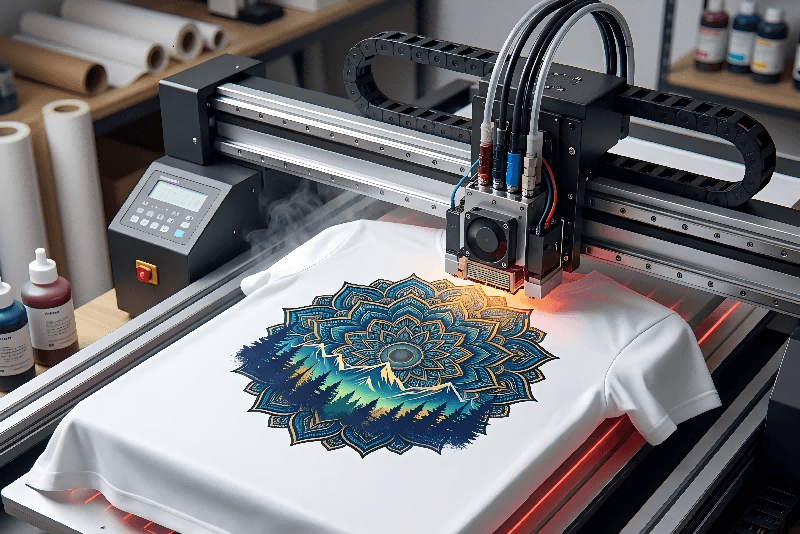
You need a printer that works with sublimation ink. Popular choices include the Epson EcoTank series (converted for sublimation) and dedicated models like the Sawgrass Virtuoso SG500 or SG1000. Sawgrass machines come ready for sublimation out of the box.
Sublimation Ink
Certain inks are not suitable for sublimation. You have to buy inks that are designed specifically for sublimation and contain properties that will allow them to be vaporized by heat. Some popular brands are Hiipoo, Cosmos, and Sawgrass SubliJet.
Sublimation Transfer Paper
This kind of paper is indispensable for keeping dye prints until the moment they are actually transferred to a product. TexPrint and Beaver Paper are among the top choices. Wrong paper results in weak color transfer and blurred edges.
Heat Press Machine
You can do a number of projects with a flat heat press; it is great for printed t-shirts, tote bags, and other flat items. To get the job done for mugs and tumblers, you will need a mug heat press. Swing-away is a much more relaxed position to work in, and more like control and safety is possible than when you are dealing with a clamshell style.
Sublimation Blanks
A blank represents a product that hasn't been printed on yet. They have to be 100% polyester or be polyester-coated. Examples of blanks you can use are t-shirts, mugs, mouse pads, phone cases, tote bags, and much more.
Design Software
If you just want to make a simple design, Canva is a free online tool that you can use. If you want your design to be very precise, then you can purchase Adobe Illustrator or CorelDRAW. Also, Sawgrass offers its own Creative Studio software built for sublimation workflows.
What Materials Can You Sublimate On?
Sublimation technology is effective only with certain materials. Checking the fabrics that can be printed with sublimation inks beforehand will spare you the trouble of wasting both time and money.
The essential criterion is that the fabric should be polyester or must have a polyester layer on its surface. Sublimation inks can only chemically attach themselves to polyester fibers or polymer-based coatings.
Polyester Fabrics
Polyester fabric that is 100% pure gives the best results in sublimation printing. The colors turn out very vibrant, and the prints remain strong for a long time on 100% polyester fabric. These factors explain why sublimation is a method of choice for manufacturing sportswear and gym outfits.
Polyester Blends
It is even possible to sublimate polyester blends (for example, 65/35 polyester-cotton), but the color will be a little faded. The greater the percentage of polyester, the better the end product.
Ceramic Mugs
Cups get saturated with sublimation ink by having a polymer coating. It is this coating that the dye attaches itself to and not the ceramic. Therefore, it is a must to make sure the cups are sublimation-friendly before doing a mass purchase.
Metal Panels
Aluminum with a polyester coating is a wonderful medium to get excellent photo prints, wall decoration, and trophies. It gives a high gloss and contrast.
Phone Cases
Besides paper, hard plastic phone cases with a white polyester coating have become the most common sublimation blanks. Sublimated pictures are wear-resistant and cannot be easily scratched.
Mouse Pads
A mouse pad whose upper surface is made of fabric with a rubber bottom is just what you need for sublimation. They give high contrast and clear pictures, and at the same time, they are a best-seller for custom merchandise stores.
Home Decor Products
Cushions (with polyester covers), ceramic tiles with polymer coatings, coasters, and photo panels are just some of the items where sublimation works great.
Can You Sublimate on Cotton?
Cotton fabric completely lacks polyester fibers, and sublimation inks have no elements to bond to in 100% cotton t-shirts. The color might fade almost immediately after washing, or the ink might not have transferred at all.
If you want to use cotton fabrics, there are mainly two possibilities:
- You can apply a spray or coating having a polyester base to the cotton first and then continue with the sublimation. This method sometimes works, but the results can be quite different.
- Opt for the Direct to Film (DTF) print technology, which is more suitable for cotton and dark-colored fabrics.
Ideally, use polyester and polyester-coated products.
Best Products for Sublimation Printing
One of the advantages of sublimation is its capability to be used on a variety of products. This is one of the reasons why custom merchandise sellers often choose this method for their products.
T-Shirts
The best-selling shirt is a white or light-colored polyester t-shirt. Getting the entire surface covered, including sleeves and back, using sublimation means that you can design the whole shirt. This is not something that screen printing can do easily.
Hoodies
There is a huge demand for polyester hoodies that allow all-over printing. Streetwear brands and sports teams are the ones who order these most of the time.
Tumblers
Among the most lucrative sublimation products are stainless steel tumblers coated with a polymer layer. Personalized tumblers continue to be a successful product on the Etsy and Shopify markets.
Mugs
Sublimation mugs are still the favorite product. Generally, a regular blank 11oz or 15oz sublimation mug is very cheap, but a customized product will sell at several times that price.
Tote Bags
Full-surface printed polyester tote bags are a perfect choice for gifts, events, and environmentally-friendly shoppers.
Keychains
Aluminum and MDF keychains are cheap and can be made very quickly. They are the favorite of both wholesale customers and those looking for personalized gifts.
Blankets
Polyester fleece is a perfect fabric for sublimating images on. Photo and message blankets continue to be popular choices for weddings, births, and holidays.
Sportswear
Sports uniforms and activewear are sublimation's main avenues. With sublimation, it is possible to produce matching sets of uniforms with names and numbers in just one print run.
Home Decor
Strong sellers for home decor through sublimation are cushion covers, photo tiles, wall panels, and puzzles.
Pet Products
Pet bandanas, pet bowls, and photo ornaments are a rapidly expanding pet product sector. Sublimation does a wonderful job of reflecting photographic detail, which is a feature that pet owners value.
Advantages of Sublimation Printing
Compared to other printing methods, sublimation has several distinct advantages.
Vivid Colors
Sublimation results in vibrant and rich color printing. Since the dye is embedded inside the material, the colors remain bright and do not degrade. Transition colors and photo-realistic images look fantastic on polyester fabrics.
Photo-Quality Detail
Artwork, photos, and detailed patterns can be printed with 100% accuracy by sublimation. Contrary to screen printing, sublimation can reproduce gradients easily and still maintain high quality.
Long-Lasting Durability
Unlike surface-applied prints, sublimation prints won't crack or peel, and their color won't fade. Some sublimated products show no visible difference even after 50+ washes.
Unlimited Color Printing
Sublimation does not have a cost per color. At the same price, you are able to print single-color as well as 50-color gradient images. This makes the complex designs very affordable.
No Minimum Order Quantity
You can produce one unit only, and the price per unit will be the same as if you had printed 100 units. For this reason, sublimation is very appropriate for print-on-demand businesses.
Eco-Friendly Production
Water-based inks are used in sublimation, and there is no discharge of wastewater and chemicals. There is a very small amount of waste produced as compared to screen printing, which uses large quantities of water and chemicals.
Great for Print-on-Demand Businesses
Since you only make what sells, you won't have to store stocks. This will keep the costs low and risk minimal, which is why most of the POD sellers opt for sublimation.
Disadvantages of Sublimation Printing
Just like any other printing method, sublimation comes with certain disadvantages that you should be aware of before making an investment.
Limited to Polyester-Based Materials
Sublimation is not effective on natural fabrics like cotton, which makes it incompatible with many commonly used materials.
Doesn't Work Well on Dark Fabrics
Since sublimation dyes are transparent, they require a white or very light background for proper color reproduction. Using dark shirts results in fading, disappearing colors, or dull hues.
Higher Costs for Equipment
The initial investment for sublimation is higher compared to some other techniques. The combined price of a decent printer, heat press, and blanks can reach between $500 and $2,000 or even more, depending on what level of quality you aim for.
Color Differences Between Various Substrates
A design imprint on a mug may not be exactly the same as on a T-shirt. This is due to different substrates having different color absorption characteristics. Therefore, you have to conduct trials and adjust your settings for each type of product.
Requires Heat Press Knowledge
Mastering temperature, time, and pressure settings requires experimentation. Even seasoned operators can come across faded or ghost-like prints as a result of incorrect settings.
Sublimation Printing vs Other Printing Methods
Here is a clear comparison to help you choose the right method for your needs.
| Feature | Sublimation | DTG | Screen Printing | DTF | HTV |
|---|---|---|---|---|---|
| Works on Cotton | No | Yes | Yes | Yes | Yes |
| Works on Polyester | Yes (best) | Yes | Yes | Yes | Yes |
| Works on Dark Fabrics | No | Yes | Yes | Yes | Yes |
| Print Durability | Very High | High | High | High | Medium |
| Color Limit | Unlimited | Unlimited | Limited | Unlimited | Limited |
| Cost Per Unit | Low | Medium | Low (bulk) | Medium | Low |
| All-Over Printing | Yes | No | No | Yes | No |
| Minimum Order | 1 | 1 | Usually 24+ | 1 | 1 |
| Setup Cost | Medium | High | High | Medium | Low |
Sublimation vs DTG
DTG, shortened for Direct to Garment, is an innovative technique that prints directly on fabric by employing the inkjet technology, making it possible to print on cotton as well as dark garments. On the other hand, sublimation printing is more effective on polyester fabrics when it comes to stability and vibrant colors. So while DTG can be used on cotton and dark-colored garments, sublimation is the preferred method for polyester materials.
Sublimation vs Screen Printing
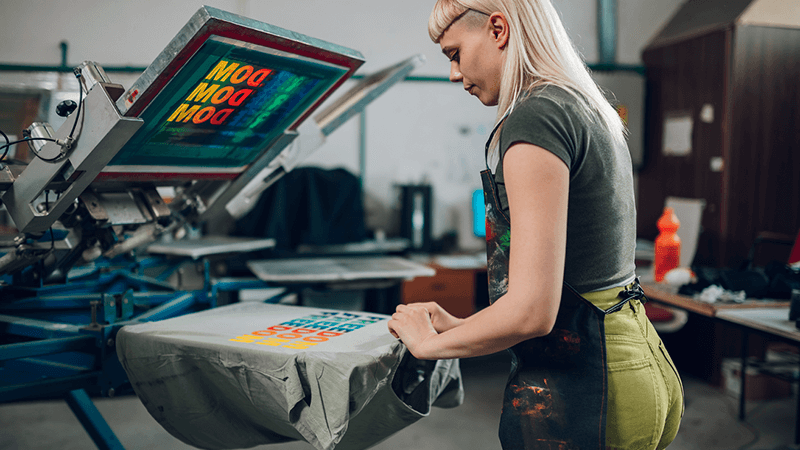
Screen printing is a great option cost-wise when producing a large quantity of products with a small number of colors in the design. On the other hand, sublimation is a better choice if you want to make a small number of items, have intricate designs, or want your print to cover the entire garment. Also, screen printing has its advantages over sublimation when it comes to printing on dark-colored fabrics or pure cotton.
Sublimation vs DTF
DTF or Direct to Film printing is one of the methods that can be used on almost all types of fabrics, including cotton and dark colors. The way it is done is by transferring a piece of film onto the surface. Sublimation, on the other hand, can generate soft, breathable, and lightweight prints on polyester fabric only. When it comes to flexibility in the types of fabric that can be printed on, DTF is the winner, but unlike sublimation, it is not bonded to the fabric but instead sits on top.
Sublimation vs Heat Transfer Vinyl (HTV)
With HTV first, the design is cut out from a sheet of colored vinyl, and the next step is to press it onto the fabric. It is very efficient when it comes to rendering texts, logos, and simple graphics. On the other hand, sublimation is way better when it comes to handling full-color photos and gradients. Although HTV can be used on more fabric types, it is limited to simpler designs, and it can start to peel off over time.
How Long Does Sublimation Printing Last?
One of the great things about sublimation is the lifespan of the prints. Here is what you need to know.
Wash Durability
It is more than possible that sublimated prints will go through 50 machine wash cycles without any significant fading. The reason is that the dye is embedded in the fibers and not lying on the top, which means that even normal washing does not affect it.
UV Resistance
In direct comparison to other printing techniques, sublimation prints are more resilient when exposed to sunlight. Sublimation colors retain their brilliance and intensity for longer periods of time when exposed to UV light, which makes this technique a good fit for the production of outdoor items and sportswear.
Factors Affecting Longevity
- Polyester percentage in the fabric (the higher, the better) Sublimation ink quality used
- Heat press settings during production
- Washing and storage habits of the item
Care Instructions
It is advisable that your customers follow the below- given steps to make the most out of their sublimated products:
- Use cold or warm water for washing (not hot)
- Always turn garments inside out before washing.
- Stay away from bleach and fabric softeners.
- Air drying is the best option; if not, use the low heat setting on the dryer.
- Do not iron directly over the printed area.
How Much Does Sublimation Printing Cost?
Knowing the costs is crucial for setting the price of your products and for business planning.
Costs for Equipment
- An entry-level sublimation printer (converted Epson EcoTank): $200 to $400
- Sawgrass Virtuoso SG500: $500 to $650
- A basic flat heat press: $150 to $400
- A mug press: $80 to $200
- A complete starter kit, in total, will cost you around $500 to $1,200
Costs for Materials
- Sublimation ink (set of 400ml): $20 to $60
- Sublimation paper (110 sheets): $15 to $30
- Polyester blank t-shirts: $3 to $8 each
- Blank sublimation mugs: $1.50 to $4 each
- Blank tumblers: $4 to $12 each
Cost Per Print
On a single sublimated mug, your material costs may be around $2 to $5. A t-shirt might be in the range of $5 to $10. Of course, the actual prices will be dependent on ink usage, paper, and blank.
Can You Make Money with Sublimation?
Definitely. The custom mugs that cost about $3 to make are commonly sold for $15 to $25. The custom t-shirts that cost about $8 to make can be priced at $25 to $45. The profit margins are very good, especially if you go for a print-on-demand model where you only produce what you have sold.
How to Start a Sublimation Print-on-Demand Business
You have more options than ever before for starting a sublimation business. Here is a straightforward method to begin.
Pick a Niche
Your selling field should be narrow. Selling "custom gifts," for example, is too broad. Instead, go for pet owners, sports teams, teachers, nurses, or newlyweds. A focused niche will make your marketing easier, and you will find it easier to attract repeat buyers.
Produce Designs
You really don't need to be a professional graphic designer. You can use the thousands of customizable templates that are available on Canva. Also, get commercial-use design bundles from Creative Market or Etsy. You should always check that you have the commercial rights of any design that you offer for sale.
Choose Products
When you are starting, limit your product line to two or three items only. Mugs, tumblers, and t-shirts are among the favorites of new entrepreneurs, and these products also have the strongest demand. Once you have mastered these, only then will you add others.
Link to a Web Store
Shopify, Etsy, and WooCommerce are platforms that can easily be linked to print-on-demand fulfillment partners. You can also do the printing yourself and manually ship orders in the beginning if you prefer.
Advertise Your Products
If your products are visually appealing, a good approach for you would be to use Pinterest and Instagram. Actually, TikTok videos of the sublimation process are performing very well due to the fact that the transformation is quite a visual delight. Share content that illustrates your products both before and after they are finished - transform your blank products into custom items.
Increase Your Business
After finding your winning products, put your money back into better equipment and more blanks. Outsourcing of design creation and automating order processing through your e-commerce platform are also options you might want to consider.
Common Sublimation Printing Mistakes and How to Avoid Them
All newbies make some of these mistakes. You can be prepared for them by knowing them in advance.
Ghosting
Ghosting is the result of the transfer paper moving ever so slightly in the press. That can cause a fuzzy double image. So, before pressing, be sure to tape your transfer paper down with a heat-resistant tape, and then you will be good to go.
Pale Colors
Your pale images are likely the result of your temperature being too low or you simply did not press for a long enough time. Using a heat press calibration with an infrared thermometer is one of the ways to check. Make sure that you set the exact temperatures for each type of item.
Discolored Pieces
A print with areas with different colors is most often the result of uneven pressure on the heat press. Check the flatness of your platen and set the pressure properly according to the indications on the machine. Having the correct pressure on the whole surface is very important.
Wrong Temperature Settings
Each type of material has a temperature range that is ideal. Mugs, shirts, and hard substrates all need the settings differently. You should follow the instructions of the manufacturers for the specific blanks you are using, and always test before proceeding to the full production run.
Water Possible Issues
Water in the blank or on the transfer paper can lead to transfers that are blotchy, spotty, or incomplete. To get rid of the moisture inside the blank, pre-press it for about 5 to 10 seconds before you lay down your transfer paper.
Is Sublimation Printing Right for You?
Sublimation is not a magic solution for everyone, but it is the best-performing method by a significant margin in the right circumstances.
You should opt for sublimation if:
- The fabric you want to print on is polyester, or if you are dealing with polyester-coated hard goods.
- You require print runs involving multiple colors or photo-quality, or even all-over prints.
- Running a print-on-demand business and willing to print single items profitably.
- Value long-lasting prints that do not crack or peel over time.
- Your product categories are sportswear, custom gifts, or home decor.
Switch to DTG if:
- Customer preference is 100% cotton shirts.
- Garments mainly printed in dark colors.
- Desire the softest-feeling prints on natural fabrics.
Choose DTF if:
- The ability to produce the same print on both cotton and polyester is needed.
- Regular commitment to working on dark fabrics.
- You want flexibility over a wide range of fabric types without coating or treating them.
Frequently Asked Questions
What is sublimation printing?
It is a method of printing in which the dye is heated to a gaseous form, which then permanently bonds with the polyester or polymer-coated materials so that the print becomes an integral part of the product.
How does sublimation printing work?
Initially, a design is printed onto special transfer paper, which is then laid on the target polyester decor. After a period of heated and pressurized exposure, the dye is converted into a gas and merged into the polyester. After relaxation, the print becomes permanent.
What equipment is required for sublimation printing?
A sublimation printer, sublimation inks, sublimation transfer papers, a heat press machine, sublimation-ready blanks, and design software for composition are essential.
Can you sublimate on cotton?
Not really. Since cotton doesn't have polyester fibers, the dye won't bond to it. While you can apply a polyester coating to cotton, the results can vary. DTF or DTG is more suitable for cotton.
Does sublimation fade after washing?
No, not at all. Properly done sublimation prints are extremely resistant to fading. Since the dye is embedded within the fibers, the print will not wear off with washing. Given appropriate care, the print will be good for 50 or more washes.
What printer is used for sublimation?
The most popular are the Sawgrass Virtuoso SG500 or SG1000, or modified Epson EcoTank printers. These printers are compatible with sublimation inks and produce the transfer prints you want.
Is sublimation better than DTG?
The answer varies with the product. When it comes to polyester, all-over printing, and hard goods such as mugs, sublimation wins. For cotton t-shirts and dark colored garments, DTG is the better choice.
Can beginners do sublimation printing?
By all means. The learning curve for sublimation is not steep. It is advisable to start with flat items such as mouse pads or shirts, and later move on to mugs and other curved substrates. Practice with test prints before production runs.
How much does it cost to start sublimation printing?
A basic starter setup cost can be around $500 to $1,200, covering a printer, heat press, ink, paper, and a small stock of blanks.
What products can be sublimated?
The sublimated product range is huge. You can sublimate polyester t-shirts, hoodies, mugs, tumblers, phone cases, mouse pads, metal panels, ceramic tiles, blankets, tote bags, keychains, etc. Basically, any surface that is polyester or has a polyester coating is suitable for sublimation.
Is sublimation good for print-on-demand?
Yes, it is actually one of the best methods for POD. Low material costs, no minimum order quantity, and high print quality give it an edge, especially for sellers on Etsy, Shopify, or any other marketplace.
Ready to Print Something Great?
Sublimation printing offers you a genuine means of bringing into existence products that look professional and last over time. Whether you are starting a side business, establishing a full print-on-demand store, or just making a custom item for yourself, sublimation is definitely a technique where you will find what you are looking for.
Here is what you should do next: select one product, prepare your materials, and make your first print. As soon as you get to know how the process is done and see the colors turning out, everything else will quickly fall into place.
Explore the full range of sublimation-ready products, blanks, and supplies at Inkedjoy and start creating your prints immediately.
Written by
CMO from EPROLO. With over 10 years of e-commerce experience, Carry specializes in dropshipping, website operation, and marketing strategies. She provides actionable insights that help online sellers grow, optimize their stores, and succeed in a competitive marketplace.
Read more