
DTG vs Screen Printing: Which is Best for Print on Demand?
Quick answer
The wrong printing technique can cost you hundreds or even thousands of dollars. Your design complexity and order quantity are the two main deciding factors. DTG is ideal for small runs, detailed artwork, and zero setup costs, while screen printing excels in bulk orders, bold logos, and unmatched durability.
Key Takeaways
- DTG printing sprays ink directly onto fabric like a paper printer, while screen printing pushes ink through mesh stencils — they cater to very different order sizes and design complexities.
- DTG offers unlimited colors, photo‑realistic detail, and zero setup fees, making it ideal for small runs, samples, and complex artwork.
- Screen printing delivers unmatched durability (60–80+ washes), lower per‑unit cost at scale, and special effects like metallic or glow‑in‑the‑dark inks.
- Fabric compatibility matters: DTG works best on cotton/cotton‑rich blends; screen printing handles almost all fabrics, including polyester and nylon.
- The break‑even point depends on color count — screen printing becomes cheaper between 8–24 units for simple logos, but may not break even until 75–100+ units for full‑color designs.
Choosing the wrong printing technique can cause you to lose hundreds, occasionally even thousands of dollars. This is the genuine risk involved in the DTG vs. screen printing (silkscreen printing) debate, and it explains why many clothing sellers are indecisive even before placing their first order.
In terms of results, both methods can produce great, stunning designs. However, the way they work is totally different, and they cater to different types of business. Actually, your design's complexity and the size of your order are the two main deciding factors in determining which is better for you.
This article will introduce you to the workings of each method, its strengths, and how to pick the printing method that best suits your merchandise. You will be able to tell which printing option is right for your next order after reading this guide.
What Is Direct to Garment Printing and How Does It Work?
DTG printing involves the use of a special inkjet printer that directly sprays ink onto the fabric, just like a paper printer sprays ink onto paper.
DTG Printing Definition Explained
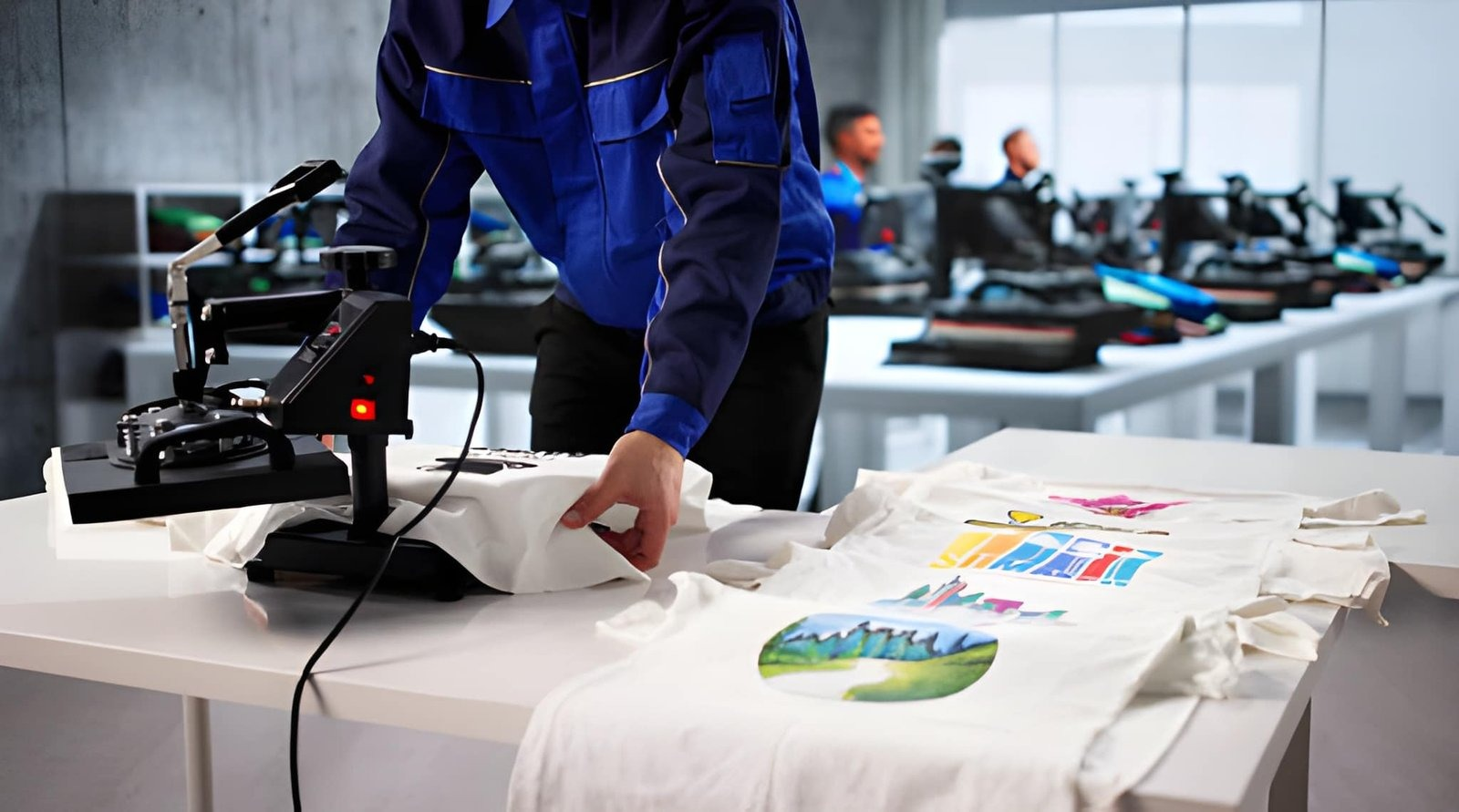
DTG is an acronym for direct-to-garment. It is a digital printing technique in which ink is sprayed directly onto the fabric that has been pre-treated. There are no screens. There are no stencils. The design is simply a file that is sent to a printer.
DTG printing is carried out in the following 3 steps:
- Pre-treatment. The garment is sprayed with a solution that promotes ink adherence to the fibers.
- Printing. The design is printed straight onto the fabric with water-based inks.
- Curing. Applying heat secures the ink so that it is permanently embedded in the fibers.
DTG is suitable for low volumes, single pieces, and designs that require full color or photographic detail.
What Makes Direct to Garment Printing Stand Out
DTG offers a handful of benefits that screen printing simply cannot compete with.
- Incomparable design freedom. Produce unlimited colors, gradients, and fine details with no additional cost.
- Zero-risk sampling. Evaluate a new design with just one shirt instead of purchasing a minimum bulk.
- Better comfort. Since ink penetrates into the fabric rather than lying on top, the print has a soft feel to the touch.
What Is Screen Printing?
During screen printing, ink is forced through a very fine mesh screen to print an image on fabric. This method has been the primary choice for producing custom apparel over the years, and why it still remains effective is simply down to the fact that prints remain really durable.
What is Screen Printing?
Screen printing, or silkscreen printing as it is sometimes called, involves using a separate stencil for every color in a design. A squeegee is used to force ink through the mesh, one layer at a time, resulting in the final design appearing on the garment.
Detailed steps of the screen printing process:
- The design gets separated into individual colors, with each one requiring its own screen.
- Each screen is first coated with a light-sensitive emulsion and then exposed to light, which "burns" the stencil inside it.
- The screens are then arranged onto the press and aligned to ensure accurate registration.
- One by one, the different inks are stuck through the various screens straight onto the fabric.
- After the printing, the garment goes through a heat tunnel, which cures the ink, making sure it stays put.
In fact, screen printing is a really good choice for making lots of items, using simple logos or bold spot-color designs.
Why Silkscreen Printing Remains Relevant
If you ask us, the answer is simple, and it boils down to speed and cost after screens are prepared.
- Lower production cost for large orders. As you increase the number of shirts printed, the cost per shirt goes down.
- Fading resistance. The thick plastisol ink will retain its color much longer than digital inks when washed.
- Matching brand colors accurately. Through Pantone matching, you can make sure that your brand colors will be the same color in every batch.
- Ability to produce special effects. The likes of glow-in-the-dark, metallic, and puff inks can only be done using screens.
Difference Between DTG and Screen Printing
On a fundamental level, DTG is capable of producing any design at any quantity without making any preparations, whereas screen printing requires preparing the setups, but gives you a lower price per unit for big quantities.
| Factor | DTG Printing | Screen Printing |
|---|---|---|
| Best fabric | Cotton and cotton-rich blends | Almost all fabrics |
| Design complexity | Photos, gradients, fine detail | Bold logos, text, spot colors |
| Durability | 40 to 60 washes | 60 to 80+ washes |
| Color capability | Unlimited, no extra cost | Limited by the number of screens |
| Special effects | Limited | Glow, metallic, puff available |
| Minimum order | None | Usually 12 to 50 pieces |
| Cost for extra colors | No added cost | Adds $20 to $40 per color |
| Cost efficiency | Cheaper under 25 pieces | Cheaper at 100+ pieces |
| Eco-friendliness | Water-based ink, less waste | PVC-based ink, more waste |
| Setup time | 5 to 10 minutes | 30 to 90 minutes |
| Print speed | 2 to 5 minutes per shirt | 4 to 15 seconds per shirt after setup |
Screen Print vs DTG: See the Difference on Real Products
Numbers reflect only half the story. Here's how both methods work on those real products that people order on a daily basis.
Case 1: Photo-Realistic Design on Tote Bags
Only DTG can satisfactorily realize a photo print with very smooth color blending. The gradients come out very clean, and the ink is absorbed in the canvas so that even folding lines do not result in cracking of the ink. It is really a tough job for screen printing in such cases. In fact, photo-realistic art often requires more colors than the standard number of colors allowed by screen printing, not to mention that color gradients are often represented by bands that noticeably differ from one another rather than smooth transitions.
Case 2: Bold Logo or Spot Color Design on Caps
For a simple, two-color logo, screen printing is definitely the best choice. First, the ink is quite bold and opaque even when the fabric of the curved cap is used, and further, the color of the logo stays really sharp even after multiple washes. In fact, DTG is also capable of printing on caps, yet the curved surface and thick fabric make it harder to get even ink coverage.
Case 3: Small Text and Fine Lines on Hoodies
Because DTG has no mesh count that would limit resolution, detailed elements such as small text or thin outlines are printed very accurately. That said, screen printing is also capable of producing small text, although the effect of lines becoming slightly blurred due to mesh threads disrupting finely edged lines can be noticeable, especially after several washes.
DTG Pricing vs. Screen Printing Costs
Price is usually the last criterion that comes into play after you have figured out the most suitable method for your design. This is what typically impacts the price on both sides.
Setup Costs
DTG does not involve any practical setup costs. There are no screens that need burning and no color separations that need preparation. Typically, a screen printing setup would cost $20 to $50 per screen, and one screen is required for each color that constitutes the design.
Per-Shirt Cost
Generally speaking, DTG is more advantageous in terms of single shirt cost since there is no initial setup cost to be recovered. The per-shirt cost for screen printing starts to become comparable only after the setup cost is gradually assigned over a sufficient number of units.
Bulk Order Pricing
The breaking point price-wise depends on how many colors your design contains.
- Single color designs: Screen printing will be cheaper after 8 to 12 units.
- Two to three color designs: Screen printing gets ahead at about 15 to 24 units.
- Four to six color designs: DTG is cheaper up to the point of 25 to 50 units.
- Full-color or photographic designs: Screen printing may not break even until 75 to 100+ units.
Cost Per Color
This is the factor that differentiates the two methods quite drastically. DTG will charge you the same whether your design is multi-colored or single-colored; a piece with five colors will cost you the same as a piece with only one color. Screen printing, on the other hand, will add $20 to $40 for each additional color, as every color requires its own screen and separate setup pass.
DTG vs. Screen Printing for Different Business Sizes
Your business size and order pattern point you toward one method more clearly than any other factor.
| Business Size | Recommended Method | Reason |
|---|---|---|
| POD sellers | DTG | No setup fees, no minimums, print one design at a time |
| Small brands, complex art | DTG | Test designs without upfront cost or risk |
| Small brands, simple logos | Screen printing | Better quality and controlled cost at low volume |
| Growing brands, logos | Screen printing | Cost-effective at 50+ units with better margins |
| Growing brands, detailed art | DTG | Complex artwork doesn't translate well to screens |
| Large-volume businesses | Screen printing | 50 to 65% cheaper per unit at 200+ units |
If you sell print-on-demand products, DTG will keep your upfront risk almost zero in the main. However, if you are a small brand making simple logo merchandise, then screen printing will keep the price per unit low even at small volumes. As the brand grows, the owners end up using both: screen printing for continuous logo runs and DTG for the limited or seasonal ones. Those that have large-volume businesses quite often stick to screen printing once they make hundred-level orders.
DTG vs. Screen Printing Quality: Which One Lasts and Feels Better?
Quality usually refers to three factors: the lifespan of the print, the feeling of the print on the skin, and the way the print wears out.
Durability: Which Survives More Washes?
Typically, DTG printing starts to fade noticeably after 40 or 60 washes. Screen printing, especially when done with plastisol inks, can last up to 60 or 80 washes or even more. However, the thicker ink layers may eventually crack after a certain period rather than fade.
| Wash Cycles | DTG Print Condition | Screen Print Condition |
|---|---|---|
| 0 to 20 washes | Full color, no change | Full color, no change |
| 20 to 40 washes | Slight softening of color | Holds strong, minimal change |
| 40 to 60 washes | Noticeable fading begins | Still vibrant |
| 60 to 80 washes | Significant fade | Minor surface cracking possible |
| 80+ washes | Print mostly worn | Cracking becomes visible |
Texture: Which One Is More Comfortable to Wear?
DTG ink literally permeates the fabric; the print is incredibly soft and hardly noticeable. On the other hand, screen printing ink lies on the surface of the fabric, which results in a print with a bit of a 3D effect. However, water-based screen inks get pretty close to that soft feel.
How Do They Fail? Fading vs. Cracking
DTG prints slowly lose their color over time since washing continuously breaks the ink's pigment. Conversely, screen prints are much more resistant to fading, but the thick layer of ink may eventually crack and flake as a result of stretching or wear.
Care Tips to Maximize Print Life
Some small factors can make a DTG or a screen print last a very long time.
- The first thing is to always wash your garments inside out and use cold water.
- Next, the best choice is for the prints to be air-dried, but if you must use a dryer, always select a low heat setting.
- Additionally, it is better to get rid of bleach and fabric softener altogether, as they cause the bonds of the ink to deteriorate much faster.
Fabric Compatibility
There is no universal fabric that is suitable for all printing methods, and the incompatibility issues actually end up influencing the choice even before cost considerations.
| Fabric | DTG | Screen Print |
|---|---|---|
| 100% cotton | Excellent | Excellent |
| Cotton/poly blend | Good, some dye migration risk | Excellent |
| 100% polyester | Poor, the ink won't bond well | Good, with poly ink |
| Nylon | Not recommended | Good, with nylon ink |
| Canvas or tote bags | Not recommended | Excellent |
If you are manufacturing polyester athletic wear or nylon bags, screen printing will probably be the right technical option for you. If you want to maximize results with direct-to-garment printing, use pure cotton or cotton-heavy blends.
Turnaround and Production Time: How Fast Can You Get Your Order?
In fact, the printing procedure goes quite fast; it is the setup that takes time.
| Stage | DTG | Screen Print |
|---|---|---|
| Setup time | 5 to 10 minutes | 30 to 90 minutes |
| Print speed | 2 to 5 minutes per shirt | 4 to 15 seconds per shirt after setup |
| Standard turnaround | 3 to 5 business days | 7 to 14 business days |
| Best for | Small orders, urgent single pieces | Large orders with flexible timelines |
If you need only a few shirts on a rush order, DTG is definitely the way to go, as there is no screen preparation that would be eating away at your time. However, if you are looking at a 300-piece order and you allow a few weeks of lead time, screen printing will be the better option as it is faster per shirt once the setup is done.
Frequently Asked Questions: DTG vs Screen Printing
Is DTG printing good quality?
Yes. DTG can result in very detailed and sharp colored images, especially when used on 100% cotton and cotton-blend t-shirts. In fact, when an image is printed on a well-treated cotton t-shirt, the colors usually hold up very well.
What type of t-shirt printing lasts the longest?
The prints manufactured with screen printing usually have the longest life span, typically lasting through 60 to 80 washes, because the plastisol ink utilized in it is resistant to fading in comparison to digital ink.
DTG vs screen printing, which one is cheaper?
It varies according to the quantity. DTG tends to be more economical if you only want a few pieces, say around 25 or fewer, since there is no setup cost. On the other hand, screen printing will become more economical when you get 50 to 100 or even more pieces of the same design.
Can DTG print on dark shirts?
Yes, it can be done, although it will require a white ink under-base layer first. This not only adds a step but also a small cost increase. However, it makes full-color printing on black or other dark garments possible.
Is DTG printing more eco-friendly?
In a general sense, yes, being water-based, DTG inks not only produce less waste than traditional screen printing, which is usually based on PVC plastisol inks, but they also use less water in screen prep and cleanup phases.
DTG vs screen printing, which one is better for a small business?
DTG will usually be the better choice for small businesses, especially when just starting up, since it requires no minimum order and no setup fee. With it, you can experiment with designs and expand your catalog without making an initial investment.
How much does direct-to-garment printing cost per shirt?
Usually, for small quantities, DTG prices it at $5 to $15 per shirt, this depending on design size, color of garment, and number of print locations.
Read More
Written by
Gina
A skilled marketing specialist with expertise in e-commerce marketing, and print-on-demand product research. She has extensive experience in keyword research, market analysis, and content strategy, helping brands find uncover profitable opportunities, improve search visibility, and drive sustainable growth through data-driven marketing.