

USPS Shipping Rates Going Up? How Small Businesses Can Save
Key Takeaways
- USPS introduced several shipping-price and pricing-rule changes in 2026, but the impact varies by service, package size, zone, and whether you use retail or commercial rates.
- The July 12, 2026 changes included revised Commercial USPS Ground Advantage pricing and dimensional-weight rules. USPS Ground Advantage retail prices remained unchanged.
- Small businesses can offset higher rates by comparing carriers, optimizing packaging, and using multi-carrier shipping software.
- Rethinking free shipping thresholds, product pricing, and fulfillment location often saves more than hunting for cheaper labels.
- For POD sellers, the true landed cost (product + fulfillment + shipping) matters more than a single shipping rate.
If you're running a small online business selling a $15 product, an increase in shipping rates can either eat into your profit or make your product less competitive. For example, a package that used to cost around $5.50 to ship could now cost $7.50—or even $8—for some sellers in 2026
That's why the latest USPS rate changes are more than just a shipping problem—they can quickly squeeze your margins.
For print‑on‑demand (POD) sellers, the pressure can be even greater. Unlike traditional retailers that may spread shipping costs across larger orders or hold inventory in bulk, POD sellers typically produce and fulfill products one order at a time. Every additional dollar matters.
Here's what's driving the rising shipping costs—and 6 practical ways to minimize them without sacrificing customer experience or profit margins.
What Changed With USPS Shipping Rates?
On July 12, 2026, USPS introduced several pricing changes that can make small and lightweight packages more expensive to ship:
1. Lightweight packages are no longer priced strictly by ounce.
Packages weighing 1 lb or less are now grouped into broader weight‑based pricing tiers.
Example:
| Product | Weight | Before | After | Increase |
|---|---|---|---|---|
| Stickers / small keychains | 3 oz | $3.99 | $5.19 | +$1.20 |
| Phone case / small accessories | 8 oz | $4.78 | $5.19 | +$0.41 |
| Lightweight sweatshirt | 15 oz | $5.83 | $5.91 | +$0.08 |
*The following examples are illustrative. Actual USPS rates vary by package, destination, service, and pricing type.*
The lighter the package, the bigger the impact can be. A $1.20 increase may not sound dramatic, but for a $10–$15 product, it can take a noticeable bite out of your margin.
2. Package dimensions have a bigger impact on shipping costs.
Larger packages may cost more based on the space they take up, even when they are lightweight.
Example:
| Product | Package Size | Actual Weight | Old Billable | New Billable | Increase (Zone 8) |
|---|---|---|---|---|---|
| Framed print | 20 × 15 × 6 in | 4 lb | 11 lb | 13 lb | +$2.74 |
| Wooden plaque | 24 × 18 × 5 in | 4 lb | 14 lb | 16 lb | +$2.87 |
The product didn't get heavier. But USPS now sees the same package as a 13‑lb shipment instead of 11 lb—and that can add nearly $3 to a Zone 8 delivery.
3. Some fees and Ground Advantage rates have changed.
USPS has adjusted Ground Advantage pricing and introduced new fees for certain shipments.
For example, a seller shipping a 5 lb Ground Advantage package across the country may pay more after the July 12 rate change. A few extra dollars per package may not seem significant, but across 100 orders, that can mean hundreds of dollars in additional shipping costs.
The important thing is that there's no single "USPS increase" that applies to every order. What you sell, how you package it, and where you ship it can all change what you end up paying.
And for a small business, specially POD seller who sell sticker, t shirt and other small accessories, even a couple of extra dollars per order can add up quickly.
USPS Shipping Changes for Q4 Holiday in 2026
USPS is planning a temporary holiday rate increase from October 4, 2026, to January 17, 2027, pending PRC review. The increase will affect services including USPS Ground Advantage, Priority Mail, Priority Mail Express, and Parcel Select.
For Etsy and POD sellers, this overlaps with the Q4 shopping season, so it's worth checking your shipping costs and margins before the holiday rush.
6 Ways to Lower Your Shipping Costs
Compare Carriers and Negotiate Better Rates
USPS isn't always the cheapest option for every single package. While it usually wins on lightweight items under 1 lb, UPS Ground or FedEx Home Delivery can easily beat USPS once a package hits 2 to 3 lbs—especially if it's traveling across several shipping zones.
If you ship regularly, never pay full price at the post office counter. Shipping software like Pirate Ship, Shippo, or Shopify Shipping gives you instant access to discounted commercial rates. Just keep in mind that a lower rate isn't worth much if a parcel gets lost, so make sure delivery speed, tracking accuracy, and insurance still meet your store's standards before switching carriers.
Make Your Package Cheaper to Ship
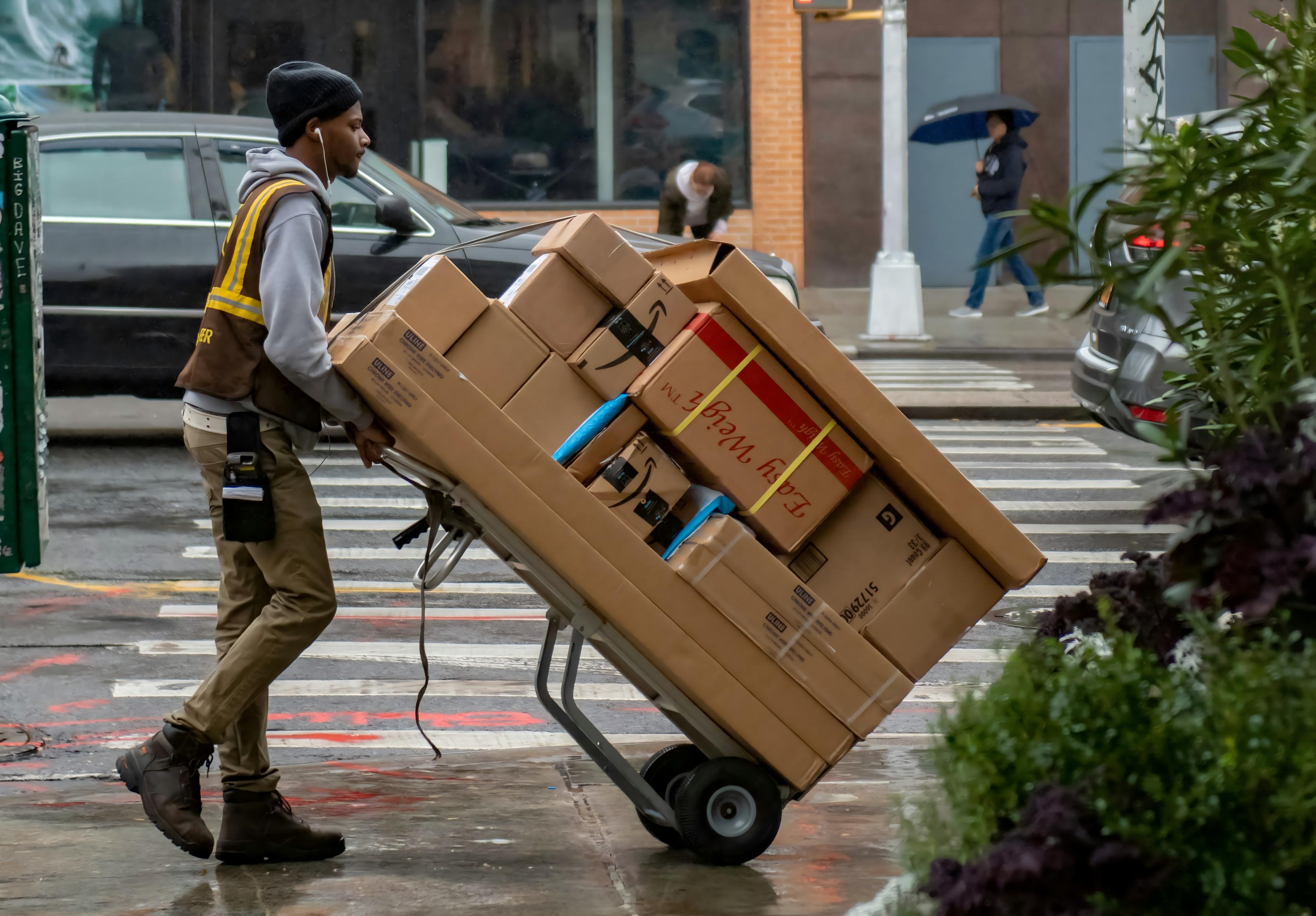
Packaging often impacts your shipping bill just as much as the product itself. Carriers charge heavily for extra space, so swapping rigid boxes for lightweight poly mailers or padded envelopes is one of the easiest ways to trim costs right away.
However, reducing packaging weight or package size isn't the only way to lower shipping costs. For example, one Etsy seller shared in a YouTube comment that a slightly heavier package cost $6.07 to ship, while a lighter packaging option would have cost $8.59. This shows why simply making a package lighter doesn't always lead to lower shipping costs.
The key is to test different package sizes and weights against the actual shipping rate, rather than assuming lighter always means cheaper.
Rethink Free Shipping and Product Pricing
When shipping costs rise, simply set up a higher price isn't always the best solution.
But instead of just hiking your shipping fee at checkout—which tends to spook buyers—try tweaking how you display your total price:
- Option A: $10 product + $8 shipping (Keeps the base price low, but high shipping fees at checkout often drive buyers away)
- Option B: $13 product + $5 shipping (Splits the shipping burden, making checkout fees look much more reasonable)
- Option C: $18 product + Free Shipping (Removes checkout friction completely, which works great for higher‑margin items)
Use a Multi‑Carrier Shipping Strategy
Relying on a single carrier for every order means you're likely overpaying on certain routes. Multi‑carrier shipping platforms can automatically compare rates across USPS, UPS, and FedEx in real time, assigning the cheapest reliable carrier for each specific package size and destination ZIP code.
If you work with a 3PL fulfillment or a print‑on‑demand supplier, check what carrier rates they offer. Larger fulfillment partners ship high volumes every day, giving you access to tier‑one commercial rates that individual small stores can't get on their own.
Rethink Where Your Orders Are Fulfilled
Sometimes the best way to cut shipping costs isn't finding a cheaper shipping label—it's shipping from a better spot in the first place.
If your products are consistently shipping from a single facility far from your main customer base, updating your store's shipping settings only fixes part of the problem.
Ship Smarter, Not Just Cheaper
Not every order needs to follow the same shipping strategy.
If you're selling multiple products, look for opportunities to combine orders, bundle products, or change how certain products are shipped. For example, two small items may be cheaper to ship together than separately, while splitting an unusually large order into multiple packages could sometimes avoid a costly weight or dimensional threshold.
You can also consider alternatives such as:
- Local delivery for nearby customers
- Local pickup when your business model allows it
- Hybrid fulfillment across different suppliers or warehouses
- Print‑on‑demand or made‑to‑order fulfillment to avoid unnecessary inventory movement
The best strategy depends on your product, order size, and customer location. Don't optimize every order the same way—optimize for the shipping pattern that costs your business the most.
What Is the Cheapest Shipping Method for Small Businesses?
There isn't one shipping service that's cheapest for every business. The best option depends on your package weight, dimensions, destination, delivery speed, and shipping volume.
Still, some services are worth checking first if you run a small online business, for example:
| Market | Shipping options worth checking first | Best suited for |
|---|---|---|
| U.S. | USPS Ground Advantage, UPS Ground, FedEx Ground | Small‑to‑medium domestic packages |
| Canada | Canada Post Expedited Parcel, Xpresspost | Domestic and cross‑border shipments |
| Australia | Australia Post Parcel Post | Domestic parcels, especially those fitting flat‑rate packaging |
The important part? Don't treat any carrier as the default winner. Run the same package through two or three carriers and compare the actual rate for your most common destinations.
What About POD Sellers?
Print‑on‑demand sellers have an extra layer to think about: where your products actually ship from. A supplier with slightly higher base prices might actually save you money overall if their fulfillment centers are located closer to your customers.
Before you swap suppliers or change your shipping options, always run the math on the complete cost per order:
Product Cost + Fulfillment Fee + Shipping Cost = Your Real Landed Cost
At the end of the day, lowering your real landed cost across all orders protects your bottom line far more than hunting for the cheapest shipping label on a single package.
Tips: Not all the suppler's listed products price includes shipping, it is crucial to review your supplier's shipping policies before you start fulfilling orders.
Common Shipping Mistakes Small Businesses Should Avoid
- Optimizing Shipping Costs Too Early
Don't spend weeks trying to save $0.50 per package when you haven't shipped enough orders for that saving to matter, which can slow your business down. - Cutting Shipping Costs at the Expense of Customer Experience
Before changing your shipping method, consider the total cost of the decision, not just the postage.
A few dollars saved on shipping isn't a saving if it creates a much larger customer service problem. - Relying on One Fixed Shipping Rate
Instead of using one rate for everything, consider calculated shipping, regional rates, shipping thresholds, or different rates by product type.
Final Thoughts
Trimming your shipping expenses isn't about compromising on delivery speed or customer service—it's about choosing smarter packaging, leveraging multi‑carrier tools, and understanding your true landed costs. Even saving a single dollar per package adds up fast when you're scaling a store.
For print‑on‑demand and small business sellers looking to protect their margins, every fee matters. At Inkedjoy, we provide a wide range of reliable, cost‑effective fulfillment and shipping options designed to keep your delivery costs down and your profit margins healthy.
Got questions about optimizing your shipping setup or landed costs? Contact our team today to see how we can help your store save on every order.
Find these shipping strategies helpful?
Make Inkedjoy a Preferred Source on GoogleFrequently Asked Questions
Are usps shipping rate going up in 2026?
Yes. USPS routinely updates its pricing schedules—including the recent July 2026 adjustment—shifting how lightweight parcels are tiered and increasing billable dimensional weight for larger packages.
Why usps shipping rate increase?
Rates rise primarily due to inflation, fuel price fluctuations, operating cost increases, and shifting carrier pricing models designed to charge more for packages that occupy larger physical volume in transit networks.
Is reduce shipping costs worth it?
Absolutely. For small businesses operating on thin margins, shipping savings drop straight to your bottom line. Trimming $1.50 per order across hundreds of sales can easily retain thousands of dollars in annual profits without needing extra marketing spend.
How much should i charge for shipping on etsy?
Charge based on your landed costs and buyer psychology. Most top sellers use calculated shipping for heavy or bulky items, or split the fee by adding part of the shipping cost into the item's base price to keep checkout friction low.
Should I set a higher price for free shipping service?
Yes, but do it strategically. Baking shipping costs into product prices works best for high‑margin, lightweight, or unique items. For low‑ticket products, consider setting an order threshold (e.g., "Free shipping over $35") to bump up your average order value instead.
Read more
Written by
Gina
Gina is a Content Strategist at Inkedjoy specializing in print-on-demand and e-commerce growth. With years of hands-on experience tracking carrier rates, supply chain logic, and store margins, she breaks down complex fulfillment logistics into clear, actionable advice to help Etsy and POD sellers protect their profits.