
Influencer Marketing for Ecommerce: 5 Strategies and Examples
Key Takeaways
- The right creator is not always the one with the biggest following. Audience fit, content style, and niche usually matter more.
- Influencer marketing works best when you focus on sales and customer relationships, not just likes and views.
- Start with small-budget tests, measure what works, and build long-term partnerships with creators who deliver results.
- For POD sellers, creators can also help showcase niche products and designs in real-life settings.
The Rise of Creator-Driven Marketing for Online Seller
Launching an ecommerce store has never been easier. You can create a product, set up your store, and start selling without a large upfront investment.
The harder part comes later: getting customers to notice your products and choose your store over thousands of similar offers.
Paid ads can help you reach potential buyers quickly, but they are not the only way to grow. More sellers are combining paid traffic with organic content, creator partnerships, and other marketing strategies.
The reason is simple: customers do not always buy because they saw an ad. They also want to see how a product looks, works, or fits into everyday life.
That is where influencer marketing can help. The right creator can put your products in front of a relevant audience while making your brand feel more familiar and trustworthy.
Paid Ads Are Not Enough for Your Online Store Anymore
You might create a product you believe in, launch a campaign on Facebook or Instagram, and see people clicking on your ads. Yet when you check your store, the sales numbers may not match the traffic you are getting.
The issue is not always the product itself. In a marketplace filled with similar products and competing offers, customers are often looking for more than something that simply looks good. They want to know why they should buy from your brand instead of another seller.
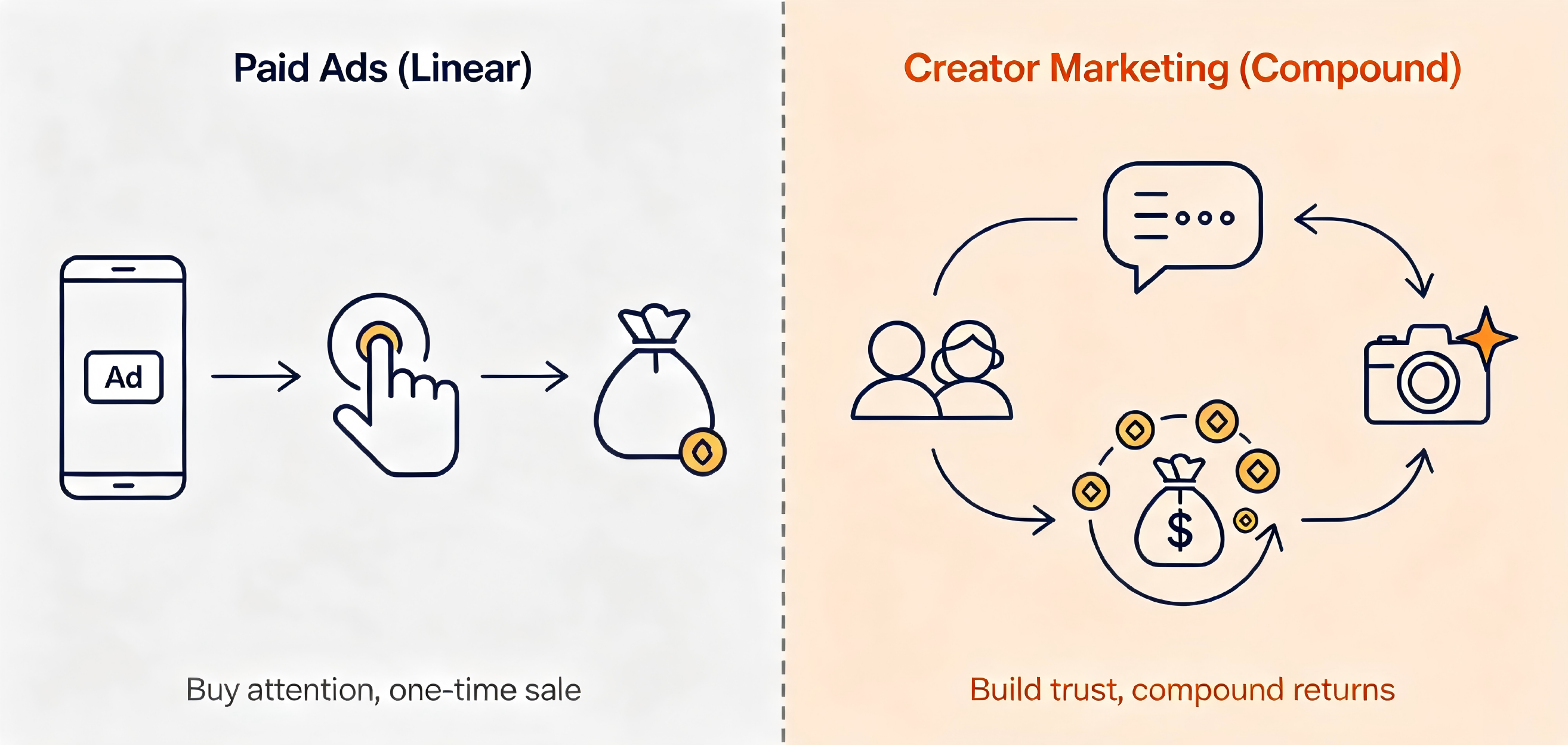
That is why relying only on paid ads can make it harder to build a long-term customer base.
Creator partnerships offer another way to reach potential customers. Instead of showing your product in a traditional ad, you can let someone who already has an audience introduce it in a way that feels more natural.
From Buying Clicks to Building Trust
Successful brands are now looking beyond paid traffic and finding new ways to build relationships with customers.
Instead of only asking “How can I get more visitors?”, sellers are starting to ask:
“How can I make customers remember my brand?” Influencer marketing can help answer that question. The goal is not simply to get someone to mention your product, but to find creators whose audience, content, and style fit your brand.
What Types of Influencer Are a Good Choice for Your Shop?
The best influencer for your store is not always the one with the biggest following. A creator’s niche, audience fit, and content style usually matter more than follower count.
For most ecommerce businesses, three types of creators are worth considering:
Influencers help you reach targeted audiences and are useful for product launches, seasonal campaigns, and affiliate promotions. Look for creators whose followers already match your target customers.
UGC creators focus on producing authentic product content rather than promoting to their own audience. They are valuable for unboxing videos, product demos, and ad creatives that show your products in real-life situations.
Community builders focus on long-term relationships with niche audiences. They are especially useful for your brands that want to create loyal customers around shared interests, such as pet lovers, hobby groups, or seasonal communities.
Once you know which type of creator fits your goal, the next step is building partnerships that actually generate sales.
5 Influencer Marketing Strategies That Actually Sell
Generic influencer advice often stops at “find the right creator.” But the best approach depends on your products, audience, budget, and sales goals.
The five strategies below can help ecommerce businesses turn creator partnerships into measurable results.
Strategy 1: Co-Create Products With Creators and Their Communities
Instead of simply asking a creator to promote an existing product, consider involving them in the product creation process.
You can ask creators to:
- Share product ideas with their audience
- Run polls on potential designs
- Collect feedback before launch
- Create a limited collection together
A small production run lets you see whether the audience responds before expanding the collection.
For example, I once worked with a creator who runs a small business community on YouTube. Instead of asking her to promote a random product, we designed a custom sample pack together — and she offered it exclusively to her audience of boutique shop owners.
We produced just 30 sample sets. Within two weeks, 12 of those turned into wholesale orders.That experience showed me why co-creation can work better than simply asking a creator to promote an existing product.
Strategy 2: Turn Product Promotion Into Lifestyle Content
Traditional product ads often focus on features, but customers usually connect more with products when they can see how they fit into everyday life.
Encourage creators to create content such as:
- Outfit inspiration
- Unboxing videos
- Styling ideas
- Honest product reviews
- Behind-the-scenes content
Context matters when customers are shopping online. A creator wearing your oversized graphic tee at a weekend market or styling an embroidered hoodie for a casual outfit helps shoppers imagine themselves using the product.
A 15-second UGC video showing a product in a real-life setting can often feel more relatable than a polished studio image, especially on platforms like TikTok, Instagram, and Pinterest.
Strategy 3: Let Creators Drive Direct Sales
Use the sales tools already available on social platforms, including TikTok Shop product tags, Instagram Shopping tags, affiliate links, and creator discount codes.
These tools allow you to connect creator content directly with purchases and understand which partnerships are actually generating revenue.
For smaller online business like print on demand stores, commission-based partnerships are often easier to manage than paying a large upfront fee. A 10% to 20% commission model means you only pay when a customer buys, while creators have a clear reason to create content that converts.
This approach also gives you more flexibility to test different creators and niches before investing more budget.
A Note on Compliance
When using affiliate links or discount codes, ensure the commercial relationship is clearly disclosed to the audience. The FTC requires influencers to disclose any "material connection" (payment, free products, or commissions) when endorsing a product. Clear disclosure builds consumer trust and protects your brand.
Strategy 4: Build Long-Term Creator Partnerships
One-off influencer posts can create short-term attention, but long-term partnerships often deliver more value.
When creators work with your brand regularly, they become more familiar with your products, your audience becomes more comfortable with their recommendations, and the content feels more natural over time.
For ecommerce brands that release new designs frequently, consider building an ongoing creator program instead of constantly searching for new influencers.
Examples include:
- Seasonal product launches
- Quarterly collections
- Monthly design drops
- Ambassador programs for best-selling products
A creator who understands your brand can become a consistent source of content and customer discovery.
Strategy 5: Test Different Creator Ideas With Small Budgets
Do not assume the biggest creator will deliver the best results. Treat influencer marketing like product testing: start small, measure results, and scale what works.
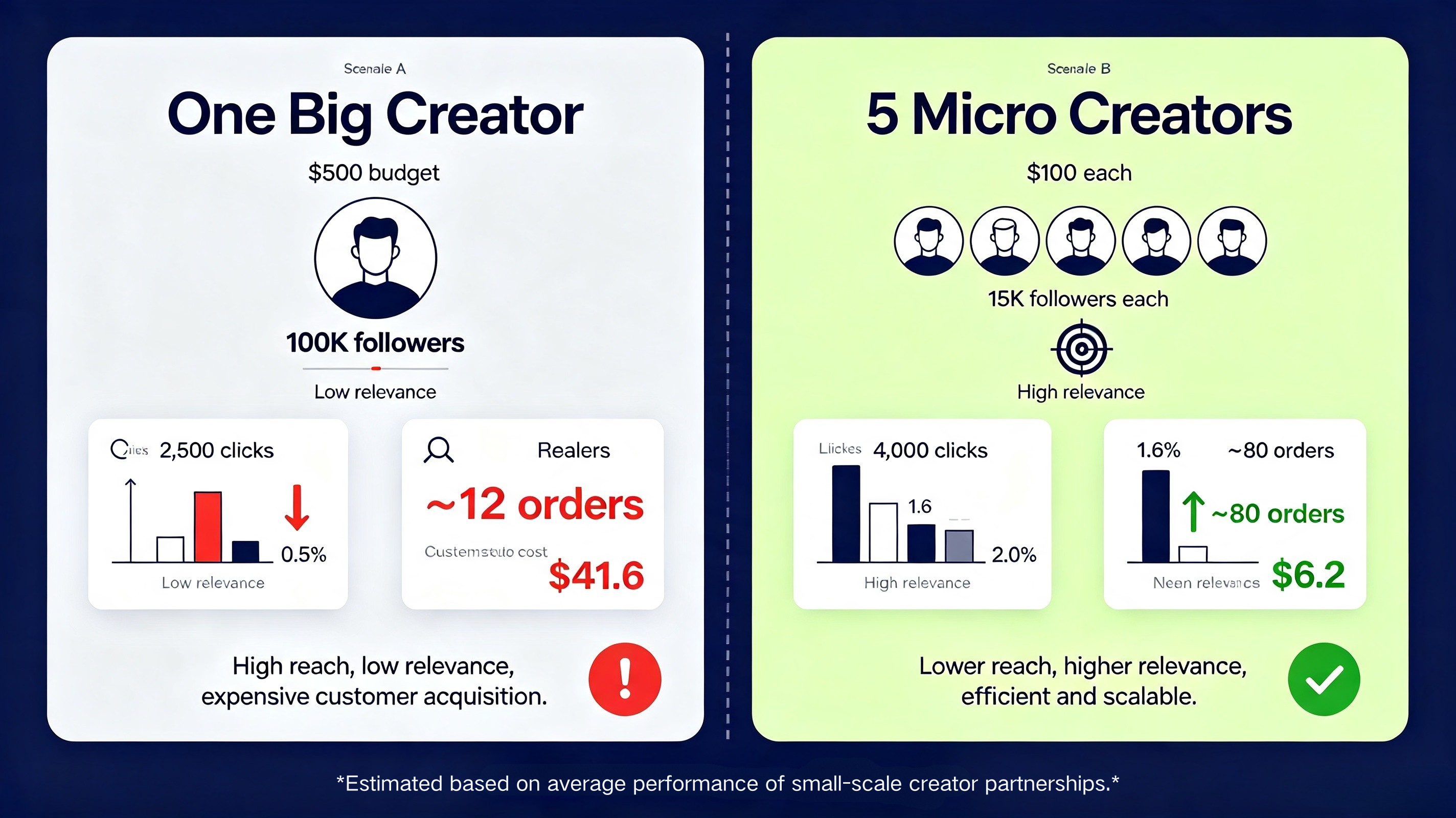
Try running several small campaigns with different creators, niches, and content styles. A $500 budget split across five micro-creators may give you more useful data than spending the same amount on one larger account.
Track metrics that matter:
- Click-through rate
- Add-to-cart rate
- Conversion rate
- Actual orders
- Customer acquisition cost
Likes and comments can show engagement, but sales data tells you whether a partnership is worth continuing.
For smaller online stores, small-budget testing is one of the safest ways to find creators who can become valuable long-term partners.
⚠️ Watch out: A common trap we see is sellers skipping the lead ownership conversation before sending samples. One seller I know partnered with a creator who promoted a sample pack to her audience, but collected all the orders directly and passed them over as "referrals." The seller had no way to follow up with those buyers later.
Before sending samples or launching a campaign, make sure your agreement clearly covers how orders, customer information, and follow-up will be handled.
Influencer Marketing Cost and ROI
Many ecommerce sellers approach influencer marketing the same way they approach paid ads: they focus only on the upfront cost.
But influencer partnerships work differently. You are not only paying for exposure — you are also investing in content creation, audience trust, and potential long-term customer acquisition.
Before working with any creator, make sure the numbers make sense for your business.
How Much Should I Spend on Influencer Marketing?
Start with your actual profit margin, not the influencer’s asking price.
The calculation should look like this:
Selling price − product cost − fulfillment cost − platform fees − shipping cost − influencer commission = actual profit
For example, imagine your custom embroidered hoodie sells for $35.
Your costs might look like:
- Product cost: $12
- Fulfillment cost: $5
- Platform fees and transaction costs: around $4
- Influencer commission: 15%
After these expenses, you may only have around $8–$10 left from each sale. That remaining profit needs to cover samples, communication time, and testing costs.
If the numbers do not work before the campaign starts, increasing sales volume will not fix the problem. You may need to adjust your pricing, product cost, or influencer payment structure.
How to Pay the Influencers?
Most online sellers use one of two payment models when working with creators:
Upfront payment works best with experienced influencers who have proven audiences and can deliver specific content for a launch. This gives you predictable content, but requires more budget upfront.
Commission-based partnerships are often a better choice for smaller POD stores. With a typical 10%–20% commission on sales, you only pay when a creator generates revenue through their link, discount code, or product tag.
For new brands, commission-based partnerships are usually easier to test because they reduce upfront risk and help you identify which creators actually drive sales.
How to Measure Influencer Marketing ROI?
Influencer marketing is easier to scale when you know which creators are actually generating results.
Track more than likes and views. Depending on your campaign, useful metrics include:
- Clicks
- Conversion rate
- Orders
- Revenue generated
- Customer acquisition cost
If a creator generates strong engagement but few sales, the partnership may need a different product, offer, or audience. If the creator consistently brings sales at a reasonable cost, you have a stronger reason to continue the partnership.
How to Find and Work With the Right Influencers for Your POD Store?
Finding the right influencer does not mean choosing the creator with the largest audience. For ecommerce businesses, the best partnerships usually come from creators who already speak to your target customers.
A creator who understands your niche, creates content naturally, and has an engaged audience is often more valuable than a larger account with low audience relevance.
Use the following steps to find creators who are more likely to generate results.
Choose Platforms Where Your Customers Use Most
Different platforms attract different types of shoppers. Instead of contacting creators on every platform, start where your customers already spend time.
TikTok works well for trend-driven products, funny designs, seasonal products, and short-form content that can quickly capture attention.
Instagram is a strong option for fashion, lifestyle products, and visually focused brands that rely on aesthetics and brand identity.
Pinterest works well for personalized products, hobby-based niches, and audiences searching for ideas around topics such as home decor, pets, weddings, and crafts.
The best platform depends on your product category, not simply the number of creators available.
How to Know If a Creator Is Worth Working With?
Before reaching out, look beyond follower count. A good creator should match your niche, your customers, and your brand style.
Signs of a Good Creator:
Look for creators who:
- Create content that feels natural rather than overly promotional
- Have regular interaction with their audience
- Understand the niche they create content for
- Maintain consistent views and engagement over time
- Have followers who match your target customers
Red Flags to Avoid:
Be careful with creators who:
- Have unusually high engagement but little meaningful interaction
- Promote unrelated products constantly
- Use scripted content that does not fit their usual style
- Have an audience that does not match your buyer
Finding the Right Influencers Without Endless Scrolling
You do not need to manually search through thousands of accounts. Several methods can help you discover relevant creators faster.
Method 1: Use Influencer Discovery Platforms
Tools like Modash, HypeAuditor, and Collabstr allow you to search creators based on:
- Niche
- Audience size
- Engagement rate
- Location
- Content category
These platforms are useful when you want to build a list of multiple creators to test.
Method 2: Search Niche Communities
Look where your customers already gather.
Reddit communities, Discord groups, Facebook Groups, and niche forums can help you discover creators who are already trusted within specific communities.
For example, if you sell pet-themed products, creators active in pet communities may already have an audience interested in your designs.
Method 3: Use Hashtags and Brand Mentions
Search product-related hashtags to find creators who naturally create content around your niche.
Examples:
- #graphictee
- #embroideredhoodie
- #petlover
Pay attention to accounts that consistently appear and whose content style fits your brand.
Method 4: Ask Your Existing Network
Your fulfillment partners, POD communities, and other sellers may already have experience working with creators.
A warm introduction can often work better than a cold message because the creator has already built trust with someone in your network.
How to Find and Work With the Right Influencers for Your POD Store?
Influencer marketing can work especially well for POD(print on demand) sellers when products are tied to a specific niche, interest, or lifestyle.
Start with creators whose audience already matches your designs instead of simply looking for the biggest account. Test a few creators, track sales, and keep working with the ones that consistently bring results.
POD also gives creators plenty of products to work with, from custom apparel and accessories to seasonal and personalized designs. This makes it easier to create content around specific niches instead of promoting a generic product.
Conclusion
Influencer marketing is not a shortcut to instant sales, but it can become a valuable growth channel for small business and ecommerce brands when done correctly.
The key is not finding the influencer with the biggest audience. It is finding creators whose content, niche, and audience match your products.
Frequently Asked Questions
How to find an influencer for my online shop?
Start by looking for creators who already reach your target customers. Search relevant hashtags, niche communities, and influencer platforms, then check their content style, audience fit, and engagement quality before reaching out.
What platform do most influencers use?
The best platform depends on your product. TikTok works well for trend-driven and seasonal designs, Instagram is strong for fashion and lifestyle products, and Pinterest can be useful for personalized or niche products.
What is the best strategy for influencer marketing?
For most ecommerce brands, start with small-budget tests. Try different creators, measure actual sales instead of likes, and build long-term partnerships with creators who consistently bring results.
How to pay influencers?
Influencer marketing helps online brands reach niche audiences, build trust, and create reusable content. The main challenges are finding the right creator, measuring ROI, and avoiding audiences that do not match your customers.
What are some benefits and drawbacks of influencer marketing?
Influencer marketing helps brands reach niche audiences, build trust, and create reusable content. The main challenges are finding the right creator, measuring ROI, and avoiding audiences that do not match your customers.
How much does influencer marketing cost?
The cost depends on the creator, audience size, content requirements, and payment model. Smaller businesses can start with product gifting or commission-based partnerships before committing to larger upfront fees.
What are the signs of a great creator partnership for a new online store?
A strong partnership has three signs: the creator’s audience matches your buyers, the content feels authentic, and the campaign generates measurable results such as clicks, add-to-carts, or sales.
Read more
Written by
Gina
A marketing specialist with experience in e-commerce, print-on-demand, and content strategy. She focuses on keyword research, market analysis, and finding practical opportunities to help brands improve their search visibility and grow their business.
Editorial note: This article references POD operational realities and creator-economy trends as strategy background. Specific creator fees, commission rates, platform CPMs, and affiliate policies change frequently; verify the latest terms with the creator, the platform, and your fulfillment partner before signing any campaign agreement. No earnings, ranking, delivery, conversion, or sales outcome is guaranteed.