
Wholesale Personalized Products: Buy Custom Gifts in Large Quantities

Wholesale Personalized Products: Buy Custom Gifts in Large Quantities

Jan 2, 2026 by Iris POD e-Commerce 101

Wholesale personalized products have shifted from “nice-to-have” swag to strategic assets that move the needle on brand awareness, loyalty, and revenue. As a mentor to on-demand printing and dropshipping founders, I see the same pattern across high-performing brands: teams that plan assortments around audience use, align decoration methods with materials, and operationalize lead times consistently outperform those chasing last-minute trends. When you buy custom gifts in large quantities with intention—backed by sound unit economics and a clear deployment plan—you turn every recipient into a mobile media channel and every reuse into a brand impression.

Why Wholesale Personalized Gifts Now

Personalized merchandise sits at the intersection of brand and utility. Industry bodies such as PPAI and ASI have long documented the recall power of useful, logoed products; PPAI reports that recipients overwhelmingly appreciate promotional items, and ASI data shows brand recall remains remarkably high for well-chosen merchandise. Thoughtful personalization deepens that effect by signaling recognition and care. SnackNation highlights that recipients often pass merchandise along, expanding reach beyond the initial audience through secondary exposure. In practical terms, a durable bottle or a favorite hoodie can deliver impressions for months, long after the media spend is gone.

At events, personalized gifts are more than giveaways; they are activation tools. Bishop-McCann underscores that on-site customization and choice convert transactional gifting into a memorable experience that drives advocacy. When the item is truly useful, it becomes a daily companion and an ambient reminder of your brand.

What “Wholesale Personalized” Really Means

Wholesale personalized products are branded items purchased in large quantities for distribution to customers, employees, attendees, or partners. Think apparel, drinkware, bags, stationery, and tech accessories ordered at volume with consistent decoration. Vistaprint describes promotional products simply and accurately as custom merchandise used to promote a brand. The Merch List adds the wholesale angle: buying in bulk lowers per‑unit cost, simplifies logistics with fewer purchase orders, and keeps quality consistent across a campaign.

Event merchandise, by contrast, is a subset designed to extend an event’s identity and experience. Sources such as 10Times, Genially, and Imagina emphasize that these pieces double as keepsakes and “walking ads,” especially when they include event-specific details like date, city, or edition.

When to Choose Bulk, On-Demand, or Hybrid

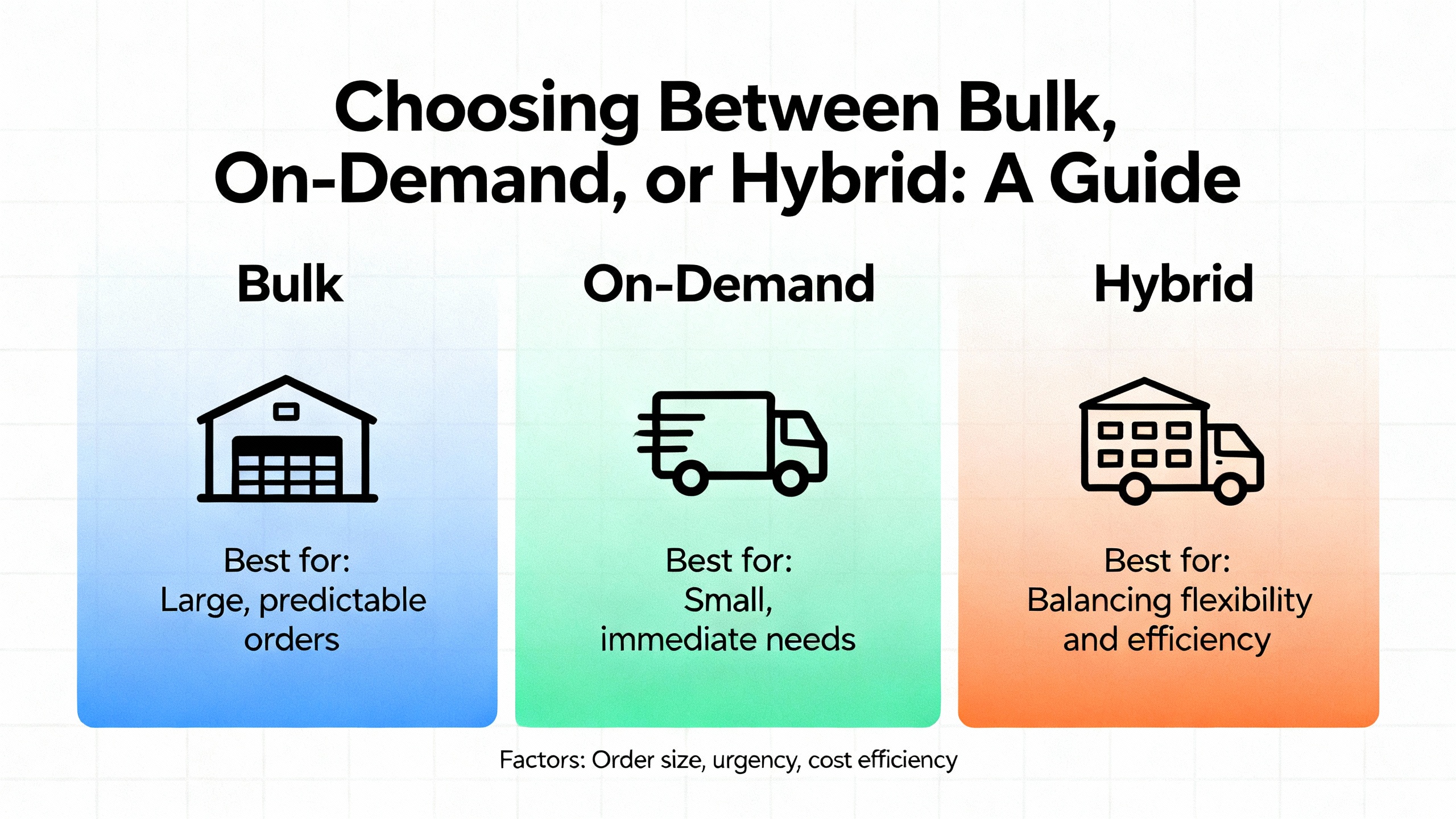
Brands typically weigh three pathways. Bulk wholesale is ideal when you have predictable demand, a defined audience, and the capital to pre-buy inventory. On-demand printing makes sense when you need assortment agility, low risk, and zero minimums—great for testing or long-tail designs. A hybrid model is pragmatic for most teams: produce core winners in bulk to lock in margins, and run seasonal or niche variants on-demand to learn without inventory risk. Italian Artisan and Brand Advantage both stress the importance of ordering ahead, while Kevinsww notes that rush options exist but compress proofing and inflate cost. Across models, the winning heuristic is straightforward: produce in bulk only what you’re confident will move, and let on-demand absorb the uncertainty.

Model

Best For

Advantages

Trade‑offs

Cash Flow Consideration

Bulk wholesale

Predictable demand and core winners

Lower unit cost; color and finish consistency

Requires storage and upfront capital

Cash out early; margins improve at scale

Print‑on‑demand

Testing and long‑tail variants

No minimums; low risk; fast creation

Higher unit cost; limited decoration options

Pay per order; minimal inventory exposure

Hybrid

Balanced portfolios

Margin on winners; agility on tests

Requires coordination across vendors

Split cash strategy; invest where signals are strong

Bulk custom gifts purchased in large quantities

Lead Times, Proofing, and Production Schedules

Timelines are the most common failure point I see. Brand Advantage recommends ordering six to eight weeks ahead for most items and notes that lanyards can push to thirteen or fourteen weeks for the best pricing. Italian Artisan suggests a four to six week runway for selection, design revisions, quality checks, packaging, and delivery coordination, which aligns with Kevinsww’s operational view that rush is possible but should be the exception. Genially advises building proofing and color-profile steps into your plan and adding buffer time for approvals and inevitable delays. ASAE’s guidance is equally pragmatic: produce and distribute well before the event to capture pre-, during-, and post-event marketing value.

Planning Guide

Practical Expectation

General promo items

Plan six to eight weeks ahead for best selection and pricing

Lanyards and similar specialty items

Budget thirteen to fourteen weeks for best pricing and stock assurance

Design, proofs, packaging, and logistics

Allocate four to six weeks including vendor quality checks

Rush feasibility

Possible with experienced vendors; expect higher costs and tighter proofing windows

Category Deep Dive: What Scales Well in Bulk

Apparel remains the universal crowd-pleaser. T‑shirts deliver reach and memorability and often become event mementos, while hoodies and lightweight outerwear serve as premium, weather-friendly options. Imagina and The Merch List both highlight apparel as a core category, with socks emerging as a surprisingly effective canvas thanks to full-pattern customization. The upside of apparel is high visibility and frequent wear; the watch-out is size curve planning and inventory complexity.

Bags act like billboards on the move. Totes, backpacks, drawstrings, and duffels offer generous imprint areas and daily utility. They shine at conferences and campuses, especially when zippers, pockets, and structured bases improve usability. Bags skew highly visible and durable; their trade-off is shipping volume and, for premium materials, higher up-front cost.

Drinkware delivers long lifespan and repeated touchpoints. Stainless steel insulated bottles, tumblers, and travel mugs carry sustainability messaging and sit on desks or in cars for months. The benefit is endurance; the caution is selecting known-quality linings and lids to avoid leaks and flavor transfer.

Tech accessories are consistent attention magnets. Power banks, multi-device chargers, Bluetooth speakers, and well-made cables solve immediate pain points. Imagina notes strong ROI on power banks and bottles because they’re used repeatedly, while Kevinsww confirms Bluetooth items remain especially desirable. These pieces perform best when you choose reputable internals and test decoration durability on smooth plastics or anodized metal.

Stationery and note-taking products win in business contexts. Moleskine-style journals, executive pens, and sticky-note bundles are credible, useful, and easy to distribute. The core advantage is desk permanence; the caveat is making sure imprint sizing fits the product—Brand Advantage cautions against items with imprints too small for large logos.

Curated kits and premium tiers elevate perceived value. Imagina calls out gift boxes, leather goods, and premium electronics for prestige moments, and SwagMagic’s curated swag boxes simplify fulfillment while maintaining brand consistency. Kits structure the unboxing and create a keepsake feel when combined with rigid boxes, tissue, and ribbon.

Design and Personalization That Work at Scale

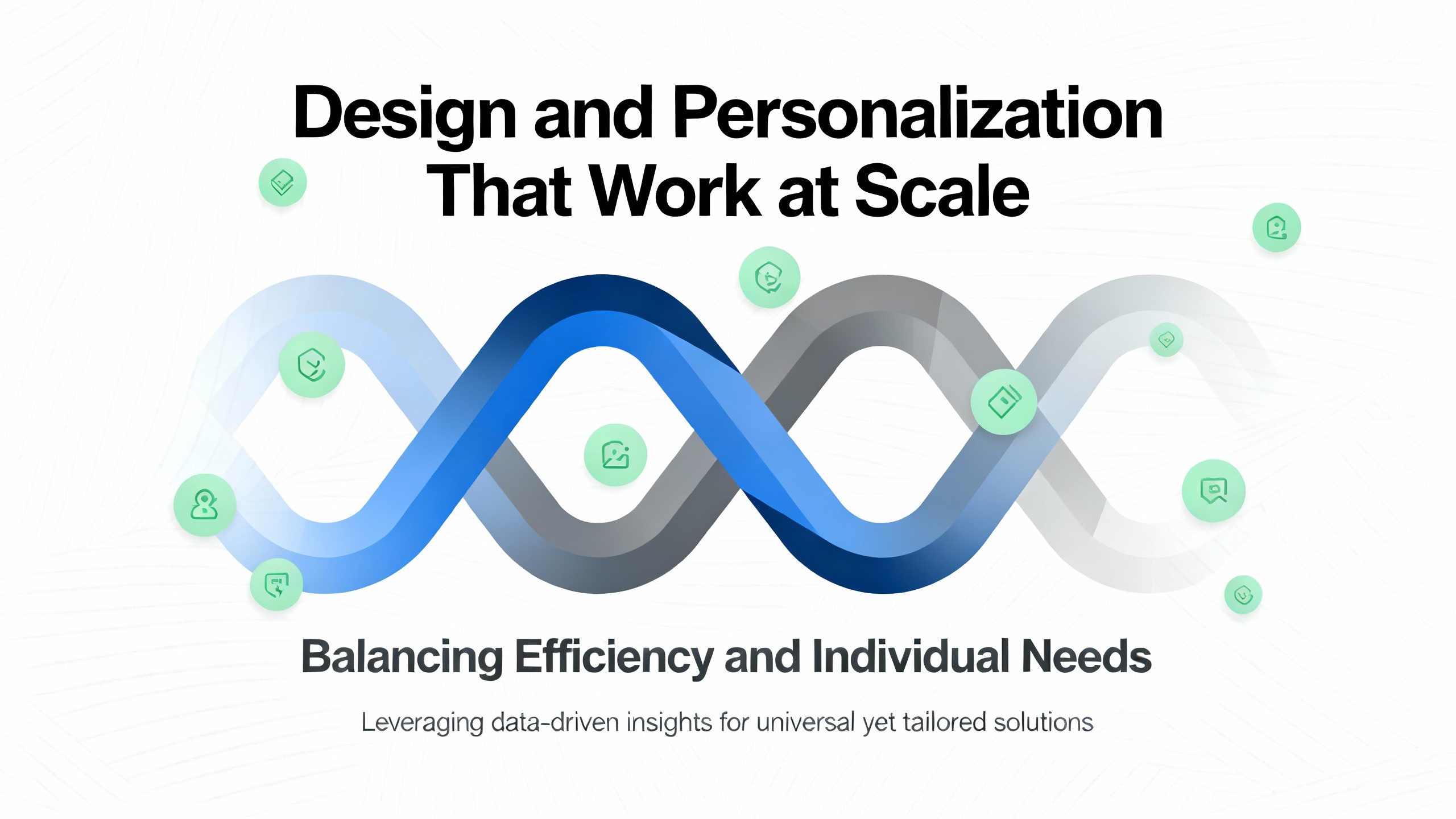
Cohesive collections outperform scattershot assortments. Genially recommends anchoring designs to your brand system—palette, typography, and core shapes—so the entire line looks deliberate on a table or in a feed. Bold, legible graphics and limited colors scale well across substrates and imprint methods. Vector artwork sized to the print area with safe margins saves time during prepress and avoids last-minute redraws.

Personalization multiplies perceived value. Bishop-McCann emphasizes names and initials on apparel, leather, or metal as an instant upgrade, and Global Asia’s guidance on matching method to material is a useful shortcut: choose embroidery for apparel, laser engraving for metal and wood, screen printing for fabric and flat surfaces, and UV printing when you need full-color on plastics, glass, or metal. Brand Advantage suggests favoring products with sufficient imprint real estate and avoiding tiny formats when you have large marks or detailed logos. Limited editions tied to an event date or city, as Genially suggests, add scarcity and give fans a reason to collect. Wirecutter’s review of customizable Converse sneakers illustrates that consumers increasingly expect deep personalization, from colorways to placement of initials.

On-site interaction turns merch into a moment. Bishop-McCann’s examples—engraving, live heat-press, jewelry stamping, or woodburning—create lines for the right reason and produce content people want to share. For volume contexts with tight timing, keep the base assortment pre-produced and personalize patches, badges, or nameplates at the station to balance throughput with delight.
Wholesale personalized merchandise for business events

Sustainability Without the Greenwashing

The market expects better materials and longer lifespans. 10Times and Genially both urge reusable, durable options over disposable trinkets. Imagina and Brand Advantage add specifics: stainless steel bottles, organic or recycled cotton totes, bamboo or wooden pens, and recycled USBs. Eco-friendly lanyards and clips are increasingly requested, though availability and pricing can depend on quantity and supplier. Sustainability is more than materials; it is also about avoiding items that become instant waste. A well-made bottle that displaces dozens of single-use bottles or a heavy-duty tote that replaces repeated shopping bags reinforces your brand’s ethics every time it is used.

Pricing, Margins, and Volume Economics

Volume drives margin, but intent drives profit. The Merch List notes that bulk orders lower the per‑unit cost, reduce the complexity of working across multiple suppliers, and create consistency. Genially’s pricing guidance is pragmatic: set cost-plus margins, build good–better–best tiers, bundle complementary items, and hold freebies for strategic incentives. For planning, Italian Artisan and Brand Advantage both recommend ordering a little extra to cover last-minute demand and miscounts. While eco options can cost more, they often earn higher perceived value, and durable items reinforce premium positioning.

To help with directional planning, SwagMagic publishes indicative starting prices across common categories. Treat these as provider-specific examples that vary based on material, volume, and decoration.

Item Type

Indicative Starting Price (SwagMagic)

Pens

$25.98

Sunglasses

$9.06

Cups

$19.55

Tote bags

$15.30

Mixed swag kits

$60.00 and up

Keychains

$2.91

Reusable water bottles

$35.69

Notebooks

$41.97

Phone grips

$1.98

Branded headphones

$43.58

Portable phone chargers

$27.00

Lanyards

$2.57

Magnets

$18.88

Custom hoodies

$40.10

Distribution and Dropshipping Mechanics

The distribution model is as important as the product. ASAE recommends producing and distributing well ahead of the main event to build anticipation and capture value beyond the show floor. Custom Sock Club’s e‑commerce advice maps cleanly to wholesale programs: run a mobile‑responsive storefront, keep product pages detailed and clear, support multiple payment options, articulate shipping and returns plainly, and reply promptly to support requests. Image Solutions emphasizes practicality and usability; that lens should carry through to packaging, fulfillment, and returns to minimize friction.

Operationally, a single supplier for bulk runs streamlines communications and reduces the risk of color mismatch. The Merch List notes that one vendor across multiple product lines also consolidates purchase orders and keeps timelines coherent. For distributed teams and programs, SwagMagic and similar services offer central storage, kitting, and employee stores, which reduces the lift for your in-house operations and keeps branding consistent.

Measuring ROI Like a Pro

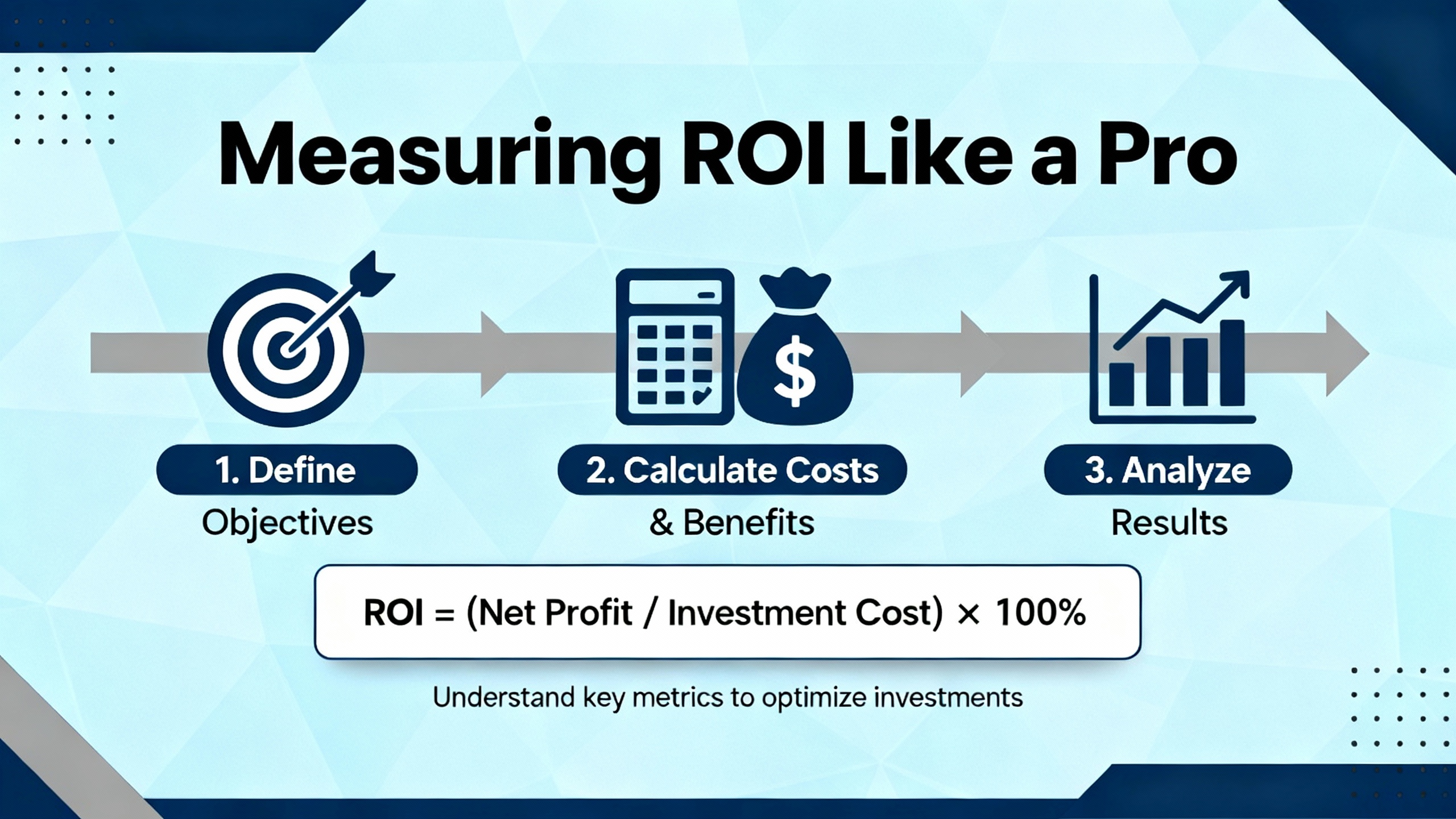
What gets measured gets improved. Genially suggests tracking sell-through, margin, average order value, and units per attendee, then restocking winners and sunsetting underperformers. LinkedIn commentary citing PPAI indicates that tailoring products to event goals can lift engagement meaningfully, while SageWorld reports strong average ROI when promo campaigns are trackable. Trackables can be as simple as QR codes on merchandise, scratch-off discounts included in packaging, or unique URLs and hashtags. The goal is attribution: knowing which items drive signups, repeat visits, or qualified leads, and then shifting future spend toward the top performers.
Strategic planning for wholesale personalized items

Vendor Selection and Quality Assurance

Experience matters when timelines are tight and volumes are large. Kevinsww describes the infrastructure behind reliable decoration at scale, from multi-point quality control to a broad catalog of executive drinkware, writing instruments, and tech. AMPRO has emphasized the value of hitting promise dates and offers no-minimum capabilities for testing a design before scaling. Italian Artisan adds perspective on craftsmanship and private-label options for premium categories. Whatever partner you choose, ask for samples, confirm decoration methods by substrate, and insist on proofs with accurate color profiles. Brand Advantage’s advice to order early and evaluate samples applies whether you are buying lanyards or premium apparel.

A pragmatic vendor checklist includes on-time delivery track record, clarity on decoration methods, breadth of sustainable options, and the ability to co-brand with sponsors when needed, as ASAE suggests. When budgets are tight, Brand Advantage recommends coordinating with sponsors or vendors to expand item selection and purchasing power without diluting brand standards.

Care and Maintenance: Help Recipients Keep and Use the Gift

The best way to extend brand impressions is to make care effortless. For screen-printed or heat-pressed apparel, recommend washing garments inside out in cold water and drying on low heat to preserve color and decoration longevity. For embroidered items, simple wash-and-wear guidance usually suffices. For stainless drinkware, encourage hand washing to protect vacuum seals and decoration finishes, and for plastics, verify whether the item is top-rack dishwasher safe before making claims in the packaging insert. Power banks and electronics benefit from a short care card that covers charging cycles, cable compatibility, and safety notes. Adding a small thank-you message with care instructions not only extends product life but also reinforces brand tone and attention to detail.

Buying Tips and Common Pitfalls

The playbook for smart wholesale buys is simple to state and easy to skip under pressure. Begin with audience fit; 10Times, Genially, and Brand Advantage all advise selecting items people will actually use in their daily context, and Bishop-McCann recommends offering choices to respect varied tastes. Next, match brand and event purpose; if your brand champions sustainability, choose materials that back it up, and if innovation is a core value, lean into tech. Then dial in imprint area and method; Brand Advantage cautions that small items limit brand legibility, making full-color or large marks impractical. Finally, plan for timing and extras; Brand Advantage’s six to eight week guidance with a buffer and a small overage of units reduces fire drills.

The biggest pitfalls I see are last-minute assortment changes that break color consistency, skipping proofs to save a day and losing a week fixing errors, and buying novelty items that feel fun in brainstorms but collect dust in real life. Imagina’s perspective on elevating perceived value through packaging is a useful antidote—when in doubt, make the item a delight to unbox and use.

A Playbook for Events and Corporate Gifting

Events and corporate programs share the same drivers but differ in cadence. ASAE outlines a classic event plan: survey members on preferred items, create limited runs to encourage early registrations, distribute well before the event, and prompt social sharing with a memorable hashtag and modest rewards. For corporate gifting and employee programs, Global Asia’s emphasis on matching gift to purpose holds up: select functional items for everyday use to maximize ongoing recall, and keep decoration subtle and tasteful for professional contexts. Curated bundles and premium tiers from Imagina and SwagMagic add a ceremonial feel, while Bishop-McCann’s approach to on-site personalization and choice turns a booth into a destination.

Future-Proofing Your Wholesale Personalization Program

JOOR’s wholesale insights point to faster iteration cycles and buyers who respond to clear data. Even if you are not selling to retailers, the lesson transfers: use data to forecast assortments, share performance internally, and move nimbly when a design proves itself. Genially’s recommendation to measure margin, AOV, and sell-through, combined with LinkedIn’s playbook for pre-event “hype” boxes and trackable activations, gives you the feedback loop to refine season after season. As sustainability requirements grow across US and EU buyers, keeping documentation on materials and ethical sourcing will increasingly become a competitive advantage, not just a values statement.

Quick Reference: Practical Price Signals

When you need a sanity check on pricing tiers, it helps to view price points from actual providers. SwagMagic’s starting prices illustrate that the same brand might pair low-cost phone grips with mid-tier totes and a premium hoodie or headphone tier so shoppers at different price bands still feel included. Genially’s good–better–best guidance sits naturally on top of those ranges, and bundling complementary items can raise perceived value while improving margin.

Short FAQ

What quantity qualifies as “wholesale” for personalized products? It depends on the supplier and category. The dynamic that matters most is whether volume meaningfully lowers your per‑unit cost and unlocks better decoration or packaging. Some vendors support no-minimum tests before you scale, while others publish stronger price breaks as quantities rise.

How far ahead should I place a bulk order? A safe default is six to eight weeks for most items, with certain categories such as lanyards requiring thirteen to fourteen weeks to secure best pricing and inventory. If you go faster, be ready to approve proofs quickly and accept higher costs for rush.

Which personalization methods are most durable? Match method to material. Embroidery excels on apparel and caps, laser engraving is superb for metal and wood, and screen printing delivers bold marks on fabrics and flat surfaces. UV printing enables full-color on plastics, glass, and metal. Work with your vendor to confirm durability and care instructions by item.

Closing

Wholesale personalized gifts work when they are useful, consistent with your brand, and operationally sound. The data from PPAI, ASI, and trade practitioners aligns with what I’ve seen in the field: practical items with thoughtful personalization are kept, used, and appreciated. If you plan early, design for legibility, choose materials people love to touch, and measure results with discipline, your next bulk buy will feel less like a gamble and more like a growth lever you can pull with confidence.

References

  1. https://www.asaecenter.org/resources/articles/an_plus/2024/09-september/how-to-leverage-custom-event-merchandise-as-a-marketing-tool
  2. https://blog.bishopmccann.com/14-unique-client-gifting-ideas
  3. https://www.personalcreations.com/?srsltid=AfmBOoqHaIdupWcb6Op7iGuOsLf8WMWNpQSqWGY-ilD8wQ_rN7skomWx
  4. https://www.vistaprint.com/promotional-products?srsltid=AfmBOoopP50tyNqr-JyzdeE1ZAnEzFxlB06O0mojuYNiAXtr6w0VsAif
  5. https://blog.10times.com/custom-event-merchandise-ideas/
  6. https://www.amprogo.com/blog/event-merchandising-tips-and-tricks
  7. https://imageinc.com/blog/event-promo-essential-tips
  8. https://italianartisan.com/the-ultimate-guide-to-choosing-the-right-custom-merchandise-for-your-event/
  9. https://www.joor.com/insights/wholesale-marketing-strategies
  10. https://kevinsww.com/event-swag/

Like the article

0
Wholesale Personalized Products: Buy Custom Gifts in Large Quantities

Wholesale Personalized Products: Buy Custom Gifts in Large Quantities

Wholesale personalized products have shifted from “nice-to-have” swag to strategic assets that move the needle on brand awareness, loyalty, and revenue. As a mentor to on-demand printing and dropshipping founders, I see the same pattern across high-performing brands: teams that plan assortments around audience use, align decoration methods with materials, and operationalize lead times consistently outperform those chasing last-minute trends. When you buy custom gifts in large quantities with intention—backed by sound unit economics and a clear deployment plan—you turn every recipient into a mobile media channel and every reuse into a brand impression.

Why Wholesale Personalized Gifts Now

Personalized merchandise sits at the intersection of brand and utility. Industry bodies such as PPAI and ASI have long documented the recall power of useful, logoed products; PPAI reports that recipients overwhelmingly appreciate promotional items, and ASI data shows brand recall remains remarkably high for well-chosen merchandise. Thoughtful personalization deepens that effect by signaling recognition and care. SnackNation highlights that recipients often pass merchandise along, expanding reach beyond the initial audience through secondary exposure. In practical terms, a durable bottle or a favorite hoodie can deliver impressions for months, long after the media spend is gone.

At events, personalized gifts are more than giveaways; they are activation tools. Bishop-McCann underscores that on-site customization and choice convert transactional gifting into a memorable experience that drives advocacy. When the item is truly useful, it becomes a daily companion and an ambient reminder of your brand.

What “Wholesale Personalized” Really Means

Wholesale personalized products are branded items purchased in large quantities for distribution to customers, employees, attendees, or partners. Think apparel, drinkware, bags, stationery, and tech accessories ordered at volume with consistent decoration. Vistaprint describes promotional products simply and accurately as custom merchandise used to promote a brand. The Merch List adds the wholesale angle: buying in bulk lowers per‑unit cost, simplifies logistics with fewer purchase orders, and keeps quality consistent across a campaign.

Event merchandise, by contrast, is a subset designed to extend an event’s identity and experience. Sources such as 10Times, Genially, and Imagina emphasize that these pieces double as keepsakes and “walking ads,” especially when they include event-specific details like date, city, or edition.

When to Choose Bulk, On-Demand, or Hybrid

Brands typically weigh three pathways. Bulk wholesale is ideal when you have predictable demand, a defined audience, and the capital to pre-buy inventory. On-demand printing makes sense when you need assortment agility, low risk, and zero minimums—great for testing or long-tail designs. A hybrid model is pragmatic for most teams: produce core winners in bulk to lock in margins, and run seasonal or niche variants on-demand to learn without inventory risk. Italian Artisan and Brand Advantage both stress the importance of ordering ahead, while Kevinsww notes that rush options exist but compress proofing and inflate cost. Across models, the winning heuristic is straightforward: produce in bulk only what you’re confident will move, and let on-demand absorb the uncertainty.

Model

Best For

Advantages

Trade‑offs

Cash Flow Consideration

Bulk wholesale

Predictable demand and core winners

Lower unit cost; color and finish consistency

Requires storage and upfront capital

Cash out early; margins improve at scale

Print‑on‑demand

Testing and long‑tail variants

No minimums; low risk; fast creation

Higher unit cost; limited decoration options

Pay per order; minimal inventory exposure

Hybrid

Balanced portfolios

Margin on winners; agility on tests

Requires coordination across vendors

Split cash strategy; invest where signals are strong

Bulk custom gifts purchased in large quantities

Lead Times, Proofing, and Production Schedules

Timelines are the most common failure point I see. Brand Advantage recommends ordering six to eight weeks ahead for most items and notes that lanyards can push to thirteen or fourteen weeks for the best pricing. Italian Artisan suggests a four to six week runway for selection, design revisions, quality checks, packaging, and delivery coordination, which aligns with Kevinsww’s operational view that rush is possible but should be the exception. Genially advises building proofing and color-profile steps into your plan and adding buffer time for approvals and inevitable delays. ASAE’s guidance is equally pragmatic: produce and distribute well before the event to capture pre-, during-, and post-event marketing value.

Planning Guide

Practical Expectation

General promo items

Plan six to eight weeks ahead for best selection and pricing

Lanyards and similar specialty items

Budget thirteen to fourteen weeks for best pricing and stock assurance

Design, proofs, packaging, and logistics

Allocate four to six weeks including vendor quality checks

Rush feasibility

Possible with experienced vendors; expect higher costs and tighter proofing windows

Category Deep Dive: What Scales Well in Bulk

Apparel remains the universal crowd-pleaser. T‑shirts deliver reach and memorability and often become event mementos, while hoodies and lightweight outerwear serve as premium, weather-friendly options. Imagina and The Merch List both highlight apparel as a core category, with socks emerging as a surprisingly effective canvas thanks to full-pattern customization. The upside of apparel is high visibility and frequent wear; the watch-out is size curve planning and inventory complexity.

Bags act like billboards on the move. Totes, backpacks, drawstrings, and duffels offer generous imprint areas and daily utility. They shine at conferences and campuses, especially when zippers, pockets, and structured bases improve usability. Bags skew highly visible and durable; their trade-off is shipping volume and, for premium materials, higher up-front cost.

Drinkware delivers long lifespan and repeated touchpoints. Stainless steel insulated bottles, tumblers, and travel mugs carry sustainability messaging and sit on desks or in cars for months. The benefit is endurance; the caution is selecting known-quality linings and lids to avoid leaks and flavor transfer.

Tech accessories are consistent attention magnets. Power banks, multi-device chargers, Bluetooth speakers, and well-made cables solve immediate pain points. Imagina notes strong ROI on power banks and bottles because they’re used repeatedly, while Kevinsww confirms Bluetooth items remain especially desirable. These pieces perform best when you choose reputable internals and test decoration durability on smooth plastics or anodized metal.

Stationery and note-taking products win in business contexts. Moleskine-style journals, executive pens, and sticky-note bundles are credible, useful, and easy to distribute. The core advantage is desk permanence; the caveat is making sure imprint sizing fits the product—Brand Advantage cautions against items with imprints too small for large logos.

Curated kits and premium tiers elevate perceived value. Imagina calls out gift boxes, leather goods, and premium electronics for prestige moments, and SwagMagic’s curated swag boxes simplify fulfillment while maintaining brand consistency. Kits structure the unboxing and create a keepsake feel when combined with rigid boxes, tissue, and ribbon.

Design and Personalization That Work at Scale

Cohesive collections outperform scattershot assortments. Genially recommends anchoring designs to your brand system—palette, typography, and core shapes—so the entire line looks deliberate on a table or in a feed. Bold, legible graphics and limited colors scale well across substrates and imprint methods. Vector artwork sized to the print area with safe margins saves time during prepress and avoids last-minute redraws.

Personalization multiplies perceived value. Bishop-McCann emphasizes names and initials on apparel, leather, or metal as an instant upgrade, and Global Asia’s guidance on matching method to material is a useful shortcut: choose embroidery for apparel, laser engraving for metal and wood, screen printing for fabric and flat surfaces, and UV printing when you need full-color on plastics, glass, or metal. Brand Advantage suggests favoring products with sufficient imprint real estate and avoiding tiny formats when you have large marks or detailed logos. Limited editions tied to an event date or city, as Genially suggests, add scarcity and give fans a reason to collect. Wirecutter’s review of customizable Converse sneakers illustrates that consumers increasingly expect deep personalization, from colorways to placement of initials.

On-site interaction turns merch into a moment. Bishop-McCann’s examples—engraving, live heat-press, jewelry stamping, or woodburning—create lines for the right reason and produce content people want to share. For volume contexts with tight timing, keep the base assortment pre-produced and personalize patches, badges, or nameplates at the station to balance throughput with delight.

Wholesale personalized merchandise for business events

Sustainability Without the Greenwashing

The market expects better materials and longer lifespans. 10Times and Genially both urge reusable, durable options over disposable trinkets. Imagina and Brand Advantage add specifics: stainless steel bottles, organic or recycled cotton totes, bamboo or wooden pens, and recycled USBs. Eco-friendly lanyards and clips are increasingly requested, though availability and pricing can depend on quantity and supplier. Sustainability is more than materials; it is also about avoiding items that become instant waste. A well-made bottle that displaces dozens of single-use bottles or a heavy-duty tote that replaces repeated shopping bags reinforces your brand’s ethics every time it is used.

Pricing, Margins, and Volume Economics

Volume drives margin, but intent drives profit. The Merch List notes that bulk orders lower the per‑unit cost, reduce the complexity of working across multiple suppliers, and create consistency. Genially’s pricing guidance is pragmatic: set cost-plus margins, build good–better–best tiers, bundle complementary items, and hold freebies for strategic incentives. For planning, Italian Artisan and Brand Advantage both recommend ordering a little extra to cover last-minute demand and miscounts. While eco options can cost more, they often earn higher perceived value, and durable items reinforce premium positioning.

To help with directional planning, SwagMagic publishes indicative starting prices across common categories. Treat these as provider-specific examples that vary based on material, volume, and decoration.

Item Type

Indicative Starting Price (SwagMagic)

Pens

$25.98

Sunglasses

$9.06

Cups

$19.55

Tote bags

$15.30

Mixed swag kits

$60.00 and up

Keychains

$2.91

Reusable water bottles

$35.69

Notebooks

$41.97

Phone grips

$1.98

Branded headphones

$43.58

Portable phone chargers

$27.00

Lanyards

$2.57

Magnets

$18.88

Custom hoodies

$40.10

Distribution and Dropshipping Mechanics

The distribution model is as important as the product. ASAE recommends producing and distributing well ahead of the main event to build anticipation and capture value beyond the show floor. Custom Sock Club’s e‑commerce advice maps cleanly to wholesale programs: run a mobile‑responsive storefront, keep product pages detailed and clear, support multiple payment options, articulate shipping and returns plainly, and reply promptly to support requests. Image Solutions emphasizes practicality and usability; that lens should carry through to packaging, fulfillment, and returns to minimize friction.

Operationally, a single supplier for bulk runs streamlines communications and reduces the risk of color mismatch. The Merch List notes that one vendor across multiple product lines also consolidates purchase orders and keeps timelines coherent. For distributed teams and programs, SwagMagic and similar services offer central storage, kitting, and employee stores, which reduces the lift for your in-house operations and keeps branding consistent.

Measuring ROI Like a Pro

What gets measured gets improved. Genially suggests tracking sell-through, margin, average order value, and units per attendee, then restocking winners and sunsetting underperformers. LinkedIn commentary citing PPAI indicates that tailoring products to event goals can lift engagement meaningfully, while SageWorld reports strong average ROI when promo campaigns are trackable. Trackables can be as simple as QR codes on merchandise, scratch-off discounts included in packaging, or unique URLs and hashtags. The goal is attribution: knowing which items drive signups, repeat visits, or qualified leads, and then shifting future spend toward the top performers.

Strategic planning for wholesale personalized items

Vendor Selection and Quality Assurance

Experience matters when timelines are tight and volumes are large. Kevinsww describes the infrastructure behind reliable decoration at scale, from multi-point quality control to a broad catalog of executive drinkware, writing instruments, and tech. AMPRO has emphasized the value of hitting promise dates and offers no-minimum capabilities for testing a design before scaling. Italian Artisan adds perspective on craftsmanship and private-label options for premium categories. Whatever partner you choose, ask for samples, confirm decoration methods by substrate, and insist on proofs with accurate color profiles. Brand Advantage’s advice to order early and evaluate samples applies whether you are buying lanyards or premium apparel.

A pragmatic vendor checklist includes on-time delivery track record, clarity on decoration methods, breadth of sustainable options, and the ability to co-brand with sponsors when needed, as ASAE suggests. When budgets are tight, Brand Advantage recommends coordinating with sponsors or vendors to expand item selection and purchasing power without diluting brand standards.

Care and Maintenance: Help Recipients Keep and Use the Gift

The best way to extend brand impressions is to make care effortless. For screen-printed or heat-pressed apparel, recommend washing garments inside out in cold water and drying on low heat to preserve color and decoration longevity. For embroidered items, simple wash-and-wear guidance usually suffices. For stainless drinkware, encourage hand washing to protect vacuum seals and decoration finishes, and for plastics, verify whether the item is top-rack dishwasher safe before making claims in the packaging insert. Power banks and electronics benefit from a short care card that covers charging cycles, cable compatibility, and safety notes. Adding a small thank-you message with care instructions not only extends product life but also reinforces brand tone and attention to detail.

Buying Tips and Common Pitfalls

The playbook for smart wholesale buys is simple to state and easy to skip under pressure. Begin with audience fit; 10Times, Genially, and Brand Advantage all advise selecting items people will actually use in their daily context, and Bishop-McCann recommends offering choices to respect varied tastes. Next, match brand and event purpose; if your brand champions sustainability, choose materials that back it up, and if innovation is a core value, lean into tech. Then dial in imprint area and method; Brand Advantage cautions that small items limit brand legibility, making full-color or large marks impractical. Finally, plan for timing and extras; Brand Advantage’s six to eight week guidance with a buffer and a small overage of units reduces fire drills.

The biggest pitfalls I see are last-minute assortment changes that break color consistency, skipping proofs to save a day and losing a week fixing errors, and buying novelty items that feel fun in brainstorms but collect dust in real life. Imagina’s perspective on elevating perceived value through packaging is a useful antidote—when in doubt, make the item a delight to unbox and use.

A Playbook for Events and Corporate Gifting

Events and corporate programs share the same drivers but differ in cadence. ASAE outlines a classic event plan: survey members on preferred items, create limited runs to encourage early registrations, distribute well before the event, and prompt social sharing with a memorable hashtag and modest rewards. For corporate gifting and employee programs, Global Asia’s emphasis on matching gift to purpose holds up: select functional items for everyday use to maximize ongoing recall, and keep decoration subtle and tasteful for professional contexts. Curated bundles and premium tiers from Imagina and SwagMagic add a ceremonial feel, while Bishop-McCann’s approach to on-site personalization and choice turns a booth into a destination.

Future-Proofing Your Wholesale Personalization Program

JOOR’s wholesale insights point to faster iteration cycles and buyers who respond to clear data. Even if you are not selling to retailers, the lesson transfers: use data to forecast assortments, share performance internally, and move nimbly when a design proves itself. Genially’s recommendation to measure margin, AOV, and sell-through, combined with LinkedIn’s playbook for pre-event “hype” boxes and trackable activations, gives you the feedback loop to refine season after season. As sustainability requirements grow across US and EU buyers, keeping documentation on materials and ethical sourcing will increasingly become a competitive advantage, not just a values statement.

Quick Reference: Practical Price Signals

When you need a sanity check on pricing tiers, it helps to view price points from actual providers. SwagMagic’s starting prices illustrate that the same brand might pair low-cost phone grips with mid-tier totes and a premium hoodie or headphone tier so shoppers at different price bands still feel included. Genially’s good–better–best guidance sits naturally on top of those ranges, and bundling complementary items can raise perceived value while improving margin.

Short FAQ

What quantity qualifies as “wholesale” for personalized products? It depends on the supplier and category. The dynamic that matters most is whether volume meaningfully lowers your per‑unit cost and unlocks better decoration or packaging. Some vendors support no-minimum tests before you scale, while others publish stronger price breaks as quantities rise.

How far ahead should I place a bulk order? A safe default is six to eight weeks for most items, with certain categories such as lanyards requiring thirteen to fourteen weeks to secure best pricing and inventory. If you go faster, be ready to approve proofs quickly and accept higher costs for rush.

Which personalization methods are most durable? Match method to material. Embroidery excels on apparel and caps, laser engraving is superb for metal and wood, and screen printing delivers bold marks on fabrics and flat surfaces. UV printing enables full-color on plastics, glass, and metal. Work with your vendor to confirm durability and care instructions by item.

Closing

Wholesale personalized gifts work when they are useful, consistent with your brand, and operationally sound. The data from PPAI, ASI, and trade practitioners aligns with what I’ve seen in the field: practical items with thoughtful personalization are kept, used, and appreciated. If you plan early, design for legibility, choose materials people love to touch, and measure results with discipline, your next bulk buy will feel less like a gamble and more like a growth lever you can pull with confidence.

References

  1. https://www.asaecenter.org/resources/articles/an_plus/2024/09-september/how-to-leverage-custom-event-merchandise-as-a-marketing-tool
  2. https://blog.bishopmccann.com/14-unique-client-gifting-ideas
  3. https://www.personalcreations.com/?srsltid=AfmBOoqHaIdupWcb6Op7iGuOsLf8WMWNpQSqWGY-ilD8wQ_rN7skomWx
  4. https://www.vistaprint.com/promotional-products?srsltid=AfmBOoopP50tyNqr-JyzdeE1ZAnEzFxlB06O0mojuYNiAXtr6w0VsAif
  5. https://blog.10times.com/custom-event-merchandise-ideas/
  6. https://www.amprogo.com/blog/event-merchandising-tips-and-tricks
  7. https://imageinc.com/blog/event-promo-essential-tips
  8. https://italianartisan.com/the-ultimate-guide-to-choosing-the-right-custom-merchandise-for-your-event/
  9. https://www.joor.com/insights/wholesale-marketing-strategies
  10. https://kevinsww.com/event-swag/

Like the article

0