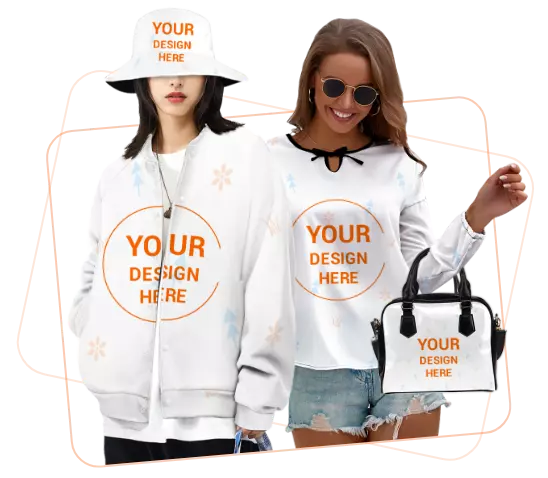


Premium Personalized Products: Luxury Customization Solutions
The luxury economy has shifted for good. Personalization is no longer a flourish reserved for the few who request a monogram at checkout; it is now a baseline expectation that separates premium brands from commodity sellers. In practice, this means products that can be configured on the fly, content that adapts to the individual, and service that anticipates needs across every touchpoint. As a mentor who has helped founders launch high‑margin, on‑demand lines, I’ve seen that the winners approach personalization as an end‑to‑end system—strategy, data, supply chain, clienteling, and trust—rather than a single feature. The results can be outsized when done well. Research from McKinsey shows personalization can lift revenue by up to 15%, cut acquisition costs by as much as 50%, and compound loyalty, while BCG and Altagamma report that nearly three‑quarters of luxury consumers prefer it. This article distills what works for premium, personalized products in on‑demand printing and dropshipping, how to protect brand equity while scaling, and how to implement with rigor from data foundations to last‑mile quality.
What Luxury Personalization Means Now
Modern luxury personalization goes far beyond slapping initials on leather. It is an AI‑ and data‑enabled approach to product configuration, content, and journeys that feel bespoke and still protect the brand’s aura. Thoughtful programs reinforce codes of craft and scarcity rather than dilute them. AlceLabs points to leaders like Burberry “Bespoke” and Gucci “DIY” that deepen emotional connection through guided customization, while BCG and Altagamma quantify the preference shift toward tailored experiences. ConfigureID frames the operating model with the “3 D’s” popularized in Harvard Business Review—Data Discovery, Decision Making, and Distribution—so brands continuously learn, decide, and deliver across channels. The craft is making all of this feel human. As Dan Gingiss notes, luxury is less about price and more about how clients feel across the journey, which is why almost 90% of luxury customers insist product quality and exceptional service must coexist. In other words, the technology is the enabler; the experience is the product.
Why Personalization Pays for Premium Brands
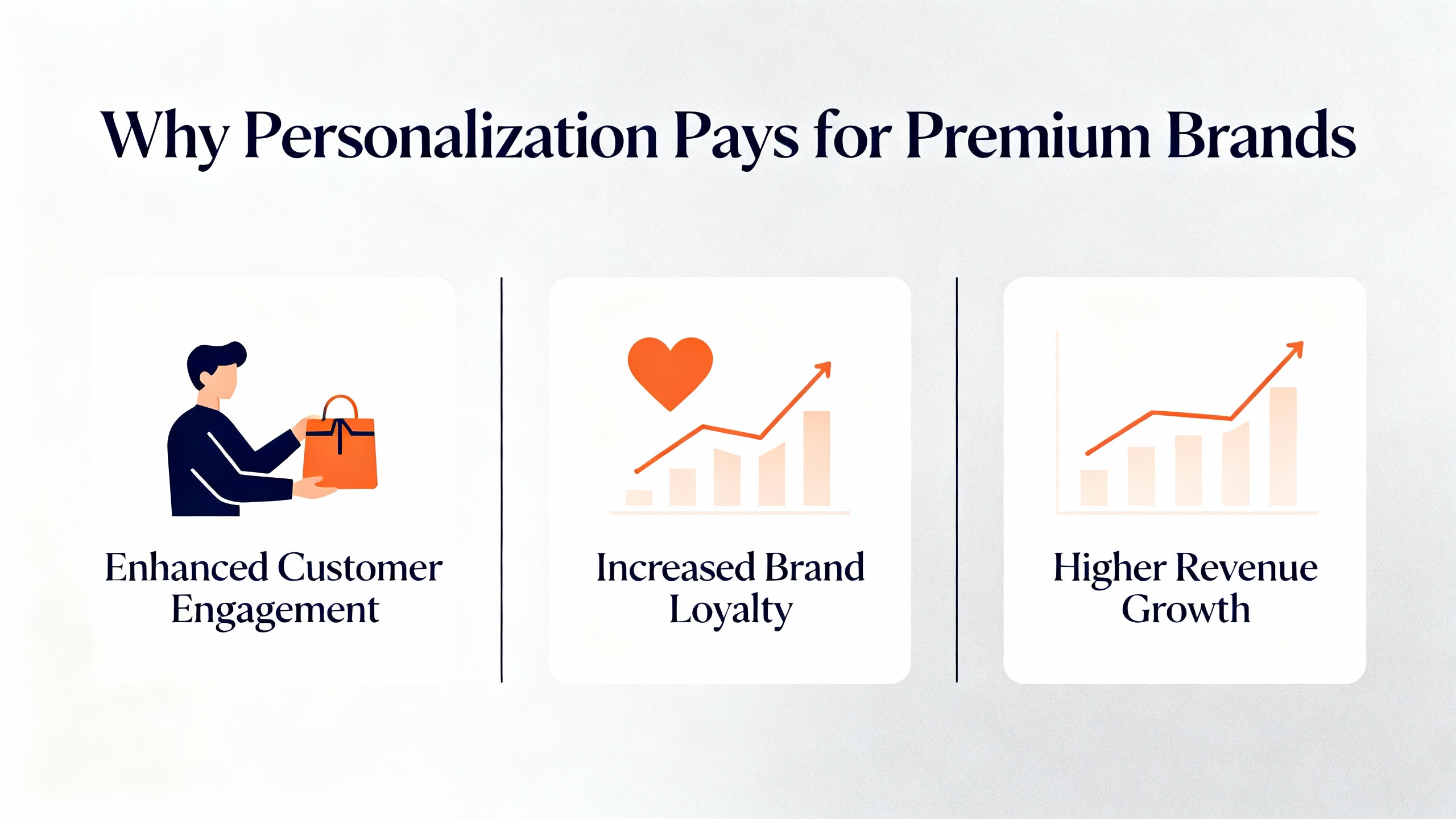
The commercial case is strong and repeatable when personalization is integrated into the business rather than bolted on. McKinsey reports that personalization outperformance shows up in both near‑term revenue and long‑term customer lifetime value, with typical revenue lifts in the 10–15% range and faster‑growing companies deriving significantly more revenue from these capabilities. Consumers notice and expect it. McKinsey also finds that 71% of consumers expect personalized interactions and 76% feel frustrated when brands miss the mark. In luxury specifically, BCG and Altagamma report that 72% of customers prefer personalization, older cohorts prize in‑store personalized treatment, and targeted recommendations remain meaningful in digital shopping. Real‑world proof points underscore the upside when execution is precise. Net‑a‑Porter’s AI engine delivered a 35% conversion lift according to Forrester, while Louis Vuitton’s “My LV World Tour” boosted social engagement by 65%. Loyalty ecosystems such as Sephora’s program apply data to make relevance habitual and rewarding, which is why data‑infused clienteling remains a durable competitive moat.
The inverse is equally instructive. Queue‑it highlights that during demand spikes, slow sites and crashes damage far more than same‑day revenue. Immediate lost sales account for only about a fifth of total harm while reputational damage lingers. Seventy‑nine percent of shoppers who face a poor digital experience will not return to buy, and nearly half will tell friends and family. For premium brands, digital reliability is table stakes for protecting exclusivity online.
Personalization Models That Fit POD and Dropshipping
Premium personalization in on‑demand printing and dropshipping should emphasize guided choices that honor brand codes, minimize returns, and keep lead times clear. Monogramming and engraving layer emotional value on small leather goods, jewelry, and homeware with low operational complexity when proofing and QC are tight. Curated option sets for color, trim, and material align customization with brand palettes to avoid off‑code results and limit rework. Made‑to‑measure and made‑to‑order apparel deepen fit and self‑expression but demand precise measurement flows, capacity buffers, and expectations management on delivery windows. One‑of‑one pieces and invitation‑only capsules maximize scarcity and storytelling, while also requiring firm policies on final sale and a robust pre‑purchase proof process.
Modality | Best Fit | Lead‑Time Impact | Return Reality | Operational Risk | Client Perception |
|---|---|---|---|---|---|
Monogram or engraving | Leather goods, jewelry, gifting | Low to moderate | Often final sale | Low with rigorous proofing | Elevated everyday luxury |
Curated color/material sets | Bags, accessories, home, sneakers | Low to moderate | Limited changes post‑order | Medium without option governance | Confident self‑expression within brand codes |
Made‑to‑order or made‑to‑measure | Apparel, footwear, premium home | Moderate to high | Typically final sale | High without measurement rigor | True bespoke feel and superior fit |
One‑of‑one and invite‑only drops | Collectibles, artful fashion, collabs | Date‑bound releases | Final sale | Medium to high without gating | Peak exclusivity and cultural cachet |
In practice, teams that constrain choices to brand‑right palettes and materials ship faster, rework less, and get better photography and UGC because the outcomes look cohesive. In my work with founders, the biggest regret is often opening too many options too early. A smaller, better‑curated menu paired with strong visualization consistently outperforms a sprawling catalog that confuses buyers and overwhelms operations.
Build the Omnichannel Engine Behind Custom Products
Personalization only scales when data, content, and service are unified across channels. That starts with identity and consent so the brand knows who it is serving and on what terms. McKinsey’s research shows the outperformance of firms that treat personalization as an organization‑wide capability rather than a campaign tactic. ConfigureID’s framework emphasizes Data Discovery beyond surface metrics to include rich engagement signals; Decision Making through unbiased, non‑linear models that infer intent; and Distribution of content consistently across store, site, app, live commerce, and service. Luxury exemplars demonstrate that channel boundaries are disappearing for clients. Neiman Marcus is known for unifying store, e‑commerce, and app interactions, and Chanel connects in‑store personalization with digital touchpoints so context carries forward. Sephora’s loyalty ecosystem is a widely cited case of using data to tailor recommendations, tips, and rewards at scale while anchoring the brand experience in community and content.
The physical store remains an experience center even for digitally native customers. Firework points out that high‑end shoppers still want face‑to‑face validation for significant purchases and that some brands have doubled down with large, high‑impact spaces such as Gucci’s 15,000 sq ft environments and VIP suites designed for private consultations. In a POD and dropshipping context, a showroom kit, traveling trunk shows, or short‑term pop‑ups can accomplish the same confidence transfer without permanent real estate, especially when paired with measurements, swatches, and on‑hand advisors.
Experience Design That Protects the Brand
The most effective premium customization journeys are guided, not limitless. ConfigureID and AlceLabs both emphasize curated choice sets, real‑time previews, and brand‑right guardrails that preserve heritage codes. Gamified experiences such as 3D and AR configurators make co‑design fun while preventing off‑brand outcomes. Hermès has long guarded scarcity and identity, which is why measured and limited personalization, such as select scarf editions, can heighten desire without eroding the brand’s aura. Balance matters. Over‑personalization risks narrowing product exposure, reducing cross‑sell, and flattening surprise‑and‑delight moments that luxury clients cherish. The strongest programs blend data intelligence with the frontline judgment of client advisors who sense tone, lifestyle, and context better than any algorithm.
Digital Exclusivity Without Snobbery
Exclusivity is not about making people feel small; it is about making the right people feel seen. Queue‑it highlights how luxury brands translate scarcity online through invite‑only access, “contact an advisor” flows instead of add‑to‑cart on high‑aura products, and gated waiting rooms for special drops. Done well, this invites participation and curiosity rather than alienation. Use waitlists that encourage clients to express preferences, then allocate access based on loyalty signals, fit, or stated interests. Make the friction feel like theater. For broader releases, omnichannel basics still matter. Inventory transparency across local stores and the ability to reserve online for in‑store purchase create useful handoffs, while buy online, pick up in store offers convenience without compromising service rituals.
Trust, Transparency, and Traceability
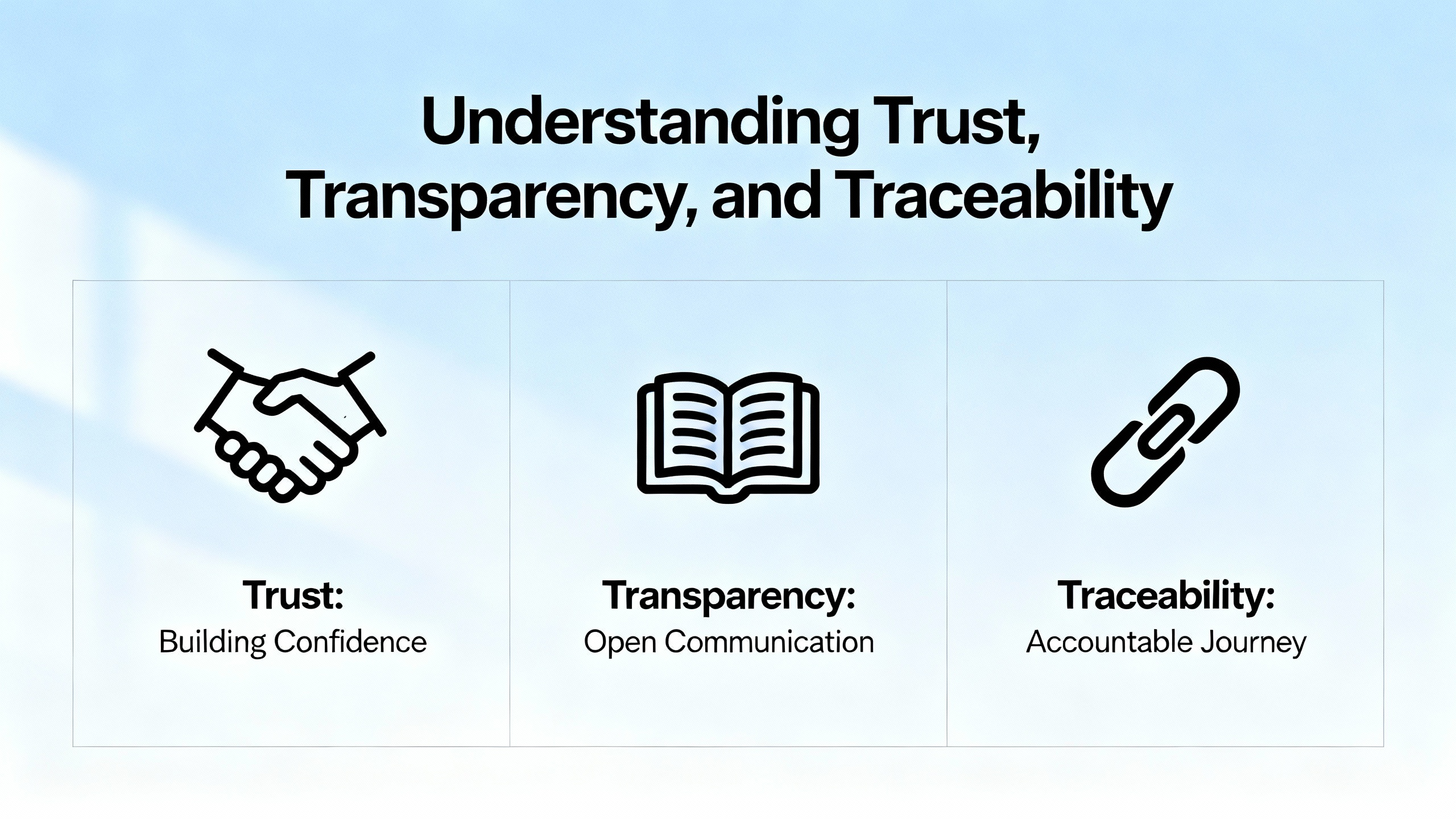
Luxury lives or dies on trust. Authena defines traceability as end‑to‑end visibility of materials and products to ensure authenticity, ethical labor, and responsible sourcing. Its solutions illustrate where the market is headed: real‑time condition monitoring from first to last mile and tamperproof unique IDs that enable Digital Product Passports. These tools help verify provenance, fight counterfeits, and support sustainability promises with evidence rather than slogans. Data practices matter just as much. Cartier’s commitment to transparent controls is a model for giving clients choice and clarity. Comply with consent requirements, minimize sensitive data collection, and explain the value exchange plainly. EHL Hospitality Insights reminds us that service quality and how customers feel treated drive the majority of buying experiences in luxury. Privacy and respect are not back‑office policies; they are front‑stage elements of the brand’s character.
Operations and Quality for Small Batches
The operational muscle behind premium personalization is different from mass commerce. Authena’s guidance on careful handling, precise inventory, and robust WMS with SKU‑level tracking is directly relevant to on‑demand printing and dropshipping. Set clear service‑level agreements for artwork proofing, production windows, and shipping timelines. Establish capacity buffers to absorb variability, and institute rigorous QC checkpoints, especially when color‑matching, engraving depth, or print alignment is involved. Limit returns for customized items with transparent, humane policies that emphasize pre‑purchase validation rather than post‑purchase disappointment. Lux‑Life’s perspective on planning for longer lead times and capacity buffers aligns with what I see on the ground. The shops that scale smoothly invest early in option governance, proof workflows, and a shared vocabulary for materials and finishes across their PIM, CPQ, and PLM systems.
Live Commerce and Content That Fuel Demand
Luxury commerce thrives on emotion, demonstration, and dialogue. Firework documents that live commerce is growing quickly in the United States, with livestream sales around $25 billion in 2023. Beauty brands have already proven the format’s potency; L’Oréal Paris reportedly sold roughly $2.7 million in a two‑hour stream, and Maybelline’s first live shopping event set a new record for a hero category. Interactive video also doubles as a personalization lab. Shoppable‑video metrics reveal the segments and stories that pull, which lets brands refine recommendations and curation in near real time. Use high‑quality content to invite co‑design and to demystify artisanal steps in on‑demand production. The point is not to flood channels; it is to sustain an immersive brand world consistently, from VR visualization to the unboxing moment at home.
Manage Exclusivity While Meeting Demand
The broader luxury market is resetting. McKinsey’s outlook points to slower growth and price fatigue among aspirational buyers after years of price‑driven gains. The prescription is to reset strategy around core clients, invest in product excellence, and professionalize operating models in digital, data, supply chain, and procurement. Mintel’s analysis echoes the need to balance scarcity with inclusivity, noting rising preferences for experiences over ownership and strong interest in authenticity guarantees through digital certificates and product passports. In customization, this means keeping limited runs truly limited, measuring the impact of personalization on perceived scarcity, and aligning price architecture with the craft, not just the configuration. Scarcity must be sincere to work.
Measure What Matters in Premium Personalization
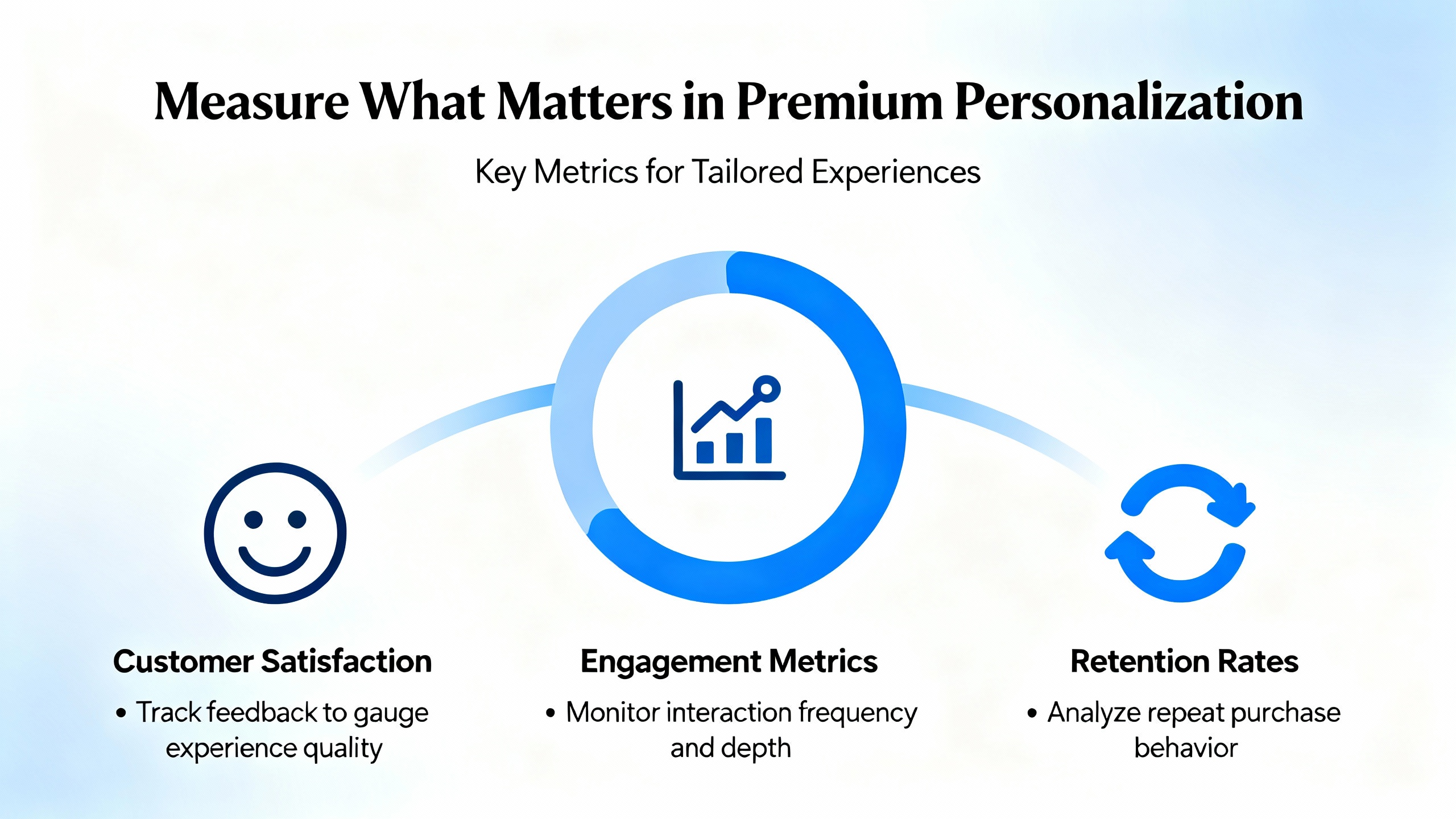
Personalization creates its own metrics. Lux‑Life calls out adoption rate of customization, configuration completion rate, average order value uplift, return rate, turnaround time, and NPS for personalized orders. EHL Hospitality Insights recommends luxury‑specific KPIs such as Event Satisfaction, Word‑of‑Mouth Value, Purchase Exclusivity, and Expectations Met to capture the nuance of high‑touch experiences. On the digital reliability front, Queue‑it reminds leaders to watch more than traffic and conversion. Demand surge protection, invite‑only waiting rooms for high‑heat drops, and performance budgets help preserve the brand moment when a collection goes live. The goal is not to chase every data point; it is to align a small set of leading indicators with the behaviors you are trying to earn—completion of configurations, share‑worthy reveals, and repeat purchases.
Pros and Cons for POD and Dropshipping Personalization
Premium personalization fits POD and dropshipping when the brand values curation over catalog size. The strengths are clear. You differentiate beyond price, earn higher willingness to pay for uniqueness, and build durable loyalty through co‑creation and service. The challenges are equally real. Lead times extend, quality becomes a daily discipline, option sprawl can create operational drag, and returns policies must be firmer without feeling punitive. Data governance adds responsibility alongside advantage. In my experience, the net effect skews positive when choices are curated, proof flows are non‑negotiable, and the story honors the craft behind each configuration. Done this way, buyers treat the product like an heirloom rather than a novelty.
Buying and Care Tips for Customers
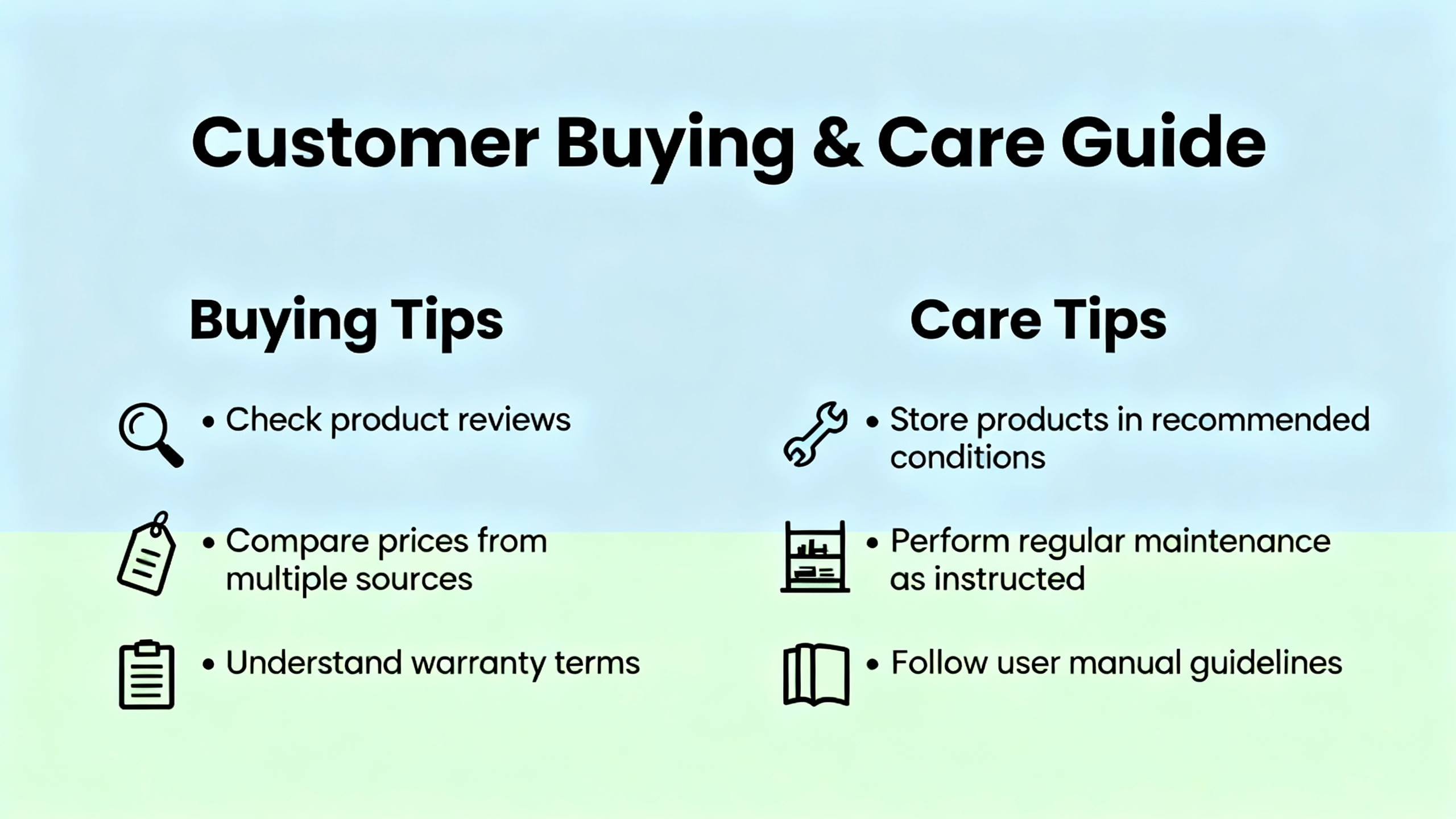
Personalized purchases feel more special when expectations and care are clear from the start. It helps to slow down and verify the details at the point of design. Double‑check monograms, placement, and artwork proofs, particularly when multiple characters or diacritics are involved. Confirm sizing if a piece is made‑to‑measure and use the brand’s guide rather than generic charts. Understand that many customized items are final sale, which is why brands invest in visualization and advisor support before you commit. For printed apparel, turn garments inside out, wash on a gentle cycle in cold water, and avoid high heat in the dryer to protect inks and finishes. For leather goods, store in a dust bag away from direct sunlight and humidity swings, and use a conditioner compatible with the specific leather type. For jewelry, avoid chemicals and store pieces separately to prevent scratches. If the brand offers authenticity or a Digital Product Passport, register it at purchase and keep documentation with the original packaging. The point of personalization is to make the item yours; the point of care is to keep it that way.
A Practical Roadmap to Launch in Ninety Days
There is a manageable path to an impressive first release. The first month is about the foundation. Map identity and consent, choose a lightweight Customer Data Platform or equivalent profile store, and define the first three use cases that tie directly to outcomes, such as a guided configurator for a hero product, personalized follow‑up for abandoned configurations, and a members‑only drop to reward loyalty. The second month focuses on the experience. Build a curated option set that aligns with brand codes, integrate 3D or AR previews if available, and script service escalations so advisors can help clients finalize designs. Stand up the proof workflow with a clear sign‑off process and connect order data to your WMS and supplier feeds. The third month is for scale and learning. Rehearse a high‑heat moment with an invite‑only test, implement demand surge protection, and tighten QC. Launch with clear delivery windows and transparent policies, then iterate weekly on the data. Treat these ninety days as a prototype of your long‑term capability rather than a one‑off campaign.
Quick Reference: What Good Looks Like
Capability | What Good Looks Like | Industry Proof |
|---|---|---|
Personalization engine | Micro‑segments, AI recommendations, strong visualization, guided choices | McKinsey reports 10–15% revenue lift; Forrester cites Net‑a‑Porter’s 35% conversion lift |
Consent and identity | Clear opt‑ins, unified profiles, transparent controls | McKinsey finds 71% expect personalization and 76% feel frustrated when it is absent |
Digital reliability | Load‑tested launches, virtual waiting rooms for drops | Queue‑it notes immediate lost sales are a small share of total damage; 79% do not return after a poor experience and 44% tell others |
Loyalty ecosystem | Members‑only access, tailored rewards, content that teaches and inspires | McKinsey reports 78% are more likely to repurchase with personalization; Sephora is a model |
Traceability and authenticity | Tamperproof IDs, condition monitoring, Digital Product Passports | Authena demonstrates real‑time traceability and verification |
Takeaway
Premium personalization is not a gimmick. It is a disciplined, brand‑defining capability that turns products into experiences and clients into collaborators. The playbook is clear. Curate options to protect identity and speed, unify data with explicit consent, make reliability part of the luxury promise, prove authenticity with traceability, and choreograph drops that feel like an invitation, not a scramble. The reward is durable demand, stronger margins, and a client base that advocates for you because they helped create what they own. In a market that is resetting toward excellence, the brands that combine product mastery with personalized journeys will earn the right to grow.
FAQ
What is the difference between personalization and customization in luxury?
Customization is the act of changing a product’s attributes, such as colors, materials, or monograms. Personalization is bigger. It uses data and AI to tailor the entire journey—content, recommendations, service, and product options—so the experience feels designed for the individual while staying faithful to brand codes. ConfigureID’s 3 D’s framework captures the operating model behind that broader vision.
How can a premium brand use invite‑only access without alienating customers?
Gate access with empathy, not arrogance. Queue‑it describes gated waiting rooms and “contact an advisor” flows that add drama to special releases while keeping the broader catalog accessible. Pair invitations with clear criteria such as loyalty, stated interests, or previous engagement so clients view access as earned and fair.
What metrics should we track to know if personalization is working?
Start with adoption of customization, configuration completion, average order value for personalized orders, return rate, production turnaround time, and NPS. Layer luxury‑specific measures from EHL Hospitality Insights such as Event Satisfaction, Word‑of‑Mouth Value, Purchase Exclusivity, and Expectations Met. Watch site reliability during launches, since Queue‑it shows the reputational fallout from poor performance dwarfs same‑day lost sales.
Does personalization really move the needle on revenue and costs?
Yes, when implemented end‑to‑end. McKinsey reports revenue lifts of up to 15% and acquisition cost reductions up to 50%, with outperformers deriving a larger share of revenue from personalization. Forrester’s coverage of Net‑a‑Porter’s 35% conversion lift demonstrates what is possible when AI and curation reinforce each other.
How do we ensure authenticity and sustainability claims for personalized products?
Adopt traceability from materials to doorstep. Authena illustrates how tamperproof IDs and Digital Product Passports verify provenance and reduce counterfeits, while real‑time condition monitoring helps protect high‑value pieces in transit. Communicate data practices transparently and collect only what you need, following the example of brands that give clients control and clarity.
Are there risks to over‑personalization?
There are. Excessive tailoring can narrow exposure to the range of products, reduce discovery, and make interactions feel transactional. AlceLabs and ConfigureID both argue for curated choice sets and a brand‑guarded design system that limit complexity while preserving delight. The goal is a guided journey that feels bespoke and still unmistakably like your brand.
References
- https://hospitalityinsights.ehl.edu/customer-service-excellence-luxury-segment
- https://authena.io/transforming-the-luxury-customer-experience-with-real-time-traceability-and-transparency/
- https://www.blockandtam.com/insights/luxury-marketing-trends
- https://www.bspk.com/post/what-to-consider-when-implementing-luxury-personalization-strategies
- https://dangingiss.com/luxury-customer-experience/
- https://firework.com/blog/improve-customer-experience-fashion-brands
- https://lux-life.digital/customizable-luxury-the-rise-of-personalized-fashion-in-the-high-end-market/
- https://www.opensend.com/post/marketing-personalization-strategies-fashion-apparel
- https://alcelabs.com/luxury/personalization-of-digital-marketing-in-luxury/
- https://queue-it.com/blog/luxury-brands-ecommerce-experience/