


Custom Products Same Day Shipping: Urgent Orders Fulfilled Fast
As brands move from “fast” to “now,” custom products are no longer exempt from urgent timelines. Whether it’s branded T‑shirts for a pop‑up, trade‑show banners, rush business cards, or personalized swag for a same‑week launch, customers expect you to turn design files into finished goods and get them to doorsteps the same day. As a mentor who has helped founders and operations leaders stand up same‑day programs in on‑demand printing and dropshipping, I’ve learned that success isn’t about heroics. It’s about defining promises precisely, engineering your operations around cut‑offs and capacity, and using the right mix of local production, courier networks, and checkout logic to make the promise keep itself. This guide distills what works, where the real constraints are, and how to launch a reliable same‑day offer without cratering margins or quality.
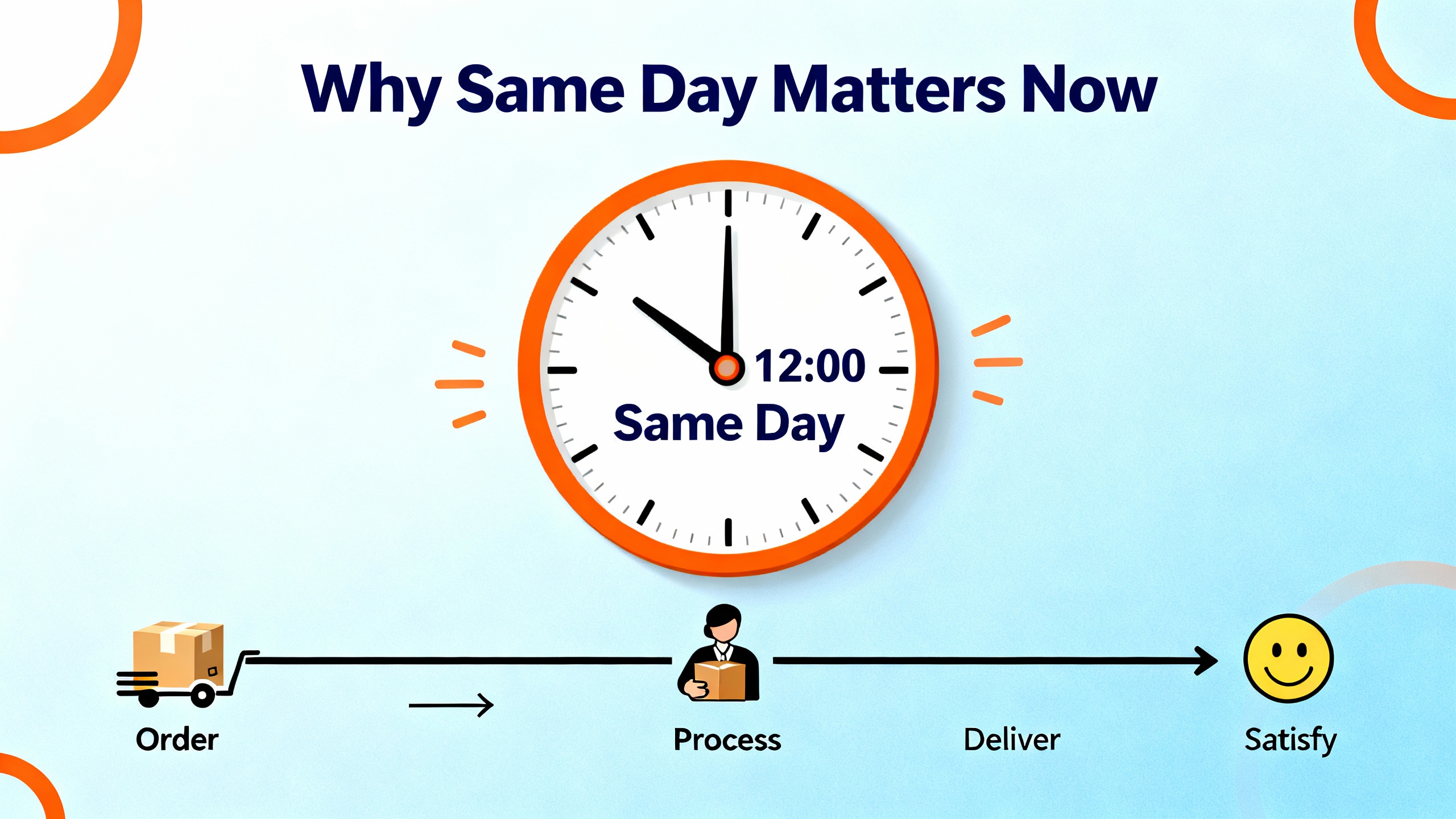
Why Same Day Matters Now
Customer expectations have been reset by retail leaders and the software that powers them. A resource from ShipperHQ notes that more than half of retailers already offer same‑day at checkout, which means customers now see it as normal rather than novel. Extensiv cites research indicating that most shoppers view one‑ to two‑day as “fast” and a large majority want same‑day, with many willing to pay more for it; that aligns with what I see on the ground when merchants introduce a well‑priced rush option at checkout. The Fulfillment Lab describes a practical reality that two forces coexist: many customers will wait longer if it’s free, while a substantial segment will pay for speed when the use case is urgent. Together, these signals explain why same‑day availability reliably lifts conversion on time‑sensitive carts while leaving a cost‑sensitive path for everyone else.
Same‑day also has operational value. Expedited and same‑day flows reduce days‑on‑hand, translate demand into cash faster, and simplify back‑order risks when you operate tight runs. The caveat is that speed increases the cost and complexity of throughput; that cost must be engineered down through better routing, nearby inventory placement, transparent rules, and honest cut‑offs. The winners are the brands that can offer speed credibly and profitably, not just loudly.
What “Same Day” Actually Means
Fast shipping terms are often conflated. For custom products, clarity is non‑negotiable because production time is part of fulfillment.
Term | What It Promises | Typical Timeline | Notes for Custom Products |
|---|---|---|---|
Same‑day shipping | Order leaves the warehouse the day it’s placed | Same calendar day ship‑out; transit is separate | Useful to trim 1–2 days from delivery; definition per The Fulfillment Lab |
Same‑day delivery | Order arrives the same day it’s placed | Same calendar day arrival, usually by evening | Requires strict cut‑offs and a local coverage radius; definitions referenced by Calcurates and The Fulfillment Lab |
Expedited shipping | Faster than standard | About 1–3 business days per DAT Freight & Analytics | A practical fallback when coverage or production constraints block same‑day delivery |
Express shipping | Faster tier than expedited when both exist | Often next‑day or two‑day as noted by Shopify and ShipBob | Labeling varies by carrier; confirm buyer‑facing language |
Standard shipping | Economy timeline | Roughly 3–7 business days after dispatch per ShipBob | Cheapest option; processing time is separate from transit |
Two recurring consumer pain points are worth stating plainly. First, many shoppers assume timeframes start at order placement, but most carriers define transit from the moment a shipment is tendered. Second, “express” and “expedited” are not interchangeable for every carrier; Shopify and ShipBob both note express is typically faster when both are offered. Address these in your policy page to avoid support tickets later.
The Reality Check: Cost, Coverage, and Cut‑Offs
Speed costs money, and the cost curve steepens as timelines compress. Shopify’s cost illustrations place overnight for a small parcel in the ballpark of $78.60 on USPS Priority Mail Express for a 5 lb example, with carrier overnight tiers at higher price points, while two‑day options sit below that top tier but above standard rates. DAT Freight & Analytics positions expedited as a 1–3 business‑day tier that balances urgency with affordability. In practice, I recommend merchandising three options at checkout—free economy with a clear window, expedited with dates, and a premium same‑day or next‑day option where eligible—so customers self‑select the trade‑off they value.
Coverage is the second constraint. Same‑day delivery is intensely local and depends on pickup windows, driver capacity, and traffic realities. The ShipperHQ team advises limiting eligibility by ZIP code or radius and publishing blackout days and cut‑off times. A seller discussion on the eBay Community reinforces the operational detail: if the earliest daily pickup happens at 1:00–2:00 PM, a conservative order cut‑off near 12:00 PM protects your handling metrics, especially when larger items require custom boxes. When you do offer in‑house local delivery, coverage can be widened with specialized networks. Roadie describes a nationwide local same‑day network strong on larger items, while ExpressIt Delivery positions a dependable statewide courier footprint across Massachusetts. For big and bulky white‑glove needs—think furniture, fixtures, or heavy displays—OneRail outlines a blueprint that includes certified crews, skill‑constrained routing, liftgate‑equipped vehicles, and alternate time windows to keep service times realistic.
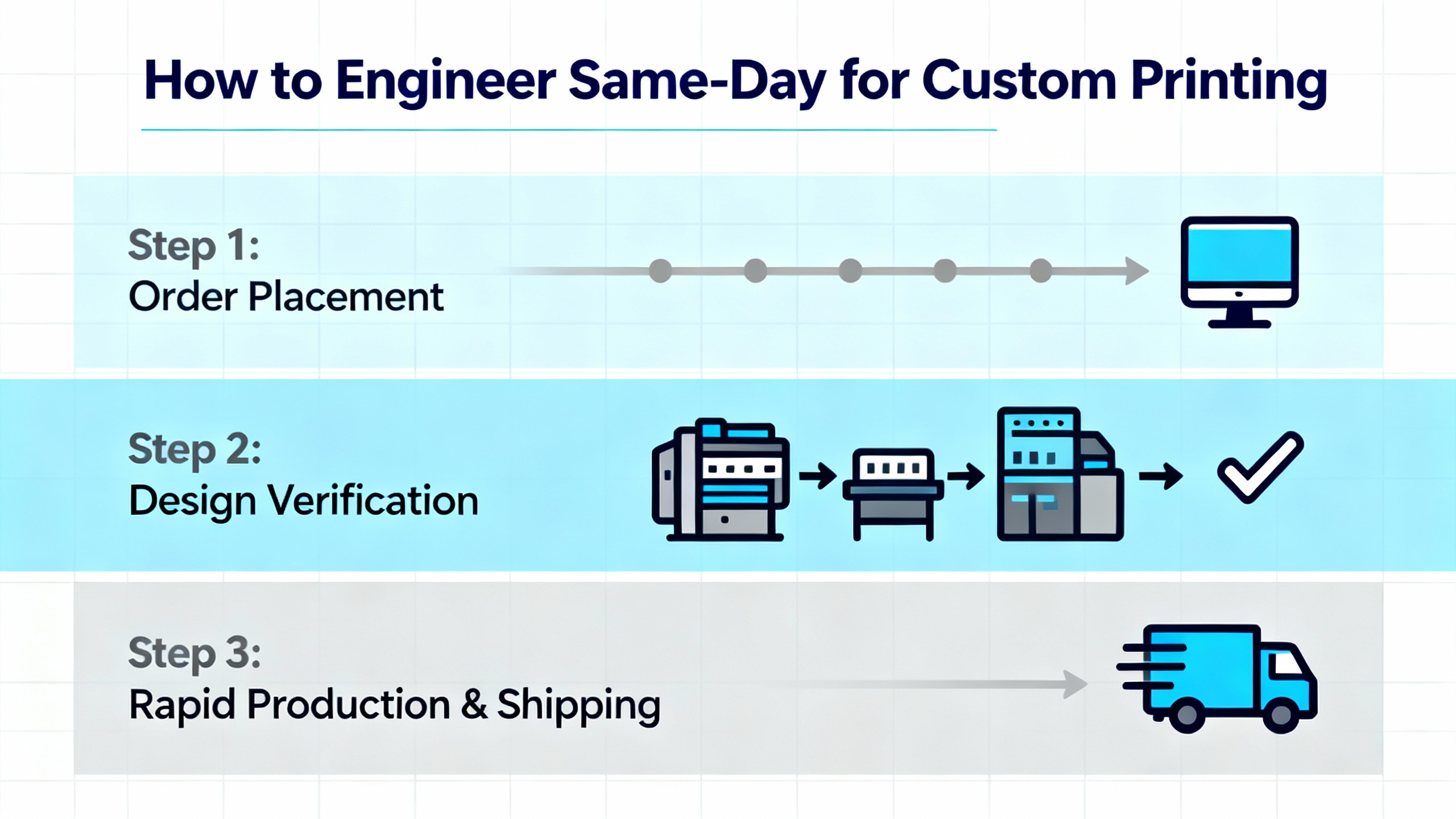
How to Engineer Same‑Day for Custom Printing
At the core, you are synchronizing three systems: rapid production, time‑definite handoff, and checkout logic that never promises what you can’t deliver. For production, digital printing is your friend for short runs and single‑unit personalization. SameDayRushPrinting highlights the advantages of in‑house digital presses for quick setup, color‑matching, and quality under rush timelines, and their model shows how a 24/7 shop can meet night, weekend, and even holiday demand if the files are truly print‑ready. NextDayFlyers’ emphasis on free design proofs and 33 quality checkpoints—paired with a stated 99.8% on‑time rate—shows another best practice: lock quality upstream so your rush jobs don’t become reprints.
Checkout logic should gate same‑day to what you can produce in hours, not days. Calcurates demonstrates how to apply advanced rules that restrict eligibility by SKU, weight, cart value, time of day, and location, with business calendars for weekends and holidays. Dynamic ETAs prevent surprises and reduce abandonment when shoppers see accurate windows and fees. ShipperHQ similarly encourages merchants to define local zones and cut‑offs precisely, then present clear delivery windows such as “before 7:00 PM” when an exact hour isn’t known.
Inventory placement and order routing are equally decisive. Extensiv describes how distributed order management centralizes inventory and automates routing to the optimal node, while ShipBob shows the impact of distributing stock across multiple facilities to reach two‑day speed with ground services. In my experience, the playbook for custom printing is to pre‑stage common blanks by color and size in the metro where demand is highest, maintain a quick‑proof workflow with auto‑preflight on upload, and pre‑kit packaging so pick‑pack is time‑predictable. The faster your “art approved to press” and “press to packed” phases are, the more conservative your cut‑off can be without sacrificing conversion.
Providers and Platforms: Examples and When to Use Them
Use Case | Example Providers (as cited) | What to Confirm Before Launch |
|---|---|---|
National parcel, urgent | FedEx SameDay; UPS time‑definite tiers; USPS Priority Mail Express | Weight and dimensional limits, service clocks, weekend acceptance, and surcharge exposure |
Local same‑day, larger items | Roadie | Pickup windows, size and weight constraints, and coverage in your priority ZIPs |
White‑glove big & bulky | OneRail | Crew certification, equipment fit, dock constraints, and appointment windows |
Regional courier coverage | ExpressIt Delivery (Massachusetts) | Service map, proof‑of‑delivery, driver vetting, and insurance limits |
Rush printing producers | SameDayRushPrinting; NextDayFlyers | File readiness standards, cut‑off times, after‑hours capacity, and reprint policies |
Checkout and rules | Calcurates; ShipperHQ | Eligibility rules by SKU/time/zone, dynamic ETAs, and business calendars |
3PL and order orchestration | Extensiv; ShipBob; The Fulfillment Lab | Node placement, DOM features, same‑day handling SLAs, and integration fit |
These examples reflect capabilities cited by the providers themselves. Before integrating, validate SLAs, pick‑up timing, and pricing against your actual products, packaging, and throughput.
SLAs, Risk Management, and Compliance
Fast promises carry more risk per minute. When vetting courier partners, 247 Express Logistics’ guidance is instructive: verify driver background checks, chain‑of‑custody standards, and proof‑of‑delivery workflows; confirm dangerous‑goods certifications where needed; and if you transport sensitive items for regulated industries, insist on compliant handling of protected health information. For urgent freight beyond parcel limits, SameDayDelivery.com underscores the flexibility of matching vehicles to load—cargo vans, straight trucks, even refrigerated equipment for perishables—but the legal and safety envelope still governs what can move same‑day.
For brand protection, publish SLAs you can keep in peak and off‑peak, down to cut‑offs and blackout dates. Offer time windows conservatively and train support to switch customers to expedited or next‑day when capacity is tight. Track exceptions daily and escalate root‑cause fixes rather than waiving fees reflexively.
Pricing and Margin Strategy That Works
The right pricing codec removes stress from your team and friction from your buyer. The Fulfillment Lab notes a split in shopper behavior: many will wait longer if shipping is free, and a sizeable portion will pay for same‑day. Shopify recommends using a minimum spend threshold above your average order value for free two‑day or faster tiers so the order subsidizes the speed. DAT’s 1–3 day expedited band is an ideal middle option when same‑day doesn’t pencil out; price it transparently and commit to the date with margin confidence. ShipBob’s experience distributing inventory shows you can often hit two‑day at ground rates when stock is near the buyer; aligning SKU placement with demand reduces your reliance on air.
For custom products, also price the production rush, not just the shipping. That can be a fixed rush fee for file handling and press priority. Be clear at checkout that artwork approval by the cut‑off is required to maintain same‑day eligibility; this one line protects margins more than almost any other.
Metrics That Keep You Honest
The fastest same‑day programs I’ve helped build run on a small set of numbers watched hourly. The 247 Express Logistics perspective focuses on on‑time rate, end‑to‑end cycle time, and cost per on‑time shipment; Calcurates adds promise‑keeping metrics such as cut‑off compliance and refund or credit rate when promises slip. Inventory health signals—stockout incidents and substitution rate—matter because one out‑of‑stock blank can torpedo your window. Returns and reships tell you whether speed is eroding quality. Publish a simple scorecard daily. When on‑time dips, drill by ZIP, by pickup window, and by SKU to find the real constraint.

Peak Readiness and U.S. Holidays
Fast shipping expectations spike in the run‑up to Black Friday, Christmas, and regional event calendars. The Fulfillment Lab frames a pragmatic target for many merchants: same‑day fulfillment with one‑ to three‑day delivery windows meets most expectations outside the densest metros, while true same‑day delivery should be reserved for the ZIPs where you can support it. If you or your print partner operate 24/7 like SameDayRushPrinting describes, you can safely extend timelines during weekends and holidays—just publish clear cut‑offs for Christmas Eve or New Year’s Eve so buyers know when the promise flips from same‑day to next‑day.
Buying and Care Tips for Customers Ordering Custom Products on a Deadline
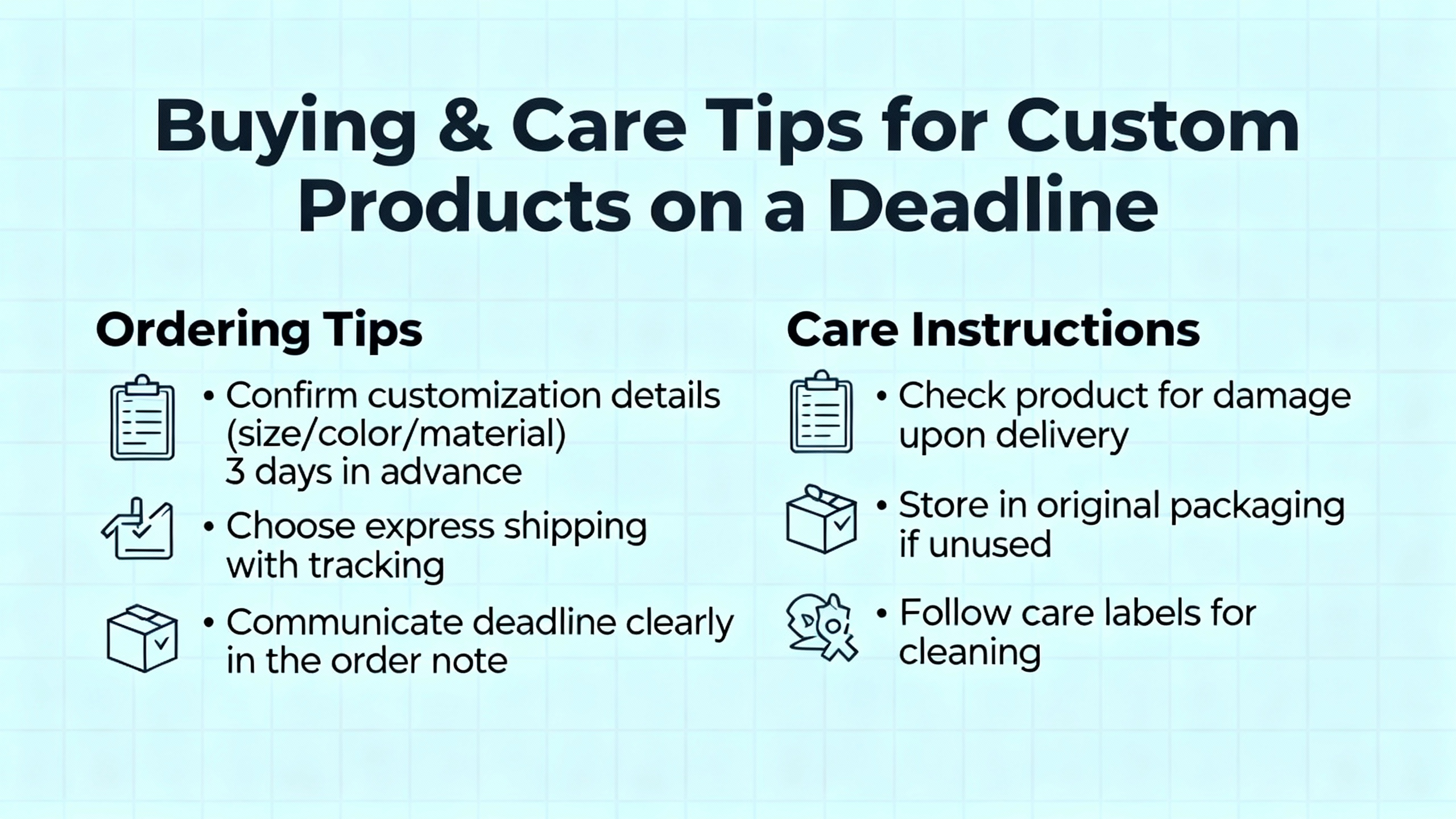
The fastest way to miss a same‑day promise is a late or unprintable file. Encourage customers to upload print‑ready artwork with fonts outlined and images embedded, accept a proof promptly when offered, and avoid last‑minute revisions. NextDayFlyers’ practice of free design proofs is an instructive model; a quick approval step prevents reprints that would push delivery into the next day.
Material choices matter under rush timelines. Digital printing remains the most reliable method for short runs and 1:1 personalization, which SameDayRushPrinting emphasizes. For apparel, embroidery and screen printing differ in setup needs; VistaPrint’s catalog signals that decoration methods vary by item, so buyers should choose options that match the timeline and the desired durability. Packaging matters too. Eshopbox describes how proper box sizing and the right in‑fill reduce damage; that same care should carry into your rush program so speed never trades off against quality on arrival. For local handoffs, ask buyers to add delivery instructions at checkout and designate a safe drop spot; that one field can shave minutes from each stop and increase on‑time success rates.
If same‑day delivery isn’t available at an address, present expedited options with honest dates rather than hiding speed entirely. VistaPrint’s express catalog shows that a three‑ to four‑day promise still wins for late planners when the alternative is a missed event.
Implementing Same‑Day: A Practical Rollout Plan
In teams I’ve mentored, the most successful launches start small and scale deliberately. Begin with a pilot zone around your production node—often a 5–10 mile radius with balanced density—then add zones as your on‑time rate stabilizes. Calcurates recommends gating eligibility by SKU, weight, and time‑of‑day, and that advice saves many first‑month headaches. Set a conservative cut‑off aligned to your earliest carrier pickup, as the eBay Community discussion suggests, and publish it on product pages and at checkout. Integrate dynamic ETAs and send immediate order confirmations that state, “We received your order and it’s scheduled for delivery between 2:00 PM and 3:00 PM” or “before 7:00 PM” when precision isn’t feasible. Use multi‑carrier setups so a single courier’s capacity crunch doesn’t sink your window.
Once the pilot is stable, add inventory nodes, widen the radius, and consider specialized partners. Roadie can extend your local coverage for larger items, ExpressIt Delivery has seasoned Northeast routes, and OneRail can stand up white‑glove capacity that your own fleet cannot. If you outgrow in‑house orchestration, explore a DOM platform as Extensiv describes to route orders automatically, rate‑shop, and trigger replenishment before a fast mover becomes a stockout. The Fulfillment Lab’s multi‑facility model shows how 3PLs can bridge to consistent one‑ to three‑day delivery nationwide while you keep same‑day local and exceptional.
Takeaway
Same‑day for custom products is won in the details: precise definitions, honest cut‑offs, a production flow optimized for short runs, and checkout logic that never overpromises. The demand is here—many shoppers will choose speed, and many will still choose free—and you can serve both segments if you treat speed as a product with clear eligibility, transparent pricing, and relentless monitoring. Start where you can be perfect, automate the handoffs, and widen the circle only when your scorecard says you are ready.
FAQ
What is the difference between same‑day shipping and same‑day delivery?
Same‑day shipping means your order leaves the warehouse on the day it is placed, which often trims one or two days off the final arrival. Same‑day delivery means the order arrives at the destination on the same calendar day. The Fulfillment Lab explains these definitions clearly, and Calcurates emphasizes that same‑day delivery depends on strict cut‑offs and local coverage.
How late can I place an order and still get same‑day delivery?
Cut‑offs vary by operation and carrier pickup windows. A conservative practice shared in an eBay Community discussion is to set the order cut‑off before the earliest daily pickup—often around 12:00 PM—especially for items that need custom packaging. Many merchants also publish blackout days and “before 7:00 PM” delivery windows when exact timing isn’t known, a communication approach reflected in ShipperHQ’s guidance.
How much more does same‑day or overnight cost compared to standard?
Costs vary based on carrier, weight, dimensions, zones, and seasonality. Shopify provides sample comparisons such as USPS Priority Mail Express overnight for smaller parcels starting around $78.60, with UPS and FedEx overnight tiers at higher rates and two‑day options priced below overnight. DAT Freight & Analytics places expedited shipping at about one to three business days, which is typically less costly than overnight air while still meeting many urgent needs.
Can large or fragile custom items be delivered the same day?
Yes, but they require the right partners and packaging. OneRail describes how pairing certified crews with liftgate‑equipped trucks and time‑window routing can make big and bulky same‑day realistic. Roadie positions a local same‑day network that supports larger items, and SameDayDelivery.com notes that specialized vehicles and even refrigerated equipment can be matched to the shipment. Proper packaging and clear handling instructions remain essential to prevent in‑transit damage.
What if my ZIP code isn’t eligible for same‑day at checkout?
Offer expedited choices with accurate dates and fees so shoppers can still meet their deadline. Calcurates and ShipperHQ both support rules that filter eligibility by radius or ZIP code and display dynamic ETAs. For many addresses, one‑ to three‑day expedited options meet event timelines without requiring a local delivery network.
References
Sources cited include ShipperHQ; DAT Freight & Analytics; Shopify; ShipBob; Extensiv; The Fulfillment Lab; eBay Community; Calcurates; SameDayRushPrinting; NextDayFlyers; VistaPrint; Roadie; ExpressIt Delivery; OneRail; SameDayDelivery.com; and 247 Express Logistics.
- https://calcurates.com/same-day-delivery-strategies-to-stay-competitive
- https://www.nextdayflyers.com/?srsltid=AfmBOopvp66PFJtLZL1haHg3QI6funlCSI9FpsUH6CMP-TPQnmePnUXz
- https://www.roadie.com/
- https://www.samedaydelivery.com/
- https://samedayrushprinting.com/
- https://www.4allpromos.com/category/one-day-rush?srsltid=AfmBOoqTP0wov3LtT-4YeEPndF657NkCfp4pOGKa0ZaUhLT8QOQHfAfn
- https://www.atomixlogistics.com/blog/same-day-delivery-explained-how-it-works-and-why-your-business-needs-it
- https://www.dat.com/resources/expedited-shipping-benefits-best-practices
- https://www.eshopbox.com/blog/same-day-delivery
- https://www.extensiv.com/blog/same-day-delivery