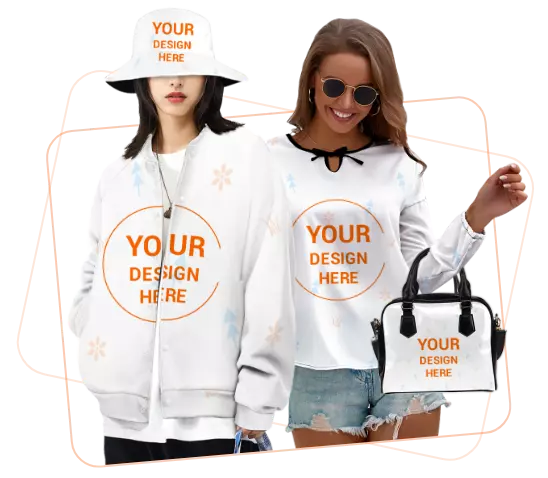


Maximizing Social Currency Value Through Customized Products
Social Currency: The Growth Engine Most POD Brands Underuse
In on-demand printing and dropshipping, you do not own factories, but you do own something far more defensible if you build it wisely: the stories people tell about your brand. That is your social currency.
Researchers describe social currency as the value and influence a brand gains when people talk about it, share its products, or display its lifestyle in their networks. It is closely tied to social capital, the trust and connections that live in communities rather than in balance sheets. Studies cited by GrowSurf show that about 92% of consumers trust recommendations from friends and peers more than any brand message, and roughly three out of four say word-of-mouth affects what they buy. Public relations research attributes around 16% of global e-commerce sales to social currency–driven marketing alone.
If you run a print-on-demand or dropshipping operation, this matters even more. Your catalog is easy to copy. Your shipping times and base products are often the same as your competitors. What is hard to copy is the way your customized products make people look, feel, and connect with one another.
In my work mentoring e-commerce founders, I see a clear pattern. Brands that treat customization purely as a way to charge a few dollars more per item plateau. Brands that treat customization as a tool for manufacturing social currency build audiences that sell for them, day after day, without needing a discount code in every email.
The question is how to design and market customized products so they behave like social tokens, not just merchandise.

From Attention To Affiliation: What Makes A Product Socially Shareable
Social currency is not about momentary virality. As analysis from BeautyMatter shows, the brands that win are those that embed themselves authentically in culture. Fazit’s glitter freckles are a vivid example. They are not just makeup; they are conversation starters. Wearers reported initiating about ten more conversations per outing and meeting new friends and even partners. That is social currency in action: a product engineered to create real-world interactions and memories.
For a print-on-demand brand, your version of glitter freckles might be a race finisher shirt that invites strangers to ask about a marathon, a tote bag that quietly signals a niche political stance, or a mug whose inside joke only members of a particular online community understand. The point is that the product gives the customer a story to share and a role to play in their social world.
Research summarized by ReferralCandy, drawing on Jonah Berger’s work, highlights three levers that make products and campaigns highly shareable. First, they possess inner remarkability, something surprising or unusually clever that people feel smart sharing. Second, they use game mechanics, visible progress or status that people are proud to show off. Third, they create insider feelings through scarcity and exclusivity. Customized products are almost uniquely suited to combine all three.
A limited-run hoodie co-designed with a niche creator can be remarkable. A loyalty program that unlocks more personalized designs as customers reach higher tiers provides game mechanics. An invite-only drop for members of your Discord group creates insider status. None of those require a warehouse; they require thoughtful design and a willingness to treat your catalog as social architecture rather than just SKUs.

The Psychology You Can Design Into Custom Products
Identity, Recognition, And The Self-Reference Effect
The corporate gifting research from BrandingIdeas emphasizes the self-reference effect. People process and remember information more deeply when it connects to their own identity, name, role, or achievements. A generic notebook is just stationery. A notebook that references a specific project, role, or win becomes a symbol of who someone is at their best.
When you sell custom products, you have a direct line into this effect. A dropshipping brand serving software engineers might offer a print that references a particular tech stack and an inside joke from that community. A print-on-demand store for nurses might personalize apparel around unit names, shift humor, or common milestones. The more the design reflects the buyer’s sense of self, the more likely they are to wear it, talk about it, and share it.
Reciprocity, Anchoring, And Loss Aversion
Psychology-of-reciprocity research points out that even a small, unexpected gift can create a felt obligation to give back. Cybertek Marketing highlights how surprise gifts, free trials, and samples often outperform pure informational campaigns because they tap into the human need to reciprocate.
Customized goods take this further. When the gift clearly required thought about the recipient’s role, preferences, or story, the perceived value and the reciprocity impulse intensify. BrandingIdeas notes that when corporate decision-makers receive highly personalized gifts, they will often respond quickly with actions like agreeing to a meeting or advancing a proposal.
Anchoring and framing also play a role. A high-quality, personalized package sets a premium perception of your brand before price ever comes up. Once a prospect emotionally associates your brand with that generous, well-designed experience, loss aversion kicks in. They do not want to lose access to a partner who seems to understand and elevate them, so they are more inclined to maintain the relationship.
As a founder, this means you can treat select customized products as strategic gifts rather than simple merchandise. You might send a small, deeply personalized item to a micro-influencer who loves your niche, or to the top ten percent of your repeat customers, paired with a low-friction next step like joining a strategy call, testing a new design, or referring a friend.
Social Proof And Status Signaling
Social proof research from Outgrow shows how powerful visible opinions are. Around 76% of consumers regularly read online reviews of local businesses before buying, and over 93% of online shoppers rely on reviews when evaluating unfamiliar retailers. Roughly 70% say they trust online consumer opinions, even when the reviewers are anonymous.
Retail Customer Experience cites evidence that products with five or more reviews can see a purchase likelihood that is roughly 2.7 times higher than products with no reviews. Combined with findings from Emplifi that 65% of consumers are more likely to buy from posts featuring real customers than traditional influencers, the message is clear. You need real people using and talking about your custom goods in public.
Social currency marketing also leans heavily on status signaling. GrowSurf notes that loyal customers influenced by strong social currency tend to spend about 67% more than new customers. Limited editions, early access drops, and membership-only designs all give your best customers something to signal about their status in your ecosystem. When those designs are visually distinctive and tightly aligned with a niche community, they become badges that invite curiosity and conversation.
The Core Social Currency Behaviors
Research from GrowSurf and related work breaks social currency into six social behaviors. Customized products can be designed to trigger each behavior in concrete ways.
Social behavior | What it means socially | How customized products can activate it |
|---|---|---|
Utility | People share things that are practically useful. | Create printables, planners, or apparel that solve real problems for a micro-niche, such as a shift-planning wall print for ICU nurses or a template board for content creators. |
Information | People trade facts and insights. | Embed bite-sized, conversation-worthy facts or frameworks on your designs so customers feel like they are sharing intelligence, not just aesthetics. |
Conversation | People need topics to talk about. | Design products with built-in talking points, like Fazit’s glitter freckles that naturally prompt questions and compliments in person. |
Advocacy | People champion what they believe in. | Build collections around causes, values, or missions and tie a transparent contribution or action to each purchase. |
Affiliation | People seek belonging. | Create micro-collections for specific subcultures, events, or cohorts such as race finishers, alumni groups, or niche fandoms. |
Identity | People express who they are. | Offer personalization that reflects roles, achievements, humor, or aesthetics that are meaningful to the wearer, well beyond adding a name. |
A strong POD catalog does not try to make every product do all six things. Instead, you deliberately assign roles. Some products are workhorses for utility and revenue. Others are designed to be wild conversation starters, even if they sell in lower volume, because they mint social currency that benefits the entire brand.
Personalization And Social Currency Reinforce Each Other
Why Personalization Is Now Baseline, Not Bonus
Personalized marketing is no longer a novelty. Emplifi defines it as using audience data such as demographics, interests, and behavior to deliver messages tailored to each customer. Their 2025 consumer survey shows that 65% of social media users say content from real customers and followers is most likely to prompt a purchase, more than double the influence of traditional influencer content. Posts that feel geared toward someone’s age group influence about a quarter of all consumers and roughly one-third of Gen Z, and 42% of Gen Z say the look of a post affects what they buy.
McKinsey’s work on retail personalization backs this up with bottom-line impact. They estimate that effective personalization can lift revenue by 5–15%, cut customer acquisition costs by up to 50%, and improve marketing efficiency by 10–30%. Bazaarvoice reports that personalized subject lines can improve email open rates by around 26%, and SMS campaigns with smart segmentation can significantly increase revenue per message, as seen in cases like Fast Growing Trees narrowing to recently engaged subscribers and boosting SMS revenue per send by 35% quarter over quarter.
Perhaps most compelling is research from the University of Michigan’s RealU2 program. When young adult smokers received generic lifestyle content, about 11% reported abstaining from smoking for 30 days at a 12-week follow-up. When content was personalized, abstinence rose to 23%. When personalization was combined with peer coaching, it reached 31%. The same pattern held for adopting other healthy behaviors. Personalized, identity-aware interventions change behavior more than generic ones.
If personalization drives behavior change in health and retail, it will drive behavior change for your store as well. The question is how to do it with the lean resources of a POD or dropshipping business.
Building A Data Foundation That A Small Brand Can Actually Use
The best marketers, according to Emplifi and Bazaarvoice, move beyond basic demographics. They combine first-party data with social listening and analytics to understand not only who their customers are but how they behave. For a POD founder, that data might include what designs people engage with on social, which product types they actually buy, which creators they follow, and how they move from discovery to purchase across channels.
You do not need enterprise software to start. At early stages, you can tag orders by collection, capture declared interests in your email signup flow, and use social media insights to see which content formats resonate most with which micro-audiences. Over time, you can graduate to sharper segmentation: trend-seeking Gen Z skincare fans on TikTok, for example, behave very differently from Millennial parents who primarily browse Instagram during early morning or lunch breaks.
The key is to segment by behavior, not just demographics. Emplifi recommends building high-intent segments such as frequent engagers, content sharers, repeat buyers, and first-time visitors. For each segment, you then design specific personalized experiences: different creatives, different offers, different products emphasized, and different follow-up paths based on what their behavior is telling you.
Designing Personalized Creative People Want To Share
Emplifi’s research shows that content feels relevant when it reflects someone’s interests, identity, and sense of humor. Gen Z often responds best to lo-fi content and humor, while Boomers may prefer clarity and usefulness. Millennials tend to gravitate toward lifestyle storytelling and social causes.
For customized products, you have three layers of personalization working together. The product itself can be personalized in its design. The creative that markets it can be tailored to different segments. And the channel experience, such as email, SMS, or social retargeting, can be adapted based on behavior.
Bazaarvoice illustrates how user-generated content can be woven into email and SMS flows, so a shopper who just bought a custom print receives a review request, then later sees curated reviews and photos from customers like them. Retail Customer Experience adds that emotional elements, such as recognition and surprise, deepen engagement. Nike By You shows what happens when you combine data, customization tools, and a seamless digital experience: customers feel a sense of ownership in the product long before it arrives.
For a POD brand, the practical move is to ensure that your best UGC, especially images of real customers enjoying their custom items, is what prospects see first. Emplifi’s data suggests that 65% of consumers are more likely to buy when they see content from real customers. Make it easy and rewarding for buyers to create that content in the first place.
Custom Products As Social Gifts And Tokens
Turning Custom Merch Into High-Impact Gifts
The work on corporate gifts from BrandingIdeas is clear. Personalized gifts are not just polite gestures; they are strategic tools that shape perception, trust, and buying decisions. When you use CRM data to tailor gifts with job titles, recent wins, or brand colors, you trigger the self-reference effect and help your brand stand out in cluttered inboxes and mailrooms.
Cybertek’s analysis of reciprocity in marketing adds another layer. Small, unexpected, personalized gifts create a strong urge to reciprocate, whether that is taking a call, sharing feedback, or making a purchase. When those gifts align with the recipient’s values, such as sustainable or reusable items, they can also signal corporate social responsibility and values alignment.
For POD and dropshipping founders, this opens up a powerful B2B and B2C play. You can run targeted gift campaigns to high-potential wholesale partners, agencies, or creators using small-run, deeply tailored products that show you did your homework. You can reward your highest-value customers with surprise items that reference their past purchases or community involvement. In both cases, you should always pair the gift with a clear, low-friction next step: book a ten-minute call, unlock a new design, or share a story featuring the product.
Experience Design: Packaging, Notes, And Calls To Action
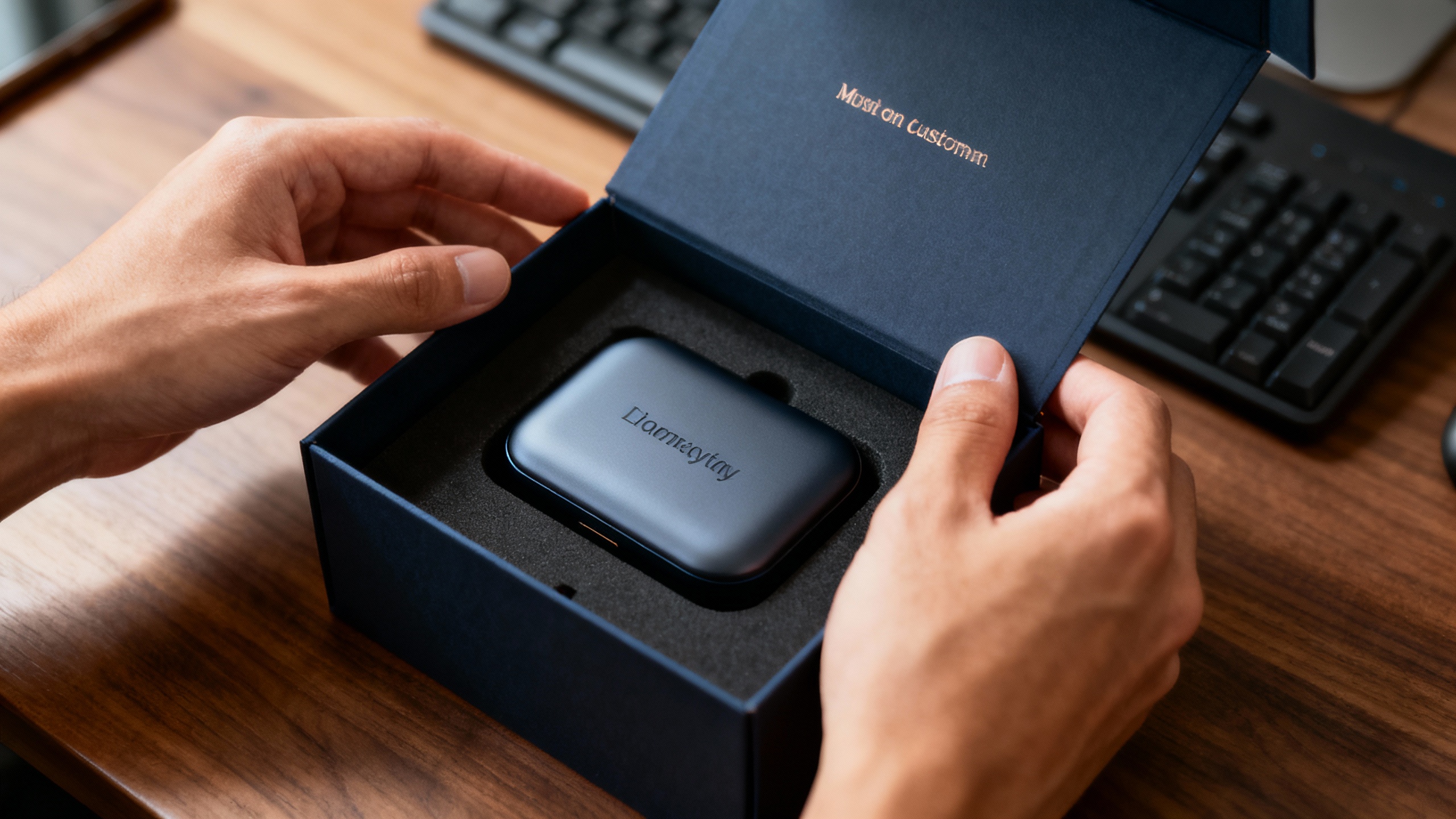
Anchoring and framing research in the gifting space emphasizes that the first impression of a package sets expectations for everything that follows. Premium packaging, even for low-cost items, can frame your brand as thoughtful and high-quality. A concise, value-focused handwritten or printed note can reinforce what makes you different while acknowledging the specific recipient, further triggering the self-reference effect.
BrandingIdeas recommends referencing the shared gift experience in follow-up communication. If you sent a custom Moleskine-style notebook, you might open your next outreach by mentioning how they might be using that notebook for their next planning session. You do not need to hard-sell. The point is to keep the positive social memory active and to make it easy for the recipient to take a small, reciprocal step.
As a mentor, I advise founders to think of every shipped package as a micro-PR campaign. The design, the unboxing, the note, and the call to action all contribute to social currency. When you get this right, customers and partners will share their unboxing experiences voluntarily, giving you UGC and word-of-mouth without having to ask.

Building Social Currency With Influencers And Communities
Co-Creating With Influencers, Not Just Paying For Posts
Pop Creative’s analysis of customized private-label products makes a simple but powerful argument. The strongest results come when brands and influencers co-create customized products that reflect both the brand’s positioning and the influencer’s personal taste and community. These collaborations feel like natural extensions of the influencer’s content rather than bolted-on ads.
Influencers build trust because they share personal experiences and honest opinions. When they have a tightly aligned, niche community, their followers see them as tastemakers. BeautyMatter’s coverage of social currency in beauty underlines the rising role of micro-influencers and comedians or niche creators who can cut through content sameness. Across studies, roughly 71% of consumers say long-term creator relationships feel more credible than one-off partnerships.
For POD and dropshipping brands, the operational advantage is that you can spin up custom designs for specific influencer collaborations quickly, without locking up capital in inventory. Start by identifying micro-creators whose audience overlaps strongly with your best customers. Invite them into a co-creation process where they contribute ideas on design, naming, and storytelling. Treat the product as shared social currency that both you and the influencer want their community to proudly display.
Building Communities Around Custom Collections
Social currency research from Tapfiliate and GrowSurf highlights the power of brand communities, especially in niche spaces like Facebook groups or member forums. These communities humanize your brand, surface customer pain points, and provide fertile ground for natural advocacy. Customers share experiences, tips, and photos, creating a feedback loop of content and insight.
Mentorist’s discussion of social currency around products recommends auditing all the moments when a user might talk about your brand and deliberately redesigning those touchpoints to be status-enhancing or remarkable. In practice, that might mean releasing a limited race finisher shirt that can only be purchased after submitting a race registration screenshot, or a special print only available to customers who attend a virtual workshop.
Gamification can amplify this. Tapfiliate describes how challenges, contests, and quizzes can turn engagement into fun, shareable experiences. If you reward customers for posting photos with a particular hashtag, participating in design votes, or referring friends into a community, you are effectively building game mechanics around your social currency engine. Just ensure the rewards enhance status rather than turning every interaction into a transaction.
Measuring The Social Currency Of Your Customized Products
If you want social currency to be a serious growth lever rather than a buzzword, you need to measure it. You cannot measure feelings directly, but you can track behaviors that indicate rising or falling social capital around your brand.
Here is a practical view of what to monitor.
Metric | What it signals | How to apply it in POD and dropshipping |
|---|---|---|
Organic share rate (shares or tags per order) | Conversation and advocacy strength. | Track how many customers tag you or use your campaign hashtags relative to orders for specific collections. Designs with high share rates are your social-currency leaders. |
Review volume and quality | Social proof and trust. | Outgrow’s data on review usage suggests that more and better reviews drive conversions. Encourage reviews for custom items and test how volume and rating shifts affect sales. |
UGC volume and diversity | Identity and affiliation depth. | Emplifi’s research shows customer content outperforms influencer posts. Monitor how many unique customers create UGC per month and which segments they represent. |
Referral-driven revenue share | Word-of-mouth effectiveness. | GrowSurf and Tapfiliate both highlight referral programs as social-currency engines. Measure the percentage of revenue coming from referrals and compare it across collections. |
Repeat purchase and retention for gift recipients | Reciprocity impact. | Compare retention and lifetime value for customers who received personalized gifts versus those who did not to quantify the long-term effect of your gifting strategy. |
Community engagement (comments, replies, event attendance) | Social capital density. | Khoros and social capital research emphasize trust and participation. Track how often community members interact with each other and with your brand, not just how many followers you have. |
The goal is not to optimize every metric at once. Instead, you use these indicators to identify which customized products, experiences, and campaigns actually build social currency and which are merely decorative. Then you double down on the patterns that align with your brand purpose and margins.
Common Pitfalls I See Founders Make
Working with early-stage e-commerce entrepreneurs, I routinely see a handful of mistakes when they try to harness social currency with customized products.
One common trap is chasing generic virality rather than cultural fit. BeautyMatter’s case studies show that brands like The Ordinary built durable social currency not by jumping on every trend but by sticking to a clear North Star of science and transparency. Their campaigns, such as Everything Is Chemicals, challenged myths and generated millions of impressions because they were on-brand and genuinely educational. A POD brand that slaps trending memes on low-quality shirts may get a spike in traffic but rarely earns long-term trust.
Another issue is treating personalization as a thin layer of name printing instead of a deeper understanding of the customer. The University of Michigan RealU2 study makes it clear that the power of personalization comes from aligning messages and experiences with people’s values, environment, and peer support. If your email says “Hey, first name” but the recommendation has nothing to do with what they actually care about, you are not building social currency; you are burning it.
Overreliance on giveaways and discount-heavy contests can also backfire. Cybertek warns that overusing gift-based reciprocity can shift customer expectations into purely transactional territory, conditioning them to act only when there is a reward. Social currency thrives when people share because it makes them look good or feel aligned with a cause, not only because they might win a free mug.
Founders also sometimes underestimate the legal and ethical complexity of consumer-generated marketing at scale. The Retail Dive analysis of social currency campaigns stresses that when you engage thousands or millions of consumers directly, you must anticipate issues around disclosures, endorsements, and privacy. You do not need a large legal team, but you do need clear guidelines, transparent rules for contests and referrals, and a plan for responding quickly if something goes wrong.
Finally, many brands ignore retention and community-building once the initial purchase is done. Emplifi and McKinsey both show that personalization and care after the sale are powerful drivers of loyalty and share of wallet. If you focus all your energy on new designs and new audiences while neglecting the people who already signal identity and status with your products, you are leaving the richest social currency on the table.
Brief FAQ For Founders
How many customized products do I need before social currency really kicks in?
You do not need a huge catalog. In practice, I have seen brands generate meaningful social currency with as few as one to three strong, tightly positioned collections that give specific communities something to talk about. It is far better to have a handful of designs that clearly signal identity and affiliation than a hundred generic options that nobody feels compelled to share.
Does print-on-demand make building social currency easier or harder?
It makes it easier to experiment and harder to hide weak ideas. Because you are not holding inventory, you can test micro-collections for very specific subcultures and kill what does not resonate quickly. At the same time, weak designs and experiences will be punished almost instantly in social feeds. That is why grounding your experiments in the psychology and research we have discussed is so important.
Should I prioritize big influencers or micro-creators for co-created custom products?
The research synthesized by BeautyMatter and Pop Creative points toward micro and niche creators with authentic communities. Large influencers can be helpful for broad awareness, but long-term relationships with smaller, well-aligned creators tend to feel more credible to their followers. Because you can produce small runs profitably with POD, you are structurally set up to win with that strategy.

Closing
Customized products are not just a margin booster; they are one of the most efficient tools you have to mint social currency around your brand. When you design them with psychology in mind, personalize the experiences around them, and integrate them into communities and co-created stories, each shipment becomes a small engine of trust, identity, and connection. As you build your next collection, do not just ask what will sell. Ask what your best customers will be proud to show their friends, and build from there.
References
- https://www.frontiersin.org/journals/built-environment/articles/10.3389/fbuil.2022.889139/full
- https://www.researchgate.net/publication/353027108_The_Influence_of_Start-up_Capital_on_Building_a_Personal_Brand
- https://ermarketing.net/navigate-the-channel/social-currency-for-the-building-product-industry/
- https://beautymatter.com/articles/next50-2025-how-do-brands-capture-culture-for-social-currency
- https://www.brax.io/blog/the-power-of-social-influence-to-steer-your-customers-towards-purchase
- https://contentmarketinginstitute.com/audience-building/study-reveals-8-tips-on-how-to-influence-behavior-with-personalized-content
- https://growsurf.com/blog/social-currency-marketing
- https://khoros.com/blog/how-understanding-social-capital-will-boost-your-social-media-efforts
- https://www.linkedin.com/pulse/making-products-matter-leveraging-social-influence-drive-burkhardt-v9ctf
- https://www.marketingsociety.com/the-library/global-brands-and-social-capital