


Etsy Alternatives for Print on Demand: Better Platforms Reviewed
If you sell print-on-demand products today, Etsy can feel like both a blessing and a ceiling. It brings built-in buyers, yet you pay for that traffic in fees, competition, and limited control over your brand. As a mentor working with POD and dropshipping founders, I see the same pattern again and again: the sellers who thrive over the long term treat Etsy as one channel, not the entire business.
In this guide, we will look at credible Etsy alternatives for print on demand, grounded in recent reviews and industry data from publishers such as Blogging Wizard, Bluehost, Printful, Podbase, Shopify, and others. We will compare how these platforms actually work in the field, where they outperform Etsy, and where they create new tradeoffs you need to understand before moving.
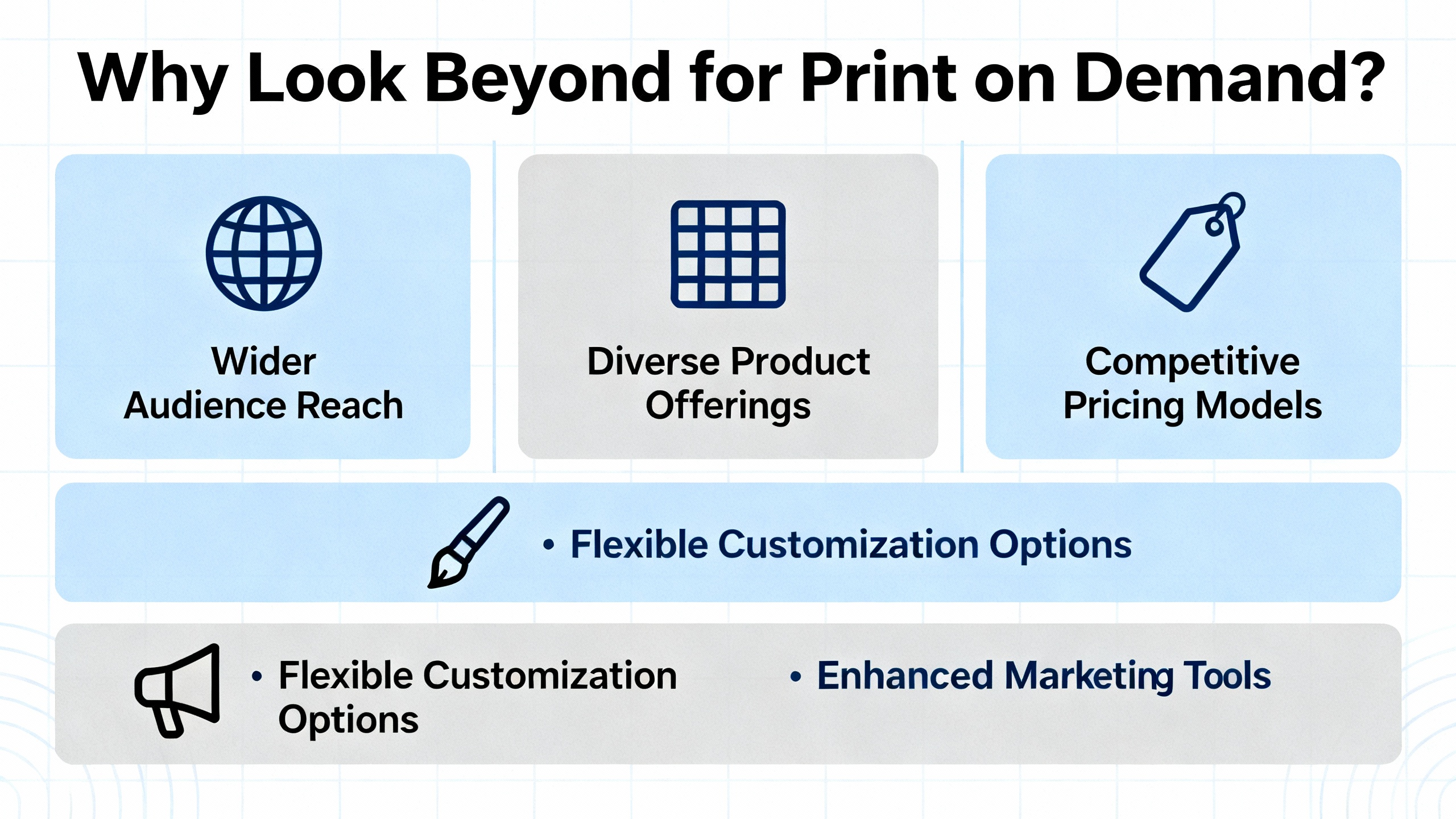
Why Look Beyond Etsy for Print on Demand?
Print on demand is a form of dropshipping. Products are produced only after a customer orders, and the POD partner handles printing and shipping on your behalf. Sources like Blogging Wizard and Bluehost describe it as a low‑risk ecommerce model because you do not pre‑purchase inventory or run your own warehouse.
Etsy fits into this picture as a marketplace, not a POD provider. Etsy allows POD products but does not print or fulfill them. In practice, many sellers connect apps like Gelato, Printful, Printify, or similar services to automate production and shipping while Etsy provides the storefront, audience, and payment processing.
This pairing works, but it comes with structural limits. Bluehost notes that marketplaces such as Etsy charge listing and transaction fees, citing Etsy’s typical fee stack of about $0.20 per listing plus around 6.5% transaction fees and payment processing on every sale. On top of that, you pay product and shipping costs to your POD provider. Those layers add up quickly in low‑margin categories like T‑shirts and mugs.
Marketplaces also own the customer relationship. Blogging Wizard points out that when you sell on marketplaces like Zazzle, you tap into existing traffic but build someone else’s brand, not your own. The same logic applies on Etsy. You benefit from search traffic, but you do not fully control the shopping experience, data, or long‑term loyalty.
Meanwhile, the broader POD market is growing fast. Bluehost reports the global print‑on‑demand market at about $4.91 billion in 2021 and projects nearly $39.87 billion by 2030. Podbase cites a 2025 market value near $10.8 billion and forecasts growth toward roughly $57.5 billion by 2033. That growth is not limited to Etsy. It is spread across independent stores, other marketplaces, and hybrid platforms.
If you want to capture more of that opportunity, you need to think beyond a single marketplace.
The Main Types of Etsy Alternatives
Before jumping into specific tools, it helps to understand three broad categories of POD platforms described by Blogging Wizard and other sources.
First, there are ecommerce platforms with built‑in print on demand. These are all‑in‑one storefront builders where POD is integrated directly into your store. Sellfy and Fourthwall are good examples.
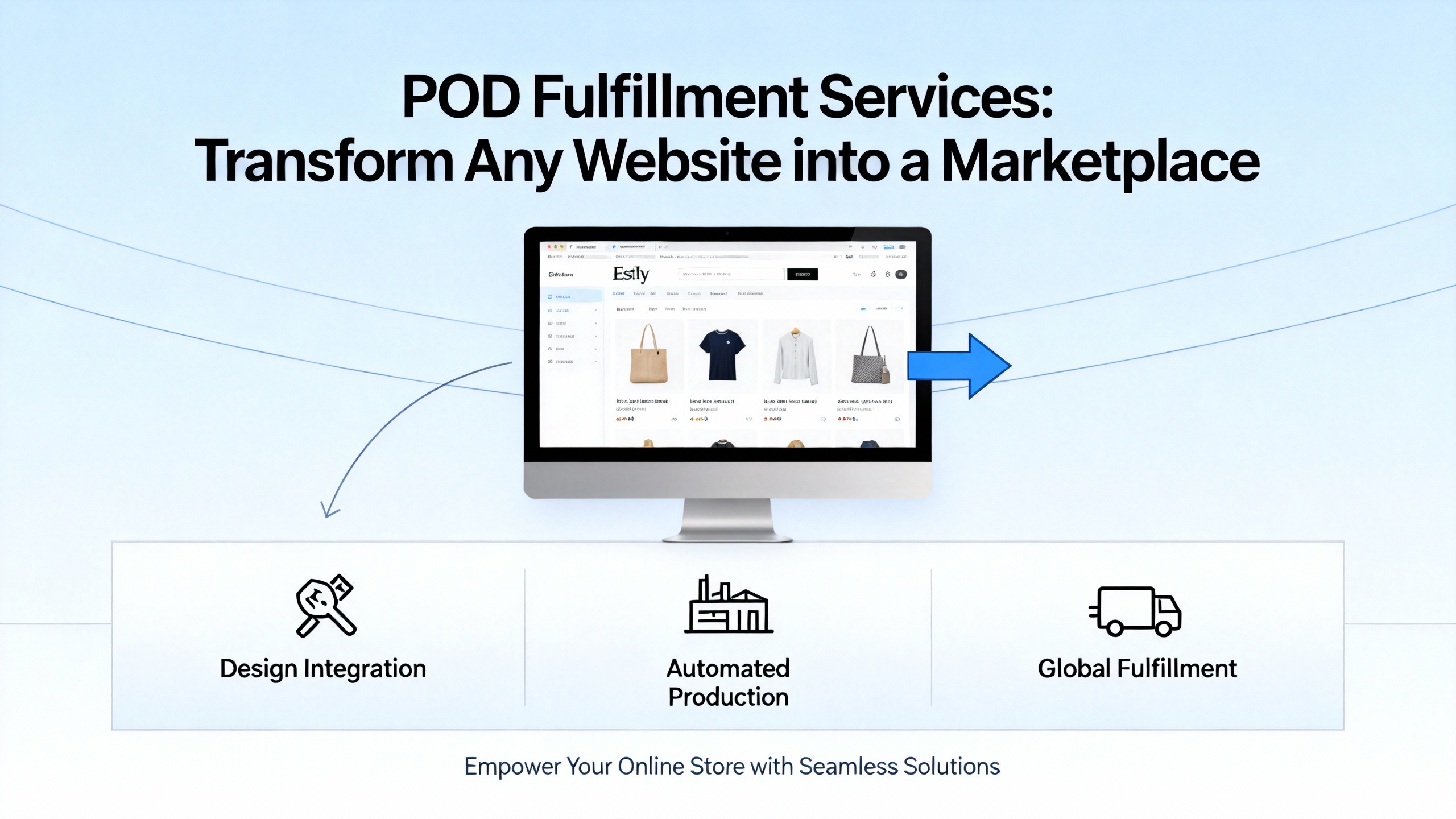
Second, there are POD fulfillment services. These plug into your existing store or marketplace and handle production and shipping in the background. Printful, Printify, Gelato, Gooten, CustomCat, SPOD, Podbase, and similar providers fall into this group.
Third, there are standalone POD marketplaces beyond Etsy. Redbubble, Zazzle, Society6, and Amazon Merch on Demand bring their own shoppers and handle production but give you very limited control over branding and customer data.
A simple way to see the tradeoffs is to look at control versus built‑in audience.
Model | Traffic source | Brand and data control | Typical examples |
|---|---|---|---|
All‑in‑one POD storefront | You drive your own traffic | High | Sellfy, Fourthwall |
POD fulfillment service | Your site plus marketplaces | High on your site, lower on marketplaces | Printful, Printify, Gelato, Gooten, Podbase, SPOD |
POD marketplace (Etsy‑style) | Marketplace brings traffic | Low | Redbubble, Zazzle, Society6, Amazon Merch on Demand |
Etsy sits in the third column. When you migrate or diversify, you are usually moving toward the first or second columns.
All‑in‑One POD Storefronts: Owning Your Brand
If what frustrates you about Etsy is the lack of control over your store, your branding, and your product mix, all‑in‑one platforms are worth serious consideration. They give you your own site, with integrated POD, and you keep customers in your ecosystem rather than Etsy’s.
Sellfy: A Simple Alternative to an Etsy‑Only Shop
Blogging Wizard positions Sellfy as the best overall print‑on‑demand platform if you want an independent online store. Unlike a marketplace, Sellfy is a full ecommerce platform with POD built in. You can sell print‑on‑demand merchandise, your own physical inventory, and digital products from the same storefront.
The practical upside is control. You design the storefront, set your prices, and decide which products to offer. The platform supports apparel, bags, stickers, mugs, phone cases, and more. For clothing, Sellfy’s partners use direct‑to‑garment printing with CPSIA‑compliant, water‑based inks that are suitable for children’s clothing, and you can add custom labels and embroidery.
From a business‑model perspective, the pricing is straightforward. Blogging Wizard notes that paid plans start around $19 per month, with a 14‑day free trial and a 30‑day money‑back guarantee. There is no marketplace audience baked in; you are responsible for driving your own traffic through search, ads, email, and social. That is the same marketing work you already perform when trying to stand out in Etsy’s crowded search results, but now you are doing it in a space where you own the domain, data, and design.
Bluehost also cites that Sellfy is used by roughly 60,000 creators, though its public review scores are more mixed than some competitors. In practice, I see Sellfy work best for creators who already have some following and want a fast way to launch a branded store where POD is just one of several revenue streams.
Fourthwall and Similar Creator Platforms
Podbase highlights Fourthwall as an all‑in‑one creator‑focused platform. Like Sellfy, it combines a branded website with POD products, but it also adds digital offerings, memberships, and tips. It integrates tightly with YouTube, TikTok, and Twitch, along with email tools, so creators can connect their existing audiences directly to a storefront.
Fourthwall offers a free plan and a Pro plan around $19 per month with lower fees and more advanced features. In my experience advising creators, this kind of platform makes sense when your fan base already lives on social channels and you want a vertically integrated home for merch, digital content, and support. It functions less like a generic Etsy replacement and more like a creator hub.
Sellfy and Fourthwall share a core tradeoff. They give you far more control over your brand and margins than Etsy, but they do not give you Etsy’s built‑in customer base. If you are willing to learn traffic generation and email marketing, these platforms can become the foundation of a durable, platform‑independent business.
POD Fulfillment Services: Turning Any Site into an Etsy Alternative
The second category of alternatives is less about where customers shop and more about who handles the printing and shipping behind the scenes. Here, you keep or build your own storefront on platforms such as Shopify, WooCommerce, Wix, or even Etsy itself, and then connect a POD partner that fulfills your orders.
Bluehost recommends combining a self‑hosted WooCommerce store with a POD provider as a scalable, brand‑driven strategy. Shopify’s own research highlights that all of its recommended POD services integrate with the Shopify App Store: you install an app, design products, publish them to your store, and orders are automatically forwarded for printing and delivery.
The key question is which provider best fits your goals. Let’s look at the major players that consistently show up across Blogging Wizard, Bluehost, Podbase, Printful’s blog, Shopify, and other sources.
Printful vs. Printify: Two Workhorse Backends
Printful and Printify are the two names I encounter most often in serious POD businesses, and for good reason. They both integrate with Shopify, WooCommerce, Etsy, Amazon, and other popular channels, but they approach fulfillment differently.
Multiple sources describe Printful as an in‑house fulfillment specialist. It owns and operates its own facilities across the United States, Mexico, Europe, and other regions, supplemented by partner sites. Bluehost cites more than 61 million items delivered since 2013 and a catalog of a few hundred products, while Podbase mentions more than 360 products and tens of hundreds of reviews with an average rating around 4.6 out of 5. Printful’s own and third‑party reviews highlight consistent quality, strong branding options such as custom neck labels and pack‑ins, and fast production times typically in the two to seven business‑day range, with many orders going out closer to two to five days.
Printify, by contrast, uses a marketplace model for production. Podbase notes that Printify connects you to 141 print providers in over 200 countries and offers more than 900 products. Bluehost reports more than four million sellers and an average rating around 4.7 out of 5. Instead of owning its own factories, Printify routes your orders to third‑party printers you select yourself, or through options like Printify Choice for some popular products in the United States.
The upside of that model is breadth and cost. Michael Essek’s in‑depth comparison points to competitive base prices, a huge catalog that ranges from standard apparel and homeware to more niche items like scented candles, yoga mats, and Bluetooth speakers, and further discounts via a Premium plan near $29 per month that can unlock up to roughly 20% off products. The downside is variability. Because production is outsourced, quality and turnaround times depend on the individual partner you choose. You are rewarded if you are willing to test, research individual printers, and switch providers when needed.
Printful tends to suit brands that want a simpler, more controlled experience and are willing to pay slightly higher base costs for it. Printify tends to suit cost‑sensitive or experimental merchants who value maximum variety and margins and are comfortable managing the added complexity.
Gelato, Gooten, CustomCat, SPOD, Podbase and Other Specialists
Beyond Printful and Printify, there is a deep bench of providers that fill specific niches or geographic gaps.
Blogging Wizard and Bluehost both highlight Gelato as a leader in localized production. Gelato integrates with platforms like Shopify, Etsy, WooCommerce, eBay, Amazon in the United States, and TikTok Shop in the United States and United Kingdom. It offers more than 48 product categories and connects to about 130 printing facilities across roughly 32 countries. Blogging Wizard reports that around 90% of orders are produced locally, which lines up with Bluehost’s figure that about 87% of orders are produced in the buyer’s region. That local routing leads to faster delivery, lower shipping costs, and reduced carbon emissions. Gelato offers a free plan and several paid tiers starting around $14.99 per month, with shipping discounts around 30% and extras like product mockups and stock images.
Gooten is covered in both Bluehost and Printful’s company lists. It uses a network of manufacturers to provide a sizable catalog of clothing, homeware, wall art, drinkware, and accessories. Bluehost notes an error rate under 2% and around 95% of orders shipped on time, with a mid‑range review score and a more business‑to‑business orientation. Gooten’s strengths are cost‑effective shipping and product variety; its downsides include varying quality, limited branding options, and somewhat slower or more complex customer support, according to the summaries.
CustomCat, profiled in the Ecomposer research, is another United States‑focused provider. It offers more than 500 customizable products and a proprietary DIGISOFT printing technology designed for vivid, durable prints. The article emphasizes fast US delivery, competitive prices, and multiple printing methods such as direct‑to‑garment, sublimation, embroidery, and cut‑and‑sew. International coverage is more limited than some global providers, so CustomCat tends to work best when your primary audience is domestic.
SPOD appears in both Blogging Wizard and Podbase as a speed‑oriented service. Powered by Spreadshirt, SPOD gives access to around 200 to 250 products and a library of up to about 50,000 free designs. The company reports that roughly 95% of orders are produced within 48 hours in facilities based in the United States and Europe, with worldwide shipping. That combination makes SPOD particularly useful for time‑sensitive promotions, fast testing, or businesses that treat quick turnaround as a core brand promise.
Podbase itself, beyond being a publisher of research, is a specialized POD provider focused on tech accessories, especially phone cases. Its own overview highlights that it runs all manufacturing in‑house, ships more than 80% of orders within 24 hours, and supports margins up to 100% on certain products. The company reports a perfect five‑star rating from more than 80 reviews and integrates with platforms like Shopify, Etsy, and WooCommerce. For brands whose hero products are phone cases and related accessories, that level of specialization and speed is difficult to match with generalist providers.
Across these services, the strategy is similar. You build your storefront on a platform you control, connect one or more POD partners suited to your product range and geography, and let them handle production and logistics while you focus on design, marketing, and customer experience.
POD Marketplaces Beyond Etsy
Sometimes the right short‑term alternative to Etsy is not an independent store, but another marketplace with a slightly different audience or business model. These platforms will not give you the control of a Shopify or WooCommerce store, but they can diversify your revenue streams and reduce dependence on a single company.
Redbubble and Zazzle: Traffic‑Rich Marketplaces
According to Blogging Wizard and Printful’s company roundups, Redbubble is the most visited print‑on‑demand marketplace in the world by traffic, drawing about 34 million monthly visitors, with around 9.5 million from organic search alone. It focuses on art, apparel, and lifestyle products and handles printing, shipping, and customer service globally through a network of production partners.
Redbubble’s main advantage is reach. The platform invests in Google Shopping ads and retargeting, which means that a strong product can attract buyers even if you are not an expert marketer. Sellers can set their own profit margins on top of Redbubble’s base prices, and the marketplace offers anti‑piracy tools to protect artwork. On the downside, quality can vary by third‑party producer, and standard accounts face additional fees taken out of profits unless they move to higher‑tier plans. Quora‑based experiences also emphasize that income is not passive; consistent uploading, external traffic, and ongoing shop activity are needed for the algorithm to favor your work.
Zazzle, reviewed by Blogging Wizard, Bluehost, and Printful’s lists, is another long‑standing marketplace. Blogging Wizard estimates around 10 million visits per month and a global reach of roughly 30 million shoppers, while Bluehost notes more than 30 million customers in over 190 countries and around 900,000 creatives. Creators can add their designs to thousands of products, set royalty rates between about 5% and 99%, and earn whenever their designs sell. Zazzle handles customer support and fulfillment.
The tradeoff is saturation and control. Because Zazzle has been around since 2005, it is heavily populated with designs, which makes it harder for newcomers to gain visibility. Its design and upload processes are often described as clunky compared with newer platforms. For some Etsy sellers, though, Zazzle can be a logical additional channel for stationery, invitations, and gift‑oriented products.
Society6 and Amazon Merch on Demand
Society6, as described in Printful’s comparison and a Quora discussion, specializes in art prints, home décor, and lifestyle products. Artists can upload work that is applied to products like wall art, rugs, furniture, and accessories. Society6 handles manufacturing and fulfillment, but branding is firmly under their umbrella, and profit margins can hover around 10% on many categories. Artists only set pricing for certain items such as wall art, and the marketplace is competitive.
On top of that, Society6 is no longer entirely free. Quora notes that artists now pay a small PayPal‑based verification fee and choose from tiers. The free tier lets you upload a limited number of designs with fixed margins, while paid tiers increase design limits and offer adjustable margins. There is also a flat shipping fee that affects the final landed price for customers. In other words, you trade some flexibility and profit for access to a focused audience that expects high‑quality art products.
Amazon Merch on Demand offers another path. Printful’s company guide describes it as a program where you upload designs that Amazon prints and ships on products like T‑shirts, hoodies, phone cases, pillows, and tote bags. Amazon handles fulfillment and customer service, and your items can be eligible for Prime delivery, giving you access to Amazon’s enormous customer base. The flip side is a relatively narrow product range compared with general POD platforms and very limited control over branding or customer data. For many Etsy sellers, Amazon Merch is best treated as one of several channels rather than a sole alternative.
Choosing the Right Etsy Alternative: A Strategic Framework
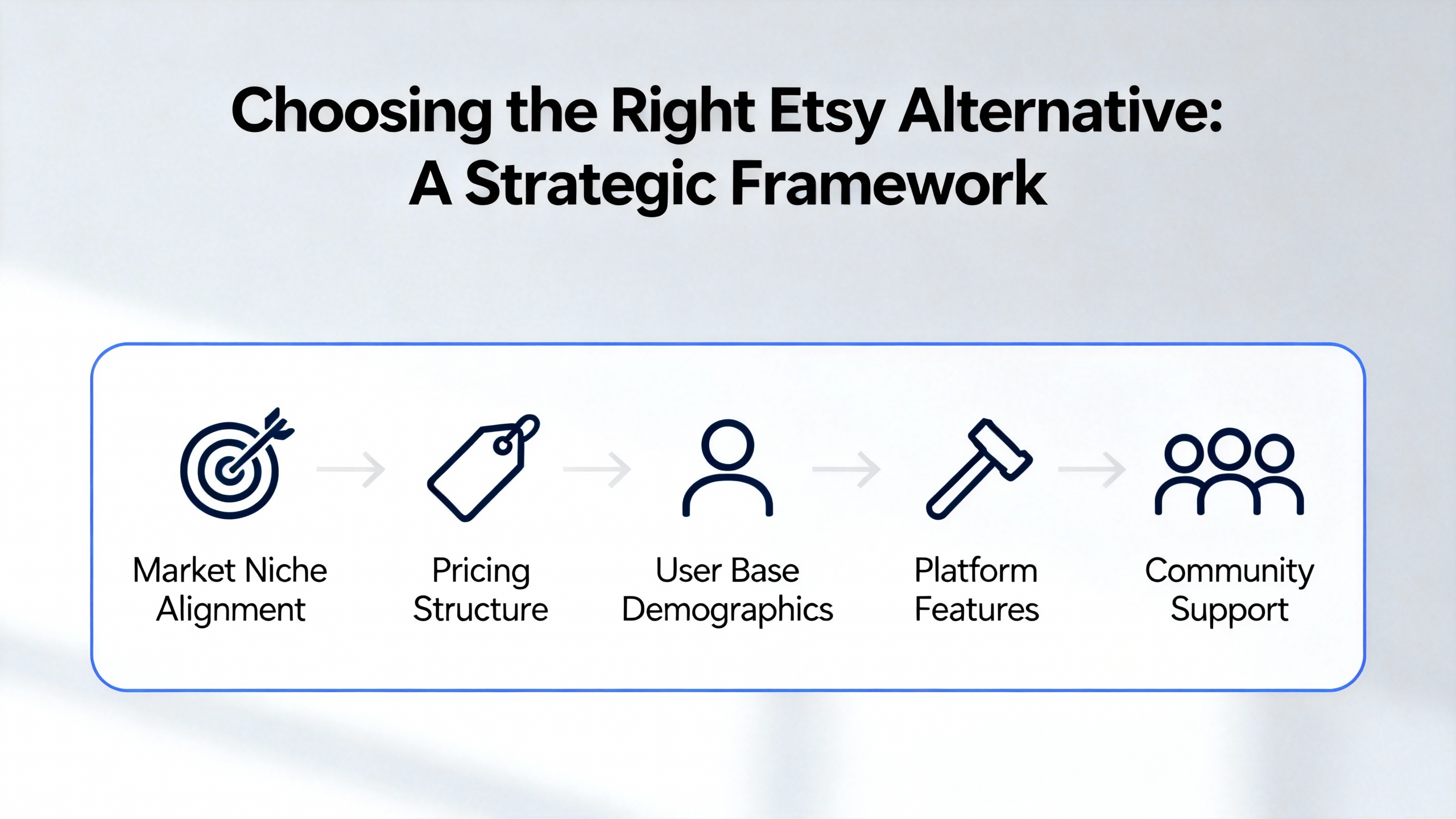
With so many options, it is tempting to ask which platform is simply “best.” The more useful question is which combination best fits your strategy, niche, and risk profile. The research notes and real‑world experiences from merchants point to a few principles.
Start with Your Niche and Audience
Printful’s analysis of common POD mistakes found that 27% of respondents reported a high negative impact from creating products that did not speak to any specific niche. Too many sellers design items they personally like and then hunt for an audience, rather than starting with a group of people and making products for them.
The Podbase beginner’s guide suggests reversing that sequence: define a narrow niche based on interests, aesthetics, or problems, then choose a focused set of products that serve that group. Use tools like marketplace searches and trend data to verify demand. Only then choose platforms and POD partners that support those products with the quality and printing methods you need.
From a practical mentoring standpoint, this means that a brand targeting eco‑conscious European buyers might lean toward providers like Gelato or TPOP that emphasize local, sustainable production, while a tech‑accessory brand might favor Podbase or Printify’s broad phone case catalog. The niche drives the tech stack, not the other way around.
Map Your Tech Stack and Sales Channels
Next, decide where you want customers to shop. Bluehost contrasts running your own site with relying on marketplaces. A self‑hosted WooCommerce or Shopify store gives you more control over branding, search engine optimization, and cross‑selling, and can reduce per‑sale fees. Marketplaces like Etsy, Redbubble, or Zazzle provide built‑in traffic but remove much of that control and add fees.
Shopify’s research highlights that all major POD fulfillment services integrate with its ecosystem, which means you can add Printful, Printify, Gelato, Gooten, and others as interchangeable backends. WooCommerce offers similar flexibility through plugins, and Bluehost notes that it powers more than one‑third of ecommerce sites globally.
A common path I recommend for established Etsy sellers is to keep Etsy for discovery but gradually build a primary store on Shopify or WooCommerce. Connect that store to one or more POD partners, and start directing repeat buyers to your own domain through packaging inserts, email, and social. Over time, the balance of revenue shifts toward channels you more fully control.
Insist on Quality: Order Samples and Test Providers
Several sources, including Printify’s quality guidance and Ecomposer’s US‑focused comparison, emphasize the importance of ordering samples before you scale. Mockups can be misleading; colors, fabric feel, and print placement often look different in real life.
Ordering physical samples lets you check print quality, material, color accuracy, and packaging. It also gives you authentic product photos for listings and ads, which generally outperform generic mockups. For marketplace‑style services like Printify or Gooten, sampling different print providers is essential because quality and speed can vary by partner.
This is not optional. If you underinvest in sampling and quality control, your refund rates will climb, reviews will slip, and the economics of POD will quickly erode.
Get Real About Pricing and Profit Margins
Bluehost offers a simple example: if a T‑shirt costs $8.50 from your POD partner and shipping is $3.50, your break‑even price is at least $12 before factoring in marketplace fees, payment processing, and your time. Only above that point do you earn actual profit.
On your own site, you avoid some marketplace fees but still pay for hosting, apps, and marketing. On Etsy and other marketplaces, you pay listing and transaction fees on top of product and shipping costs. Podbase demonstrates that margins can be healthy when the product and supply chain are optimized; its own case‑study data suggests margins up to 100% on certain phone cases when pricing and positioning are done well.
The key is to run the numbers per platform. For every product, write down the base cost, shipping, any subscription or premium plan discounts, expected marketplace or payment fees, and your target retail price. Make sure you are not underpricing to match sellers who operate with different cost structures or who are willing to accept very thin margins.
Practical Scenarios: Matching Platforms to Business Models
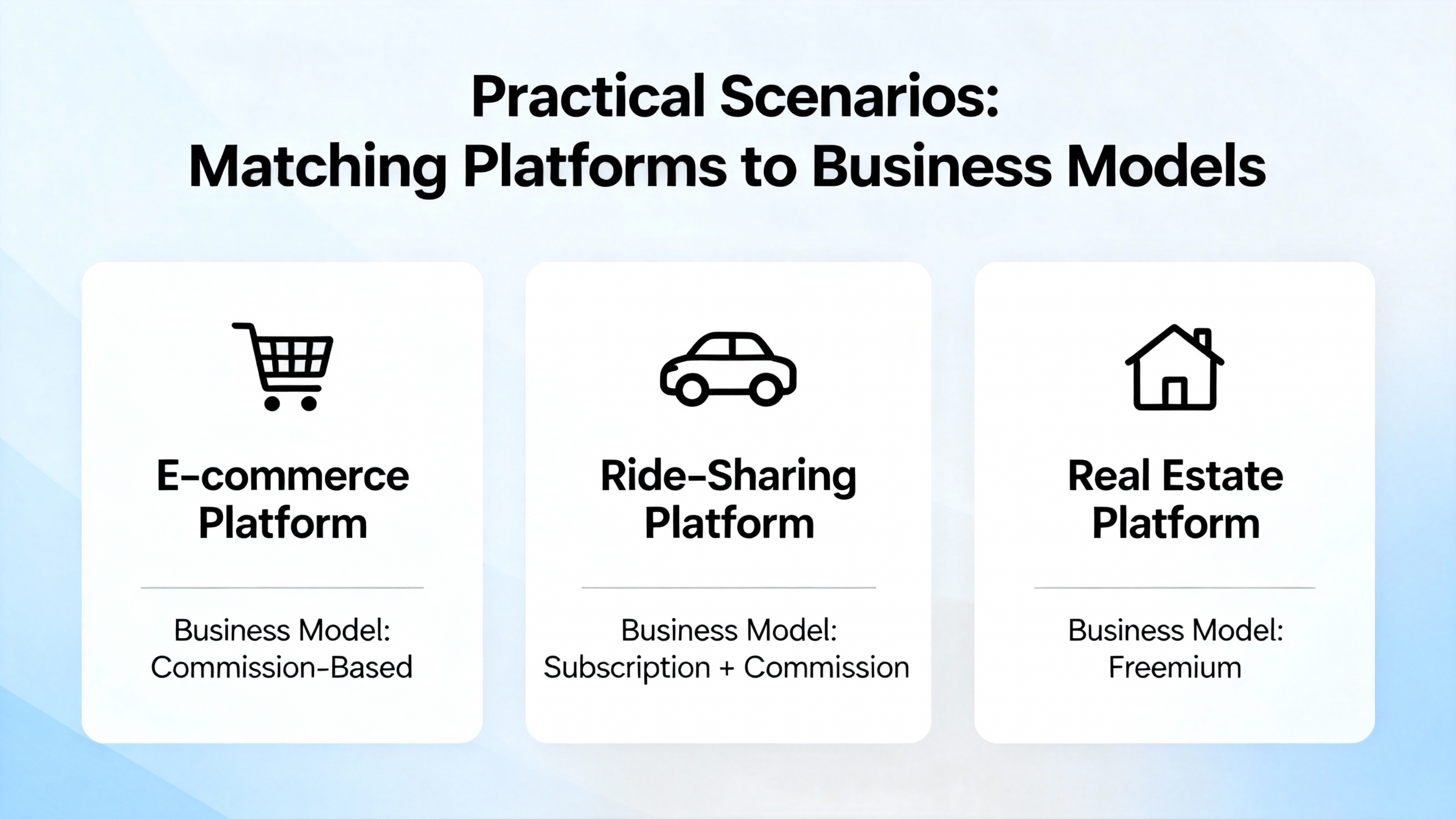
To make these tradeoffs concrete, consider a few scenarios I often see in mentoring sessions.
A designer with an established Etsy shop and loyal repeat buyers might feel constrained by fees and branding limitations. For this seller, the natural Etsy alternative is a branded Shopify or WooCommerce store connected to Printful or Printify. Printful would appeal if consistency and premium branding options are the priority; Printify would win if margins and catalog variety matter more. Etsy can remain as a lead‑generation channel while the independent store becomes the main profit center.
A creator with a large YouTube or TikTok following but little patience for technical setup might gravitate toward all‑in‑one platforms like Sellfy or Fourthwall. These tools package storefront, POD, and digital products in a single dashboard and integrate directly with social platforms. The creator’s job becomes driving traffic from content to a single, branded destination rather than juggling multiple marketplaces.
A niche home‑decor brand with customers spread across North America and Europe might prefer a combination of Gelato and Gooten connected to WooCommerce. Gelato’s local routing in over 30 countries can reduce shipping times and environmental impact, while Gooten’s catalog fills gaps, especially for home and lifestyle products. That brand can then decide whether to maintain a presence on Etsy or migrate entirely once the independent store’s traffic and email list are strong enough.
A phone‑case‑focused seller who has struggled with inconsistent quality on generic marketplaces might find Podbase compelling. In‑house manufacturing, fast turnaround where most orders ship within about 24 hours, and high potential margins on their specialty products can justify building a brand that revolves around that niche, with additional generalist POD providers only where necessary.
None of these paths are perfect, and all of them require marketing. The difference is that, off Etsy, your effort compounds into assets you control.
Is Print on Demand Still Worth It Without Etsy?
Several of the research sources conclude that print on demand remains a growing and viable model. Podbase places the global POD market around $10.8 billion in 2025 with projections to roughly $57.5 billion by 2033, while its beginner guide mentions broader forecasts near $75.3 billion for related segments. Bluehost’s numbers point to similar long‑term growth.
Profitability is less about whether you use Etsy and more about product selection, niche focus, marketing, and platform fit. Blogging Wizard stresses that there is no single “most profitable” POD item. Less saturated categories such as sneakers, stickers, and tote bags often perform better than overcrowded staples like T‑shirts and mugs, especially when paired with a clear audience and differentiated designs.
Quora‑based practitioners also note that success on marketplaces like Redbubble and Society6 is driven by consistent uploading, sustained external traffic, and disciplined expectations. First sales can arrive with a few dozen strong designs, not thousands, but ongoing activity is required. That reality carries over to independent stores as well. A Shopify or WooCommerce site linked to Printful or Printify will not magically generate revenue without deliberate promotion.
In other words, POD without Etsy is viable, but not easier. It can, however, be far more defensible and profitable once you align the right products, platforms, and audiences.
Brief FAQ
Do I have to leave Etsy entirely to benefit from these alternatives?
You do not. Many of the most resilient businesses use Etsy alongside their own stores and other marketplaces. The research from Bluehost and others suggests treating marketplaces as channels in a broader strategy. You can gradually move repeat customers toward platforms where you have more control while still leveraging Etsy’s traffic.
Can I use the same POD provider for Etsy and my own store?
Yes. Services like Printful, Printify, and Gelato integrate with both Etsy and standalone platforms such as Shopify and WooCommerce. Blogging Wizard specifically notes that Etsy sellers commonly connect POD services to automate production and shipping. From a systems perspective, this means you can centralize fulfillment in one provider while diversifying your storefronts.
How many designs do I need before I leave Etsy?
There is no fixed number. Quora experiences suggest that early sales on marketplaces like Redbubble become realistic around 30 to 40 well‑researched designs, as long as they target a clear niche and you keep uploading over time. For independent stores, the more important factor is whether your niche and brand positioning are clear enough that visitors instantly understand what you stand for and what to buy.
Closing Thoughts
When you rely solely on Etsy for print on demand, you are effectively renting shelf space in someone else’s store. That can be a smart starting point, but it is a fragile foundation for a long‑term business. The data from Blogging Wizard, Bluehost, Podbase, Printful, Shopify, and others all point in the same direction: the POD market is expanding, and the strongest brands are spreading their risk across platforms while building assets they own.
Your goal is not simply to find the “next Etsy,” but to assemble a stack of platforms that gives you dependable fulfillment, fair margins, and room to grow a recognizable brand. Choose the tools that fit your niche, test quality ruthlessly, price with real numbers, and let Etsy become one channel among many, rather than the only one that matters.
References
- https://print-mail.byu.edu/print-on-demand
- https://www.library.jhu.edu/print-on-demand-springer-books/
- https://journal.yp3a.org/index.php/pakmas/article/download/3471/1322/16075
- https://www.printful.com/
- https://bloggingwizard.com/print-on-demand-sites/
- https://bootstrappingecommerce.com/best-print-on-demand-companies-for-etsy/
- https://dtfprintco.com/ultimate-guide-to-print-on-demand-businesses/?srsltid=AfmBOopvz1aAuoGmjtvgkYktYCmHxl2KyR0HWPlI4YpcVnUvt6bD3KZi
- https://www.michaelessek.com/print-on-demand-companies/
- https://www.podbase.com/blogs/print-on-demand-companies
- https://printify.com/print-on-demand/