


Durable Zipper Personalized Bags: Reliable Closure Systems For Your Brand
Why Closures Decide Whether Customers Reuse Your Bags
If you sell on a print‑on‑demand or dropshipping model, personalized bags can quietly become one of your highest‑ROI products. They are packaging, gift wrap, organizer, and walking billboard in a single item. But in practice, customers decide whether they reuse your bag based on one thing more than any other: the closure.
In my work mentoring ecommerce founders, I routinely see beautiful artwork printed on bags that never get used again because the zipper feels flimsy, jams, or simply does not match the way customers actually use the bag. On the flip side, I have seen simple, minimalist designs earn long‑term brand impressions because the zipper is smooth, strong, and trustworthy.
Durable zipper personalized bags are not just about “having a zipper.” They are about building a reliable closure system around real‑world use: the materials around the zipper, the thickness of the bag, the opening size, the way the slider glides, and even how easy it is to clean and maintain. This article walks through what industry research and real user experiences tell us about zipper bag performance, and how to translate that into profitable, low‑headache products in your on‑demand catalog.
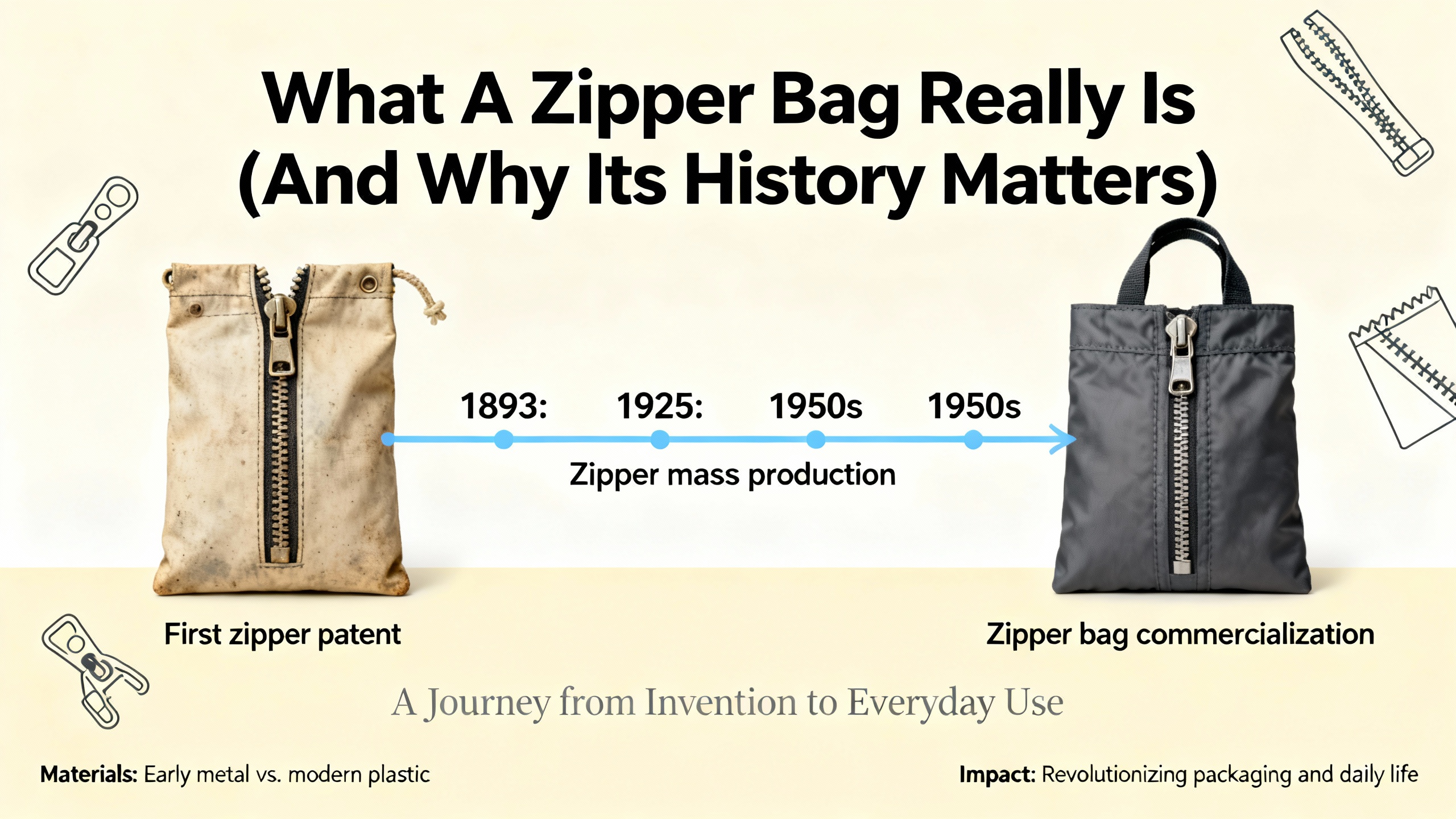
What A Zipper Bag Really Is (And Why Its History Matters)
KimEcopak defines zipper bags, often called zip‑top bags, as flexible, resealable containers with two sides sealed at the bottom and an opening at the top closed by a plastic zipper mechanism. Originally developed for food storage in the early 1960s, they quickly spread into cosmetics, pharmaceuticals, fashion, and electronics because they combine three things brands care about: protection, functionality, and a polished presentation.
That evolution matters for you as a seller. Zipper bags are no longer “just for sandwiches.” They have become packaging for jewelry and cosmetics, reusable organizers for travel and office tools, and even canvas or cotton storage for bedding and garments. Every one of those use cases places different loads, stresses, and expectations on the zipper.
A zip‑top closure is a system, not a single part. The plastic or metal teeth, the slider, the stitching that holds the zipper into fabric, and the film or textile that surrounds it all work together. If any part is underspecified, the system fails, and the customer learns not to trust your brand’s bags.
Zippers Versus Other Closures: Choosing The Right System
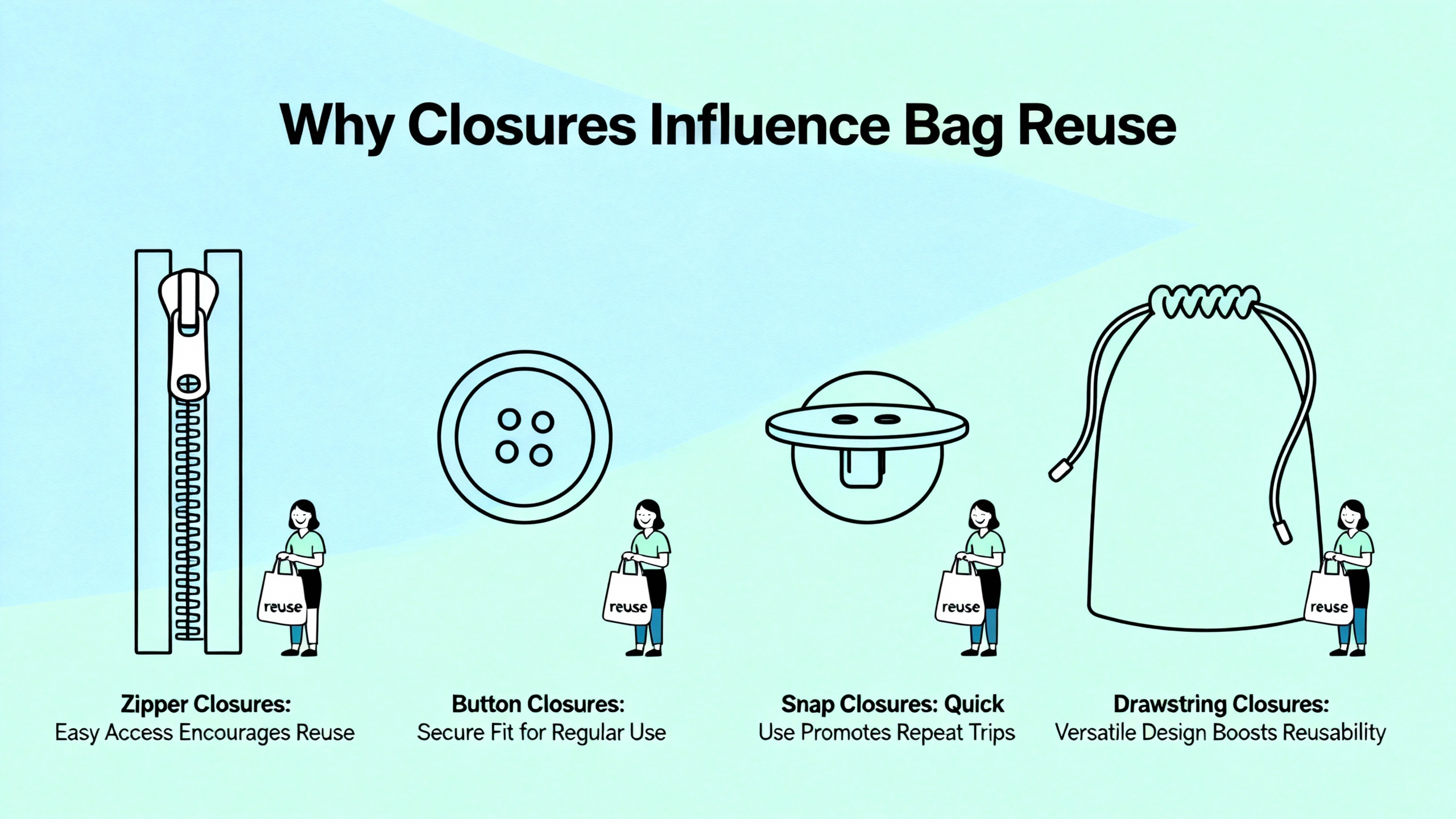
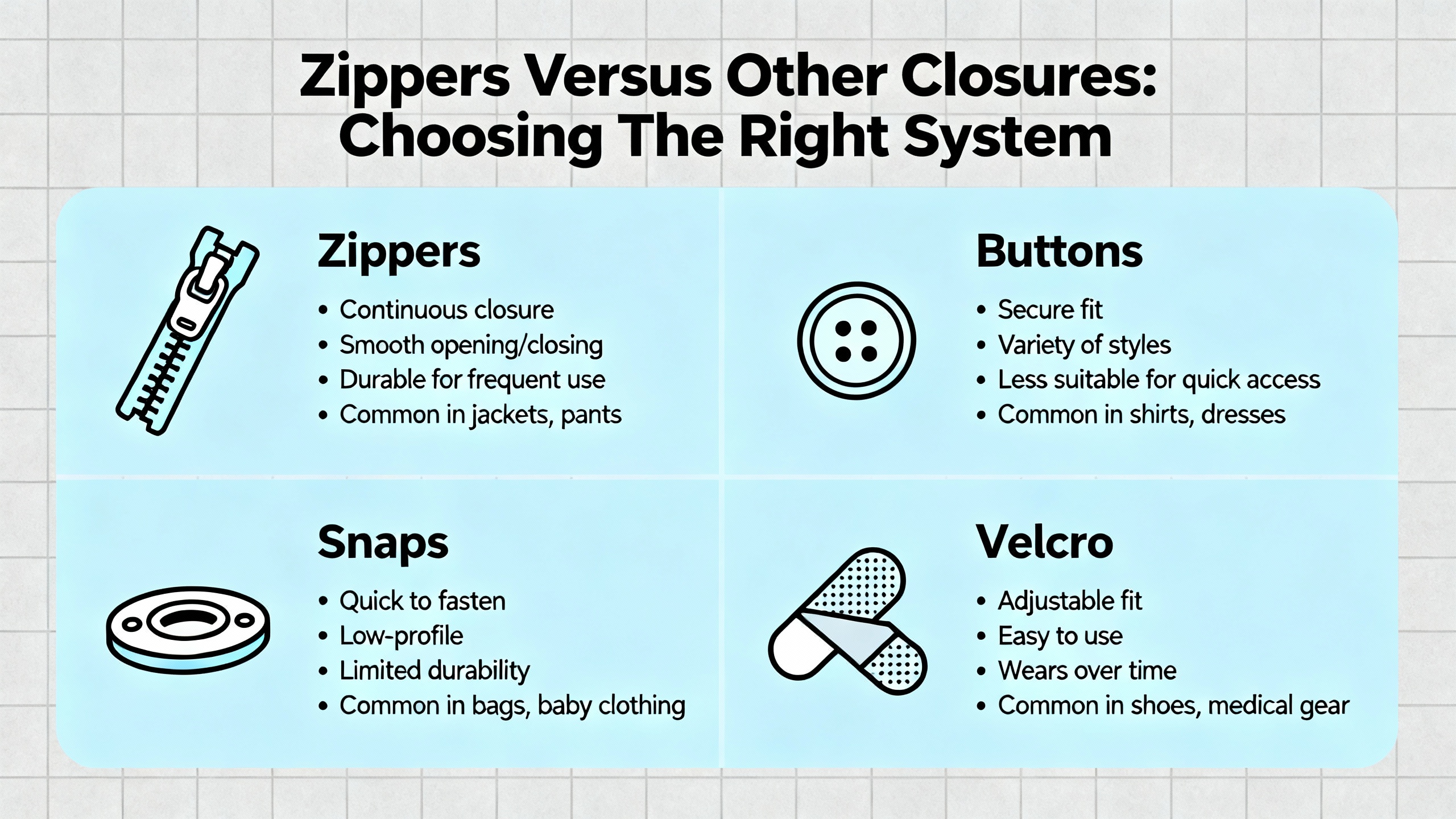
Cloth storage and garment bag specialists such as ClassicsThreads and Hayden Hill describe several common closure types: straight zippers, reversible zippers, waterproof zippers, plus alternatives like Velcro, drawstrings, and snaps. For a print‑on‑demand business, you will usually lead with zippers, but it helps to understand where they fit.
Velcro is fast and intuitive but can clog with lint and is less secure over time. Drawstrings allow breathability and quick access, which works for laundry or breathable storage bags, but they are poor at sealing out dust and moisture. Snaps offer a middle ground but still leave gaps. Heat‑sealed closures, widely used on Mylar food storage bags and some vacuum bags, provide extremely tight seals but are not resealable without cutting and re‑sealing, so they are less suited to daily‑use personalized bags.
Zippers shine when you need reliable resealability, better dust and moisture protection, and a higher‑end feel. That is why Container Store storage bags, cotton canvas comforter bags on major marketplaces, and premium garment bags all lean on zip closures for seasonal clothing and bedding.
Within zippers, ClassicsThreads notes several variants. Straight zippers are the standard choice for everyday access. Reversible zippers that open from both ends help on large storage bags and garment covers because customers can access items from different sides. Waterproof zippers pair with coated fabrics for damp or outdoor conditions, closing more tightly and sheltering the teeth from water.
For personalized ecommerce bags, take a deliberate stance. Use zippers where you want your bag to feel premium and protective, and reserve drawstrings or snaps for breathable, casual, or low‑risk use cases such as quick‑grab totes or laundry bags.
Zipper Quality, Bag Thickness, And Material: The Durability Trio
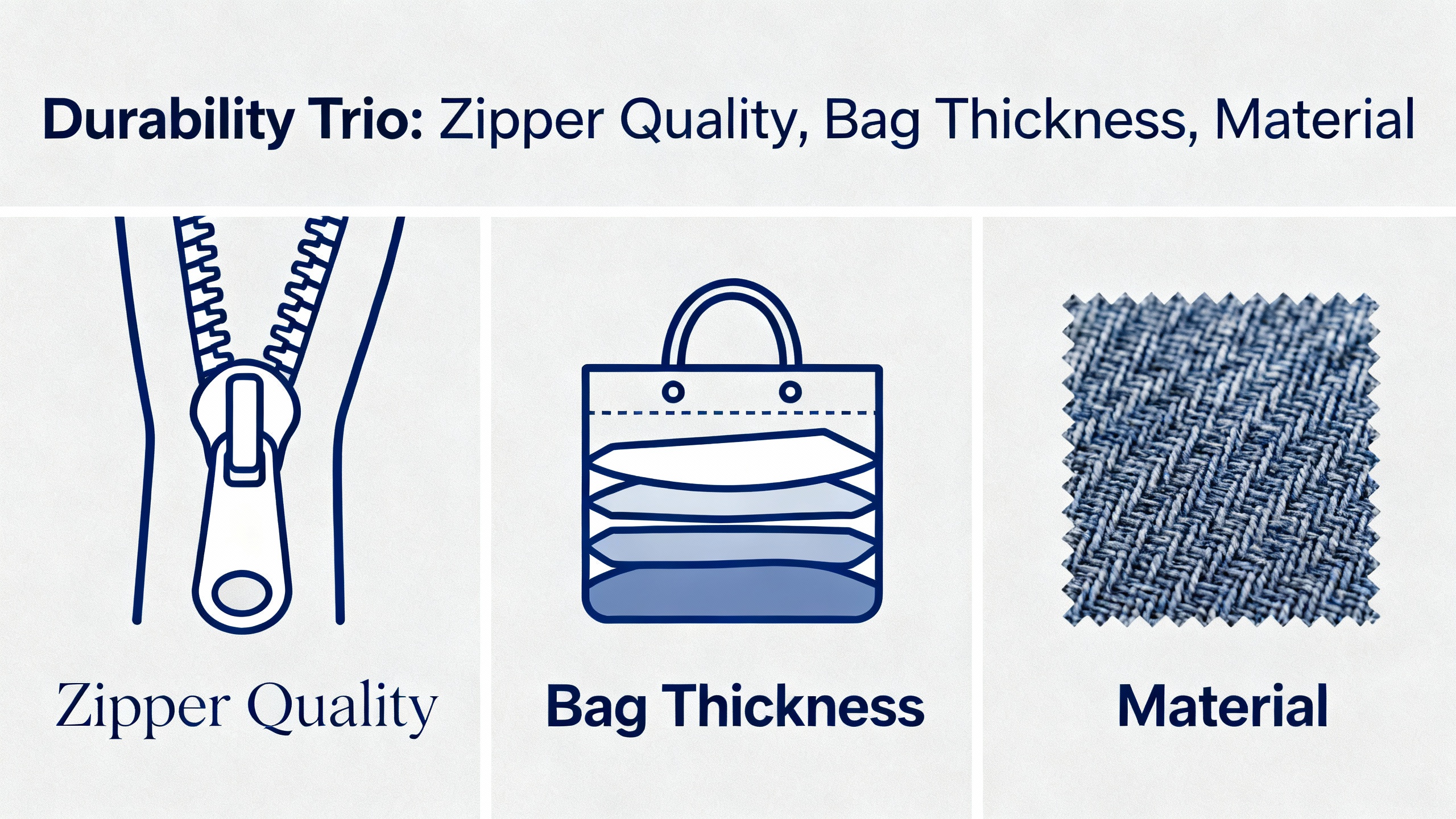
Several sources converge on the same conclusion: durability is not just about the zipper hardware. Materials and thickness matter just as much.
KimEcopak and Universal Plastic together sketch the core picture for plastic zipper bags. Common materials include polyethylene and polypropylene, with thickness measured in mils, where one mil equals one thousandth of an inch. Universal Plastic reports typical ranges from one to six mil for zip lock bags. Lighter bags around one to two mil are suitable for very light items and short‑term storage. Around three mil, you get a sweet spot for everyday retail: clothing, snacks, or medium‑weight components, with good puncture resistance. Four mil and above are recommended for sharp or heavy items such as metal parts, screws, and nails, and for long‑term or low‑temperature storage.
A premium example on the small‑bag side is a four‑mil jewelry zip bag, roughly four by six inches, marketed for small parts and jewelry. The extra thickness makes it noticeably tougher than typical household baggies and better suited to repeated opening and closing.
Durable zipper bags for storage can also be fabric‑based. ClassicsThreads and Hayden Hill describe organic cotton and linen storage bags that are breathable and biodegradable, while polyester and blends deliver stiffness and tear resistance. Waterproof and heavy‑duty bags may use coated nylon or polyester, waxed canvas, TPU‑coated fabrics, or PVC‑backed textiles. A technical fabrics guide from Szoneier emphasizes that coatings such as polyurethane, PVC, and TPU dramatically shift waterproof performance and abrasion resistance. The key lesson is that you cannot judge closure reliability without looking at how the zipper is sewn or welded into the surrounding material and whether the fabric itself can withstand the stresses customers will put on it.
Smart packaging guidance from DHgate highlights a mistake many buyers make: prioritizing print design or low price while ignoring zipper quality and bag thickness. They recommend testing zippers for smooth operation and tight locking that does not slide open under a gentle tug, and matching bag thickness to use case, with around three mil or higher for heavy‑duty or high‑use scenarios. They also point out that trusted zipper brands such as YKK are widely used as a proxy for quality and often justify their higher cost in reduced failure rates.
To bring this together for your catalog, think in terms of a simple matrix.
Bag context | Material and thickness focus | Zipper implications |
|---|---|---|
Flat artwork or sticker packs | Two to three mil polyethylene or polypropylene | Standard zip; prioritize smooth, easy sliding |
Jewelry, hardware, or small tech | Three to four mil, sometimes antistatic or padded | Robust zipper; avoid snagging on sharp edges |
Bedding, coats, seasonal garments | Heavy cotton canvas, polyester, or coated fabrics | Full‑length zipper; reinforced seams and handles |
Waterproof or outdoor gear bags | Coated nylon, PVC, TPU, or waxed canvas | Waterproof zipper and sealed seam design |
Office and travel organizers | Clear PVC, mesh, or fabric blends with moderate stiffness | Frequent‑use zipper; ergonomic pull, no sharp zipper tape |
When you discuss specifications with suppliers, you want all three elements on the table: zipper quality, bag material, and thickness. Skip any vendor who can only talk about print area and color options.
When Closures Fail: Real Usability Problems You Must Avoid
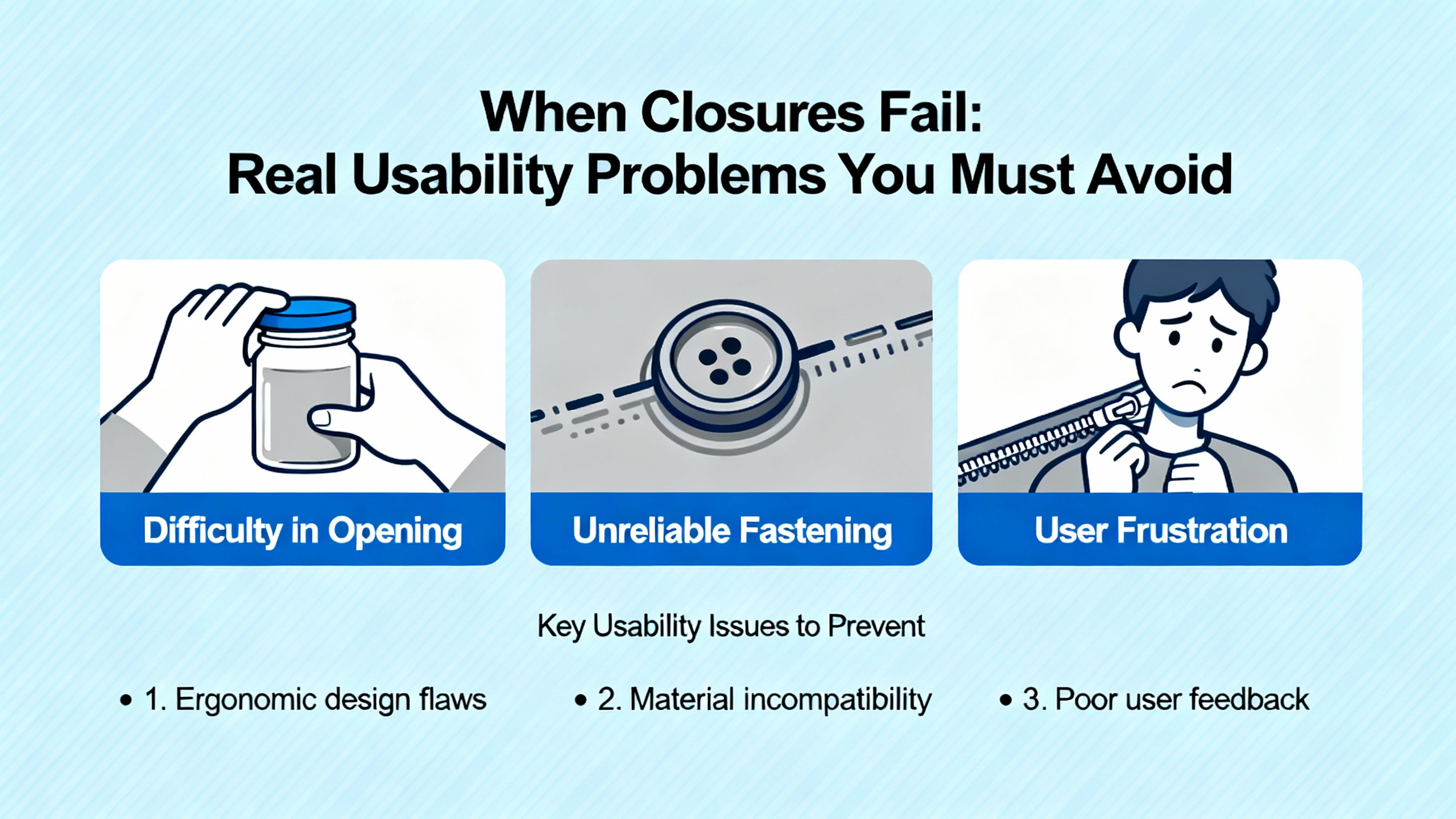
A negative user review of a popular branded zip pouch, the ALPAKA Zip Pouch, is an instructive case study. The reviewer found that the pouch was too small to comfortably fit a standard bank card or driver’s license, even when the zipper was fully open. Cards would catch on the zipper edge on the way in and out, paper bills had to be folded many times to fit, and coins were hard to see or access. The overall handling was described as fiddly, and the reviewer concluded they would not use the pouch again, calling it a waste of money.
Nothing about that failure is due to printing or fabric. The disappointment comes from misaligned sizing, opening geometry, and zipper placement. For card‑sized organizers, the mouth opening must be slightly larger than the card itself, the zipper tape should not intrude into the interior volume, and the internal height must comfortably accommodate the card plus a margin for fingers. If you print stunning artwork onto a pouch with those functional flaws, customers will still abandon it.
Space‑saving vacuum storage bags provide another lesson. A home organization enthusiast discussing discount vacuum bags noted that inexpensive bags from a dollar‑oriented retailer could perform as well as more expensive brands, as long as the user left a little space between the contents and the opening and handled the bags gently when sealing. The weak points were sealing technique and overstuffing, not always brand or price.
Together, these experiences highlight two principles you should bake into your product selection:
Do not design or choose zipper bags purely from flat mockups. Always evaluate how the bag opens, what must pass through the opening, and how the zipper interacts with the contents.
Educate customers with simple usage guidance, especially for compression and storage bags. Advising them not to overstuff and to keep the zipper path clear of fabric reduces warranty claims and reviews about broken zippers.
Personalized Zipper Bags That Customers Actually Use
The packaging and fashion insights compiled by Universepack show how central zipper bags have become to modern, branded experiences. They point to the growing sustainable fashion market, citing Statista projections that eco‑friendly accessories will be part of an approximately eighty‑billion‑dollar segment by 2025. Customized zipper tote bags and storage bags are part of that movement, acting as reusable, durable alternatives to disposable plastic.
Universepack also notes that Jewelry Business Magazine reports fifty‑eight percent of consumers judge a brand’s prestige based on packaging quality, and Travel and Leisure has found that seven in ten luxury travelers prefer dedicated jewelry bags. It is no accident that those bags almost always use zip closures: customers want items to stay protected and organized during transit.
Home Organization Trends research, cited by Universepack, reports that more than half of households use storage bags for winter clothing or off‑season items, especially in small urban apartments, and Consumer Reports estimates that vacuum compression bags can save up to thirty percent of storage space. For you, that means customers are already primed to understand zipper storage bags as tools for order and space saving, not just packaging they throw away.
Combining those insights with practical guidance from KimEcopak, DHgate, and Yotenpack, there are several design principles that make personalized zipper bags genuinely useful.
Think from the inside out. Start with the items your customers will store: jewelry, cables, makeup, planners, travel toiletries, or bedding. For rigid objects, Universal Plastic recommends adding at least half an inch of extra width beyond the item size so the bag does not stretch or strain. For soft items, consider how much compression is comfortable.
Match size and compartmentalization to tasks. Yotenpack describes clear zipper pouches for documents and electronics, mesh bags for breathable storage, and multi‑compartment bags for separating supplies within one organizer. A personalized office kit with multiple zipper compartments lets knowledge workers keep chargers, pens, cards, and small tech in a single branded pouch that actually improves their day.
Balance visibility and privacy. Transparent PVC or vinyl bags, like the forty‑liter zip storage bags sold for sweaters and bedding, make it easy to see contents inside closets. Opaque cotton canvas or kraft paper zipper bags align with premium branding and hide clutter. Decide consciously which you want; do not leave it to chance.
Align closure strength with perceived value. Ziploc positions its heavy duty storage bags as twice as thick as their regular storage bags, explicitly for “tough jobs” such as tools and garage items. Those bags feature puncture‑resistant film and reinforced seams and are promoted as reusable. When your product is marketed as heavy duty, your zipper choice must match that promise.
Finally, design for reuse. Universepack points out that zipper bags tend to be more sustainable than disposable plastic bags precisely because they are durable and multifunctional. If your personalized bag survives daily use as an organizer or storage tool, it will keep your branding in circulation far longer than a shipping box ever could.
Reliable Closure Systems For Key Catalog Use Cases
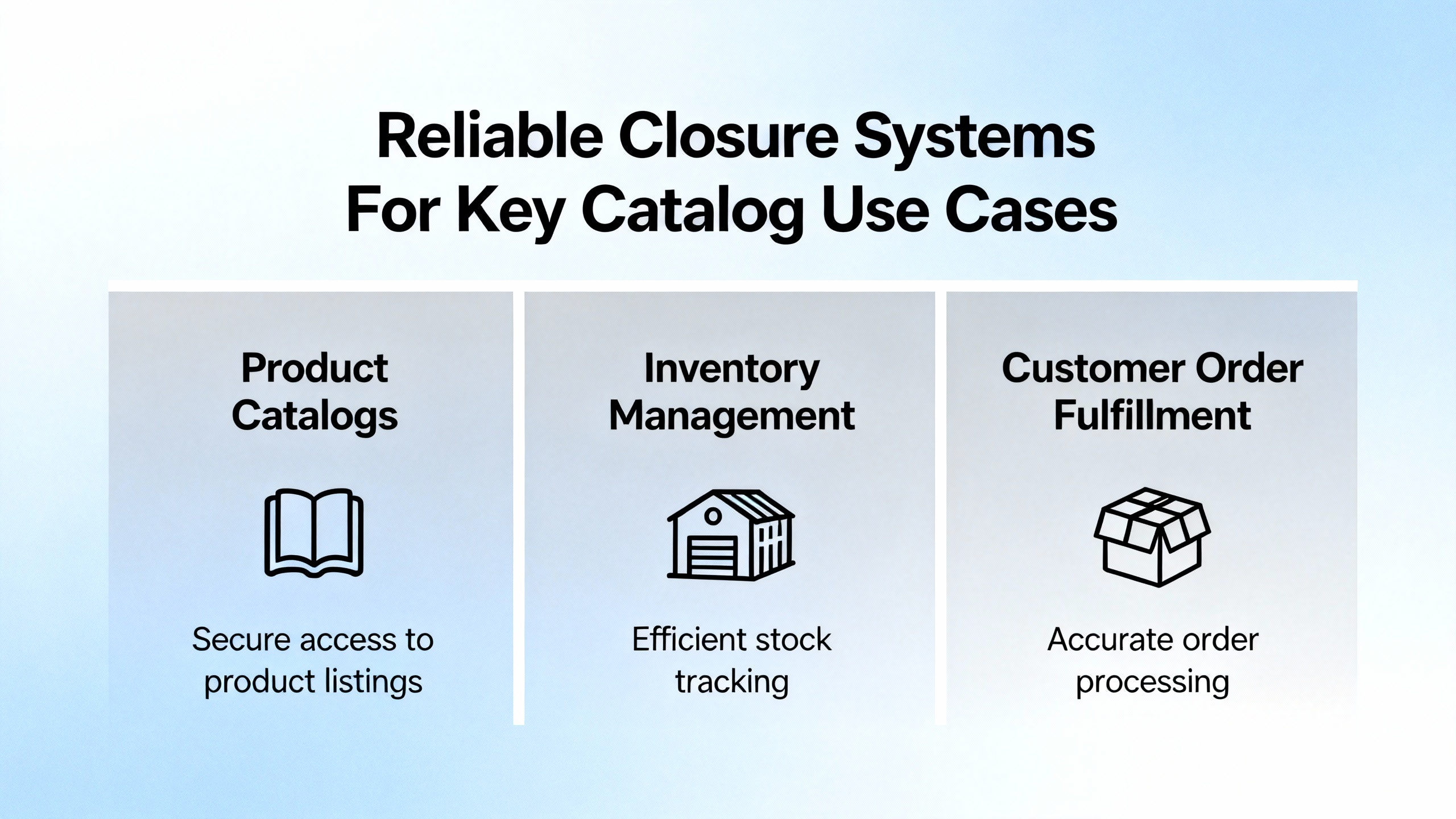
Different product categories call for different closure strategies. Here are three common use cases for print‑on‑demand and dropshipping brands and how to approach their closure systems.
Apparel And Home Textile Storage
Hayden Hill’s guidance on garment bags is a blueprint for premium clothing storage. They emphasize organic cotton garment bags with zippers for dresses, suits, coats, and heirloom pieces. The breathable fabric allows airflow while the zipper keeps out moths, dust, and light that can fade fabrics. Storage bags in large and extra‑large sizes hold multiple garments and are meant for seasonal storage in closets, drawers, or bins.
ClassicsThreads extends this idea to cloth storage bags for bedding and everyday clothing. Cotton and linen bags provide breathability and natural aesthetics, while polyester and blends offer more structure and water resistance. Zippers are stitched in for secure closure, and transparent panels sometimes allow quick content checks.
Space Centre Storage compares Mylar, standard plastic, and vacuum bags for long‑term storage. Mylar bags combined with oxygen absorbers protect dry goods and some clothing from light and oxygen but are not suited to sharp or heavy items. Standard plastic bags are best for light items and short‑term coverage. Vacuum bags are designed to save space for bulky textiles but can be more expensive and less reusable.
If you are selling personalized bags for clothing and bedding, position zippered cotton or canvas storage bags as the reusable, breathable, brandable option for seasonal wardrobes, and optionally add vacuum zipper bags as an upsell for customers focused on maximum space saving. Make sure your zippers run the full length of one side, so customers can easily place bulky blankets inside without stressing the slider, and add handles anchored near the zipper so the closure is not carrying all the weight.
Office, Study, And Everyday Carry
Yotenpack highlights how zipper bags transform office organization. Clear zipper bags keep documents and electronics visible and protected. Mesh zipper bags are durable and breathable for files and craft supplies. Fabric zipper bags provide stylish, flexible storage for personal items and project kits. Heavy‑duty plastic zipper bags protect important documents and heavier tools, while waterproof variants are crucial for fieldwork or outdoor settings.
From a usability standpoint, this is exactly where the ALPAKA Zip Pouch review offers a warning. An everyday carry pouch that cannot comfortably fit cards, cash, and coins, or that makes items catch on the zipper, erodes trust. When designing or choosing personalized office pouches, prioritize:
Card and passport friendliness, with interior dimensions and opening size that give a comfortable margin around common items.
Zipper placement that allows the pouch to open wide enough for visibility without forcing contents to scrape against teeth.
Pull tabs or cords that are easy to grab, especially for customers who will open the pouch many times a day.
If your brand targets students or remote workers, consider multi‑compartment zipper organizers that separate tech, writing tools, and small accessories. Printing your artwork on a bag that quietly reduces friction in their day is one of the fastest ways to become a favorite brand.
Jewelry, Cosmetics, And Travel Accessories
KimEcopak notes that cosmetics and pharmaceutical packaging needs are stringent. Zipper bags provide compact, hygienic packaging for creams, pills, and sheet masks, meeting both portability and safety requirements. In the fashion world, zipper bags are used to package and organize jewelry and small accessories for retailers, keeping items untangled and visible while enhancing the unboxing experience.
Universepack emphasizes that zipper jewelry bags serve both as protective packaging and branding tools and cites Jewelry Business Magazine’s finding that more than half of consumers judge brand prestige through packaging quality. For travel, dedicated jewelry zipper bags and organized toiletry pouches are particularly valued by luxury travelers.
Construction details matter here. For liquids and creams, choose laminated or coated materials with reliable, possibly waterproof zippers, and fully sealed seams. For jewelry, soft linings or padded inserts protect delicate pieces, while zip closures prevent items from spilling during transit. Clear windows or panels help customers quickly locate items, but opaque or tinted designs may better suit premium or discrete products.
Personalization can be subtle: a small logo or pattern on the corner of a jewelry zipper bag can feel more refined than a full‑surface print, especially if the bag is expected to live inside a suitcase or dresser drawer for years.
Operational Playbook: Vetting Zipper Bag Quality With Suppliers
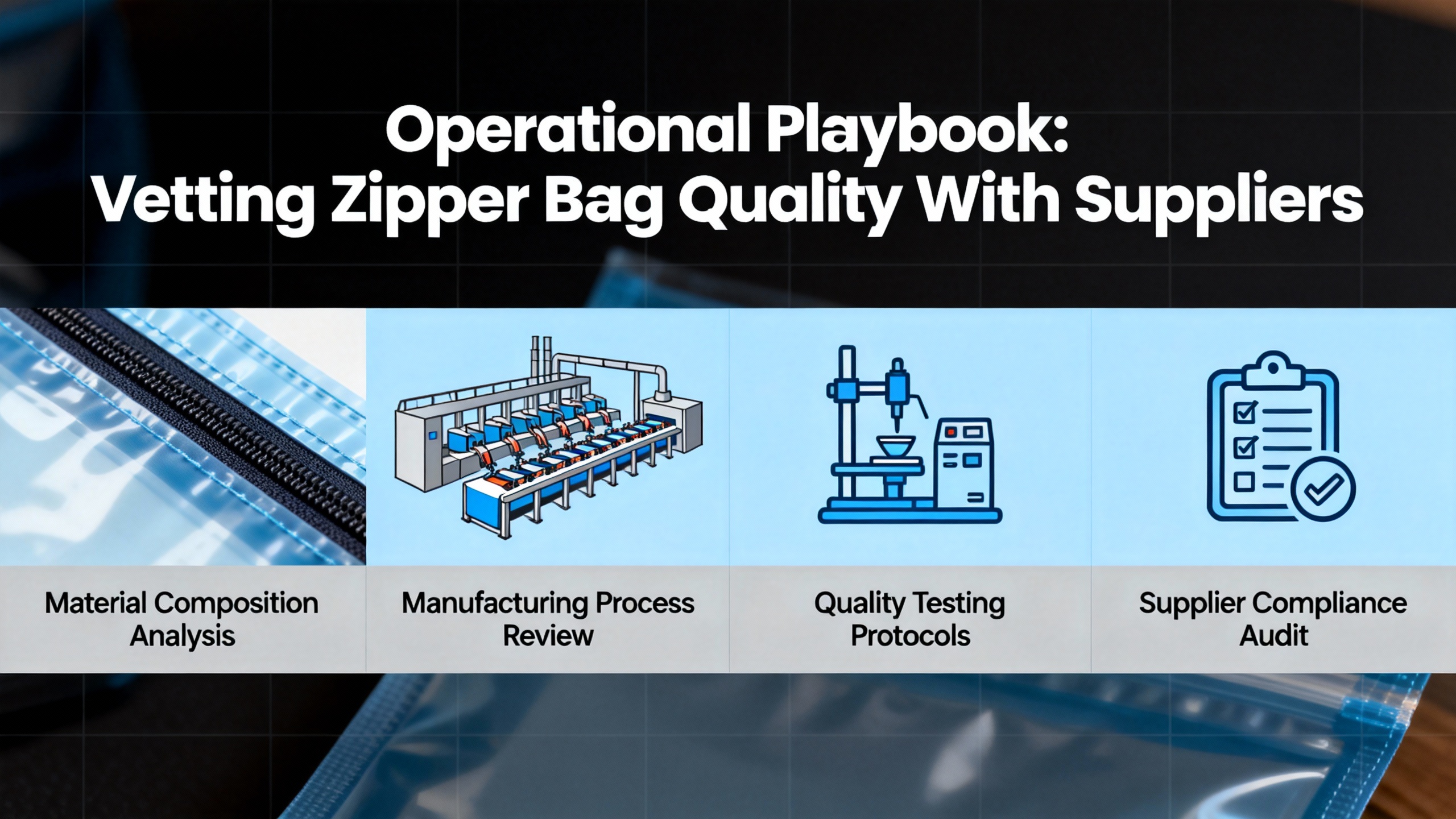
For a dropshipping or on‑demand printing business, your leverage lies in specification and sampling. You may not own the factory, but you can enforce standards.
Start with clear technical requirements. Drawing on DHgate’s material guidelines, specify material type, bag thickness in mils for plastic bags, and any special needs such as anti‑moisture properties, heat resistance for warm climates or shipping, or biodegradable materials for eco‑focused lines. For fabric bags, define the fabric type, whether you want coated or uncoated surfaces, and whether waterproof performance is required.
Always ask about zipper brand and construction. Suppliers who use recognized zipper brands are often proud to say so. If they use generic zippers, request information on testing and failure rates. Ask how the zipper is attached: sewn, taped, or welded, and whether stress points around the opening and handles are reinforced.
Order samples and perform simple stress tests. For plastic zipper bags, Universal Plastic’s mil guidelines give you a baseline. Fill three‑mil bags with the heaviest items you realistically expect, including some with corners or edges, and repeatedly open and close the zipper, flexing the bag. For fabric or canvas bags, load them close to their advertised capacity, lift them by the handles, and see whether the zipper waves, separates, or leaks.
Evaluate user experience, not just survival. Test whether cards smoothly enter and exit pouches, whether zippers snag on internal seams or label edges, and whether bags open wide enough for visibility. The ALPAKA review demonstrates that a product can be physically intact and still fail due to poor ergonomics.
Finally, bake education into your product pages. A short line advising customers not to overstuff compression bags, to keep the zipper path free of fabric, and to leave a small buffer near the opening for better sealing takes seconds to add but can prevent many closure‑related complaints.
Care, Cleaning, And Reuse: Keeping Closures Reliable
Long‑lasting personalized bags support both sustainability and brand visibility, but only if customers know how to care for them.
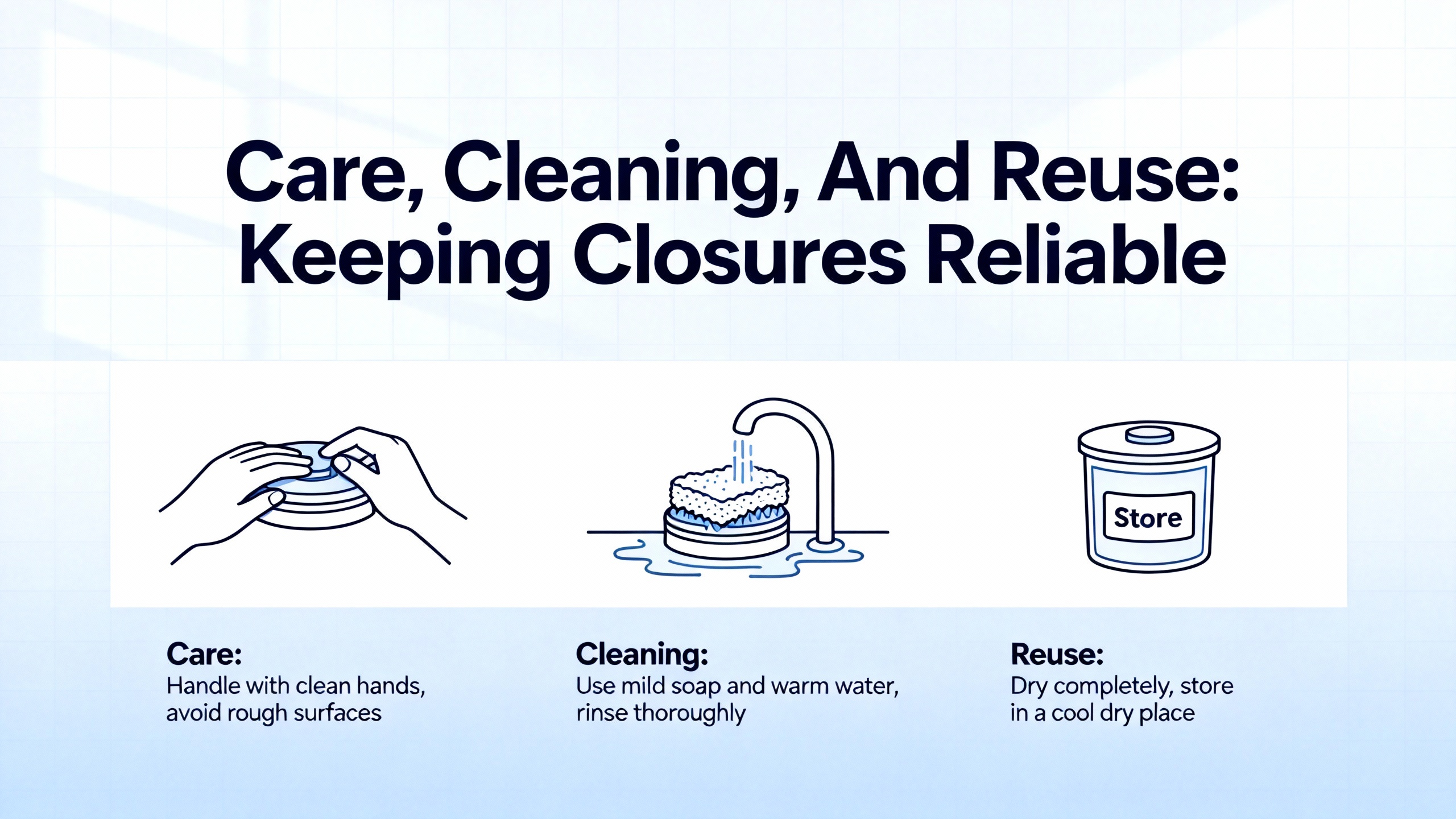
Hayden Hill offers detailed care guidance for organic cotton garment bags. Before washing, they recommend removing removable zipper pulls to prevent tearing delicate fabric, damaging the washing machine, or tangling with other items. Turning bags inside out and shaking out dust or embellishments helps restore shape. For washing, cold water and mild detergent are preferred, with optional white vinegar for odors, while bleach and fabric softener are discouraged because they can weaken fibers. Hand washing with light agitation and gentle pressing to remove excess water, followed by air drying away from direct heat or sunlight, preserves both fabric and zipper. Tumble drying is discouraged due to the risk of shrinkage and fabric weakening.
KimEcopak’s guidance for reusable zipper bags echoes similar themes. Rinsing bags with cold water immediately after use prevents residue from hardening. Washing with mild detergent, avoiding harsh chemicals, and fully air drying before storage helps prevent mold and odor and maintains the integrity of the material and closure.
Zipper maintenance itself matters. A zipper bag usage guide notes that applying silicone spray periodically can keep zippers running smoothly and reduce snagging or sticking, prolonging overall bag usability. Especially for heavy‑duty travel or outdoor bags, this simple step can be the difference between a zipper that lasts for years and one that fails during peak season.
It is worth incorporating these care principles into your ecommerce content. A short care card graphic printed inside a garment bag or a section on your product page that explains washing and air‑drying recommendations not only helps customers but reinforces your brand as thoughtful and knowledgeable.
FAQ: Smart Decisions About Durable Zipper Personalized Bags
How thick should plastic zipper bags be for ecommerce products?
Universal Plastic recommends one to two mil thickness for very light items and short‑term storage, such as simple product inserts. For retail‑ready goods that customers will open and close repeatedly, around three mil is widely used, providing moderate weight capacity and good puncture resistance. For heavier, sharp, or high‑value items such as metal parts or high‑end hardware, four mil and above provide the extra strength and puncture resistance you want. When in doubt, sample both thicknesses and test with the actual items you plan to ship.
Are vacuum or Mylar bags a good replacement for zipper storage bags?
Space Centre Storage explains that Mylar bags, often used with oxygen absorbers, offer excellent barriers to light and oxygen and work well for dry goods and some textiles, but they are not ideal for sharp or very heavy items and are usually heat‑sealed rather than zip‑closed. Vacuum bags shine when reducing volume for bulky textiles like comforters, but they can be less reusable and more expensive. For personalized, daily‑use products, resealable zipper bags in fabric or plastic are usually better because customers can open and close them easily and reuse them as organizers. Mylar and vacuum bags make the most sense as add‑on storage solutions rather than replacements for your core personalized zipper bags.
How can I talk about zipper quality with a print‑on‑demand or dropship supplier without sounding overly technical?
You do not need to be an engineer. Use practical language linked to end use. Explain that your customers will open and close the bag many times and that you want the zipper to slide smoothly, lock firmly, and resist popping open under gentle tension. Reference well‑known expectations: mention that brands like Ziploc promote their heavy duty bags as puncture‑resistant with reinforced seams, and that you want similar robustness relative to your product category. Ask suppliers whether they use branded zippers, what thickness in mils they recommend for your items, and whether they can share test results or long‑term clients using the same construction. Suppliers who are serious about durability will be happy to have that conversation.
Closing Thoughts
Reliable zipper closure systems turn personalized bags from one‑time packaging into long‑term brand assets. When you combine thoughtful sizing, appropriate materials and thickness, proven zipper hardware, and clear care guidance, you create products that customers reach for daily in their closets, offices, suitcases, and studios. As you build or refine your print‑on‑demand catalog, treat the zipper not as an afterthought, but as a strategic design decision that protects your reputation, reduces complaints, and quietly compounds your brand’s visibility over time.
References
- https://admisiones.unicah.edu/Resources/EukEUZ/6OK124/bags-to__sew__for_beginners.pdf
- https://insights.made-in-china.com/Essential-Tips-and-Tricks-for-Mastering-Zipper-Bag-Use-and-Meeting-Your-Carrying-Needs_FaRtyOwVZEIG.html
- https://alpakagear.com/products/zip-pouch?srsltid=AfmBOoqwRMf5lEp9gvZY1EorKMgXge4tEk_tYWJgbE2miogCyx0k5bJa
- https://smart.dhgate.com/how-to-choose-a-durable-zipper-bag-key-features-and-materials-to-look-for/
- https://nomadskitchen.ca/guide-long-term-food-storage/
- https://www.spacecentrestorage.com/blog/what-bags-are-best-for-long-term-storage.html
- https://szoneier.com/best-waterproof-fabrics-for-bags/
- https://yotenpackaging.com/the-best-zipper-bags-for-organizing-your-office/
- https://www.amazon.com/Comforter-Storage-Bags-Zipper-Conveniently/dp/B0C5472BVT
- https://www.calcarcover.com/product/car-jacket-storage-bags/7528?srsltid=AfmBOoqOkT4-jeqZpYUaU11fmNV9plAlpZyWhnnLjUalgjIcnkWfDYj1