

Custom Gifts Free Design Service: Professional Help for Personalized Items

Custom Gifts Free Design Service: Professional Help for Personalized Items

Jan 3, 2026 by Iris POD e-Commerce 101

Custom gifts are no longer a niche side category in e-commerce. They sit right at the intersection of emotional storytelling, smart technology, and lean on-demand production. As a mentor working with print-on-demand and dropshipping founders, I see one pattern repeatedly: the stores that truly break out of the commodity trap are the ones that pair personalized products with professional design help. Often, that help is packaged as a “free design service” bundled into the purchase. Done well, it feels like white-glove creative support for the customer and a powerful growth engine for the business.

In this article, I will unpack what a custom gifts free design service actually is, how it fits into an on-demand printing and dropshipping model, the economics behind “free,” and the practical steps to implement it without drowning in revisions or eroding your margins.

Why Personalized Gifts Are Booming

Across multiple sources in the personalized gift space, one theme is constant: buyers actively seek unique, meaningful products and are willing to pay for that emotional value. GetPrintbox notes that the global personalized gifts market is forecast to reach about $43.3 billion by 2027, driven by demand for emotionally resonant, story-driven products rather than generic prints. PrintKK emphasizes the same dynamic from an operator’s standpoint: custom items like mugs, blankets, apparel, and candles can be produced with low inventory risk through print-on-demand, while still carrying a premium because they feel bespoke.

From the consumer’s perspective, companies like Shutterfly and 4OVER4 define personalized gifts as everyday objects that carry photos, names, dates, inside jokes, or brand elements. These items turn a simple mug, blanket, or wine label into a memory anchor. Articles from Bags of Love and Thoughtful Presence describe how even ordinary moments and “just because” gestures become more meaningful when the gift tells a story about the recipient’s personality, hobbies, or shared memories.

This trend is not limited to private occasions. In the corporate world, Route 75 Imprints positions branded gifts as strategic tools to build relationships, reinforce identity, and boost morale. Monday Merch shows how personalized, eco-friendly tech and lifestyle items serve as everyday reminders of a company’s values. MOO reports survey results that about 83 percent of recipients felt closer to companies that sent them a gift, underlining that thoughtful gifting is not a soft luxury; it is a retention and loyalty strategy.

In short, the market is large and growing, buyers expect personal relevance, and brands are using gifting as a relationship engine. That sets the stage for design help to become a differentiator rather than a cost center.

What Is a Custom Gifts Free Design Service?

A custom gifts free design service is a promise to your customers that you will help them transform their ideas, photos, and messages into a polished, print-ready design at no extra charge beyond the product cost. Instead of leaving buyers alone with a clunky editor and a blinking cursor, you put professional creative support behind their personalization.

This service goes beyond the standard online designer many platforms offer. Companies like Kickflip and 4OVER4 highlight how visual product configurators make it easy for customers to select colors, upload images, and add text. That self-serve layer is valuable. However, a free design service adds a human layer on top, where a designer reviews, refines, or even fully creates the layout, typography, and visual hierarchy, while making sure the file will print cleanly on the chosen product.

In practice, a free design service can range from light-touch support to done-for-you work. On the lighter end, your team might simply fix cropping, correct spelling, and align elements on a personalized mug or tote bag. On the heavier end, you might design a full wedding invitation suite, a detailed photo collage blanket, or a curated corporate gift box concept from scratch, all while presenting it to the customer as an included service when they order.

How It Fits Into On-Demand Printing and Dropshipping

Personalized gift businesses frequently run on a print-on-demand or hybrid model. GetPrintbox and PrintKK both describe an ecosystem where merchants use powerful online editors, pass final designs to manufacturing partners, and ship directly to customers without holding inventory. This structure is ideal for offering free design services because design and production are both scalable.

A typical workflow looks like this. A customer arrives at your store, selects a product such as a photo book, engraved jewelry, a custom gaming controller, or a personalized tote bag. They share their content and basic preferences. Your design team, which may be in-house, remote, or freelance, translates that into a print-ready layout and sends a proof. Once approved, the design flows into your print-on-demand or dropshipping pipeline, and production partners handle printing, engraving, sewing, or embroidery.

Modern tools make this pipeline more reliable. GetPrintbox highlights the importance of real-time image-resolution checks to prevent blurry uploads and reduce reprints. PrintKK points to integrated stacks that connect design tools, e-commerce platforms, and fulfillment. A free design service fits naturally into this environment: you are not manually crafting every step; you are adding professional judgment where automation alone would fall short.

Why Professional Help Beats Pure DIY

The temptation in custom gifting is to assume a slick online editor is enough. Let customers drag and drop, and you have removed friction, right? In reality, the stores that rely solely on self-service editors often end up with inconsistent quality, frustrated customers, and designs that look amateur once printed.

Senior designers and brand designers bring strategic value that self-service tools cannot match. Passionates describes senior graphic designers as experienced creatives who combine visual skill with strategic thinking. They own projects end to end, mentor others, and make sure every design aligns with brand strategy. icreatives emphasizes that good designers use typography, color, layout, and imagery to solve business problems, not just to make things look “nice.”

Verobranding explains the difference between general graphic design and brand design: brand designers create integrated systems of colors, type, symbols, and layouts that express a company’s story and values consistently. For a custom gift store, that means your templates, product mockups, and packaging design form a coherent experience rather than a patchwork of styles.

In my experience working with print-on-demand founders, the pivot from “DIY everything in Canva” to “work with a professional designer on brand and templates” is often when the business graduates from side hustle vibes to a recognizable brand. Products like personalized mugs, tote bags, notebooks, blankets, and corporate gift sets start to look like they belong to the same family, which makes marketing, upselling, and repeat sales much easier.

Freelance and Remote Designers as Flexible Capacity

The good news is that you do not need a large in-house design department to deliver a free design service. Quickly Hire describes how freelance designers reduce overhead by eliminating office space and employer benefits, while giving you access to specialized skills on a project basis. Near notes that most graphic designers already work freelance, and remote setups let you tap a global talent pool with different styles and cultural perspectives.

Remote designers fit custom gifting particularly well because the work is brief-based, largely asynchronous, and tool driven. Articles from Quickly Hire and Near share best practices that apply perfectly here: use detailed creative briefs, review portfolios to ensure style fit, start with smaller test projects, and maintain clear communication through project-management tools and regular check-ins. Security and compliance can be managed through NDAs and secure file sharing, which is essential when you handle personal photos or sensitive corporate artwork.

In a free design service model, your design capacity can be a blend of a core team that defines brand guidelines and templates plus a bench of freelancers handling overflow or specialized tasks such as illustration-heavy designs, complex photo retouching, or motion graphics for marketing content.

Pros and Cons of Offering a Free Design Service

A free design promise is a powerful differentiator, but it is not risk free. It changes your customer expectations, operational load, and cost structure. It helps to look at the trade-offs clearly.

Aspect

Advantages

Risks / Trade-offs

Customer experience

Feels high touch and guided; reduces overwhelm and design anxiety for non-designers.

Customers may expect agency-level work and unlimited revisions without understanding constraints.

Conversion and revenue

Boosts conversion for hesitant buyers and can support higher average order values and bundles.

If pricing is not calibrated, design time can quietly erode margins on lower-ticket products.

Brand differentiation

Positions your store as a creative partner rather than a commodity print shop.

Competitors may respond with similar claims, so quality and reliability must stay consistently high.

Operations

Encourages tighter briefs, proofing, and quality control that improve outcomes overall.

Increases complexity in workflow management, especially during seasonal spikes and big corporate campaigns.

Talent and staffing

Justifies investment in senior designers, brand systems, and vetted freelance networks.

Requires ongoing effort to vet designers, maintain standards, and avoid quality gaps between different vendors.

The question is not whether a free design service is “good” or “bad,” but whether you can design it in a way that amplifies your strengths and aligns with your business model.

Making “Free” Design Economically Sustainable

On paper, free design sounds like giving away labor. In practice, you are bundling design into the perceived value of the product. Both GetPrintbox and PrintKK stress that personalized gifts carry higher perceived value than generic versions. Buyers are not just paying for the physical mug or blanket; they are paying for a story embodied in that item.

PrintKK gives a simple pricing warning: if a cup costs five dollars to produce and ship and you charge six dollars, you are underpaying yourself and eroding profitability. When you add free design into the mix, you must treat design time as part of your cost structure in the same way you treat materials and shipping.

From a mentor’s perspective, I encourage founders to estimate an average design time per order by product category. Simple text-only personalization on a tote bag or notebook might take just a few minutes using a template, while a custom photo book, curated corporate gift box, or complex collage could take significantly longer. Once you understand these patterns, you can make several smart moves.

First, focus your free design promise on products with enough margin to carry that cost. GetPrintbox recommends going beyond classic mugs and T-shirts into higher-value items like story photo books, puzzles, blankets with kids’ art, and bundled gift boxes. Those products can sustain a more generous design service because the emotional premium and willingness to pay are higher.

Second, use order size and type to segment the offer. PrintKK highlights corporate gifting as a major growth lever because companies place larger, more predictable orders. For a corporate client ordering gift boxes or employee kits, you can afford to invest more design time upfront in exchange for volume and repeat campaigns. Route 75 Imprints and Monday Merch both show how curated, personalized corporate gifts can become long-term programs rather than one-off orders.

Third, manage promotions thoughtfully. The Personal Creations example shows a campaign with a steep thirty five percent discount framed as a one-day sale. If you run frequent deep discounts and also promise free design across the board, your margins will compress quickly. Many successful operators reserve the most labor-intensive free design offers for full-price products or for customers with high lifetime value.

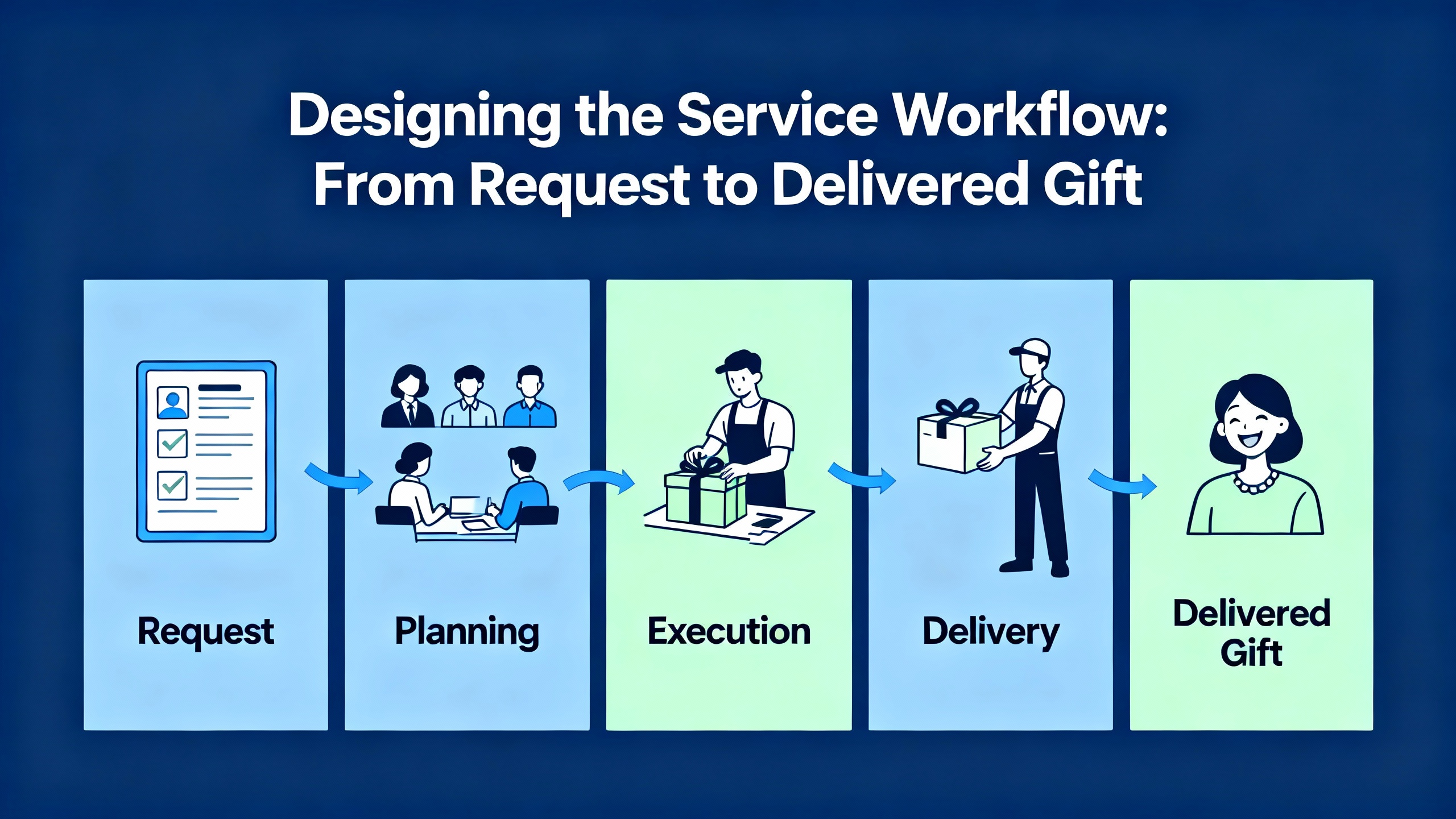
Designing the Service Workflow: From Request to Delivered Gift

A sustainable free design service lives or dies on process. When you wing it, you drown in email threads and vague requests. When you design the workflow up front, you can scale without chaos.

Intake and Briefing

The same principles that hiring guides recommend for design teams apply to your relationship with customers. Quickly Hire, Near, and icreatives all emphasize the importance of detailed briefs and clear expectations. Your intake form should capture the occasion, the recipient’s profile, preferred style, and any must-include names, dates, or messages.

Content from Thoughtful Presence and Bags of Love reinforces that the most meaningful gifts reflect the recipient’s identity, hobbies, and shared memories. Your intake process should make it easy for customers to tell that story. Simple prompts such as “Describe one memory you want this gift to reflect” or “What is the recipient’s style: playful, minimalist, bold, or classic?” give your designers a strong starting point.

Concept and Proofing

Once you have a brief, your designers can lean on your brand system and template library. GetPrintbox describes the value of flexible online editors with drag-and-drop layouts and production-ready templates for key occasions such as weddings, holidays, and anniversaries. PrintKK suggests tools like Canva and Photoshop for fast, branded visuals and fine-tuned edits, and mockup generators for realistic previews.

Your team can adapt these assets to each order, then send a digital proof. Passionates notes that senior designers manage projects from concept to completion, using iterative workflows, stakeholder input, and usability tests where needed. In a custom gift context, iteration usually means a small number of targeted revisions. To keep your “free” design service sustainable, set clear revision limits and turnaround times up front, and guide feedback toward specific elements such as text, photos, or color rather than open-ended reworks.

Production-Ready Files and Quality Control

After approval, the design must be checked for technical quality and sent to production. GetPrintbox stresses image-quality management as a key risk area, recommending real-time resolution checks and enhancement tools to avoid blurry uploads and costly reprints. That discipline is non-negotiable when customers entrust you with once-in-a-lifetime moments such as weddings or memorial gifts.

Quality control also extends to packaging. Route 75 Imprints and TeckWrap Craft both highlight how thoughtful presentation, from custom boxes and ribbons to decals and themed elements, amplifies the impact of the gift. A free design service can include standard packaging layouts and simple personalized touches, such as name labels or brief printed messages, without adding too much extra time per order.
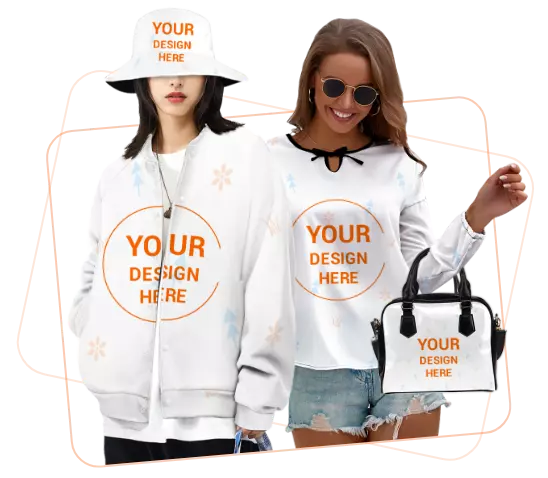
Free Design Service For Personalized Products

How Free Design Supports Corporate and Employee Gifting

Corporate and employee gifting is where a free design service often unlocks disproportionate value. Decision makers in marketing, HR, and operations are busy. They know personalized, high-quality gifts matter, but they do not want to become creative directors in their spare time.

Route 75 Imprints frames corporate giveaways as strategic relationship tools and urges companies to focus on personalization, usability, and subtle branding rather than cheap swag. Monday Merch shows how premium tech items, sustainable tote bags, reusable straw sets, recycled bottles, ergonomic stands, and cozy blankets can be personalized with names and discreet logos, aligning with company values like sustainability and well-being.

MOO takes this a step further by positioning personalized workplace gifting as a counter to hustle culture. They emphasize impact per person rather than bulk quantity and cite data that a large majority of recipients feel closer to companies that send them thoughtful gifts. A free design service helps you implement that philosophy at scale. You can offer design support for engraved pens, notebooks, bottles, or welcome kits, ensuring each item reflects both the company’s brand and the individual recipient.

From a business perspective, corporate clients are attractive because they often order in volume, repeat seasonally, and appreciate partners who handle the creative heavy lifting. When you bundle free design with curated gift proposals, mockups, and consistent packaging, you become a strategic gifting partner rather than just another vendor.

Product Categories Where Free Design Shines

Not every item needs intensive design support. Part of your strategy is choosing where a free design service creates real lift.

High-emotion photo products are an obvious fit. GetPrintbox highlights story-driven photo books, pet blankets, travel canvases, and collages. Shutterfly and Bags of Love showcase photo blankets, mugs, cushions, calendars, and frames as everyday keepsakes. Customers often have a folder full of images but no clear idea of how to arrange them. Your design service can handle layout, sequencing, cropping, and the addition of brief captions or dates.

Themed and hobby-based gifts are another strong area. Kickflip’s custom gift guide mentions items like custom gaming controllers, personalized jewelry, monogrammed shoes, custom socks, water bottles, handcrafted furniture, leashes for pets, and even professional-level baseball bats. A designer can help match color schemes to team colors, lifestyles, or home décor, and ensure personalization feels integrated rather than pasted on.

Tote bags deserve special mention. Canva’s content describes how custom tote bags have moved from band merch to personal gifts and even side-hustle products. They are practical, visible, and expressive. Your design service can help customers translate inside jokes, fandom references, or favorite lyrics into graphics that print cleanly and age well, while avoiding overcomplicated layouts that do not read from a distance.

Finally, there is a hybrid audience of DIY crafters. TeckWrap Craft shows how vinyl personalization can transform everyday items like mugs, cutting boards, pillows, aprons, and mason jars. For these customers, you can provide free design help in the form of ready-to-cut vector files, typography choices, or composition advice, letting them handle the physical crafting while you handle the creative direction.

Managing Risks and Setting Boundaries

Every generous promise in e-commerce needs guardrails. A free design service without boundaries invites scope creep and burnout.

From the design side, Passionates and icreatives stress the importance of clear processes, realistic timelines, and structured feedback. Those same ideas should shape your customer-facing policies. Define what “free design” includes, such as text layout, basic photo edits, and one or two rounds of revisions, and what falls into a paid custom design tier, such as hand-drawn illustrations or complex branding projects.

Communication is another risk area. Quickly Hire and Near both note that remote arrangements require clear channels, milestones, and expectations. Internally, create checklists for designers and customer support so everyone understands how design requests are triaged, how proofs are delivered, and how deadlines align with production and shipping windows, especially around holidays.

Legal and brand safety also matter. In my own mentoring work, I advise founders to be explicit about what content is acceptable. Customers should confirm they own or have rights to the photos and artwork they upload. Be cautious with third-party characters and logos, even in popular themes like movie franchises or sports teams, unless you have appropriate licensing. This protects both your business and your print partners.

Finally, when working with freelancers, follow the security guidance from Quickly Hire by using secure file-sharing systems, NDAs, and clear agreements that cover ownership of final designs. Personalized gifts often involve sensitive family images or internal corporate visuals, so you must treat data handling as seriously as design quality.

Print On Demand Custom Gifts Design Strategy

Implementation Roadmap for Store Owners

Translating this strategy into action does not require a massive team from day one, but it does require deliberate choices.

It starts with clarity about your niche and customer personas. GetPrintbox suggests focusing on clearly defined segments such as parents, pet owners, or newlyweds, and choosing a narrow product range where you can excel. Decide whether your free design service will primarily support family photo stories, pet-themed décor, corporate gift sets, or another specific area. This focus will guide your hiring, your templates, and your marketing.

Next, establish your design foundation. Consider working with a professional brand or senior designer, as described by Verobranding and Passionates, to create your visual identity, product template library, and packaging system. That investment pays off for years by making every subsequent personalization faster and more consistent. Supplement that foundation with vetted freelancers using the practices recommended by Quickly Hire, Near, and icreatives, so you can flex up during peak seasons without sacrificing standards.

Then, assemble your tool stack. Kickflip, GetPrintbox, and PrintKK all emphasize the importance of strong product editors and integrations with e-commerce platforms. Combine those with familiar design tools such as Canva or Photoshop and mockup generators to create efficient workflows. The goal is to make it easy for designers to work within your templates and for customers to preview their personalized products.

After that, pilot your free design service rather than rolling it out everywhere at once. PrintKK advises starting with a small number of focused products. Choose a handful of high-margin items, define clear rules for what your free service includes, and measure design time, revision rates, and customer satisfaction. Use this pilot data to refine pricing, processes, and staffing before expanding to more categories or larger campaigns.

Over time, refine based on behavior rather than assumptions. Track which products attract the most design requests, which customers come back repeatedly, and where your team spends disproportionate time. Use that insight to bundle products into curated sets, develop reusable design motifs, or introduce paid tiers for more complex work. Treat your free design service as a living part of your value proposition, not a static feature.

FAQ

Is a free design service necessary to succeed with custom gifts?

It is not strictly necessary, but it can be a powerful advantage. The market is crowded with self-serve personalization tools, and many customers feel overwhelmed by the blank canvas. By offering professional help, you reduce friction, improve outcomes, and justify premium pricing. When you structure the service carefully and focus it on the products and customers where it has the biggest impact, it often becomes one of the strongest reasons buyers choose your brand over an Amazon-like alternative.

How can a small one-person shop afford professional designers?

Early on, many founders play dual roles as operator and basic designer, especially when using templates and simple editors. The key is to be honest about your limits. You can start by investing in a professional brand and template system once, then using freelancers for overflow or specialized tasks. Articles from Quickly Hire and Near show that freelancers let you scale design capacity up and down per project, paying only for work you need. As long as you account for that cost in your pricing and focus on higher-value products, you do not need a full-time design salary on day one.

Should I let customers design everything themselves instead?

Self-service tools have their place, and many buyers enjoy tweaking colors or adding text. The challenge is that unsupervised DIY design often leads to inconsistent quality and unmet expectations once printed. A balanced approach is to let customers start with templates in an editor, then have your design team review and refine files before production. That way, customers feel involved, but you still control quality and protect your brand reputation.

A well-designed free design service turns your store from a product catalog into a creative partner. In an era where personalization, emotional connection, and thoughtful branding drive real business results, that is a strategic position worth building toward.

References

  1. https://www.personalcreations.com/?srsltid=AfmBOoqSBMXM2QwQ7ZRcXk9F751yH3Zqhif1sARUIq0l6QHTYwdPl8Wu
  2. https://www.thingsremembered.com/
  3. https://gokickflip.com/blog/custom-gifts-ideas
  4. https://www.hirewithnear.com/blog/why-should-you-hire-a-remote-graphic-designer-top-9-reasons
  5. https://www.mondaymerch.com/articles/ultimate-guide-for-personalized-employee-gifts-2025
  6. https://www.msmcreative.com/single-post/the-benefits-of-hiring-a-professional-graphic-designer-for-your-business
  7. https://www.natsuminishizumi.com/blog/benefits-of-hiring-a-professional-designer-to-create-your-business-logo
  8. https://passionates.com/the-benefits-of-hiring-a-senior-graphic-designer-and-how-to-find-the-perfect-fit-for-your-company/
  9. https://www.personalisedbyaspire.com/blog/how-to-create-memorable-custom-gifts-that-stand-out
  10. https://quicklyhire.com/5-cost-saving-benefits-of-hiring-freelance-designers-for-small-businesses/

Like the article

0
Custom Gifts Free Design Service: Professional Help for Personalized Items

Custom Gifts Free Design Service: Professional Help for Personalized Items

Custom gifts are no longer a niche side category in e-commerce. They sit right at the intersection of emotional storytelling, smart technology, and lean on-demand production. As a mentor working with print-on-demand and dropshipping founders, I see one pattern repeatedly: the stores that truly break out of the commodity trap are the ones that pair personalized products with professional design help. Often, that help is packaged as a “free design service” bundled into the purchase. Done well, it feels like white-glove creative support for the customer and a powerful growth engine for the business.

In this article, I will unpack what a custom gifts free design service actually is, how it fits into an on-demand printing and dropshipping model, the economics behind “free,” and the practical steps to implement it without drowning in revisions or eroding your margins.

Why Personalized Gifts Are Booming

Across multiple sources in the personalized gift space, one theme is constant: buyers actively seek unique, meaningful products and are willing to pay for that emotional value. GetPrintbox notes that the global personalized gifts market is forecast to reach about $43.3 billion by 2027, driven by demand for emotionally resonant, story-driven products rather than generic prints. PrintKK emphasizes the same dynamic from an operator’s standpoint: custom items like mugs, blankets, apparel, and candles can be produced with low inventory risk through print-on-demand, while still carrying a premium because they feel bespoke.

From the consumer’s perspective, companies like Shutterfly and 4OVER4 define personalized gifts as everyday objects that carry photos, names, dates, inside jokes, or brand elements. These items turn a simple mug, blanket, or wine label into a memory anchor. Articles from Bags of Love and Thoughtful Presence describe how even ordinary moments and “just because” gestures become more meaningful when the gift tells a story about the recipient’s personality, hobbies, or shared memories.

This trend is not limited to private occasions. In the corporate world, Route 75 Imprints positions branded gifts as strategic tools to build relationships, reinforce identity, and boost morale. Monday Merch shows how personalized, eco-friendly tech and lifestyle items serve as everyday reminders of a company’s values. MOO reports survey results that about 83 percent of recipients felt closer to companies that sent them a gift, underlining that thoughtful gifting is not a soft luxury; it is a retention and loyalty strategy.

In short, the market is large and growing, buyers expect personal relevance, and brands are using gifting as a relationship engine. That sets the stage for design help to become a differentiator rather than a cost center.

What Is a Custom Gifts Free Design Service?

A custom gifts free design service is a promise to your customers that you will help them transform their ideas, photos, and messages into a polished, print-ready design at no extra charge beyond the product cost. Instead of leaving buyers alone with a clunky editor and a blinking cursor, you put professional creative support behind their personalization.

This service goes beyond the standard online designer many platforms offer. Companies like Kickflip and 4OVER4 highlight how visual product configurators make it easy for customers to select colors, upload images, and add text. That self-serve layer is valuable. However, a free design service adds a human layer on top, where a designer reviews, refines, or even fully creates the layout, typography, and visual hierarchy, while making sure the file will print cleanly on the chosen product.

In practice, a free design service can range from light-touch support to done-for-you work. On the lighter end, your team might simply fix cropping, correct spelling, and align elements on a personalized mug or tote bag. On the heavier end, you might design a full wedding invitation suite, a detailed photo collage blanket, or a curated corporate gift box concept from scratch, all while presenting it to the customer as an included service when they order.

How It Fits Into On-Demand Printing and Dropshipping

Personalized gift businesses frequently run on a print-on-demand or hybrid model. GetPrintbox and PrintKK both describe an ecosystem where merchants use powerful online editors, pass final designs to manufacturing partners, and ship directly to customers without holding inventory. This structure is ideal for offering free design services because design and production are both scalable.

A typical workflow looks like this. A customer arrives at your store, selects a product such as a photo book, engraved jewelry, a custom gaming controller, or a personalized tote bag. They share their content and basic preferences. Your design team, which may be in-house, remote, or freelance, translates that into a print-ready layout and sends a proof. Once approved, the design flows into your print-on-demand or dropshipping pipeline, and production partners handle printing, engraving, sewing, or embroidery.

Modern tools make this pipeline more reliable. GetPrintbox highlights the importance of real-time image-resolution checks to prevent blurry uploads and reduce reprints. PrintKK points to integrated stacks that connect design tools, e-commerce platforms, and fulfillment. A free design service fits naturally into this environment: you are not manually crafting every step; you are adding professional judgment where automation alone would fall short.

Why Professional Help Beats Pure DIY

The temptation in custom gifting is to assume a slick online editor is enough. Let customers drag and drop, and you have removed friction, right? In reality, the stores that rely solely on self-service editors often end up with inconsistent quality, frustrated customers, and designs that look amateur once printed.

Senior designers and brand designers bring strategic value that self-service tools cannot match. Passionates describes senior graphic designers as experienced creatives who combine visual skill with strategic thinking. They own projects end to end, mentor others, and make sure every design aligns with brand strategy. icreatives emphasizes that good designers use typography, color, layout, and imagery to solve business problems, not just to make things look “nice.”

Verobranding explains the difference between general graphic design and brand design: brand designers create integrated systems of colors, type, symbols, and layouts that express a company’s story and values consistently. For a custom gift store, that means your templates, product mockups, and packaging design form a coherent experience rather than a patchwork of styles.

In my experience working with print-on-demand founders, the pivot from “DIY everything in Canva” to “work with a professional designer on brand and templates” is often when the business graduates from side hustle vibes to a recognizable brand. Products like personalized mugs, tote bags, notebooks, blankets, and corporate gift sets start to look like they belong to the same family, which makes marketing, upselling, and repeat sales much easier.

Freelance and Remote Designers as Flexible Capacity

The good news is that you do not need a large in-house design department to deliver a free design service. Quickly Hire describes how freelance designers reduce overhead by eliminating office space and employer benefits, while giving you access to specialized skills on a project basis. Near notes that most graphic designers already work freelance, and remote setups let you tap a global talent pool with different styles and cultural perspectives.

Remote designers fit custom gifting particularly well because the work is brief-based, largely asynchronous, and tool driven. Articles from Quickly Hire and Near share best practices that apply perfectly here: use detailed creative briefs, review portfolios to ensure style fit, start with smaller test projects, and maintain clear communication through project-management tools and regular check-ins. Security and compliance can be managed through NDAs and secure file sharing, which is essential when you handle personal photos or sensitive corporate artwork.

In a free design service model, your design capacity can be a blend of a core team that defines brand guidelines and templates plus a bench of freelancers handling overflow or specialized tasks such as illustration-heavy designs, complex photo retouching, or motion graphics for marketing content.

Pros and Cons of Offering a Free Design Service

A free design promise is a powerful differentiator, but it is not risk free. It changes your customer expectations, operational load, and cost structure. It helps to look at the trade-offs clearly.

Aspect

Advantages

Risks / Trade-offs

Customer experience

Feels high touch and guided; reduces overwhelm and design anxiety for non-designers.

Customers may expect agency-level work and unlimited revisions without understanding constraints.

Conversion and revenue

Boosts conversion for hesitant buyers and can support higher average order values and bundles.

If pricing is not calibrated, design time can quietly erode margins on lower-ticket products.

Brand differentiation

Positions your store as a creative partner rather than a commodity print shop.

Competitors may respond with similar claims, so quality and reliability must stay consistently high.

Operations

Encourages tighter briefs, proofing, and quality control that improve outcomes overall.

Increases complexity in workflow management, especially during seasonal spikes and big corporate campaigns.

Talent and staffing

Justifies investment in senior designers, brand systems, and vetted freelance networks.

Requires ongoing effort to vet designers, maintain standards, and avoid quality gaps between different vendors.

The question is not whether a free design service is “good” or “bad,” but whether you can design it in a way that amplifies your strengths and aligns with your business model.

Making “Free” Design Economically Sustainable

On paper, free design sounds like giving away labor. In practice, you are bundling design into the perceived value of the product. Both GetPrintbox and PrintKK stress that personalized gifts carry higher perceived value than generic versions. Buyers are not just paying for the physical mug or blanket; they are paying for a story embodied in that item.

PrintKK gives a simple pricing warning: if a cup costs five dollars to produce and ship and you charge six dollars, you are underpaying yourself and eroding profitability. When you add free design into the mix, you must treat design time as part of your cost structure in the same way you treat materials and shipping.

From a mentor’s perspective, I encourage founders to estimate an average design time per order by product category. Simple text-only personalization on a tote bag or notebook might take just a few minutes using a template, while a custom photo book, curated corporate gift box, or complex collage could take significantly longer. Once you understand these patterns, you can make several smart moves.

First, focus your free design promise on products with enough margin to carry that cost. GetPrintbox recommends going beyond classic mugs and T-shirts into higher-value items like story photo books, puzzles, blankets with kids’ art, and bundled gift boxes. Those products can sustain a more generous design service because the emotional premium and willingness to pay are higher.

Second, use order size and type to segment the offer. PrintKK highlights corporate gifting as a major growth lever because companies place larger, more predictable orders. For a corporate client ordering gift boxes or employee kits, you can afford to invest more design time upfront in exchange for volume and repeat campaigns. Route 75 Imprints and Monday Merch both show how curated, personalized corporate gifts can become long-term programs rather than one-off orders.

Third, manage promotions thoughtfully. The Personal Creations example shows a campaign with a steep thirty five percent discount framed as a one-day sale. If you run frequent deep discounts and also promise free design across the board, your margins will compress quickly. Many successful operators reserve the most labor-intensive free design offers for full-price products or for customers with high lifetime value.

Designing the Service Workflow: From Request to Delivered Gift

A sustainable free design service lives or dies on process. When you wing it, you drown in email threads and vague requests. When you design the workflow up front, you can scale without chaos.

Intake and Briefing

The same principles that hiring guides recommend for design teams apply to your relationship with customers. Quickly Hire, Near, and icreatives all emphasize the importance of detailed briefs and clear expectations. Your intake form should capture the occasion, the recipient’s profile, preferred style, and any must-include names, dates, or messages.

Content from Thoughtful Presence and Bags of Love reinforces that the most meaningful gifts reflect the recipient’s identity, hobbies, and shared memories. Your intake process should make it easy for customers to tell that story. Simple prompts such as “Describe one memory you want this gift to reflect” or “What is the recipient’s style: playful, minimalist, bold, or classic?” give your designers a strong starting point.

Concept and Proofing

Once you have a brief, your designers can lean on your brand system and template library. GetPrintbox describes the value of flexible online editors with drag-and-drop layouts and production-ready templates for key occasions such as weddings, holidays, and anniversaries. PrintKK suggests tools like Canva and Photoshop for fast, branded visuals and fine-tuned edits, and mockup generators for realistic previews.

Your team can adapt these assets to each order, then send a digital proof. Passionates notes that senior designers manage projects from concept to completion, using iterative workflows, stakeholder input, and usability tests where needed. In a custom gift context, iteration usually means a small number of targeted revisions. To keep your “free” design service sustainable, set clear revision limits and turnaround times up front, and guide feedback toward specific elements such as text, photos, or color rather than open-ended reworks.

Production-Ready Files and Quality Control

After approval, the design must be checked for technical quality and sent to production. GetPrintbox stresses image-quality management as a key risk area, recommending real-time resolution checks and enhancement tools to avoid blurry uploads and costly reprints. That discipline is non-negotiable when customers entrust you with once-in-a-lifetime moments such as weddings or memorial gifts.

Quality control also extends to packaging. Route 75 Imprints and TeckWrap Craft both highlight how thoughtful presentation, from custom boxes and ribbons to decals and themed elements, amplifies the impact of the gift. A free design service can include standard packaging layouts and simple personalized touches, such as name labels or brief printed messages, without adding too much extra time per order.

Free Design Service For Personalized Products

How Free Design Supports Corporate and Employee Gifting

Corporate and employee gifting is where a free design service often unlocks disproportionate value. Decision makers in marketing, HR, and operations are busy. They know personalized, high-quality gifts matter, but they do not want to become creative directors in their spare time.

Route 75 Imprints frames corporate giveaways as strategic relationship tools and urges companies to focus on personalization, usability, and subtle branding rather than cheap swag. Monday Merch shows how premium tech items, sustainable tote bags, reusable straw sets, recycled bottles, ergonomic stands, and cozy blankets can be personalized with names and discreet logos, aligning with company values like sustainability and well-being.

MOO takes this a step further by positioning personalized workplace gifting as a counter to hustle culture. They emphasize impact per person rather than bulk quantity and cite data that a large majority of recipients feel closer to companies that send them thoughtful gifts. A free design service helps you implement that philosophy at scale. You can offer design support for engraved pens, notebooks, bottles, or welcome kits, ensuring each item reflects both the company’s brand and the individual recipient.

From a business perspective, corporate clients are attractive because they often order in volume, repeat seasonally, and appreciate partners who handle the creative heavy lifting. When you bundle free design with curated gift proposals, mockups, and consistent packaging, you become a strategic gifting partner rather than just another vendor.

Product Categories Where Free Design Shines

Not every item needs intensive design support. Part of your strategy is choosing where a free design service creates real lift.

High-emotion photo products are an obvious fit. GetPrintbox highlights story-driven photo books, pet blankets, travel canvases, and collages. Shutterfly and Bags of Love showcase photo blankets, mugs, cushions, calendars, and frames as everyday keepsakes. Customers often have a folder full of images but no clear idea of how to arrange them. Your design service can handle layout, sequencing, cropping, and the addition of brief captions or dates.

Themed and hobby-based gifts are another strong area. Kickflip’s custom gift guide mentions items like custom gaming controllers, personalized jewelry, monogrammed shoes, custom socks, water bottles, handcrafted furniture, leashes for pets, and even professional-level baseball bats. A designer can help match color schemes to team colors, lifestyles, or home décor, and ensure personalization feels integrated rather than pasted on.

Tote bags deserve special mention. Canva’s content describes how custom tote bags have moved from band merch to personal gifts and even side-hustle products. They are practical, visible, and expressive. Your design service can help customers translate inside jokes, fandom references, or favorite lyrics into graphics that print cleanly and age well, while avoiding overcomplicated layouts that do not read from a distance.

Finally, there is a hybrid audience of DIY crafters. TeckWrap Craft shows how vinyl personalization can transform everyday items like mugs, cutting boards, pillows, aprons, and mason jars. For these customers, you can provide free design help in the form of ready-to-cut vector files, typography choices, or composition advice, letting them handle the physical crafting while you handle the creative direction.

Managing Risks and Setting Boundaries

Every generous promise in e-commerce needs guardrails. A free design service without boundaries invites scope creep and burnout.

From the design side, Passionates and icreatives stress the importance of clear processes, realistic timelines, and structured feedback. Those same ideas should shape your customer-facing policies. Define what “free design” includes, such as text layout, basic photo edits, and one or two rounds of revisions, and what falls into a paid custom design tier, such as hand-drawn illustrations or complex branding projects.

Communication is another risk area. Quickly Hire and Near both note that remote arrangements require clear channels, milestones, and expectations. Internally, create checklists for designers and customer support so everyone understands how design requests are triaged, how proofs are delivered, and how deadlines align with production and shipping windows, especially around holidays.

Legal and brand safety also matter. In my own mentoring work, I advise founders to be explicit about what content is acceptable. Customers should confirm they own or have rights to the photos and artwork they upload. Be cautious with third-party characters and logos, even in popular themes like movie franchises or sports teams, unless you have appropriate licensing. This protects both your business and your print partners.

Finally, when working with freelancers, follow the security guidance from Quickly Hire by using secure file-sharing systems, NDAs, and clear agreements that cover ownership of final designs. Personalized gifts often involve sensitive family images or internal corporate visuals, so you must treat data handling as seriously as design quality.

Print On Demand Custom Gifts Design Strategy

Implementation Roadmap for Store Owners

Translating this strategy into action does not require a massive team from day one, but it does require deliberate choices.

It starts with clarity about your niche and customer personas. GetPrintbox suggests focusing on clearly defined segments such as parents, pet owners, or newlyweds, and choosing a narrow product range where you can excel. Decide whether your free design service will primarily support family photo stories, pet-themed décor, corporate gift sets, or another specific area. This focus will guide your hiring, your templates, and your marketing.

Next, establish your design foundation. Consider working with a professional brand or senior designer, as described by Verobranding and Passionates, to create your visual identity, product template library, and packaging system. That investment pays off for years by making every subsequent personalization faster and more consistent. Supplement that foundation with vetted freelancers using the practices recommended by Quickly Hire, Near, and icreatives, so you can flex up during peak seasons without sacrificing standards.

Then, assemble your tool stack. Kickflip, GetPrintbox, and PrintKK all emphasize the importance of strong product editors and integrations with e-commerce platforms. Combine those with familiar design tools such as Canva or Photoshop and mockup generators to create efficient workflows. The goal is to make it easy for designers to work within your templates and for customers to preview their personalized products.

After that, pilot your free design service rather than rolling it out everywhere at once. PrintKK advises starting with a small number of focused products. Choose a handful of high-margin items, define clear rules for what your free service includes, and measure design time, revision rates, and customer satisfaction. Use this pilot data to refine pricing, processes, and staffing before expanding to more categories or larger campaigns.

Over time, refine based on behavior rather than assumptions. Track which products attract the most design requests, which customers come back repeatedly, and where your team spends disproportionate time. Use that insight to bundle products into curated sets, develop reusable design motifs, or introduce paid tiers for more complex work. Treat your free design service as a living part of your value proposition, not a static feature.

FAQ

Is a free design service necessary to succeed with custom gifts?

It is not strictly necessary, but it can be a powerful advantage. The market is crowded with self-serve personalization tools, and many customers feel overwhelmed by the blank canvas. By offering professional help, you reduce friction, improve outcomes, and justify premium pricing. When you structure the service carefully and focus it on the products and customers where it has the biggest impact, it often becomes one of the strongest reasons buyers choose your brand over an Amazon-like alternative.

How can a small one-person shop afford professional designers?

Early on, many founders play dual roles as operator and basic designer, especially when using templates and simple editors. The key is to be honest about your limits. You can start by investing in a professional brand and template system once, then using freelancers for overflow or specialized tasks. Articles from Quickly Hire and Near show that freelancers let you scale design capacity up and down per project, paying only for work you need. As long as you account for that cost in your pricing and focus on higher-value products, you do not need a full-time design salary on day one.

Should I let customers design everything themselves instead?

Self-service tools have their place, and many buyers enjoy tweaking colors or adding text. The challenge is that unsupervised DIY design often leads to inconsistent quality and unmet expectations once printed. A balanced approach is to let customers start with templates in an editor, then have your design team review and refine files before production. That way, customers feel involved, but you still control quality and protect your brand reputation.

A well-designed free design service turns your store from a product catalog into a creative partner. In an era where personalization, emotional connection, and thoughtful branding drive real business results, that is a strategic position worth building toward.

References

  1. https://www.personalcreations.com/?srsltid=AfmBOoqSBMXM2QwQ7ZRcXk9F751yH3Zqhif1sARUIq0l6QHTYwdPl8Wu
  2. https://www.thingsremembered.com/
  3. https://gokickflip.com/blog/custom-gifts-ideas
  4. https://www.hirewithnear.com/blog/why-should-you-hire-a-remote-graphic-designer-top-9-reasons
  5. https://www.mondaymerch.com/articles/ultimate-guide-for-personalized-employee-gifts-2025
  6. https://www.msmcreative.com/single-post/the-benefits-of-hiring-a-professional-graphic-designer-for-your-business
  7. https://www.natsuminishizumi.com/blog/benefits-of-hiring-a-professional-designer-to-create-your-business-logo
  8. https://passionates.com/the-benefits-of-hiring-a-senior-graphic-designer-and-how-to-find-the-perfect-fit-for-your-company/
  9. https://www.personalisedbyaspire.com/blog/how-to-create-memorable-custom-gifts-that-stand-out
  10. https://quicklyhire.com/5-cost-saving-benefits-of-hiring-freelance-designers-for-small-businesses/

Like the article

0