

Understanding the Surge in Custom Farewell Gifts on Fridays
Farewell gifts used to be a last‑minute card passed around the office or a bottle of wine grabbed on the way to the party. Today, especially in hybrid and remote workplaces, I am seeing something very different across the e‑commerce brands I mentor: highly personalized, often print‑on‑demand farewell gifts ordered specifically for Friday good‑byes.
This shift is not random. It sits at the intersection of three forces that the research clearly supports. First, farewell gifting itself is emerging as a distinct consumer behavior. Second, personalized gifts have moved from “nice to have” to “expected,” especially for Millennials and Gen Z. Third, corporate gifting is becoming a year‑round retention strategy rather than a once‑a‑year obligation, and Friday is the natural rhythm point for many teams to say goodbye.
For entrepreneurs running on‑demand printing and dropshipping businesses, understanding what is really driving this surge is the difference between selling another generic mug and building a high‑margin, repeatable Friday farewell product line.
Farewell Gifts Are Their Own Category, Not Just “Another Gift”
Recent academic work on farewell gifts highlights something experienced store owners have felt intuitively for years: saying goodbye is psychologically different from saying happy birthday or thank you. Research on farewell gifting shows that in a world of frequent job changes, relocations, graduations, and visits ending, farewells are becoming more common and gifts are a widely used way to mark those transitions and defend relationships against the threat of separation.
The same research notes strong market evidence. A simple search for “farewell gift” returns tens of millions of results, and a large marketplace lists tens of thousands of farewell‑specific items across material and experiential categories. That breadth is exactly what your customers face when they open a browser: a sea of options and no clear guidance on what actually works.
Most gift research has traditionally focused on matching the gift to the recipient’s traits and interests. Farewell gifts behave differently. In farewell contexts, people gravitate toward what researchers call giver‑identity‑linked gifts. These are gifts that deliberately reflect the giver’s own identity, stories, or shared experiences, rather than just the recipient’s hobbies. The underlying motive is simple and powerful: the giver wants the departing person to remember them after the separation. That reminding motive is what makes farewell gifting its own category and it is precisely what custom print‑on‑demand products are built to deliver.

Why Friday Has Become the Natural Farewell Slot
In many companies I advise, farewell celebrations cluster on Fridays. It is the end of the work week, calendars are more flexible for a team gathering, and there is a natural sense of closure as people move from work mode into the weekend. When a last working day is negotiated, it often lands on a Friday for the same reason: that is when the full team is most likely to be present, whether in person or on video.
From a psychological standpoint, that Friday timing matters. Gift research from consumer psychology shows that gifting is a ritual that expresses care, belonging, and appreciation, and that giving and receiving gifts triggers a reward response in the brain. People remember the circumstances around emotionally charged gifts, and the end of the week is already a moment of reflection and transition. When teams layer a customized farewell gift onto that Friday ritual, they anchor the relationship in memory right at the point of separation.
For an e‑commerce entrepreneur, this is more than an interesting cultural note. It means demand for farewell gifts is not evenly distributed. Orders bunch around the days leading up to a known last Friday. Your product design, delivery promises, and merchandising should all assume that “goodbye on Friday” is the real use case, not “someday next month.”

Personalized Gifts Outperform Generic Gifts On Every Meaningful Metric
The good news for on‑demand printers is that farewell gifting naturally leans toward personalization, and the research says personalization is exactly what recipients want. A large U.S. survey commissioned by Vistaprint found that 62 percent of adults prefer holiday gifts that are heartfelt and personalized over more expensive retail items. Nearly twice as many people would rather receive a personal, from‑the‑heart gift than a generic gift worth $100, and only 14 percent would choose a gift card over something personalized.
Those preferences translate into memory and retention. About two thirds of respondents said they are much more likely to remember a heartfelt, personalized gift than a generic store‑bought one. More than half said they keep personalized gifts longer, on average for about an extra year, and nearly 40 percent said they would keep a personalized gift forever. The top items people want in this category are exactly the products print‑on‑demand excels at: photo gifts, handwritten notes, photobooks, custom mugs or cups, and custom pillows or blankets.
Experimental work from the University of Bath and its partners takes this further. In a series of studies involving customized clothing, mugs, and wristwatches, they found that personalized gifts create stronger emotional connections and increase recipients’ self‑esteem compared with non‑customized equivalents. The researchers introduce the idea of “vicarious pride,” where recipients feel a sense of pride that mirrors the pride the giver felt in designing a unique gift. That effect means a personalized farewell mug or hoodie does not just carry a logo; it carries the story of the team that created it, and the departing teammate feels the effort behind it.
For e‑commerce sellers, those findings are commercial, not just academic. Personalized gifts are more appreciated, kept longer, talked about more, and handled with more care. That is exactly what you want in a category where repeat business is driven by positive memories and word of mouth.

Farewell Gifts Are Increasingly About The Giver’s Identity
The farewell‑gifting research mentioned earlier makes a crucial point that should shape how you design your Friday farewell catalog. In farewell situations, givers are more likely to choose gifts that reflect their own identity rather than only the recipient’s tastes. In one pilot study, roughly two thirds of participants reported having given a gift that reflected some aspect of themselves, and over three quarters had received such a gift, showing how common this pattern is.
This preference becomes particularly strong in farewell contexts because of that reminding motive. When someone leaves a company or city, colleagues want the gift to say, “Remember us,” not only, “We remembered what you like.” That is why you see farewell gifts that highlight shared team jokes, local landmarks, or specific projects, not just the recipient’s favorite color. The research also finds that this effect weakens when the giver is not close to the recipient or when the farewell feels low risk to the relationship. In other words, the closer and more meaningful the relationship, the more likely the gift will be a mirror of the group as well as a nod to the individual.
For print‑on‑demand and dropshipping brands, this insight is pure product strategy. Your farewell templates should make it easy to express the identity of the giver or group. Think of designs that foreground team names, internal slogans, city skylines, product names, or shared rituals, with the recipient’s name integrated rather than dominating. You are not just printing “Good luck, Alex”; you are printing “Alex, you built this with us,” and the “us” is visible in the design.
The Market Is Moving Toward Personalized Farewell Gifting
The demand side is more than a feeling. Industry reports put the global personalized gifts market at around $28.95 billion in 2024, with projections rising to about $47.49 billion by 2030, implying roughly 8.6 percent annual growth over 2025 to 2030. Non‑photo personalized products such as engraved jewelry, monogrammed accessories, and custom home decor currently account for more than half of that revenue, but corporate and event gifting are described as some of the fastest‑growing uses.
In the United States, another analysis estimates the personalized gifting market at about $9.69 billion in 2024, expected to reach $14.56 billion by 2030 at roughly 7 percent annual growth. Millennials and Gen Z are identified as the most active buyers, spending meaningful time crafting messages and designs, and perceiving personalized gifts as signaling deeper bonds. That is exactly the demographic driving many of today’s knowledge‑work teams and startup cultures where Friday farewell gifts are most visible.
Overlay that with corporate gifting data and the opportunity sharpens. Coresight Research values the U.S. corporate gifting market at $258 billion in 2022, with projections climbing to $312 billion by 2025. Within that, personalized corporate gifting alone is projected to grow from $9.69 billion in 2024 to $14.56 billion by 2030. Companies are giving fewer gifts at higher price points, shifting away from cheap swag toward more intentional, relationship‑driven items.
When you combine the rise of farewell gifting as a distinct ritual, the growth of personalized gifts, and the corporate appetite for strategic gifting, you get exactly what we are seeing in sales data on the ground: an uptick in custom farewell orders, disproportionately timed to land for Friday send‑offs.
When Farewell Gifts Backfire: Lessons For Product Selection
The fact that people appreciate personalized gifts does not mean every personalized idea is safe. Research from FIU Business, published in the Journal of Retailing, shows how some well‑intended gifts can seriously backfire. The team studied “self‑improvement gifts,” such as weight‑loss teas, gym memberships, or communication‑skills calendars, and found that recipients evaluated these gifts more negatively than neutral versions in the same category. Across experiments with more than 1,300 participants, self‑improvement gifts earned lower ratings, less positive language, and more support for negative online reviews.
The key psychological mechanism was hurt feelings. These gifts often signal, “You are not good enough as you are,” threatening recipients’ sense of being accepted. Importantly, the negative effect disappears when people buy the same self‑improvement products for themselves; the backlash is tied specifically to receiving them as gifts from others. Recipients also tend to redirect hurt feelings toward the product and brand, often through one‑star reviews, rather than confronting the giver.
Translate that into the Friday farewell context and the message is clear. A custom farewell gift that implies the departing employee needs to fix their body, productivity, or skills can damage both the relationship and your brand. The same yoga mat that feels motivating when purchased on January 2 can feel like a judgment when gifted by colleagues on someone’s last Friday. As a seller, lean heavily toward leisure, nostalgia, and shared identity rather than improvement themes in your farewell catalog, especially around peak gifting seasons.

What Buyers Actually Want in Farewell Gifts
Putting all of this research together, a clear preference pattern emerges. Recipients value gifts that are personal, story‑rich, and emotionally meaningful more than those that are expensive but generic. They remember such gifts longer, keep them longer, and feel more connected to the giver and the relationship behind the gift.
A survey of U.S. adults found that people’s top personalized gift choices are photo products, handwritten notes, photobooks, custom mugs or cups, and custom pillows or blankets. These products are all ideal canvases for farewell storytelling: a collage of team photos on a blanket, a mug with a favorite internal meme, or a photobook that chronicles projects and milestones. The University of Bath research tells us that when givers customize such items and share the story behind their design choices, recipients feel more cherished and experience that vicarious pride.
Employee‑focused data points in the same direction. A large employer gift‑giving survey of more than 1,000 U.S. employees reports that while 51 percent receive employer gifts at least once a year, 42 percent have received a gift they did not want and 56 percent describe past gifts as impersonal or generic. Yet 57 percent say they are more likely to remain loyal to a company that provides gifts. After receiving a gift, many report feeling appreciated, valued, and more connected to their employer. The gap between those benefits and the high rate of impersonal gifts is where personalized farewell products live.
For print‑on‑demand sellers, this means your farewell gift line should prioritize items that can carry imagery and text with high emotional density, and your marketing should coach buyers toward telling a story, not just adding a name.
Product Strategy: Mapping Gift Types To Farewell Use Cases
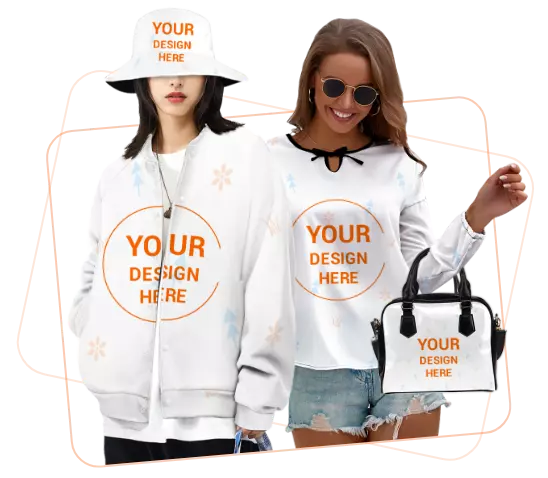
To turn insight into inventory, it helps to map product categories to the specific strengths and risks they carry in farewell contexts. The following table summarizes how common on‑demand products fit Friday farewell use cases.
Gift Type | Key Strength In Farewells | Main Risk Or Limitation | Best Friday Use Case |
|---|---|---|---|
Custom mugs and drinkware | Daily use, easy to print inside jokes and team identity | Overused when generic; can feel like basic swag | Desk reminders of the team, project‑specific designs |
Apparel (hoodies, tees) | Highly visible, wearable identity and belonging | Fit and style issues; can feel promotional if logo‑heavy | “Team uniform” designs, city or office references, tour shirts |
Photo books and prints | Deep storytelling, strong nostalgia and memory anchoring | Higher design effort; longer production times | Long‑tenure farewells, founders and early employees |
Desk accessories and decor | Constant presence in workspaces, subtle branding options | Too generic if not customized beyond a logo | Remote workers’ home office setups, hybrid teams |
Pillows, blankets, homeware | Comfort and coziness, strong emotional and sensory cues | Bulkier to ship; less suitable for minimalist recipients | Close‑knit teams, farewell after intensive shared experiences |
When you design collections, think less in terms of “products we can print on” and more in terms of “roles these products play in the recipient’s daily life.” The Friday farewell moment is the handoff, but the true commercial value lies in how often the gift will be seen, used, and talked about afterward.
Operationalizing Friday Farewell Demand In On‑Demand Printing
From an operations standpoint, Friday farewells create a very specific fulfillment challenge. The gift timing is fixed. If colleague gifts arrive on Monday after the send‑off, the emotional and social value drops sharply. Because most personalized gifts are made to order, your production and shipping windows must be engineered backward from Friday delivery.
In practice, that means being explicit on your product pages about order‑by cutoffs for a Friday farewell, and tying those cutoffs to your production queues and shipping options. Many successful sellers I work with use clear microcopy such as, “Last working day on Friday? Order by Sunday 6:00 PM for on‑time delivery,” supported by fast on‑demand manufacturing and reliable carriers. That kind of clarity converts anxious corporate buyers who might otherwise default to a generic gift card.
Quality control also matters more in this category than many founders realize. Research on personalized gifts shows that recipients treat personalized items more gently, repair them when damaged, and postpone replacement because of the emotional attachment. That extended lifespan means every misprint or imperfect item is a long‑lasting advertisement for your brand, for better or worse. You are not just shipping a mug; you are shipping a story that may sit on a desk for years.
In a dropshipping context, partner selection is critical. Choose production partners who can consistently meet tight lead times with accurate customization, and build processes for proofing names, dates, and inside jokes. A single misspelled name on a farewell print can turn an emotional moment into an awkward one, and negative stories about such failures travel fast through teams and social channels.
Designing For Story: Helping Buyers Communicate Effort And Meaning
One of the most actionable findings from the University of Bath research is that personalization works not only because it matches preferences, but because it makes the giver’s effort visible. When a giver explains why specific colors, images, or phrases were chosen, recipients connect with that effort and feel more valued.
You can build this insight directly into your product experience. Template prompts such as “Add the story behind this design here” or “Describe the project or memory this image represents” encourage buyers to write short notes that you print on the product or packaging. Including optional “made by” elements, such as printing “Designed by the Data Team, 2025” on a farewell notebook, makes the giver’s identity explicit and taps that giver‑identity‑linked dynamic farewell research highlights.
I also recommend framing collections around narratives rather than occasions alone. Instead of a generic “Farewell gifts” category, experiment with themes like “From the founding team,” “From your first squad,” or “Good‑bye to Fridays together.” These story‑driven themes signal to buyers that your catalog is built to help them be remembered, not just to check a box.
Balancing Personalization With Sensitivity And Values
Finally, do not ignore the ethical and values dimension of farewell gifting. Several studies show that consumers increasingly favor gifts that are aligned with social or environmental values, and a survey of U.S. employees found that about half believe employers should give gifts that have a philanthropic or values‑aligned component. Farewell gifts are an opportunity to demonstrate what the team stands for, not just what it jokes about.
You can integrate that by offering options made with sustainable materials, highlighting longevity rather than disposability, or even bundling a personalized physical gift with a charitable contribution made in the recipient’s name. The research showing that people care for personalized gifts longer and delay replacement suggests that well‑designed farewell items can also support sustainability by reducing waste.
At the same time, remember the FIU research on self‑improvement gifts. A farewell present that hints at fixing the recipient’s weaknesses, even if intended as helpful, can be read as a criticism and trigger hurt feelings. In your merchandising and design prompts, tilt away from messages about productivity or self‑optimization and toward appreciation, shared accomplishments, and future success on the recipient’s own terms.
Brief FAQ For E‑commerce Founders
Is it worth specializing in farewell gifts rather than generic corporate gifts? Given the documented growth of personalized gifting, the scale of the corporate gifting market, and the unique psychological drivers behind farewell gifting, focusing on farewell products is a viable niche. It is narrower than “corporate swag,” but buyers in this niche are more motivated, more time‑sensitive, and more willing to pay for meaningful personalization, especially when a Friday deadline is looming.
Which print‑on‑demand products tend to perform best for Friday farewells? Products that are both everyday‑use and highly customizable perform best. Mugs, tumblers, apparel, photo books, and desk accessories give teams room to embed shared memories and identity. They also align with what consumer surveys highlight as the most desired personalized gifts, which gives you confidence that you are building around real demand, not just aesthetic preference.
How can I reduce returns and negative reviews in this category? Set clear delivery expectations for Friday send‑offs, invest in name and text proofing, and steer buyers away from potentially hurtful self‑improvement themes. Encourage them to add backstories and “made by” notes so recipients feel the effort behind the gift. Research shows that when people perceive a gift as thoughtful and personal, they are more forgiving of minor imperfections and more likely to cherish the item over time.
In the on‑demand printing and dropshipping world, Friday farewell gifts are no longer an afterthought. They are a fast‑growing, emotionally charged micro‑category where strong research aligns with on‑the‑ground demand. If you design for identity, memory, and timing—not just for logos—you can turn those Friday good‑byes into a durable, profitable part of your business.
References
- https://www.bath.ac.uk/announcements/personalised-gifts-create-lasting-emotional-connections-and-enhance-self-esteem-new-research/
- https://business.fiu.edu/news/2025/new-fiu-research-some-holiday-gifts-can-backfire-leading-to-hurt-feelings-bad-reviews.html
- https://www.eurekalert.org/news-releases/1068672
- https://www.researchgate.net/publication/396060077_Gifts_to_say_goodbye_consumer_preferences_for_farewell_gifts
- https://theconversation.com/personalised-gifts-really-do-mean-that-little-bit-more-to-your-loved-ones-says-research-245507
- https://deepmarketinsights.com/report/personalized-gifts-market-research-report
- https://www.vistaprint.com/news/study-us-personalized-holiday-gifts-more-popular?srsltid=AfmBOopavIPdMMhnBWNHqxcAQ6vmjLgxDmaoU3n1SQcicHdFnz7Yqh9c
- https://finance.yahoo.com/news/u-personalized-gifting-market-outlook-101500329.html
- https://www.charlotteobserver.com/news/business/article312905307.html
- https://www.chococraft.in/blogs/corporate-gifts/annual-day-gifting-case-study?srsltid=AfmBOorj06tHlSmBNaxipynJbIMVKdqZcTDvy25zUxHwvfPBDlU_dtwC