
Custom Bakery Packaging: Stand Out with Unique Designs

Custom Bakery Packaging: Stand Out with Unique Designs

Dec 25, 2025 by Iris POD e-Commerce 101

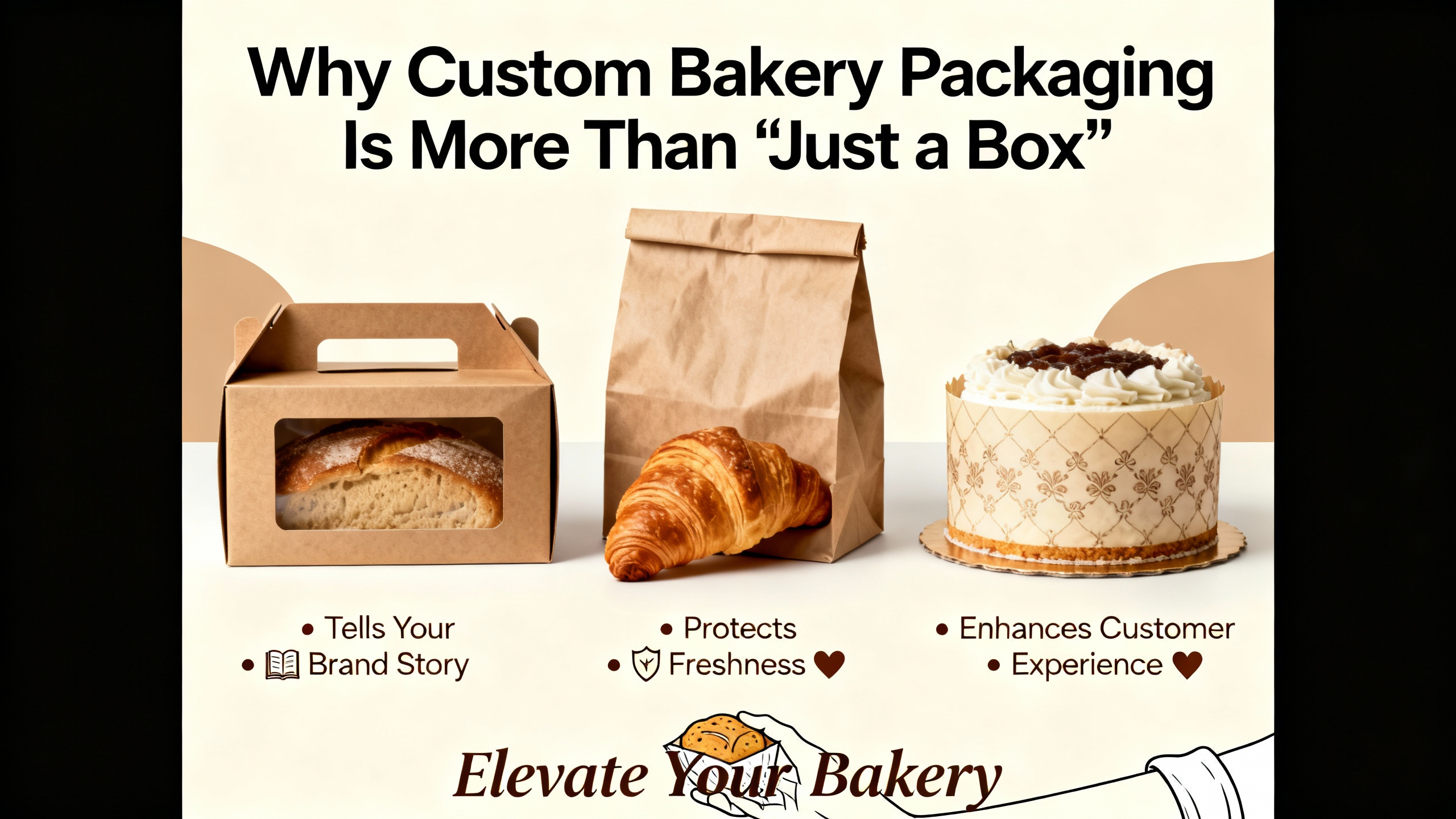
Why Custom Bakery Packaging Is More Than “Just a Box”

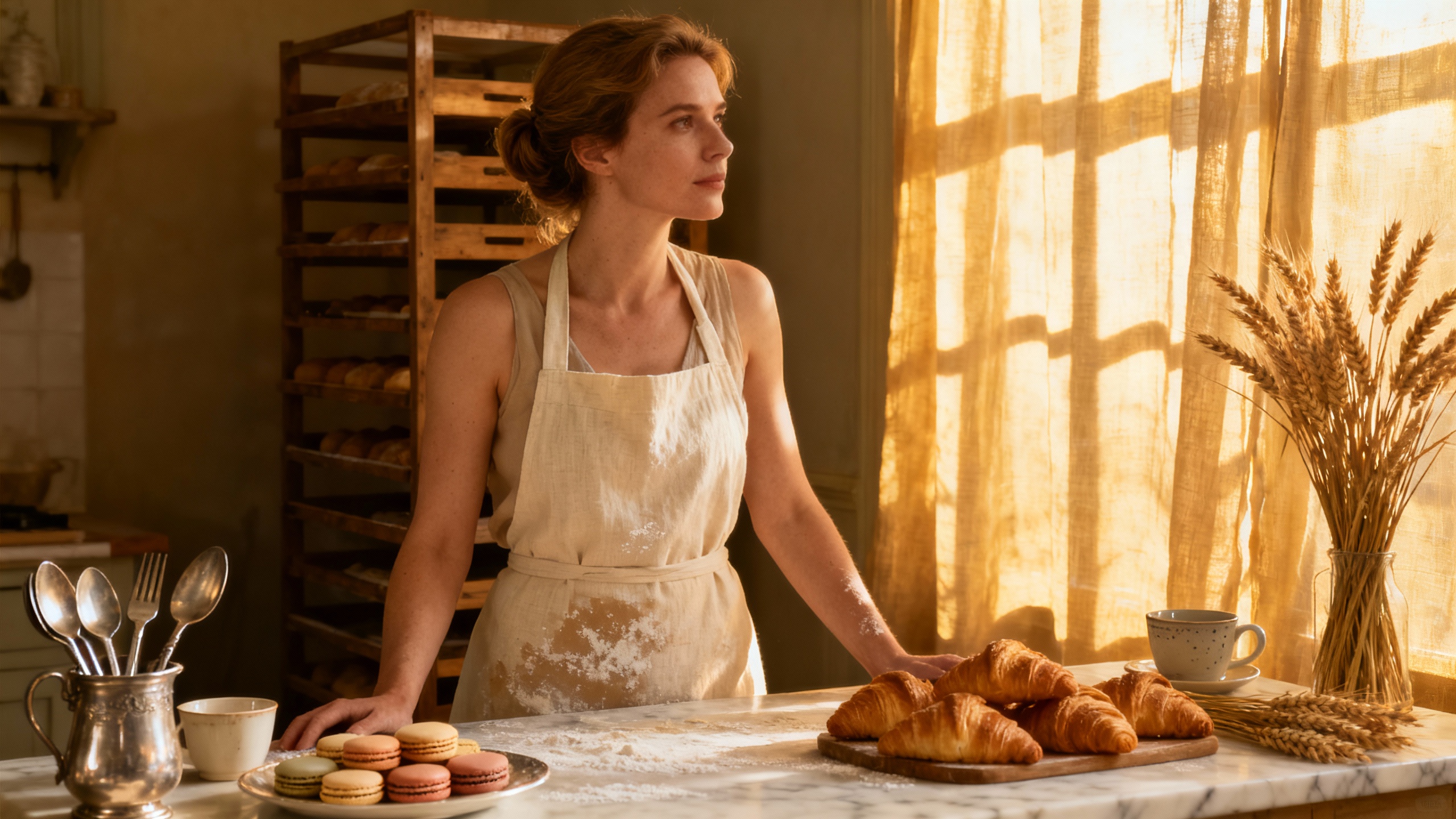
If you sell baked goods—whether from a home kitchen under cottage-food laws, a neighborhood bakery, or an online store with on-demand fulfillment—your packaging is often the first touchpoint a customer has with your brand. Long before they taste a cookie or slice into a cake, they see, touch, and sometimes photograph the box, bag, or label.

Borderlands Bakery describes packaging as the first thing clients see and a critical part of the overall baked-goods experience. Jenny Steffens, a former caterer, argues that plain plastic containers and paper plates cheapen the perception of homemade treats, while well-presented packages make the same product feel special and gift-worthy. noissue goes even further, calling custom pastry boxes a “mini billboard” and a silent salesperson.

From the vantage point of e-commerce and on-demand printing, packaging is even more central. When your customer buys online, your box or bag has to travel through shipping, arrive intact, and still feel like a curated brand moment. High-quality, well-designed packaging can:

  • Signal professionalism and justify premium pricing, even for home or cottage operations.
  • Travel organically on social media when customers share unboxing photos.
  • Reduce damage and waste by protecting fragile products in transit.
  • Reinforce your values, whether that is sustainability, nostalgia, or luxury indulgence.

In my mentoring work with bakery founders, I consistently see packaging turn into a strategic lever. Brands that invest thoughtfully here often report stronger repeat orders, better word of mouth, and more confident wholesale conversations, even when their production volume is still modest.
Branded bakery boxes for small business

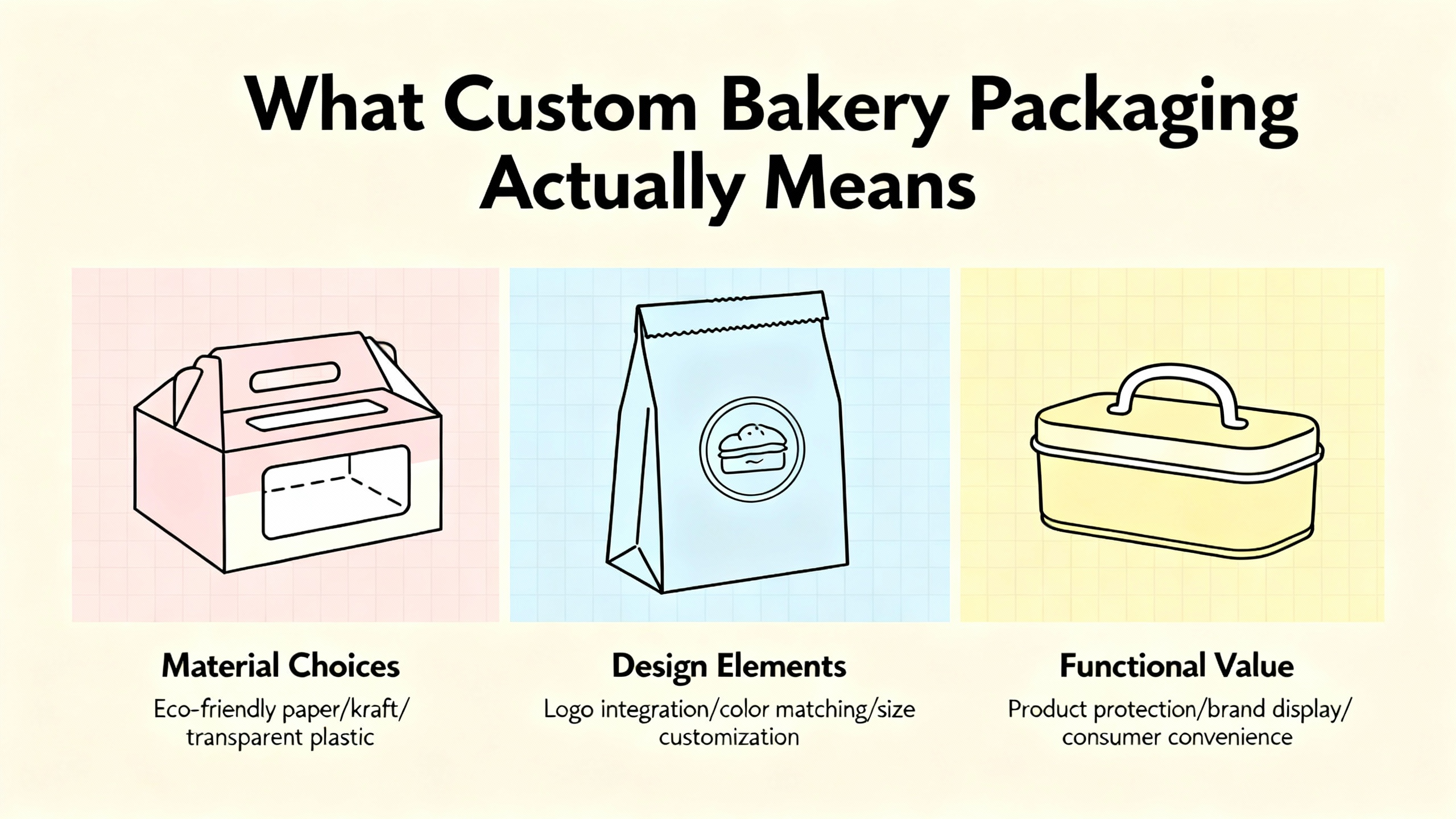
What Custom Bakery Packaging Actually Means

Several industry sources, including Custom Designs Boxes, Stampa Prints, PackagingBlue, and Tycoon Packaging, define custom bakery packaging in very similar ways. At its core, it is tailored food-safe packaging designed around two jobs at the same time: protect the product and represent the brand.

Custom packaging typically combines two layers of customization.

The first layer is structural packaging. This includes the shape and format of boxes, bags, clamshells, sleeves, trays, jars, and cups. For example, Tycoon Packaging discusses gable boxes with built-in handles for easy carry, transparent window boxes for cupcakes and bread, dessert boxes, pastry and donut boxes with compartments, and sturdy cake boxes engineered to hold single or multi-tier cakes. PackagingBlue and Custom Designs Boxes add folding cartons, corrugated shipping boxes, cupcake inserts, pie boxes, bread bags, and muffin trays to this structural mix.

The second layer is visual design. This is what noissue, ManyPixels, Elite Custom Boxes, and Dream Custom Boxes emphasize: logos, colors, typography, illustrations, patterns, and finishes printed on those structures to create a recognizable brand. It includes elements like die-cut windows, gold foil or UV effects, stamped logos, stickers, and branded tissue paper.

Stampa Prints notes that truly custom bakery boxes let the business choose materials, box style, size, printing, and finishing, instead of forcing everything into generic ready-made packaging. In the on-demand printing and dropshipping context, this is increasingly accessible, because many suppliers now support relatively low minimums, digital print, and quick turnarounds.
Personalized food packaging solutions

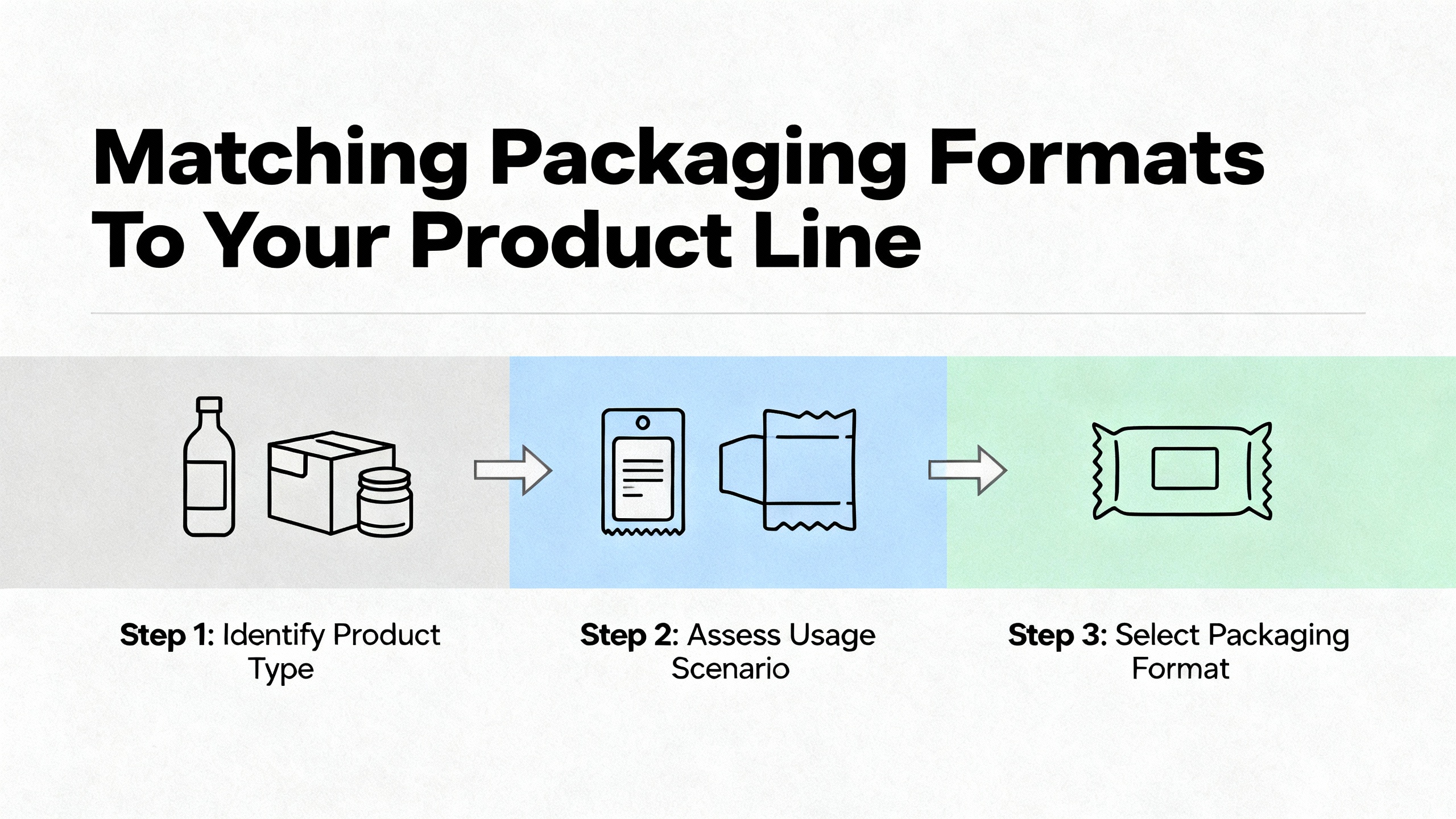
Matching Packaging Formats To Your Product Line

A unique design only works if it is built on the right functional format. The research across Custom Designs Boxes, PackagingBlue, Tycoon Packaging, GoodStart Packaging, and others points toward choosing formats by product type rather than relying on a single one-size-fits-all box.

Bread, Loaves, And Artisan Baguettes

Custom Designs Boxes explains that bread packaging needs to balance freshness and visual appeal. For sourdough and rustic loaves, they recommend paper bags, often kraft, with perforations and sometimes windows. These bags allow some airflow to keep crusts from going soggy while still offering enough protection and display.

For banana bread and mini loaves, they suggest wrapping in wax or parchment, then placing the wrapped product into a window box. That combination keeps moisture in, presents cleanly, and gives you space for branded labels or ribbons. Dream Custom Boxes adds a related concept: bread sleeves, which are slip-on wraps made from kraft or custom-printed paper. Sleeves protect the loaf, create a neat professional look, and give you billboard space for logos and taglines without covering the entire product.

The practical advantage of these formats is that they scale from cottage operations to larger bakeries. Jenny Steffens uses parchment wraps and twine in her kitchen, showing that you can achieve a boutique feel even without a custom box factory. At the same time, suppliers like PackagingBlue and Tycoon Packaging provide gable-style paper bread bags and custom sleeves when you are ready to standardize at higher volumes.

Cakes, Cupcakes, And Pastries

Cakes and pastries are where structure and aesthetics collide most dramatically. Custom Designs Boxes gives several examples. Mini bundt cakes perform well in dome containers, especially when you add ribbons to turn them into ready-to-gift items. Large bundt cakes benefit from tall boxes with clear tops and decorative boards, which stabilize the product while still letting customers see the design.

For cinnamon rolls, shallow window boxes allow you to display the swirl and icing while keeping everything together. Cake slices often use triangular clamshell containers, protecting the slice and making it easy to grab for takeaway. Cheesecakes, prone to smudged toppings, do well in clamshells or kraft or plastic boxes that do not press against the surface.

Tycoon Packaging describes dessert boxes for cakes and pastries, cupcake boxes with inserts, and rigid cake boxes for heavier, decorated cakes. Transparent die-cut windows add visibility so the product can sell itself visually. Meanwhile, Dream Custom Boxes recommends custom cake boxes with vibrant patterns, artwork, ribbons, and transparent windows to create a more personal, gift-like experience.

The main pros of these formats are presentation, protection, and portability. The trade-offs are cost and storage space; rigid and tall boxes consume more room and usually cost more per unit, which is why many small bakeries start with simpler window boxes or clamshells and upgrade to rigid or luxury boxes for high-ticket items.

Cookies, Brownies, And Muffins

Cookies and brownies are among the most flexible items to package. Custom Designs Boxes suggests clear cookie bags or small kraft window boxes, while also noting resealable bags and sleeves for single cookies. Brownies work in parchment-lined kraft trays sealed with branded stickers, which is consistent with Jenny Steffens’ use of parchment, twine, and labels to elevate simple bakes.

Borderlands Bakery offers a number of creative ideas here. They highlight window boxes and clear packaging as a way to showcase decorated cookies, decorative gift bags such as heat-seal kraft bags with a window, and cookie cards and backers. Cookie cards and backers are printed cards that individual cookies are attached to, which can be purchased as digital templates from shops like Cookie Printable Shop or from Borderlands’ own range of digital tags and backers.

Dream Custom Boxes adds Mylar bags as a premium-feeling option. They describe Mylar bags as strong, airtight, and moisture resistant, making them a good fit for cookies, brownies, and pastries that need extra protection from air and moisture. Custom printing on these bags turns them into mobile branding.

For muffins, Custom Designs Boxes recommends plastic trays or individual pods to prevent movement, while Tycoon Packaging and PackagingBlue describe muffin trays and inserts that keep each item in place.

The advantage of this category is modularity. You can use a mix of clear bags, kraft boxes, cards, sleeves, and trays, then unify them visually with labels, stickers, and ribbons. The downside is operational complexity if you allow too many one-off formats; standardizing on a few core structures and then personalizing with print and labels is often more efficient.

Pies, Donuts, And Layered Desserts

Pies and donuts bring their own structural requirements. Custom Designs Boxes recommends custom pie boxes with clear tops and branded stickers, and flat donut boxes with separators and windows to prevent sticking and smudging. Separators are especially valuable for iced or filled donuts.

For layered desserts such as parfaits or trifles, they recommend clear lidded cups so that textures and layers remain visible. Elevate Packaging echoes this approach for clear compostable bags and stand-up pouches, noting that letting the food “speak for itself” visually can be powerful, especially when aligned with eco-friendly materials.

These formats tend to perform well for grab-and-go and event catering. The primary drawback is that clear plastics can be environmentally sensitive if you choose conventional materials, which is where compostable options emerge as an important strategic choice.
Custom pastry box marketing strategies

Branding Your Packaging: Turning Boxes Into “Silent Salespeople”

Distinctive design is what turns a functional box into a brand asset. Multiple sources converge on the same principle: your packaging should be beautiful, useful, and clearly representative of your brand.

Elite Custom Boxes explicitly defines effective bakery packaging as combining beauty, usefulness, and brand representation. They encourage experiments with unique patterns and bright colors, while warning that unattractive or low-quality packaging can slow sales. Their “five-year-old test” is a helpful mental model: if a five-year-old can describe your box well enough that someone else can pick it out in a group, your design is likely distinctive enough.

ManyPixels illustrates how even simple materials can be transformed. Croissant Café & Bakery uses plain kraft paper bags but adds branded stickers, minimizing printing costs while still feeling authentic. Bakelove uses a logo combining whey streaks and a heart to communicate warmth. Persephone Bakery in Wyoming covers its boxes with hand-drawn illustrations that look like works of art, while 45th Avenue uses an Art Deco logo and patterns to build a luxurious, unified identity.

noissue emphasizes that structural design and graphics must work together. They recommend ensuring that boxes visually match your brand personality, from elegant minimalism to bold color, and suggest professional printing with options like gold foil or UV printing when you want standout effects. Functional features such as handles, die-cut windows, and custom die-cut shapes also become part of the brand language, not just a practical afterthought.

Dream Custom Boxes points out that humor can be a differentiator. They highlight humorous muffin wraps with flavor-based puns and playful illustrations, interactive designs like QR codes that take buyers to your site or review page, and festive graphics for holidays. UrgentBoxes expands on personalization with detailed product information, custom messaging, and QR codes that can link to coupons or even augmented reality effects in some cases.

From a mentor’s standpoint, the most effective branding strategies usually follow a sequence. First, commit to a small set of brand colors, typefaces, and motifs. Next, choose two or three structural formats you will use consistently. After that, apply your visual system across bags, boxes, sleeves, stickers, and labels so everything seen together feels like one family. Finally, embed your story: a short origin line, a note about sourcing, or a sentence about what makes your bakery different. Elite Custom Boxes and ManyPixels both show how storytelling, handled subtly on the box or insert, deepens the perceived value of each item.

Sustainability Without Losing Performance

Across the research, sustainability shows up as both a customer expectation and a branding opportunity. At the same time, bakers worry about cost and performance. The goal is to move toward eco-friendly materials where they add the most value, without compromising product safety or shelf life.

Bonds Packaging defines environmentally friendly bakery packaging as using recyclable, biodegradable, or compostable materials and processes that protect food while minimizing environmental impact. They highlight recycled paper and cardboard, including unbleached kraft, as core materials that are sturdy, widely available, and easily recyclable. They also discuss compostable and biodegradable options made from renewable resources such as corn-starch-based bioplastics and compostable papers, along with natural fiber innovations like bagasse and PLA that offer moisture and grease resistance.

Maker’s Row, in its analysis of eco-friendly cake boxes, lists recycled paper and cardboard, kraft paper, sugarcane bagasse, PLA-coated paper, and palm leaf containers as viable sustainable options. They note that buying boxes in bulk lowers per-unit costs and positions bakeries for long-term success, particularly as environmental regulations tighten.

BRP Box Shop’s natural brown bakery boxes offer a concrete example of how material choice affects impact. They describe their uncoated, unbleached paperboard as using about 25 to 30 percent less fiber than some other box materials. That translates into fewer trees being harvested for the same number of boxes, and because the stock is not bleached, it avoids strong solvents. The fiber comes from lumber managed under the Sustainable Forestry Initiative, reinforcing responsible sourcing.

Elevate Packaging focuses on clear compostable cello bags and stand-up pouches that are GMO-free and vegan, and that can withstand refrigeration and frozen storage. Their thesis is that you can let food show through clear packaging and still align with eco-friendly values when you choose compostable substrates rather than conventional plastics.

Green Paper Products showcases plant-based bakery boxes and clamshells made from renewable resources such as corn. They are careful to note that many of these materials are compostable in commercial or municipal facilities rather than backyard compost. That nuance matters if you are marketing an eco story; you should be transparent about what “compostable” means in your region.

UrgentBoxes explicitly cites that over 90 percent of consumers prefer purchasing from environmentally conscious brands, which they present as representing most U.S. households. Borderlands Bakery notes that eco-friendly materials often cost more but can be worthwhile investments in brand positioning.

From a practical point of view, this is how I guide bakery founders. Start by making paper and cardboard the default whenever structurally possible. Add compostable or biodegradable films and bags for items that need clear visibility or extra moisture management. Where you must use plastic, explore compostable alternatives like the cello bags Elevate Packaging describes, or consider reusable containers for high-value products, as suggested by Green Paper Products and Borderlands Bakery’s reusable jars and fabric bags.

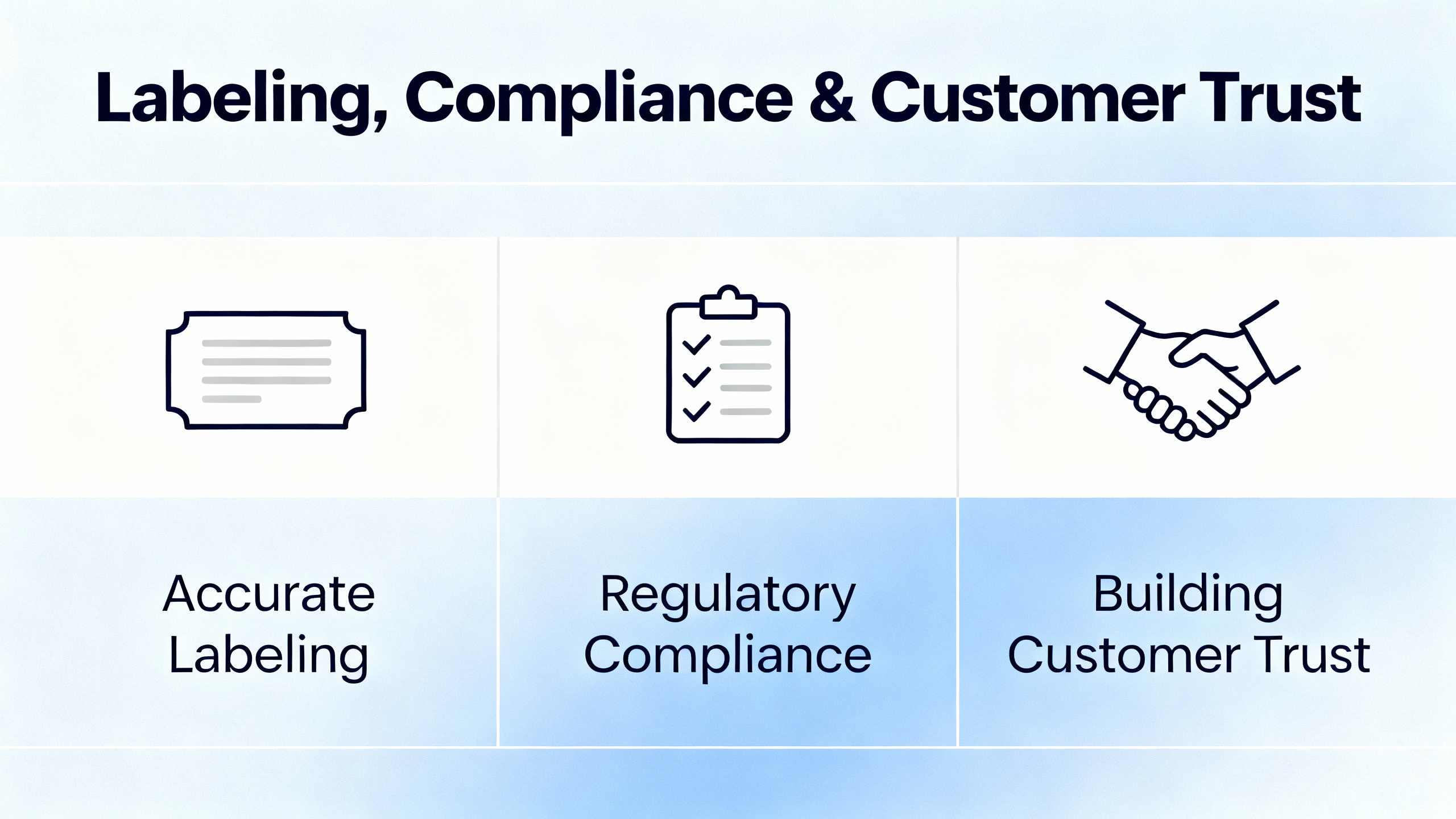
Labeling, Compliance, And Customer Trust

Great design does not excuse weak compliance. For small and cottage bakeries in particular, labels are where food safety and brand story meet.

Borderlands Bakery stresses the importance of customized stickers and labels that not only carry your logo but also list flavor descriptions and ingredients to remain compliant with local laws. They recommend outsourcing bulk label printing to companies such as StickerYou, StickerGiant, or Vistaprint, while using a thermal printer in-house for ingredient labels and one-off print jobs. This approach keeps both costs and lead times manageable.

Dream Custom Boxes highlights labels as a simple yet powerful way to make packaging look professional. They advocate for clear fonts, bright colors, and including key information such as product names, ingredients, baking tips, and storage instructions. Elite Custom Boxes adds that educational inserts with reheating or serving instructions can help customers feel supported and confident, which in turn builds trust.

Discussions in cottage-food communities, such as the Cottage Food Business group posts summarized in the research, show that many home bakers invest time studying state cottage-food laws. They focus on understanding what must appear on labels, which items are allowed or prohibited, and what permits or tax IDs may be required before selling. Those conversations underscore an important point: even the most beautiful packaging fails if it ignores local rules on disclosure and allowed products.

The safest path is to treat compliance information as a non-negotiable layer of your design. Start by understanding your applicable regulations, whether through your state agriculture department, local health department, or official cottage-food resources. Then design your labels and boxes so mandatory text—such as ingredients, allergen statements, producer name, and any required warnings—has a dedicated place. Finally, use the more flexible real estate on your labels and inserts for brand story, QR codes, and marketing messages.
Professional bakery packaging for cottage food

Cost, Operations, And Choosing Suppliers

Packaging can quickly become either a strategic asset or a silent margin killer. Several sources, including Maker’s Row, Tycoon Packaging, GoodStart Packaging, and PackagingBlue, give practical guidance on aligning packaging choices with economics and operations.

GoodStart Packaging describes a range of eco-friendly, compostable bakery packaging supplies, from cupcake containers and artisan bread bags to deli paper and compostable cups. They highlight custom printing, individual samples, wholesale volume discounts, and fast shipping as ways to de-risk decisions and support time-sensitive operations. Tycoon Packaging mentions premium materials, cost-effective wholesale pricing, low minimum order quantities, and fast turnaround, plus access to templates and expert design support.

Maker’s Row takes a broader view by connecting brands with U.S. and international packaging manufacturers. They emphasize that buying cake boxes in bulk lowers per-unit cost and that their platform allows filtering by material and design, direct communication, and custom quotes. PackagingBlue’s qualitative guidance stresses selecting materials that are safe, functional, and aligned with brand identity, with cardboard and paperboard highlighted as versatile and cost-effective.

These insights translate into three broad strategies that most bakery businesses consider.

Strategy

Description

Upfront investment

Flexibility and speed

Best fit scenarios

Stock generic packaging

Unbranded boxes, bags, and containers from distributors

Low, pay-as-you-go

Very high; easy to switch or add sizes

Testing new products, very early-stage businesses

Semi-custom with labels/stickers

Stock packaging plus custom labels, stickers, and cards

Moderate design effort

High; design updates are relatively inexpensive

Cottage bakeries, lean e-commerce brands, seasonal promotions

Fully custom printed packaging

Custom-printed boxes and bags in brand colors and shapes

Higher setup and minimums

Lower; changes require reordering printed stock

Established brands, high-volume items, premium gift lines

As a mentor, I typically recommend starting with semi-custom packaging. Use stock or off-the-shelf eco-friendly boxes and bags from suppliers like GoodStart Packaging or Green Paper Products; then layer in branded stickers, sleeves, and thank-you cards inspired by Borderlands Bakery and Elite Custom Boxes. As your best-sellers stabilize and volumes grow, work with partners such as Tycoon Packaging, PackagingBlue, or Maker’s Row-connected manufacturers to introduce fully custom printed boxes for those core products.

Operationally, the key is to avoid over-customizing low-volume items while under-investing in the packages that most customers see and share. Prioritize high-margin, high-visibility products for your most distinctive boxes and invest in sturdier packaging for anything shipped long distances, as multiple sources, including Custom Designs Boxes and PackagingBlue, note that damage in transit erodes both customer satisfaction and profitability.

Designing A Unique Packaging System For Your Brand

Creating unique packaging is not about copying a single pretty example from Pinterest. The strongest systems come from deliberate design thinking tied to your business model. The research provides a roadmap you can adapt.

Begin by clarifying your brand position. noissue shares examples such as Librae Bakery, which uses warm colors and playful designs to express a third-culture identity blending Middle Eastern flavors and Danish techniques, and Brooki Bakehouse, which leans into a “Paris meets NYC East Village” aesthetic. ManyPixels showcases brands ranging from richly illustrated Persephone to minimal, modern Navi. Decide whether your brand is cozy and nostalgic, bright and playful, modern and minimal, or luxurious and decadent, then translate that into a simple visual vocabulary.

Next, audit your product line and touchpoints. List the main formats you need: bread, cupcakes, large cakes, cookies, bars, pies, and any specialty items. Use the format guidance from Custom Designs Boxes, Tycoon Packaging, PackagingBlue, and Elevate Packaging to decide where you need boxes with windows, clamshells, sleeves, jars, or clear bags. Identify which items are for local pickup only and which are shipped, because shipping requires sturdier structures.

Then map the unboxing or un-bagging experience. Elite Custom Boxes suggests considering inserts such as thank-you notes, small gifts like a single cookie, or educational cards with storage and reheating tips. Borderlands Bakery highlights personalized tags and thank-you notes that may even include discount codes for future orders. Think about how the customer will lift the lid, see the product, notice your story, and discover any extras.

After that, define your sustainability baseline. Based on the guidance from Bonds Packaging, Maker’s Row, Elevate Packaging, Green Paper Products, and BRP Box Shop, choose where you will lean into recycled paperboard, unbleached kraft, compostable films, or natural fiber innovations like bagasse and PLA. Decide which sustainability logos or phrases you will display, making sure they align with how the materials actually behave in your region. For example, if a box is only compostable in commercial facilities, be clear about that rather than implying backyard compostability.

Once these decisions are in place, work with design and production partners. noissue recommends partnering with suppliers that simplify the design process and offer flexible quantities. ManyPixels demonstrates how professional designers can turn simple briefs into cohesive identities, while Tycoon Packaging and Stampa Prints offer in-house design support for box layouts. If your budget is tight, starting with digital templates for cookie cards and backers, as Borderlands Bakery and Cookie Printable Shop offer, can be a very effective bridge between homemade and professional.

Finally, measure and iterate. noissue suggests tracking three types of indicators when you roll out new packaging: changes in sales before and after the launch, shifts in social media mentions and user-generated content featuring your boxes, and direct customer feedback about the design. You can run small in-market tests by introducing unique packaging for one product line or one season, gathering data, and then deciding whether to scale that design system across more of your catalog.

FAQ

Do I really need custom packaging if I am just starting under cottage-food laws or selling on a small scale? You do not need a fully custom printed box to start, but you do need intentional packaging. The research from Jenny Steffens, Borderlands Bakery, and Elite Custom Boxes all shows that simple materials such as parchment paper, kraft bags, and stock boxes can look premium when combined with well-designed stickers, labels, twine, and notes. For cottage or early-stage businesses, a semi-custom approach—stock packaging plus branded labels and cards—is usually the most practical starting point.

Is eco-friendly bakery packaging worth the extra cost? Multiple sources, including Bonds Packaging, Borderlands Bakery, Maker’s Row, and UrgentBoxes, argue that sustainable packaging is increasingly a customer expectation and branding advantage. UrgentBoxes cites that more than 90 percent of consumers prefer brands that are environmentally conscious. While eco options often cost more, suppliers such as BRP Box Shop, Elevate Packaging, and Green Paper Products show that careful material choices can reduce overall fiber usage and support a strong sustainability story. In practice, many bakeries adopt eco materials first for their most visible or premium lines and then expand as budgets allow.

How do I choose between clear plastic, compostable bags, and paper? The choice depends on product needs, brand values, and your target customer. Elevate Packaging demonstrates that clear compostable cello bags and stand-up pouches can showcase products while remaining compostable and vegan. Bonds Packaging and Maker’s Row highlight recycled paper and cardboard as sturdy, widely recyclable foundations. BRP Box Shop shows that unbleached kraft can reduce fiber use and chemical processing. For items where visibility drives sales, clear windows or bags—ideally compostable where possible—make sense. For most other applications, recycled or natural paperboard is a strong default, with compostable films reserved for items that need special moisture or grease management.

Moving Forward

Custom bakery packaging is no longer just the concern of big retail chains. With specialized suppliers, digital design services, and on-demand printing, even a one-person cottage bakery or a lean e-commerce brand can build a distinctive, sustainable packaging system. By grounding your choices in proven formats, clear brand storytelling, and thoughtful material decisions drawn from the work of Borderlands Bakery, Custom Designs Boxes, noissue, Maker’s Row, Bonds Packaging, and others, you can turn every box and bag into a competitive edge that supports both your margins and your mission.
Custom cake boxes and branding

References

  1. https://www.brpboxshop.com/eco-friendly-natural-boxes.html?srsltid=AfmBOop-EH7Cw_tyYc11Z8V83RxwlThj2U1AMnvTSyydbkVS_yA50FUU
  2. https://blog.jennysteffens.com/packaging-baked-goods-in-your-kitchen
  3. https://www.packagingblue.com/bakery-boxes.asp?srsltid=AfmBOorgdOwvvDKIbwujybZ-MuWtSXi-nPEP85caIYiyjlC9QnDqHI9A
  4. https://customdesignsboxes.com/blog/bakery-packaging-ideas?srsltid=AfmBOopulDXjx-O6UN0A1SpIau_J9ZT5ANDpoPGWv3S_vjquX0XN8lm8
  5. https://www.dreamcustomboxes.com/bakery-packaging-ideas/?srsltid=AfmBOorgVIvzQ5cOntYT9koeqljJiSNh2-LZCfpl4RgxGOxJvBLU5Rhz
  6. https://www.goodstartpackaging.com/bakery-packaging-supplies/?srsltid=AfmBOoo-7ACqcEIj8Z50k7E6ajLgUEsE3x56Cbcb0bLGxIKEl6FS4EzX
  7. https://stampaprints.com/custom-bakery-boxes/?srsltid=AfmBOopBE6SWqJ55yVv2DMAZqs-90spjWcNVvzpQXNQLamuurmigGSH2
  8. https://stompstickers.com/collections/bakery-boxes?srsltid=AfmBOooPrGztneHApGPCoCkGcjMUbWrbl4_Ol-Ic8y3-zPnooT85SiH2
  9. https://urgentboxes.com/blog/trendy-bakery-packaging-ideas
  10. https://www.baking-forums.com/threads/eco-friendly-materials-for-food-packaging.7961/

Like the article

0
Custom Bakery Packaging: Stand Out with Unique Designs

Custom Bakery Packaging: Stand Out with Unique Designs

Why Custom Bakery Packaging Is More Than “Just a Box”

If you sell baked goods—whether from a home kitchen under cottage-food laws, a neighborhood bakery, or an online store with on-demand fulfillment—your packaging is often the first touchpoint a customer has with your brand. Long before they taste a cookie or slice into a cake, they see, touch, and sometimes photograph the box, bag, or label.

Borderlands Bakery describes packaging as the first thing clients see and a critical part of the overall baked-goods experience. Jenny Steffens, a former caterer, argues that plain plastic containers and paper plates cheapen the perception of homemade treats, while well-presented packages make the same product feel special and gift-worthy. noissue goes even further, calling custom pastry boxes a “mini billboard” and a silent salesperson.

From the vantage point of e-commerce and on-demand printing, packaging is even more central. When your customer buys online, your box or bag has to travel through shipping, arrive intact, and still feel like a curated brand moment. High-quality, well-designed packaging can:

  • Signal professionalism and justify premium pricing, even for home or cottage operations.
  • Travel organically on social media when customers share unboxing photos.
  • Reduce damage and waste by protecting fragile products in transit.
  • Reinforce your values, whether that is sustainability, nostalgia, or luxury indulgence.

In my mentoring work with bakery founders, I consistently see packaging turn into a strategic lever. Brands that invest thoughtfully here often report stronger repeat orders, better word of mouth, and more confident wholesale conversations, even when their production volume is still modest.

Branded bakery boxes for small business

What Custom Bakery Packaging Actually Means

Several industry sources, including Custom Designs Boxes, Stampa Prints, PackagingBlue, and Tycoon Packaging, define custom bakery packaging in very similar ways. At its core, it is tailored food-safe packaging designed around two jobs at the same time: protect the product and represent the brand.

Custom packaging typically combines two layers of customization.

The first layer is structural packaging. This includes the shape and format of boxes, bags, clamshells, sleeves, trays, jars, and cups. For example, Tycoon Packaging discusses gable boxes with built-in handles for easy carry, transparent window boxes for cupcakes and bread, dessert boxes, pastry and donut boxes with compartments, and sturdy cake boxes engineered to hold single or multi-tier cakes. PackagingBlue and Custom Designs Boxes add folding cartons, corrugated shipping boxes, cupcake inserts, pie boxes, bread bags, and muffin trays to this structural mix.

The second layer is visual design. This is what noissue, ManyPixels, Elite Custom Boxes, and Dream Custom Boxes emphasize: logos, colors, typography, illustrations, patterns, and finishes printed on those structures to create a recognizable brand. It includes elements like die-cut windows, gold foil or UV effects, stamped logos, stickers, and branded tissue paper.

Stampa Prints notes that truly custom bakery boxes let the business choose materials, box style, size, printing, and finishing, instead of forcing everything into generic ready-made packaging. In the on-demand printing and dropshipping context, this is increasingly accessible, because many suppliers now support relatively low minimums, digital print, and quick turnarounds.

Personalized food packaging solutions

Matching Packaging Formats To Your Product Line

A unique design only works if it is built on the right functional format. The research across Custom Designs Boxes, PackagingBlue, Tycoon Packaging, GoodStart Packaging, and others points toward choosing formats by product type rather than relying on a single one-size-fits-all box.

Bread, Loaves, And Artisan Baguettes

Custom Designs Boxes explains that bread packaging needs to balance freshness and visual appeal. For sourdough and rustic loaves, they recommend paper bags, often kraft, with perforations and sometimes windows. These bags allow some airflow to keep crusts from going soggy while still offering enough protection and display.

For banana bread and mini loaves, they suggest wrapping in wax or parchment, then placing the wrapped product into a window box. That combination keeps moisture in, presents cleanly, and gives you space for branded labels or ribbons. Dream Custom Boxes adds a related concept: bread sleeves, which are slip-on wraps made from kraft or custom-printed paper. Sleeves protect the loaf, create a neat professional look, and give you billboard space for logos and taglines without covering the entire product.

The practical advantage of these formats is that they scale from cottage operations to larger bakeries. Jenny Steffens uses parchment wraps and twine in her kitchen, showing that you can achieve a boutique feel even without a custom box factory. At the same time, suppliers like PackagingBlue and Tycoon Packaging provide gable-style paper bread bags and custom sleeves when you are ready to standardize at higher volumes.

Cakes, Cupcakes, And Pastries

Cakes and pastries are where structure and aesthetics collide most dramatically. Custom Designs Boxes gives several examples. Mini bundt cakes perform well in dome containers, especially when you add ribbons to turn them into ready-to-gift items. Large bundt cakes benefit from tall boxes with clear tops and decorative boards, which stabilize the product while still letting customers see the design.

For cinnamon rolls, shallow window boxes allow you to display the swirl and icing while keeping everything together. Cake slices often use triangular clamshell containers, protecting the slice and making it easy to grab for takeaway. Cheesecakes, prone to smudged toppings, do well in clamshells or kraft or plastic boxes that do not press against the surface.

Tycoon Packaging describes dessert boxes for cakes and pastries, cupcake boxes with inserts, and rigid cake boxes for heavier, decorated cakes. Transparent die-cut windows add visibility so the product can sell itself visually. Meanwhile, Dream Custom Boxes recommends custom cake boxes with vibrant patterns, artwork, ribbons, and transparent windows to create a more personal, gift-like experience.

The main pros of these formats are presentation, protection, and portability. The trade-offs are cost and storage space; rigid and tall boxes consume more room and usually cost more per unit, which is why many small bakeries start with simpler window boxes or clamshells and upgrade to rigid or luxury boxes for high-ticket items.

Cookies, Brownies, And Muffins

Cookies and brownies are among the most flexible items to package. Custom Designs Boxes suggests clear cookie bags or small kraft window boxes, while also noting resealable bags and sleeves for single cookies. Brownies work in parchment-lined kraft trays sealed with branded stickers, which is consistent with Jenny Steffens’ use of parchment, twine, and labels to elevate simple bakes.

Borderlands Bakery offers a number of creative ideas here. They highlight window boxes and clear packaging as a way to showcase decorated cookies, decorative gift bags such as heat-seal kraft bags with a window, and cookie cards and backers. Cookie cards and backers are printed cards that individual cookies are attached to, which can be purchased as digital templates from shops like Cookie Printable Shop or from Borderlands’ own range of digital tags and backers.

Dream Custom Boxes adds Mylar bags as a premium-feeling option. They describe Mylar bags as strong, airtight, and moisture resistant, making them a good fit for cookies, brownies, and pastries that need extra protection from air and moisture. Custom printing on these bags turns them into mobile branding.

For muffins, Custom Designs Boxes recommends plastic trays or individual pods to prevent movement, while Tycoon Packaging and PackagingBlue describe muffin trays and inserts that keep each item in place.

The advantage of this category is modularity. You can use a mix of clear bags, kraft boxes, cards, sleeves, and trays, then unify them visually with labels, stickers, and ribbons. The downside is operational complexity if you allow too many one-off formats; standardizing on a few core structures and then personalizing with print and labels is often more efficient.

Pies, Donuts, And Layered Desserts

Pies and donuts bring their own structural requirements. Custom Designs Boxes recommends custom pie boxes with clear tops and branded stickers, and flat donut boxes with separators and windows to prevent sticking and smudging. Separators are especially valuable for iced or filled donuts.

For layered desserts such as parfaits or trifles, they recommend clear lidded cups so that textures and layers remain visible. Elevate Packaging echoes this approach for clear compostable bags and stand-up pouches, noting that letting the food “speak for itself” visually can be powerful, especially when aligned with eco-friendly materials.

These formats tend to perform well for grab-and-go and event catering. The primary drawback is that clear plastics can be environmentally sensitive if you choose conventional materials, which is where compostable options emerge as an important strategic choice.

Custom pastry box marketing strategies

Branding Your Packaging: Turning Boxes Into “Silent Salespeople”

Distinctive design is what turns a functional box into a brand asset. Multiple sources converge on the same principle: your packaging should be beautiful, useful, and clearly representative of your brand.

Elite Custom Boxes explicitly defines effective bakery packaging as combining beauty, usefulness, and brand representation. They encourage experiments with unique patterns and bright colors, while warning that unattractive or low-quality packaging can slow sales. Their “five-year-old test” is a helpful mental model: if a five-year-old can describe your box well enough that someone else can pick it out in a group, your design is likely distinctive enough.

ManyPixels illustrates how even simple materials can be transformed. Croissant Café & Bakery uses plain kraft paper bags but adds branded stickers, minimizing printing costs while still feeling authentic. Bakelove uses a logo combining whey streaks and a heart to communicate warmth. Persephone Bakery in Wyoming covers its boxes with hand-drawn illustrations that look like works of art, while 45th Avenue uses an Art Deco logo and patterns to build a luxurious, unified identity.

noissue emphasizes that structural design and graphics must work together. They recommend ensuring that boxes visually match your brand personality, from elegant minimalism to bold color, and suggest professional printing with options like gold foil or UV printing when you want standout effects. Functional features such as handles, die-cut windows, and custom die-cut shapes also become part of the brand language, not just a practical afterthought.

Dream Custom Boxes points out that humor can be a differentiator. They highlight humorous muffin wraps with flavor-based puns and playful illustrations, interactive designs like QR codes that take buyers to your site or review page, and festive graphics for holidays. UrgentBoxes expands on personalization with detailed product information, custom messaging, and QR codes that can link to coupons or even augmented reality effects in some cases.

From a mentor’s standpoint, the most effective branding strategies usually follow a sequence. First, commit to a small set of brand colors, typefaces, and motifs. Next, choose two or three structural formats you will use consistently. After that, apply your visual system across bags, boxes, sleeves, stickers, and labels so everything seen together feels like one family. Finally, embed your story: a short origin line, a note about sourcing, or a sentence about what makes your bakery different. Elite Custom Boxes and ManyPixels both show how storytelling, handled subtly on the box or insert, deepens the perceived value of each item.

Sustainability Without Losing Performance

Across the research, sustainability shows up as both a customer expectation and a branding opportunity. At the same time, bakers worry about cost and performance. The goal is to move toward eco-friendly materials where they add the most value, without compromising product safety or shelf life.

Bonds Packaging defines environmentally friendly bakery packaging as using recyclable, biodegradable, or compostable materials and processes that protect food while minimizing environmental impact. They highlight recycled paper and cardboard, including unbleached kraft, as core materials that are sturdy, widely available, and easily recyclable. They also discuss compostable and biodegradable options made from renewable resources such as corn-starch-based bioplastics and compostable papers, along with natural fiber innovations like bagasse and PLA that offer moisture and grease resistance.

Maker’s Row, in its analysis of eco-friendly cake boxes, lists recycled paper and cardboard, kraft paper, sugarcane bagasse, PLA-coated paper, and palm leaf containers as viable sustainable options. They note that buying boxes in bulk lowers per-unit costs and positions bakeries for long-term success, particularly as environmental regulations tighten.

BRP Box Shop’s natural brown bakery boxes offer a concrete example of how material choice affects impact. They describe their uncoated, unbleached paperboard as using about 25 to 30 percent less fiber than some other box materials. That translates into fewer trees being harvested for the same number of boxes, and because the stock is not bleached, it avoids strong solvents. The fiber comes from lumber managed under the Sustainable Forestry Initiative, reinforcing responsible sourcing.

Elevate Packaging focuses on clear compostable cello bags and stand-up pouches that are GMO-free and vegan, and that can withstand refrigeration and frozen storage. Their thesis is that you can let food show through clear packaging and still align with eco-friendly values when you choose compostable substrates rather than conventional plastics.

Green Paper Products showcases plant-based bakery boxes and clamshells made from renewable resources such as corn. They are careful to note that many of these materials are compostable in commercial or municipal facilities rather than backyard compost. That nuance matters if you are marketing an eco story; you should be transparent about what “compostable” means in your region.

UrgentBoxes explicitly cites that over 90 percent of consumers prefer purchasing from environmentally conscious brands, which they present as representing most U.S. households. Borderlands Bakery notes that eco-friendly materials often cost more but can be worthwhile investments in brand positioning.

From a practical point of view, this is how I guide bakery founders. Start by making paper and cardboard the default whenever structurally possible. Add compostable or biodegradable films and bags for items that need clear visibility or extra moisture management. Where you must use plastic, explore compostable alternatives like the cello bags Elevate Packaging describes, or consider reusable containers for high-value products, as suggested by Green Paper Products and Borderlands Bakery’s reusable jars and fabric bags.

Labeling, Compliance, And Customer Trust

Great design does not excuse weak compliance. For small and cottage bakeries in particular, labels are where food safety and brand story meet.

Borderlands Bakery stresses the importance of customized stickers and labels that not only carry your logo but also list flavor descriptions and ingredients to remain compliant with local laws. They recommend outsourcing bulk label printing to companies such as StickerYou, StickerGiant, or Vistaprint, while using a thermal printer in-house for ingredient labels and one-off print jobs. This approach keeps both costs and lead times manageable.

Dream Custom Boxes highlights labels as a simple yet powerful way to make packaging look professional. They advocate for clear fonts, bright colors, and including key information such as product names, ingredients, baking tips, and storage instructions. Elite Custom Boxes adds that educational inserts with reheating or serving instructions can help customers feel supported and confident, which in turn builds trust.

Discussions in cottage-food communities, such as the Cottage Food Business group posts summarized in the research, show that many home bakers invest time studying state cottage-food laws. They focus on understanding what must appear on labels, which items are allowed or prohibited, and what permits or tax IDs may be required before selling. Those conversations underscore an important point: even the most beautiful packaging fails if it ignores local rules on disclosure and allowed products.

The safest path is to treat compliance information as a non-negotiable layer of your design. Start by understanding your applicable regulations, whether through your state agriculture department, local health department, or official cottage-food resources. Then design your labels and boxes so mandatory text—such as ingredients, allergen statements, producer name, and any required warnings—has a dedicated place. Finally, use the more flexible real estate on your labels and inserts for brand story, QR codes, and marketing messages.

Professional bakery packaging for cottage food

Cost, Operations, And Choosing Suppliers

Packaging can quickly become either a strategic asset or a silent margin killer. Several sources, including Maker’s Row, Tycoon Packaging, GoodStart Packaging, and PackagingBlue, give practical guidance on aligning packaging choices with economics and operations.

GoodStart Packaging describes a range of eco-friendly, compostable bakery packaging supplies, from cupcake containers and artisan bread bags to deli paper and compostable cups. They highlight custom printing, individual samples, wholesale volume discounts, and fast shipping as ways to de-risk decisions and support time-sensitive operations. Tycoon Packaging mentions premium materials, cost-effective wholesale pricing, low minimum order quantities, and fast turnaround, plus access to templates and expert design support.

Maker’s Row takes a broader view by connecting brands with U.S. and international packaging manufacturers. They emphasize that buying cake boxes in bulk lowers per-unit cost and that their platform allows filtering by material and design, direct communication, and custom quotes. PackagingBlue’s qualitative guidance stresses selecting materials that are safe, functional, and aligned with brand identity, with cardboard and paperboard highlighted as versatile and cost-effective.

These insights translate into three broad strategies that most bakery businesses consider.

Strategy

Description

Upfront investment

Flexibility and speed

Best fit scenarios

Stock generic packaging

Unbranded boxes, bags, and containers from distributors

Low, pay-as-you-go

Very high; easy to switch or add sizes

Testing new products, very early-stage businesses

Semi-custom with labels/stickers

Stock packaging plus custom labels, stickers, and cards

Moderate design effort

High; design updates are relatively inexpensive

Cottage bakeries, lean e-commerce brands, seasonal promotions

Fully custom printed packaging

Custom-printed boxes and bags in brand colors and shapes

Higher setup and minimums

Lower; changes require reordering printed stock

Established brands, high-volume items, premium gift lines

As a mentor, I typically recommend starting with semi-custom packaging. Use stock or off-the-shelf eco-friendly boxes and bags from suppliers like GoodStart Packaging or Green Paper Products; then layer in branded stickers, sleeves, and thank-you cards inspired by Borderlands Bakery and Elite Custom Boxes. As your best-sellers stabilize and volumes grow, work with partners such as Tycoon Packaging, PackagingBlue, or Maker’s Row-connected manufacturers to introduce fully custom printed boxes for those core products.

Operationally, the key is to avoid over-customizing low-volume items while under-investing in the packages that most customers see and share. Prioritize high-margin, high-visibility products for your most distinctive boxes and invest in sturdier packaging for anything shipped long distances, as multiple sources, including Custom Designs Boxes and PackagingBlue, note that damage in transit erodes both customer satisfaction and profitability.

Designing A Unique Packaging System For Your Brand

Creating unique packaging is not about copying a single pretty example from Pinterest. The strongest systems come from deliberate design thinking tied to your business model. The research provides a roadmap you can adapt.

Begin by clarifying your brand position. noissue shares examples such as Librae Bakery, which uses warm colors and playful designs to express a third-culture identity blending Middle Eastern flavors and Danish techniques, and Brooki Bakehouse, which leans into a “Paris meets NYC East Village” aesthetic. ManyPixels showcases brands ranging from richly illustrated Persephone to minimal, modern Navi. Decide whether your brand is cozy and nostalgic, bright and playful, modern and minimal, or luxurious and decadent, then translate that into a simple visual vocabulary.

Next, audit your product line and touchpoints. List the main formats you need: bread, cupcakes, large cakes, cookies, bars, pies, and any specialty items. Use the format guidance from Custom Designs Boxes, Tycoon Packaging, PackagingBlue, and Elevate Packaging to decide where you need boxes with windows, clamshells, sleeves, jars, or clear bags. Identify which items are for local pickup only and which are shipped, because shipping requires sturdier structures.

Then map the unboxing or un-bagging experience. Elite Custom Boxes suggests considering inserts such as thank-you notes, small gifts like a single cookie, or educational cards with storage and reheating tips. Borderlands Bakery highlights personalized tags and thank-you notes that may even include discount codes for future orders. Think about how the customer will lift the lid, see the product, notice your story, and discover any extras.

After that, define your sustainability baseline. Based on the guidance from Bonds Packaging, Maker’s Row, Elevate Packaging, Green Paper Products, and BRP Box Shop, choose where you will lean into recycled paperboard, unbleached kraft, compostable films, or natural fiber innovations like bagasse and PLA. Decide which sustainability logos or phrases you will display, making sure they align with how the materials actually behave in your region. For example, if a box is only compostable in commercial facilities, be clear about that rather than implying backyard compostability.

Once these decisions are in place, work with design and production partners. noissue recommends partnering with suppliers that simplify the design process and offer flexible quantities. ManyPixels demonstrates how professional designers can turn simple briefs into cohesive identities, while Tycoon Packaging and Stampa Prints offer in-house design support for box layouts. If your budget is tight, starting with digital templates for cookie cards and backers, as Borderlands Bakery and Cookie Printable Shop offer, can be a very effective bridge between homemade and professional.

Finally, measure and iterate. noissue suggests tracking three types of indicators when you roll out new packaging: changes in sales before and after the launch, shifts in social media mentions and user-generated content featuring your boxes, and direct customer feedback about the design. You can run small in-market tests by introducing unique packaging for one product line or one season, gathering data, and then deciding whether to scale that design system across more of your catalog.

FAQ

Do I really need custom packaging if I am just starting under cottage-food laws or selling on a small scale? You do not need a fully custom printed box to start, but you do need intentional packaging. The research from Jenny Steffens, Borderlands Bakery, and Elite Custom Boxes all shows that simple materials such as parchment paper, kraft bags, and stock boxes can look premium when combined with well-designed stickers, labels, twine, and notes. For cottage or early-stage businesses, a semi-custom approach—stock packaging plus branded labels and cards—is usually the most practical starting point.

Is eco-friendly bakery packaging worth the extra cost? Multiple sources, including Bonds Packaging, Borderlands Bakery, Maker’s Row, and UrgentBoxes, argue that sustainable packaging is increasingly a customer expectation and branding advantage. UrgentBoxes cites that more than 90 percent of consumers prefer brands that are environmentally conscious. While eco options often cost more, suppliers such as BRP Box Shop, Elevate Packaging, and Green Paper Products show that careful material choices can reduce overall fiber usage and support a strong sustainability story. In practice, many bakeries adopt eco materials first for their most visible or premium lines and then expand as budgets allow.

How do I choose between clear plastic, compostable bags, and paper? The choice depends on product needs, brand values, and your target customer. Elevate Packaging demonstrates that clear compostable cello bags and stand-up pouches can showcase products while remaining compostable and vegan. Bonds Packaging and Maker’s Row highlight recycled paper and cardboard as sturdy, widely recyclable foundations. BRP Box Shop shows that unbleached kraft can reduce fiber use and chemical processing. For items where visibility drives sales, clear windows or bags—ideally compostable where possible—make sense. For most other applications, recycled or natural paperboard is a strong default, with compostable films reserved for items that need special moisture or grease management.

Moving Forward

Custom bakery packaging is no longer just the concern of big retail chains. With specialized suppliers, digital design services, and on-demand printing, even a one-person cottage bakery or a lean e-commerce brand can build a distinctive, sustainable packaging system. By grounding your choices in proven formats, clear brand storytelling, and thoughtful material decisions drawn from the work of Borderlands Bakery, Custom Designs Boxes, noissue, Maker’s Row, Bonds Packaging, and others, you can turn every box and bag into a competitive edge that supports both your margins and your mission.

Custom cake boxes and branding

References

  1. https://www.brpboxshop.com/eco-friendly-natural-boxes.html?srsltid=AfmBOop-EH7Cw_tyYc11Z8V83RxwlThj2U1AMnvTSyydbkVS_yA50FUU
  2. https://blog.jennysteffens.com/packaging-baked-goods-in-your-kitchen
  3. https://www.packagingblue.com/bakery-boxes.asp?srsltid=AfmBOorgdOwvvDKIbwujybZ-MuWtSXi-nPEP85caIYiyjlC9QnDqHI9A
  4. https://customdesignsboxes.com/blog/bakery-packaging-ideas?srsltid=AfmBOopulDXjx-O6UN0A1SpIau_J9ZT5ANDpoPGWv3S_vjquX0XN8lm8
  5. https://www.dreamcustomboxes.com/bakery-packaging-ideas/?srsltid=AfmBOorgVIvzQ5cOntYT9koeqljJiSNh2-LZCfpl4RgxGOxJvBLU5Rhz
  6. https://www.goodstartpackaging.com/bakery-packaging-supplies/?srsltid=AfmBOoo-7ACqcEIj8Z50k7E6ajLgUEsE3x56Cbcb0bLGxIKEl6FS4EzX
  7. https://stampaprints.com/custom-bakery-boxes/?srsltid=AfmBOopBE6SWqJ55yVv2DMAZqs-90spjWcNVvzpQXNQLamuurmigGSH2
  8. https://stompstickers.com/collections/bakery-boxes?srsltid=AfmBOooPrGztneHApGPCoCkGcjMUbWrbl4_Ol-Ic8y3-zPnooT85SiH2
  9. https://urgentboxes.com/blog/trendy-bakery-packaging-ideas
  10. https://www.baking-forums.com/threads/eco-friendly-materials-for-food-packaging.7961/
Like the article

0