
Commercial Quality Custom Items: Building Business‑Grade Customization Into Your Brand
The New Standard: Customization As A Commercial Imperative
In the last decade, custom products have quietly moved from novelty to necessity. Studies from Deloitte, Dassault Systems, McKinsey, Bain & Company, and others all point in the same direction: customers now expect products and experiences that are tailored to them, and they reward the brands that deliver.
A Deloitte survey found that about 36% of consumers express interest in personalized products, and roughly one in five among them is willing to pay about 20% more for those items. A later study from Dassault Systems put the average premium even higher, at about 25.3%. McKinsey has reported that effective personalization can lift revenue by 5% to 15% and reduce customer acquisition costs by up to 50%. Bain & Company found that fewer than 10% of online shoppers had tried product customization at the time of their survey, but roughly 25% to 30% were interested in doing so, and those who customized gave significantly higher loyalty scores.
On the product experience side, 3D Cloud’s research in furniture shopping shows that 77% of buyers say real‑time configuration helps them decide faster, 72% feel more confident when they can view products in 3D or augmented reality, and 68% prefer brands that offer digital customization tools and tend to stay loyal to them. Dynamic Mockups reports that about 62% of customers prefer customized items and that the personalized gift category is on track for strong annual growth through at least 2030.
From the vantage point of a mentor who has worked with founders and established teams across print‑on‑demand (POD), dropshipping, and branded merchandise, I see the same pattern on the ground. Brands that treat customization as an experiment often get a short‑term lift. Brands that treat it as a commercial‑grade discipline gain a long‑term advantage in revenue, loyalty, and data.
That brings us to the central question: what does “commercial quality” or “business‑grade” customization actually mean, and how do you build it into your operations without drowning in complexity?
Customization, Personalization, And Mass Customization: Working Definitions
The first step is to clarify the language, because the market often conflates terms that have very different operational implications.
ConfigureID and other ecommerce specialists make a helpful distinction between product customization and product personalization. In retail, customization means letting customers co‑design within a curated set of options. That might include colors, patterns, fabrics, materials, modules, or other components. Ray‑Ban’s custom Aviator sunglasses, Franklin’s configurable baseball gloves, and Fender’s Mod Shop guitars are classic examples. Customers are not inventing a product from scratch; they are choosing from intelligent boundaries.
Personalization, by contrast, means adding a personal touch to an otherwise standard product. Think monograms on a polo shirt, names on a mug, a photograph printed on a candle, or a logo added to a notebook. Yankee Candle’s personalized labels and Ralph Lauren’s customizable polo placements show how powerful this can be.
Mass customization is the ability to deliver individualized products at or near mass‑production prices, by combining modular product design, flexible manufacturing, and digital configuration tools. The National Center for Policy Analysis identified mass customization decades ago as a potential driver of economic growth, and today it is mainstream. ConfigureID and related sources describe four classical types in this landscape: collaborative, transparent, adaptive, and cosmetic.
Collaborative customization is what many POD and dropshipping businesses use: the customer co‑designs with the brand, often via an online configurator. Adaptive customization uses flexible products that can be adjusted by the user without redesigning the core item. Transparent customization uses data behind the scenes so the product arrives pre‑configured without explicit choices. Cosmetic customization alters presentation or appearance—colors, finishes, engravings—while the underlying product stays the same.
These different modes are not academic distinctions. They determine what sort of technology, processes, and vendor relationships you need. A commercial‑quality strategy starts by deciding where you want to sit on this spectrum.
Types Of Product Customization In Commercial Practice
When we talk about business‑grade custom items, most programs rely on a small set of customization types used in combination. Research from 3D Cloud and other product‑configurator providers highlights five especially relevant ones.
Customization type | What changes in practice | Typical examples from research | Where it fits in business‑grade items |
|---|---|---|---|
Functional | How the product behaves or performs changes through options such as adjustability or performance specs. | HON office chairs with configurable support, Dell computers with configurable processors and memory, VELDT helmets with interchangeable parts. | Best where performance or ergonomics matter: B2B equipment, workstations, or technical apparel offered to corporate buyers. |
Component | Customers choose modules or parts while the core platform stays the same. | Fender Mod Shop guitars, Canyon bicycles, BMW vehicles with configurable packages and hardware. | Ideal when you want variety without redesigning the whole product, especially for high‑value items. |
Aesthetic | Only visual attributes change: colors, finishes, materials, trim. | Design Within Reach furniture fabrics and finishes, Nike shoes with custom colors and initials, Away luggage shells and tags. | Low operational risk and highly scalable for promotional items, apparel, and decor. |
Personalized | Identity elements are added on top of standard products. | Zazzle, Shutterfly, and Printify enabling names, logos, and photos on base items. | Core to corporate swag, client gifts, and employee apparel, especially at scale. |
Mass customization | Processes are built so unique outputs can be delivered efficiently and repeatedly. | MyMuesli custom cereal mixes, Starbucks drink combinations, Gantri’s 3D‑printed lamp variations. | The north star for brands that want to treat customization as a core business model rather than a one‑off campaign. |
As you design your commercial customization strategy, you will almost always combine these. A business‑grade promotional hoodie, for instance, may be a platform‑based product with aesthetic options (fabric and color), personalized elements (embroidered names), and functional choices (lighter or heavier weight for different climates).
What Makes A Custom Item Truly Business‑Grade?
Not every customized product is suitable for serious brand programs. The difference between a one‑off consumer gift and a commercial‑quality custom item comes down to a few non‑negotiables: perceived quality, durability, brand integrity, and operational reliability.
Industry research from the Promotional Products Association International (PPAI) and the Advertising Specialty Institute (ASI) underscores how critical quality is. A PPAI consumer study reported that about 70% of people equate the quality of a promotional item with the company’s reputation. ASI’s Global Impressions findings show that more than half of consumers keep promotional items for one to four years. A flimsy tumbler or peeling print does not just fail to impress; it actively damages your brand for years.
From a commercial‑grade standpoint, a custom item should meet several standards at once.
The product must be genuinely useful and context‑appropriate. Many articles in the promotional space emphasize that the best items are those customers use often in public—drinkware, apparel, tech accessories, bags—so your logo is seen repeatedly. A high‑end Bluetooth speaker might be perfect as a loyalty reward or executive gift, while a branded tote or water bottle works well for conferences.
Quality has to match your positioning. Underground Shirts highlights that cheap, disposable trinkets can create negative impressions, especially for premium brands, whereas well‑made hoodies or drinkware reinforce a high‑value image. Business‑grade customization means resisting the temptation to shave pennies at the expense of perceived value.
Brand consistency must be non‑negotiable. Articles from Deliberate Directions, Pataskala Customs, and several promotional‑product experts all stress consistent use of logos, color palettes, and design language. That includes not only the product imprint but also external packaging, labeling, and digital mockups. When you move into POD and dropshipping, this consistency also has to extend across marketplaces and regions.
Durability and compliance matter. Research on promotional items points out that durable products create long‑term impressions. At the same time, commercial buyers often have compliance constraints such as safety standards, material requirements, or sustainability guidelines. Eco‑friendly items like reusable water bottles and tote bags are increasingly popular with environmentally conscious customers, and an ASI study noted that nearly half of consumers favor eco‑conscious brands.
Finally, commercial‑grade items must be reliable to order, proof, and deliver. Google’s Merchant Center best‑practice guidance for customized products insists on accurate variant data, matching images and prices, and transparent total costs, including minimum quantities and setup fees. In my experience, brands that treat data hygiene as a core part of their product rather than an afterthought avoid disapprovals, chargebacks, and frustrated buyers.
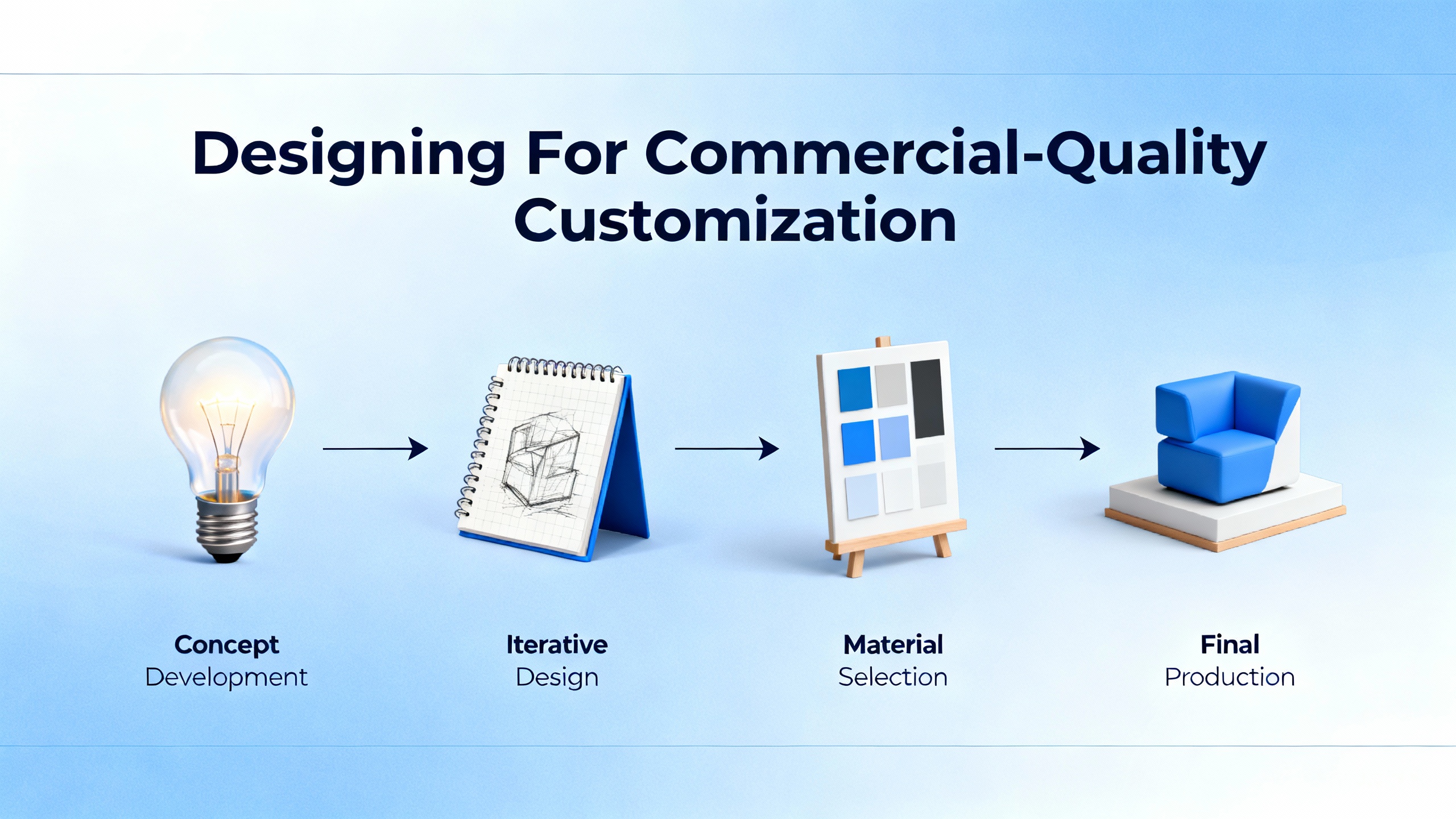
Designing For Commercial-Quality Customization
Once you understand what “business‑grade” means, the next step is to design your customization program accordingly: not just the products themselves but the configuration experience and underlying rules.
Choosing The Right Depth Of Customization
Bain & Company suggests that companies must decide what customization is really for: a marketing and engagement tool, a profit driver on a specific line, or the foundation of the whole business. That decision should guide how deep you go.
Event‑industry analysis from Catersource describes three levels of customization strategy that translate neatly to ecommerce. True customization starts from a blank slate each time, essentially designing every order from scratch. Selected customization gives customers a large but pre‑defined set of components to mix and match. Guided customization limits choices to a narrow, well‑structured menu.
In practice, most ecommerce and POD brands perform best when they avoid true customization, except in very high‑margin, low‑volume categories. Selected customization works when your operations and data are mature; you can cost and produce every variation reliably. Guided customization, however, is often the sweet spot for commercial‑grade items because it reduces cognitive load for customers and operational risk for you.
This aligns with what The Good has observed in ecommerce: brands that overwhelm shoppers with options see cart abandonment spike. When a furniture brand like Knoll introduced structure—numbered choices, saved carts, and clear steps—conversion rates improved sharply. Bain finds the same pattern in footwear and apparel: limiting options to the handful of attributes that customers truly care about, and making those decisions simple, produces better sales and satisfaction.
If you are launching or upgrading a customization program, err on the side of guided options with clear boundaries, then open up complexity only when your data proves customers are asking for it and your operations can handle it.
Building Modular, Platform‑Based Products
Mass customization research from ConfigureID highlights modular and platform‑based design as two of the most powerful strategies. Modular customization breaks a product into rule‑based modules that customers can combine without triggering engineer‑to‑order complexity. Platform‑based customization builds many variants on a shared base structure.
Fender’s Mod Shop, Nixon’s customizable watches, and automotive configurators all use this pattern. Customers pick a base model, then choose among neck profiles, finishes, case materials, dials, straps, or option packages. Behind the scenes, the product team enforces rules so customers cannot select combinations that cannot be built.
For commercial‑quality custom items, especially in POD and dropshipping, treating your catalog as a set of platforms with interchangeable skins and add‑ons is one of the most scalable moves you can make. A “hero” hoodie can support dozens of colorways, print placements, and personalization areas. A best‑selling tumbler can carry seasonal artwork, corporate logos, monograms, and variable packaging while sharing the same underlying SKU.
Modular thinking also helps you avoid the combinatorial explosion that Google Merchant Center warns about. Instead of trying to create and submit every possible shade‑by‑size‑by‑material‑by‑pattern combination, you focus on the variants with proven demand, while still allowing rich customization at the configuration layer on your own store.
Visualization And Confidence: 2D, 3D, And AR
The psychological side of customization is driven largely by confidence. Customers want to see what they are getting and feel in control of the outcome.
3D Cloud’s findings show how powerful real‑time visualization can be: most shoppers in their furniture study said 3D and augmented‑reality tools helped them decide faster and made them more confident. The Good has documented similar results from high‑quality previews and monogramming tools in categories such as lab coats and home goods.
Technical guides from Artifi and related platforms break this down into assets, canvases, and widgets. Assets are the images or 3D models. The canvas is the area that can be decorated, which might be an open layout or a tightly defined zone. Widgets are the tools customers use: add text, upload an image, choose a monogram style, rotate, resize, or apply effects.
A commercial‑quality setup pays attention to all three. Assets are crisp and accurate across colorways. Canvases are defined so artwork never bleeds into seams or illegible zones. Widgets expose just enough control to feel expressive, without forcing the average shopper to become a designer.
In many POD and dropshipping setups, 2D previews are sufficient if they are photorealistic and update instantly. In categories with higher average order values—furniture, complex apparel, or industrial components—investing in 3D or 360‑degree rotation can be worthwhile. The key is that every preview closely matches what will be produced, because that is what allows you to command a premium and still keep return rates manageable.
Operational Backbone: From Click To Shipment
The most common failure mode I see in custom‑product businesses is not lack of demand. It is operational friction: orders that cannot be produced as configured, artwork that requires manual intervention, or data that fails to reach the right supplier in time. Business‑grade customization demands a disciplined end‑to‑end flow.
Capturing Customization Cleanly
Product customization platforms such as those described by Artifi emphasize the importance of production‑ready output. When a customer submits text, images, and options, your system should generate files and data that manufacturing or partners can use without guessing.
That means storing vector or high‑resolution artwork, not just low‑quality thumbnails. It means including fonts, Pantone or equivalent color references, and exact positioning. It also means encoding the rules that govern what is allowed. For example, monograms might support specific letter arrangements; embroidery has minimum stroke widths; engraving on metal may require line‑art conversions.
The more of this logic you capture in the configuration layer, the less rework you need downstream. This is not just about efficiency. It is about brand safety. When you operate at scale for corporate buyers, you cannot afford to produce items that differ materially from mockups.
On-Demand Production And Dropshipping
Print‑on‑demand is particularly well suited to commercial customization. Dynamic Mockups explains that POD allows you to produce only after an order is placed, eliminating inventory risk. Shopify’s guidance notes that a basic POD T‑shirt that costs about $5 to fulfill can sell for many times that amount when customers can choose styles, colors, and custom designs.
The advantages extend beyond margin. POD models offer flexibility to test new designs quickly, adapt to trends, and serve many niches without holding stock. Providers such as Printful, Printify, SPOD, and Gelato (cited in the research) integrate with Shopify, WooCommerce, BigCommerce, and marketplaces, often handling production and fulfillment worldwide.
However, business‑grade POD still requires rigor. You must vet your partners for quality, color consistency, and fulfillment times. Bain’s research points out that tolerance for lead time varies by category—customers may accept three to four weeks for bespoke footwear but lose interest in shirts if delivery exceeds about two weeks. Custom items are often harder to resell, so you want to minimize disappointment through honest lead‑time communication and reliable operations.
The right POD and dropshipping stack lets you start small but think big. You can validate demand in a niche, then formalize programs for corporate buyers, trade shows, or year‑round employee stores without tying up capital in inventory.
Data, Pricing, And Marketplaces
If you promote customized products on comparison engines or large marketplaces, you need to think like Google’s Merchant Center documentation suggests: product data is part of your product.
Google recommends providing detailed variant attributes such as color, size, material, and pattern, and grouping variants under a shared item group identifier when they are truly versions of the same product. They also emphasize that the image, title, description, and price for each advertised variant must all match. If a patterned phone case costs more than a solid one, the patterned case image and higher price should appear together.
For complex configurable products where combinations could number in the thousands, Google advises against submitting every possible configuration. Instead, submit the variants that actually sell, while ensuring the broader options are available on your landing page or configurator.
Commercial‑grade customization in this context means being deliberate about which variants you surface in paid channels, and ensuring your feeds, landing pages, and configurators stay synchronized. When your ads promise an engraved tumbler at a certain price and color, your product page must land on that exact configuration with options preselected.
Use Cases Where Business-Grade Custom Items Excel
Customization can technically be added to almost anything, but it becomes commercially powerful in certain use cases where the economics and psychology line up.
Promotional products and trade shows are one of the most visible arenas. Articles from FaceTime Business Resources, Gloso, Underground Shirts, and others frame promo items as versatile advertising tools that increase brand visibility and foster goodwill. The key is aligning the item with audience, context, and goal. A company courting athletes may use custom apparel and duffel bags, while a corporate software firm might prioritize branded notebooks, laptop sleeves, and high‑quality pens.
Corporate gifting and employee programs are another high‑value domain. Anuent’s analysis of gifting businesses emphasizes how carefully chosen, subtly branded gifts strengthen relationships with staff, clients, and prospects. Here, subtlety and quality matter more than raw logo size. A monogrammed leather notebook or premium drinkware with discreet branding often outperforms a loud, low‑quality novelty item.
Direct‑to‑consumer brands can use custom products to stand out in crowded categories. Shopify showcases examples like custom swimwear, personalized candy, and monogrammed stationery. The Good documents how brands such as LL Bean leveraged playful monogramming on their Boat and Tote bags to create a sales spike. Food brands like Starbucks and Chick‑fil‑A have turned menu customization into a key part of their experience, supported by mobile ordering.
In all of these scenarios, the same business‑grade principles apply: clear objectives, appropriate product selection, quality that matches your positioning, and a configuration experience that feels empowering rather than confusing.
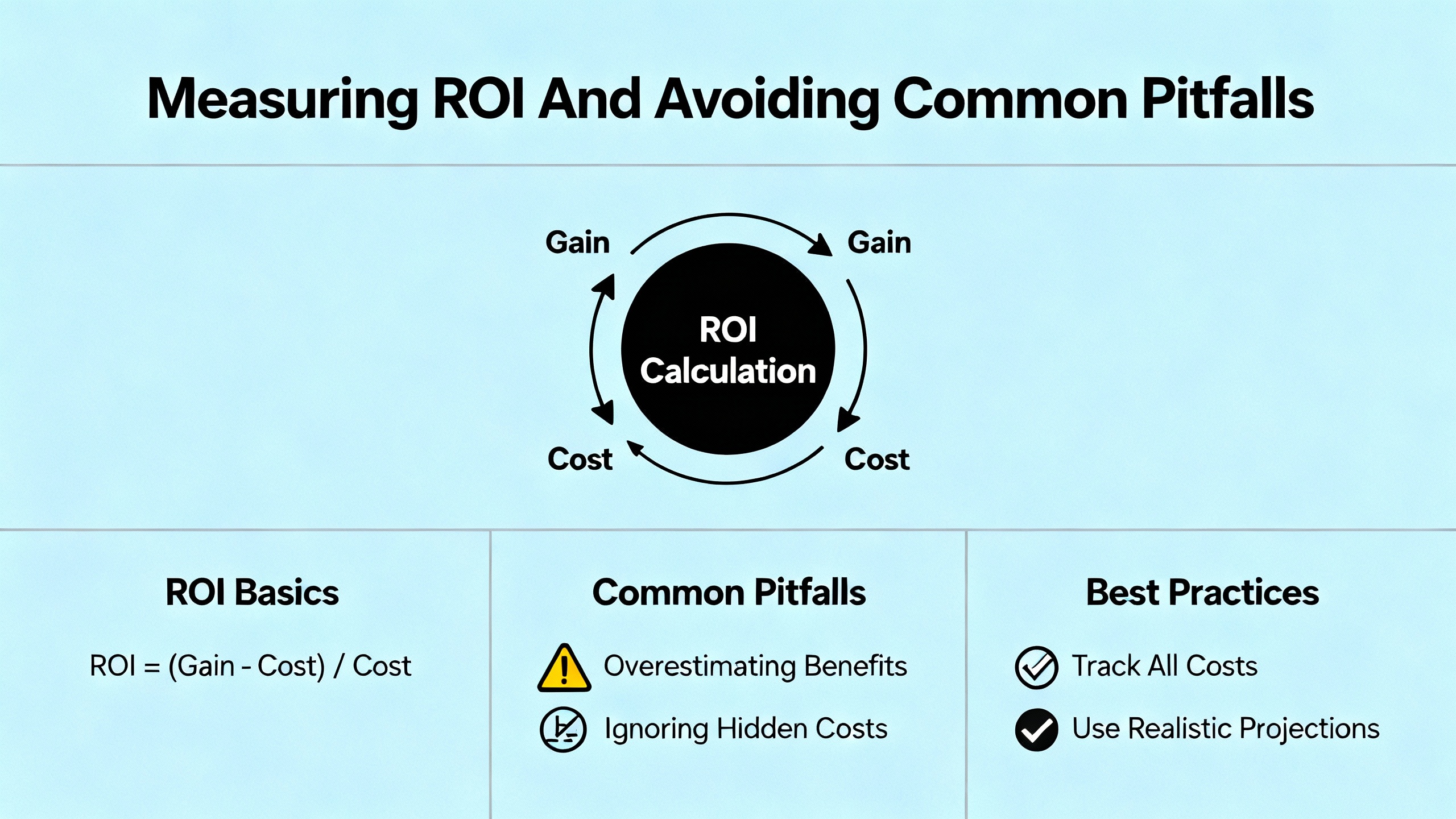
Measuring ROI And Avoiding Common Pitfalls
Customization can become an expensive hobby if you do not track impact and discipline scope. Fortunately, the research provides useful guardrails.
McKinsey’s work on personalized marketing shows not only revenue lifts but also better marketing efficiency when brands leverage data intelligently. Business.com notes that brands using personalization are significantly more likely to see improved loyalty, and that customers are often frustrated when companies do not personalize at all.
On the promotional side, Deliberate Directions recommends linking custom campaigns to measurable outcomes such as sales, conversions tied to unique codes, landing‑page performance, and social media engagement. FaceTime Business Resources and Gloso suggest tracking not just distribution volumes but also usage, repeat orders, and qualitative feedback. ASI’s findings that many consumers keep high‑quality promotional items for years should encourage you to think about cost per impression over the life of the product, not just upfront unit price.
At the same time, several sources warn about common pitfalls.
Catersource explains that poorly managed customization in events leads to an inability to say no, constant reinvention, and one‑time‑use inventory. The same is true in product businesses. Without clear rules, sales teams promise anything, and operations bear the cost. Bain and The Good both highlight the danger of choice overload. When configurators present too many options without structure, customers abandon the experience, and your extra complexity never converts into revenue.
Business.com and Artifi both stress the hidden costs of customization: technology investments that can range from modest to very large, additional staffing, training, data maintenance, and more involved quality control. These costs are manageable, but only if you treat customization as a deliberate strategy with clear financial targets rather than a shiny add‑on.
From a mentor’s perspective, I encourage teams to define in advance how they will decide whether a customization initiative is working. That usually means setting revenue uplift goals, average order value targets, and qualitative metrics such as satisfaction or Net Promoter Score for customers who customize versus those who do not. Bain’s example of customized footwear buyers giving roughly 50% higher loyalty scores than standard buyers shows what is possible when customization truly resonates.
A Pragmatic Rollout Roadmap For Business-Grade Customization
The fastest way to derail a custom‑product program is to try to do everything at once. A more sustainable approach is to roll out in phases while keeping a clear line of sight to commercial quality.
A sensible starting point is a single hero product that already sells well in your catalog and lends itself to customization. Many Shopify and POD guides recommend apparel, drinkware, or stationery for exactly this reason. You introduce light personalization such as names, numbers, or simple monograms and ensure your preview, production, and fulfillment pipeline works flawlessly.
Once that is stable, you layer in more structured options. That might mean offering a few colorways, materials, or trim options, effectively moving from purely cosmetic personalization into aesthetic or component customization. ConfigureID’s mass customization strategies show how powerful modular and platform‑based approaches can be at this stage.
The next phase is to standardize operations and data. You integrate your configurator with your ecommerce platform more deeply, use standardized templates for product rules, and ensure that production files are automatically generated as Artifi recommends. If you advertise on Google or similar channels, you refine your data feeds to align variant information, pricing, and images.
Only then do you scale into advanced features such as 3D visualization, complex bundle builders, or collaborative co‑design workflows. At that point, you have both the customer insight and the operational maturity to make these investments pay off.
For brands in POD and dropshipping, this phased approach also lets you gradually bring more of the value chain under your control. You might start with generic supplier mockups and simple text customization, then move to your own high‑quality mockup generation, automated listing updates, and eventually brand‑specific packaging and inserts that turn every shipment into a fully branded experience.
Brief FAQ On Business-Grade Customization
Do small brands really need sophisticated configurators and 3D?
Not every business needs full 3D or augmented‑reality configuration. Research from 3D Cloud shows the benefits at scale, especially in categories like furniture where size and fit are complex. For smaller brands in apparel, drinkware, or accessories, high‑quality 2D previews and clear instructions can deliver most of the commercial value. The priority is accuracy and clarity, not gimmicks.
How much customization is enough without overwhelming customers?
Bain & Company’s guidance and The Good’s case studies both suggest focusing on the handful of decisions that matter most to customers and that you can deliver reliably. For footwear, that might be style, color, and a small set of personal touches. For promotional tumblers, it might be size, color, logo placement, and optional personalization. If you are not sure, start with fewer, well‑chosen options and expand only when customers and data clearly ask for more.
What about returns and customer expectations for custom items?
Bain’s research shows that customers’ tolerance for lead times and returns varies by category, but they generally expect clear policies and a reasonable return window, often around a month. The good news is that return rates for well‑executed custom products are often lower than for standard items because customers know what they are getting. The critical point for commercial‑quality programs is to set expectations clearly, provide accurate previews and timelines, and make any exceptions to usual return rules easy to understand up front.
Closing Thoughts
Business‑grade customization is not about offering the fanciest configurator or the widest set of options. It is about combining thoughtful product design, disciplined operations, and a clear understanding of your customer so that every custom item strengthens your brand rather than stretching it thin. When you treat custom products as a serious commercial capability—supported by robust data, realistic processes, and high‑quality outputs—you not only justify the premiums customers are willing to pay; you build a long‑term moat that competitors selling generic goods will struggle to cross.
References
- https://libjournals.mtsu.edu/index.php/jsbs/article/download/7/5/80
- https://3dcloud.com/product-customization-examples/
- https://www.catersource.com/tools-technology/3-types-of-customization-finding-the-best-fit-for-you
- https://deliberatedirections.com/maximizing-impact-with-custom-products-for-business-promotions/
- https://facetimebusinessresources.com/how-to-choose-which-promotional-products-to-buy-for-your-company/
- https://www.flywheelbrands.com/news/5-tips-for-choosing-the-best-company-for-promotional-products-for-your-brand
- https://gloso.com/choosing-promotional-items-for-business/
- https://resources.imagine.io/blog/product-customization-examples
- https://www.imprintnow.com/guides/7-tips-for-starting-and-building-your-custom-products-for-business
- https://www.shopify.com/blog/product-customization