


Chip-Resistant Custom Mugs: Durable Ceramic and Enamel Options
In every coaching call I do with new print-on-demand founders, mugs come up sooner or later. They are easy to design, universal in appeal, and perfect for gifts, corporate swag, and subscription add‑ons. Yet behind the scenes, mugs are also one of the top sources of broken shipments, chipped rims, and one‑star reviews. When you scale an on-demand or dropshipping business, the difference between “cute mug” and “chip-resistant custom mug built for daily use” shows up directly in your margins and your brand reputation.
This article walks through what chip resistance really means, how ceramic and enamel options compare, and how to select and position durable custom mugs in an on-demand model. The focus is practical and rooted in what we know from ceramic manufacturers, safety advocates, and independent product testers, combined with what I see working for e‑commerce brands in the real world.
Why Chip Resistance Matters For On-Demand Sellers
If you are running a print-on-demand or dropshipping store, you rarely see the product before your customer does. That means you are betting your brand on your supplier’s materials, firing process, glaze quality, and packaging.
Every chipped handle that arrives on a doorstep triggers a chain of expensive events: customer support time, reprints, possible refunds, and negative word of mouth. For some brands, mugs are loss leaders; they exist to put your artwork in someone’s kitchen and keep your logo on their desk. If that mug starts chipping around the rim after a few months, the emotional association with your brand erodes just as quickly.
Chip-resistant custom mugs do not eliminate breakage, but they dramatically lower the frequency of micro-damage from everyday knocks, stacking, and dishwasher cycles. That is where the long-term payoff lies: fewer problems to fix, more repeat buyers, and a mug that remains part of your customer’s routine rather than buried in the back of a cabinet.
What “Chip Resistant” Really Means
“Chip resistant” is often used as a marketing phrase, but in ceramics and enamel it has a specific foundation. It is not about being unbreakable. It is about how well the mug resists localized damage along the rim and edges during normal use.
For ceramic mugs, chip resistance starts with the clay body and firing. As outlined in ceramic overviews from brands such as Angie Homes and safety-focused guides like Healthier Homes, high-fired, vitrified ceramics are non-porous and inherently stronger. When stoneware or porcelain is fired at high temperatures, often well above 2,192°F, the clay particles fuse and the body becomes dense and less prone to micro-cracks. Articles on durable ceramic drinkware, including those cited by the American Ceramic Society in manufacturer content, highlight that properly vitrified ceramic resists thermal shock and surface degradation better than many glass or plastic alternatives.
The glaze is the other half of the story. A high-quality glaze that is evenly applied, fully covering the surface, and matured in the kiln forms a smooth, glass-like layer. Durable mug makers such as HF Coors and CURVD describe their glazes as vitrified, non-porous, and chip-resistant, emphasizing that this sealed surface helps prevent moisture from getting into the clay body and reduces the likelihood of chips starting at weak glaze spots.
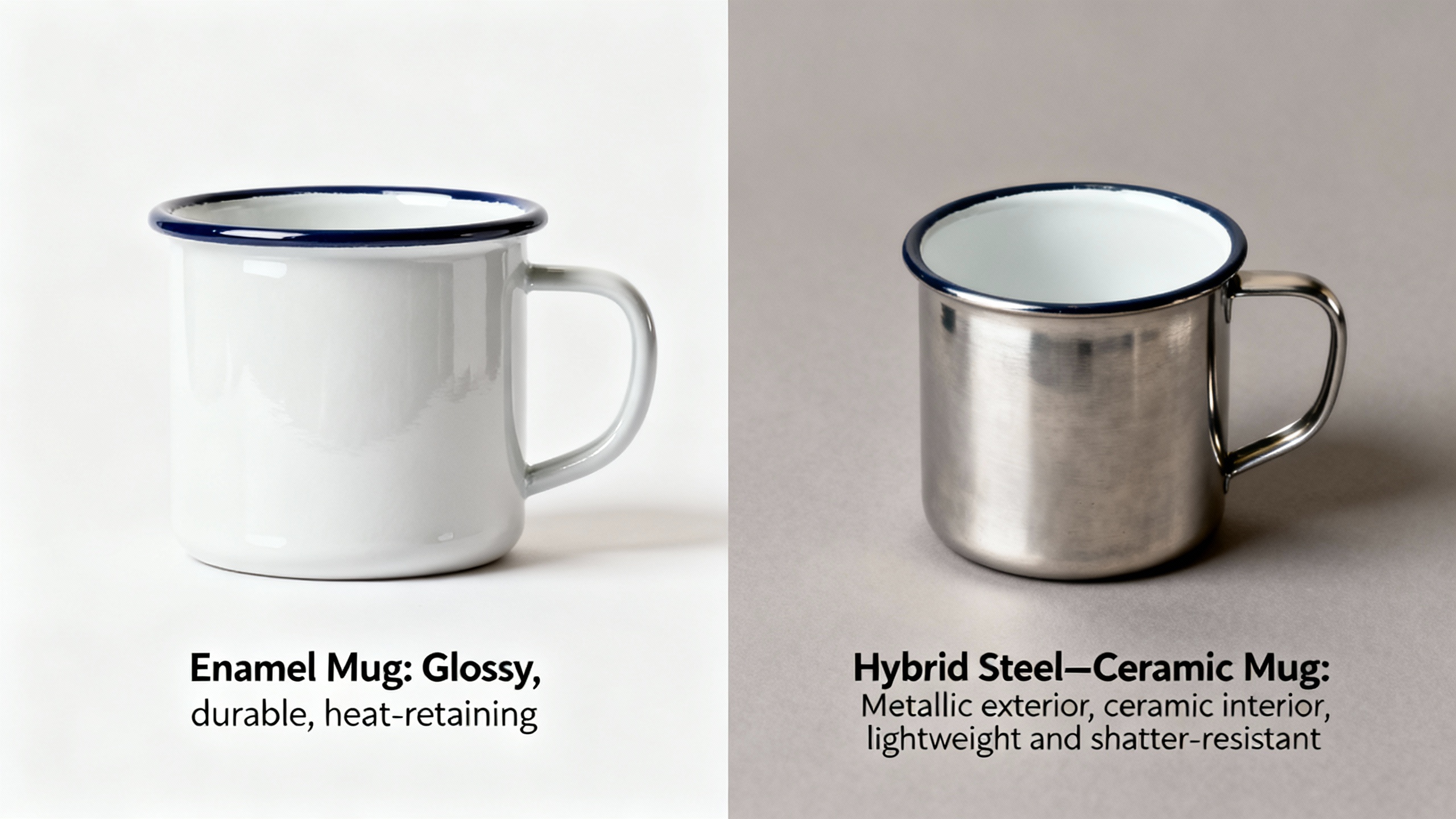
For enamel and hybrid steel–ceramic designs, chip resistance looks a bit different. The metal body itself usually survives impacts that would shatter a ceramic mug, but the enamel or ceramic lining can chip at high-stress points like the rim and handle. In practice, these mugs are great at surviving drops but will show visible damage where the coating chips away.
The key takeaway for an e‑commerce entrepreneur is simple: chip resistance is a material and process story, not just a marketing label. When a supplier cannot explain clay type, firing temperature range, and glaze approach, they are asking you to take on their risk.
Ceramic Options: Earthenware, Stoneware, Porcelain, and Bone China
Ceramics are still the default material for custom mugs, and for good reason. They are chemically inert, hold heat well, and present a clean canvas for artwork and logos. However, not all ceramic types perform the same way in daily use.
Earthenware: Warm Aesthetics, Lower Durability
Earthenware is the most accessible ceramic category: a clay-based material fired at relatively low temperatures, resulting in a porous and somewhat softer body. Angie Homes describes earthenware mugs as warm and charming, with vibrant colors and intricate designs. They are affordable and can look fantastic, especially in handmade or artisanal styles.
The tradeoff is durability. Earthenware tends to be more fragile and can absorb flavors if the glaze or body is not fully vitrified. Under repeated impacts or thermal stress, it is more susceptible to chips and cracks. For a custom mug line that you expect to survive years of dishwasher cycles and office use, earthenware is rarely the best choice, especially in a dropshipping context where you do not control how pieces are handled.
Earthenware can still play a role in limited, high-art releases where customers expect to handle pieces gently, but as a chip-resistant workhorse it sits low on the list.
Stoneware: The Chip-Resistant Workhorse
Stoneware is the backbone of durable ceramic mug programs. It is fired at higher temperatures than earthenware, producing a dense, non-porous body with excellent strength. Angie Homes notes that stoneware mugs are known for their good heat retention and earthy aesthetics, and that they are typically more chip-resistant than earthenware. The downside is weight; stoneware mugs tend to feel heftier in the hand, and color ranges can be more muted.
Real-world brands back up stoneware’s durability story. HF Coors markets its vitrified stoneware mugs and dinnerware as chip-resistant and non-porous, highlighting a two-year chipping guarantee and positioning them as suitable for both everyday and restaurant-level use. The company emphasizes that its pieces are lead-free, cadmium-free, and designed to go from oven to dishwasher to freezer without cracking, provided they are used as directed. That level of confidence only works when the base body and glaze are genuinely robust.
Le Creuset’s 14 oz stoneware mug, frequently recommended by reviewers at Food media outlets and home-product testers, is described as resistant to chips, scratches, and stains. It carries a long warranty, is microwave and dishwasher safe, and is specifically marketed as chip-resistant stoneware in retail descriptions. Editors at Bon Appétit and Food & Wine praise stoneware mugs like those from East Fork and Le Creuset for their thick walls, heat retention, and ability to stay attractive after years of daily use.
CURVD, a brand focused on durable ceramic mugs, defines a durable ceramic mug as one that maintains structural integrity and appearance under repeated heat, moisture, and washing without cracking, fading, or leaching harmful substances. Their approach combines high-temperature firing, advanced glazing, and kiln-fired decals that embed artwork into the mug so designs do not peel or rub off even after many dishwasher cycles.
From an e‑commerce perspective, stoneware is usually the safest base for a chip-resistant custom mug. It delivers durability, neutral taste, and a high-quality feel that justifies premium pricing. The extra weight does increase shipping costs slightly, but that is typically offset by fewer replacements and higher perceived value per order.
Porcelain and Bone China: Refined but Less Forgiving
Porcelain sits at the high end of traditional ceramics. As Angie Homes explains, porcelain is fired at the highest temperatures among the main ceramic types, resulting in a smooth, non-porous body that is light, refined, and highly stain resistant. Properly fired porcelain is very strong in compression and offers an elegant, thin-walled profile that many coffee enthusiasts love.
The tradeoff is that thin rims and lighter bodies can be more prone to chipping if dropped or knocked against hard surfaces. While porcelain edges can be quite strong, the impact point is concentrated, and tiny chips along the rim are more visible than on thicker stoneware.
Bone china is a related, high-fired material highlighted in a practical guide to safe ceramic mugs for hot drinks. The guide describes bone china as non-porous, lightweight, and generally safe for hot beverages, making it a high-performing option for those who prioritize lightness and elegance. However, bone china usually commands a higher price and is best suited to careful users rather than rough office kitchens.
Porcelain and bone china mugs can absolutely be part of a profitable custom line, especially for more premium or design-forward segments. Editors at Bon Appétit and coffee-focused publications often praise handmade porcelain mugs for their balance of comfort and aesthetic appeal. For example, Haand’s 10 oz porcelain mug, modeled after classic tin camping mugs, is celebrated for its hand-hugging shape, matte lead-free glaze, and microwave and dishwasher safety.
If your audience is willing to treat their mugs more gently and you position these pieces as premium, porcelain and bone china can earn strong margins. However, if your main goal is minimizing chips and returns in a high-velocity on-demand operation, stoneware remains the more forgiving foundation.
Enamel and Hybrid Steel–Ceramic Mugs
Enamel mugs occupy an interesting space in the chip resistance conversation. When people think “camp mug,” they often picture a lightweight metal mug with a glossy, colored coating. That coating is typically a glassy enamel fused onto a metal body, usually steel. Health-focused materials guides also describe hybrid steel–ceramic designs where a stainless exterior is paired with a ceramic interior to combine insulation with better flavor.
From a durability standpoint, enamel and steel–ceramic mugs excel at surviving drops that would shatter ceramics. The metal shell absorbs impact without breaking into shards, which is reassuring for outdoor use and family environments. In everyday e‑commerce use, that means fewer catastrophic breakages during shipping and in the customer’s home.
However, chip resistance at the surface level is more nuanced. The enamel or ceramic lining can chip if the mug is knocked against a hard edge or if the rim takes a hit. When that happens, the damage usually shows up as a small exposed metal spot, especially along the rim or at the handle attachment points. The mug often remains structurally usable, but the aesthetics take a hit and some customers may be concerned about rust over the very long term.
Another factor is heat management. Reviews of tin and metal mugs in coffee blogs, such as Low-Key Coffee Snobs, point out that single-walled metal mugs conduct heat quickly. They lose heat faster than double-walled designs and can become hot to the touch. That means enamel camping-style mugs are not top performers if your main promise is “keeps coffee hot for hours,” but they can still be very attractive, durable canvases for branding where chip resistance is more about survival than perfect surface preservation.
For on-demand printing, enamel mugs are especially popular as lifestyle products: think retro camp designs, outdoor brands, and minimalist line art. They are also lighter to ship than stoneware. If you add enamel into your catalog, position it as rugged and portable rather than as the ultimate heat-retaining or chip-immune option, and make sure your product descriptions set expectations about how enamel chips may appear over time.
Safety: Lead-Free, Cadmium-Free, and Non-Toxic Surfaces
Material safety should sit right next to chip resistance in your decision criteria. Several sources point to real risks from poorly regulated glazes and coatings, especially for hot drinks.
Healthier Homes evaluates mug materials using criteria such as non-toxicity, durability, design quality, and ecofriendliness. Their analysis highlights ceramic, glass, and stainless steel as categories that, when made correctly, handle high temperatures with minimal leaching. At the same time, they caution that decorative or antique ceramic mugs, particularly those made before the 1990s, may contain lead or cadmium in glazes. The recommendation is to avoid using such vintage pieces for hot drinks unless they are specifically tested and certified as food safe.
HF Coors tackles the safety question head-on by marketing their mug sets as 100% lead-free and 100% cadmium-free. They emphasize vitrified, non-porous surfaces that resist absorbing odors and contaminants, and frame their chip-resistant mugs as part of a broader commitment to family health. CURVD similarly notes that its durable ceramic mugs are made with food-safe, eco-friendly glazes that are third-party tested to avoid leaching heavy metals so beverages taste like coffee rather than chemicals.
A practical guide to safe ceramic mugs suggests looking for clear “lead-free” and “cadmium-free” labels, favoring brands under stricter regulations such as US and EU manufacturers or certified overseas makers, and being wary of unlabeled imports. The guide also points out that cracks, chips, and worn finishes increase porosity and the risk of contaminants leaching into drinks. In other words, a chipped mug is not just an aesthetic problem; it can become a safety issue over time.
For your store, that means product pages should not only highlight durability and design but also mention safety attributes where your suppliers back them up. Do not invent claims, but do ask suppliers about heavy-metal testing and certifications. When you can legitimately say “lead-free, cadmium-free, and third-party tested,” you are not just selling a mug; you are selling peace of mind.
Evaluating Chip-Resistant Custom Mugs From Suppliers
When you are choosing blanks for custom printing or evaluating white-label mugs from a dropshipping catalog, there are a few themes that consistently predict real-world chip resistance.
Clay Body and Firing Quality
Durability in ceramic mugs depends heavily on clay type and firing temperature. Guides on durable ceramic mugs point out that high firing temperatures, ideally above about 2,192°F, combined with high-quality glaze and sound construction, reduce porosity, cracking, and chipping. Stoneware fired in this range tends to be denser and tougher, while thinner porcelain can feel refined but demands more careful use.
Ask suppliers explicitly whether the mug is stoneware, porcelain, earthenware, or a composite, and whether the body is fully vitrified. Vitrified, non-porous claims, like those made by HF Coors, indicate that the body has been fired to a level where it resists moisture absorption and associated micro-cracks.
Glaze and Rim Design
The glaze is often where chips start. A durable ceramic mug guide recommends looking for glazes that are even, smooth, and fully covering the surface. Thin spots, rough patches, or visibly uneven coatings are red flags for early stains, scratches, and chips. Joyye’s “Mug Care 101” adds that thermal shock and impact are primary causes of cracks and chips, especially at rims and handles.
Rim design plays a role as well. Thick but comfortable rims, like those seen in Le Creuset and East Fork stoneware mugs, create a bit more material to absorb knocks when mugs are stacked or clinked together. Very sharp, thin rims in porcelain can feel luxurious but leave less buffer against impact. For high-use environments like offices, coffee bars, or busy households, prioritizing a slightly thicker rim pays off in lower chip rates.
Glaze Safety and Certifications
Given the concerns about heavy metals in some glazes, your due diligence should include safety checks. Healthier Homes and other safety guides recommend favoring mugs that are explicitly labeled food-safe, lead-free, and cadmium-free, and that come from manufacturers operating under strict quality controls.
Brands like HF Coors and CURVD use safety claims as selling points, emphasizing their heavy-metal-free, independently tested glazes. In your marketing, you do not need to become a chemist, but you do need enough clarity to avoid vague wording. It is better to honestly describe a mug as “durable stoneware with a smooth glaze” than to imply safety certifications that do not exist.
Real-World Durability Signals
Independent tests and editor roundups provide useful clues about how mugs actually hold up. TechGearLab, The Spruce Eats, and Food & Wine have all tested a range of mugs across materials, capacities, and use cases, tracking insulation, ergonomics, durability, and ease of cleaning. In those reviews, double-wall glass and ceramic designs consistently outperformed single-wall designs for heat retention, while stoneware mugs such as Le Creuset’s 14 oz mug and LIFVER’s large porcelain mugs were praised for robust performance under daily use.
Lifestyle publications such as Bon Appétit and Wirecutter also highlight mugs that remain favorites after years, not months. East Fork’s standard stoneware mug, for instance, is celebrated for staying thick, hefty, and warm over long periods, with glazes that stand up to dishwashers. These kinds of qualitative signals matter when you decide which blanks to build a product line around.
Print Method and Customization Durability
Durable mugs are not just about the clay and glaze; they are also about how your artwork is applied. CURVD explains that kiln-fired decal printing embeds the design into the ceramic body by firing it in the kiln. This method results in artwork that stays vivid and does not peel or rub off even after many washes, making it ideal for long-term branding, cafe use, or high-frequency home use.
In contrast, surface-level prints that sit on top of the glaze can fade or peel, especially under dishwasher and microwave stress. When you evaluate print-on-demand suppliers, ask whether designs are fired into the glaze or applied as surface transfers, and whether their processes have been tested in dishwashers and microwaves. Since you are promising a “custom mug,” the design itself must be as durable as the clay and glaze.
Operational Considerations in Dropshipping
On a practical level, your supplier relationship is as important as the product itself. That begins with samples. Before you commit to a mug style, order samples and use them the way your customers will: daily coffee or tea, dishwasher cycles, occasional microwave reheating, and normal stacking in a cabinet. Check for early chips at the rim, fading designs, or hairline cracks.
Packaging is another lever. Even a chip-resistant mug will not survive negligent packing. Ask suppliers how they pack single mugs and sets, whether they use inner boxes, corner protectors, and shock-absorbing materials, and how they handle replacements when carrier damage occurs. HF Coors’ two-year chipping guarantee is a reminder that some manufacturers are willing to stand behind durability; your supplier should at least be ready to resolve issues swiftly.
Ceramic, Enamel, and Stainless: Comparison for E‑commerce Sellers
The table below summarizes how key materials compare when you are designing a chip-resistant custom mug lineup.
Material | Chip Resistance in Daily Use | Heat Retention and Feel | Print Durability Potential | Best Use Cases for Custom Mugs |
|---|---|---|---|---|
Stoneware ceramic | High, especially when vitrified with robust glazes | Excellent heat retention, heavier, cozy and substantial in hand | Strong with kiln-fired decals and quality glazes | Core everyday mugs, office sets, cafe merchandise, premium POD basics |
Porcelain or bone china | Good but more prone to rim chips if treated roughly | Lighter, refined feel, good heat retention at moderate wall thickness | Strong with high-quality glazes; designs can look very crisp | Premium or giftable lines, design-forward collections, careful home users |
Enamel-coated steel | Body survives drops well; enamel can chip at edges | Single-wall metal loses heat faster, exterior can feel hot | Limited to enamel-compatible designs; chips can expose metal | Retro camp-style mugs, outdoor or lifestyle brands, lightweight merch |
Hybrid steel–ceramic interior | Excellent structural durability | Strong insulation in double-wall designs, flavor closer to ceramic | Dependent on interior coating and exterior finish | Travel-focused mugs, office mugs where shatterproof design is critical |
Stainless, vacuum-insulated | Very high structural durability | Best-in-class heat retention for travel use | Exterior print durability depends on coating; interior is unprinted | Travel and commuter mugs, high-end gifts where heat retention is the priority |
For a typical on-demand store, a mix of stoneware ceramic for everyday use and enamel or hybrid steel–ceramic pieces for outdoor and travel segments offers a practical balance between chip resistance, heat management, and perceived value.
Designing a Chip-Resistant Custom Mug Line
Once you understand the materials, you can make strategic decisions about how to structure your mug offering rather than adding random SKUs.
Capacity and shape are the first levers. Angie Homes notes that standard mugs in the 8 to 12 oz range work well for everyday coffee and tea, with larger 14 to 16 oz mugs suited to bigger drinks and 18 oz and above functioning as crossover pieces for soup or cereal. Healthier Homes suggests that 8 to 15 oz is a sweet spot for most coffee styles, with 2 to 6 oz reserved for espresso and small drinks, and up to about 20 oz for travel mugs. In practice, offering one core size around 11 to 14 oz, a smaller espresso or cappuccino piece, and a larger “big mug” option will cover most customer needs without overwhelming your catalog.
Shape influences both heat retention and the sensory experience. Guides from coffee specialists explain that wide-mouth mugs allow faster cooling but enhance aroma, while narrower top designs retain heat longer. Bon Appétit’s editors praise mugs like East Fork’s and Haand’s for shorter, wider shapes that encourage a two-hand grip and showcase latte art, while other reviewers prefer taller forms for slow sipping. When you design artwork, think about how it flows with these shapes; a vertical logo behaves differently on a tall mug than on a squat, rounded one.
Branding and pricing strategy should account for material and durability. A durable stoneware mug with proven chip resistance, microwave and dishwasher safety, and kiln-fired artwork can support a higher price point and still feel like excellent value. Enamel mugs can serve as more accessible lifestyle pieces that are lightweight and visually distinctive, even if they are not the best heat keepers. Premium porcelain or bone china mugs can be reserved for limited releases, collaborations, or holiday collections where buyers are already primed to spend more.
Finally, consider the emotional story. CURVD frames durable ceramic mugs as objects that integrate into daily rituals, living on desks and counters and subtly improving the rhythm of mornings and breaks. Wirecutter and Food media staff write about mugs they have used for years that feel like old friends. Your product descriptions, photography, and emails should position your chip-resistant mugs not just as functional drinkware but as daily companions.
Care Instructions You Should Share With Customers
Even the best materials need basic care to stay chip-resistant over the long term. Supporting your customers with clear guidance reduces preventable damage and reinforces the perception that your brand cares about the whole experience.
Thermal shock is a common culprit behind cracks and chips. HF Coors and Joyye both advise avoiding extreme temperature changes, such as moving a mug directly from the freezer to the oven or pouring boiling water into a mug that has been sitting in a very cold environment. Encouraging customers to let mugs come to room temperature before drastic temperature shifts, and to pre-warm mugs with warm tap water before very hot drinks, is an easy protective habit.
Handling and storage matter as well. Ceramic care guides recommend handling mugs gently when washing and stacking, not stacking heavy items on delicate pieces, and using racks or padded shelves to distribute weight. Lining shelves with a soft material or using dedicated mug trees reduces rim-to-rim collisions that can cause chips. Advising customers to grip mugs by the handle or body rather than the rim, and to avoid carrying too many at once, is simple but effective.
For cleaning, multiple sources converge on the same advice. Use mild dish soap and non-abrasive detergents with a soft sponge. Avoid harsh scouring pads that can scratch glazes. Many durable ceramics, such as those from HF Coors, CURVD, Le Creuset, and East Fork, are dishwasher safe, and their makers test them for repeated washing. Nevertheless, reminding customers that handwashing will always be the gentler option reinforces the sense of craftsmanship and care. For enamel and hybrid steel–ceramic mugs, follow manufacturer guidance, especially regarding dishwashers and the use of harsh cleaners on coated surfaces.
Safety guides also stress that chipped mugs should be retired from food use. Cracks and chips create porous areas that can harbor bacteria and, in lower-quality glazes, may increase the risk of leaching. You can suggest that customers repurpose sentimental chipped mugs as pen holders or plant pots rather than continuing to drink from them.
From a business standpoint, consider including a short care card in packaging or a follow-up email with care tips. This small touch positions you as a partner in your customers’ daily rituals rather than a faceless vendor and can genuinely extend the life of your products.
Short FAQ
Are chip-resistant mugs unbreakable?
Chip-resistant mugs are not unbreakable. The term refers to improved resistance to localized damage, especially around the rim and edges, under normal use. High-fired stoneware with a good glaze and well-designed rim, like the vitrified stoneware described by HF Coors or the stoneware mugs praised by Le Creuset reviewers, will outperform low-fired or poorly glazed ceramics, but any ceramic mug can break if dropped hard enough.
Are enamel mugs more chip-resistant than ceramic?
Enamel mugs are more resistant to catastrophic breakage, because the metal body tends to survive drops that would shatter a ceramic mug. However, the enamel coating itself can chip at stress points, revealing the metal underneath. A robust stoneware mug may show fewer visible chips at the rim in everyday cabinet and dishwasher use, while enamel excels in situations where drops are more likely but surface chips are acceptable.
How can I tell if a ceramic mug is safe for hot drinks?
Safety-focused guides recommend looking for clear “food-safe,” “lead-free,” and “cadmium-free” labels, and favoring brands that operate under strict regulations and third-party testing, such as those highlighted by Healthier Homes, HF Coors, and CURVD. Avoid using vintage, hand-painted, or raised-design mugs for hot drinks unless they are specifically certified as safe, because older glazes may contain lead or cadmium. Also inspect the mug for cracks, chips, or worn glaze; any damaged areas are reasons to retire the mug from hot-drink use.
From an entrepreneurship standpoint, durable, chip-resistant custom mugs are a quiet compounding asset. One thoughtfully chosen stoneware or enamel design that stays in a customer’s rotation for years does more brand-building than any ad campaign you run this quarter. If you treat materials, firing, glazes, and safety as seriously as you treat your artwork and marketing, your mug line can become a reliable profit center rather than a support headache.
References
- https://www.surlatable.com/o?c=durable-coffee-mug&srsltid=AfmBOoopNe64HpLa6s_uAoLtbXAKyRAVUfhoX5Ufvb4GPdOxfDLda4Az
- https://www.thespruceeats.com/best-coffee-mugs-espresso-cups-5115760
- https://www.amazon.com/chip-resistant-coffee-mugs/s?k=chip+resistant+coffee+mugs
- https://www.bonappetit.com/story/best-coffee-mugs?srsltid=AfmBOoqUalBnITTJR_Q1Oc-UeES-TVlLKpwjvRx1rzk8Hv8EYASmF4ZD
- https://smart.dhgate.com/a-practical-guide-to-choosing-safe-ceramic-mugs-for-hot-drinks-what-every-coffee-lover-should-know/
- https://www.duralexusa.com/collections/coffee-tea-cups-collection?srsltid=AfmBOoreNZpj-xxBuNLfZFhlmqRwygHXRkDX0lXJCKWvKBi8WtLILygl
- https://www.healthierhomes.com/post/safest-material-for-coffee-mugs?srsltid=AfmBOopUtEyRdFfRVAgx1kmJ-LMh49Fiede9UBQ4C1ZuZPFkzjjFyuHF
- https://hfcoors.com/collections/mug-sets?srsltid=AfmBOorlVuMsKqehWVBqLFDxd7PCorFiXfEu96CcCH55rfxY7cnxFRcK
- https://www.joyye.com/info-detail/mug-care-101
- https://www.lowkeycoffeesnobs.com/best-coffee-mugs-to-keep-coffee-hot/