

Best Shutterfly Alternative for Custom Gifts: Top Options Compared

Best Shutterfly Alternative for Custom Gifts: Top Options Compared

Jan 3, 2026 by Iris POD e-Commerce 101

If you have ever uploaded a batch of family photos at midnight to crank out a last‑minute holiday calendar, chances are you have used Shutterfly. It has become the default for turning digital photos into physical keepsakes. Yet as I see again and again mentoring creators, small businesses, and marketing teams, the “default” is not always the best fit once you care about print quality, unique aesthetics, or building a real revenue stream from your designs.

The good news is that the custom‑gift ecosystem has matured. You now have specialized photo labs for gallery‑worthy books, marketplaces for artist‑designed gifts, and full print‑on‑demand platforms that let you run a branded store without touching inventory. The challenge is picking the right Shutterfly alternative for your actual goal, not just the first site with a coupon code.

Drawing on independent testing from product reviewers at the New York Times’ Wirecutter, gifting research from Coresight Research, Deloitte, and multiple corporate gifting platforms, plus hands‑on experience helping founders build print‑on‑demand businesses, this guide breaks down the strongest options and how they compare to Shutterfly.

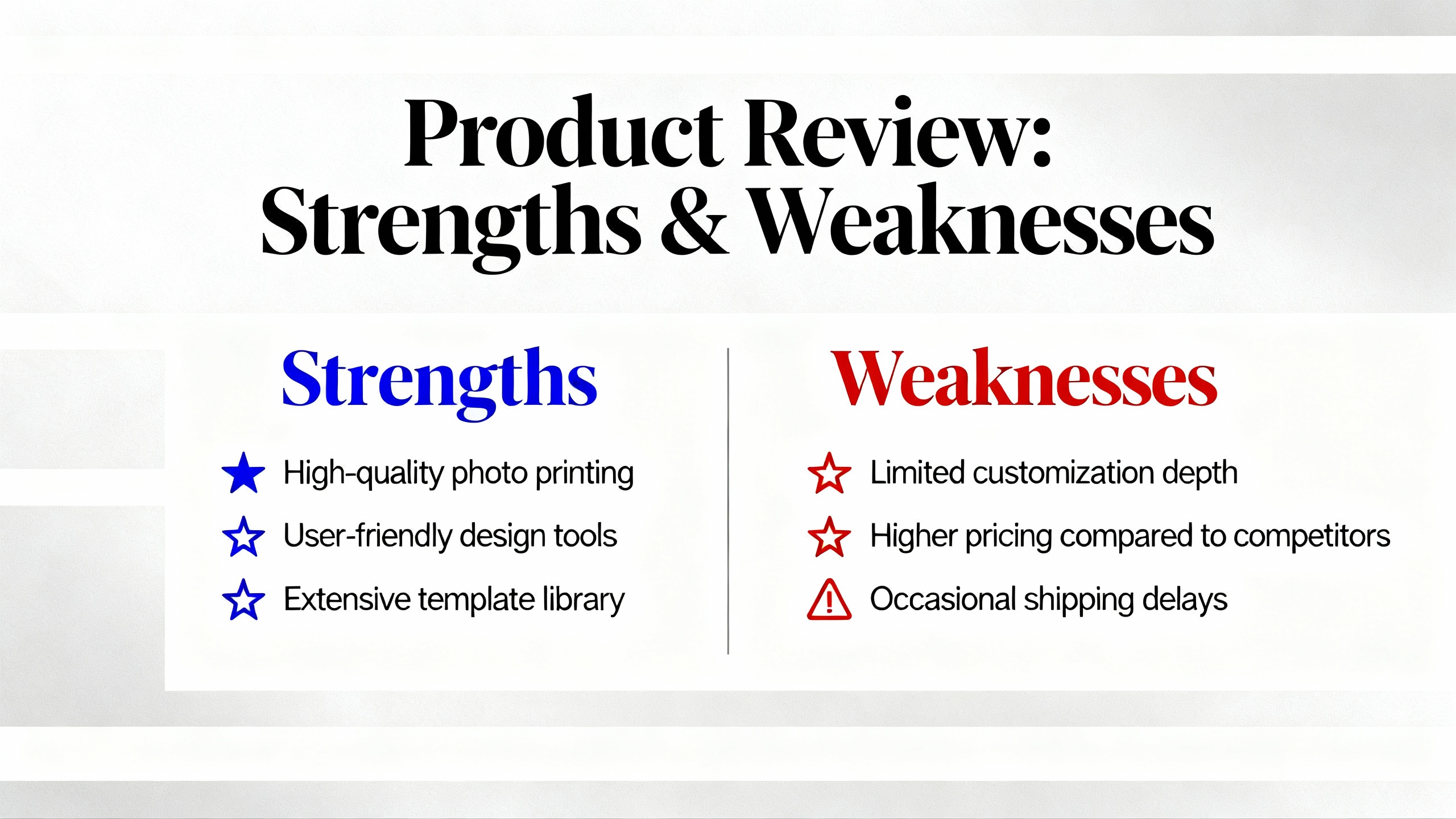
Where Shutterfly Shines—and Where It Falls Short

Shutterfly, founded in 1999, is designed for everyday users who want to turn phone and camera photos into tangible products. It offers a wide range of photo books, cards, wall art, calendars, mugs, blankets, puzzles, and home décor. The web and mobile editors are intentionally simple, using drag‑and‑drop layouts and guided templates. For casual gifters, the appeal is obvious: you upload JPEGs, pick a template, adjust a few captions, and you are done.

The platform has a generous promotional engine. Research on Shutterfly’s pricing highlights competitive entry points, with small prints starting around fifteen cents and premium hardcover books beginning around twenty‑nine dollars and ninety‑nine cents. There are recurring offers like free monthly four by four or four by six prints and a six by six softcover photo book, with customers paying only shipping. Packaging and delivery are generally robust, which is part of why Shutterfly still shows up on gift shortlists from consumer outlets like Business Insider and specialist gift sites.

For many family milestones, this is more than enough. Articles from Prize Possessions and other personalized‑gift reviewers position Shutterfly as a go‑to for quick, heartfelt photo gifts such as wall art, photo mugs, blankets, and puzzles. If you are making one‑off Mother’s Day mugs or birthday books, the convenience is hard to beat.

However, Shutterfly’s convenience comes with trade‑offs. A detailed comparison by creator‑commerce platform Fourthwall notes that Shutterfly is template‑driven and offers limited advanced photo editing. You cannot fine‑tune layouts at a granular level the way you can with some premium book platforms. Uploads are restricted to JPEG, with no support for RAW or TIFF files, which matters to serious photographers who want maximum control over color and dynamic range.

Independent testing from Wirecutter adds more nuance. In side‑by‑side evaluations of photo gifts, reviewers found Shutterfly socks scratchy and thin, puzzles with flimsy pieces that wore quickly, and canvas prints where heavy canvas texture showed through the image and made it look blurry. Shutterfly photo mugs were convenient to design but had an orangey color cast and awkward cropping. Plush photo blankets from several vendors, including Shutterfly, felt cozy but tended to warp images and mute colors because of the fluffy fabric.

There is also a business dimension. Fourthwall’s analysis emphasizes a critical gap for creators: Shutterfly does not offer built‑in monetization. You cannot set your own prices, earn commissions on repeat orders, or run a fully branded storefront. If you are a photographer, illustrator, or influencer who wants recurring income from your designs, Shutterfly is more of a consumer endpoint than a business platform.

Even on the consumer side, Shutterfly is not always the cheapest option once shipping enters the picture. A Facebook discussion among Calgary residents illustrates the challenge: a user happy with the U.S. Shutterfly range reported that shipping to Canada had become uncomfortably expensive, and Shutterfly’s Canadian site did not feel like a meaningful improvement on overall cost. That is a hint that “headline discounts” can be erased by international shipping and fees.

In short, Shutterfly is still solid for mainstream, quick‑turn personal gifts. But if you care deeply about design control, premium materials, or long‑term monetization, there are better alternatives.
shutterfly versus other photo printing services

How to Think About Shutterfly Alternatives

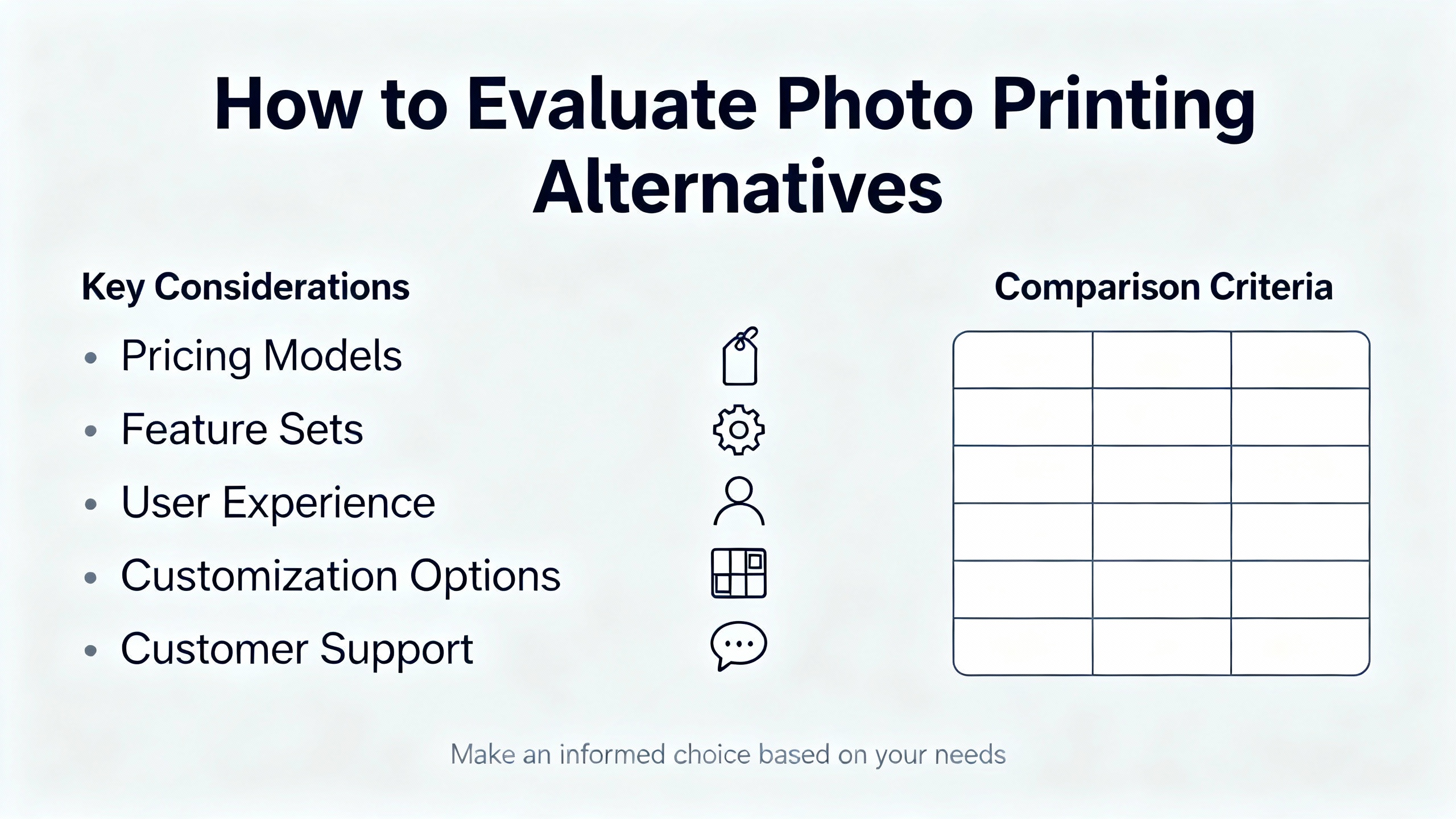
Before you jump to another platform, clarify what “better” actually means for you. In my mentoring work I see three broad profiles.

The first profile is the personal gifter focused on sentiment and reliability. You want custom gifts that arrive on time, look good on the coffee table, and do not require learning professional design tools.

The second profile is the visual storyteller: serious hobbyists, families archiving big life events, or photographers delivering client albums. For you, print quality, materials, and layout flexibility matter more than shaving off a few dollars.

The third profile is the creator or organization. You are using custom gifts as part of a revenue strategy or relationship‑building program. That includes independent creators selling prints, small brands building merch lines, and corporate teams sending gifts to clients or employees.

Corporate gifting research shows just how strategic this can be. Coresight Research estimates the global corporate gifting market grew from about two hundred fifty‑eight billion dollars in 2022 to a projected three hundred twelve billion dollars by 2025, roughly six and a half percent compound annual growth. Deloitte reports that seventy‑eight percent of businesses say gifting enhances client relationships and eighty‑four percent see it as an effective employee recognition tool. While those stats focus on corporate buyers, the principle applies to individuals too: thoughtful, well‑executed gifts deepen relationships.

Across all three profiles, several criteria consistently matter. You need a platform with a product range that matches your use case, from bobbleheads to gallery‑worthy books. You want design tools that are simple enough for your team but flexible enough to express your brand or story. Pricing should be transparent, without gimmicky sale banners masking hidden add‑ons for “HD printing” or basic quality upgrades, a pattern that Wirecutter observed with some canvas and blanket vendors. Production and shipping timelines must fit your calendar; gift research from photo‑gift sites notes that delivery can range from a few days to a few weeks depending on provider and complexity.

If you are a creator or business, add one more layer: integration and scalability. B2B platforms like Sendoso, Swag.com, Xoxoday, Giftsenda, and Imprint Engine’s IEX are not direct Shutterfly competitors but show where the market is heading. They offer global warehouses, curated catalogs, CRM and HRIS integrations, and analytics to tie gifts to pipeline and revenue. You may not need that on day one, but it is worth picking consumer‑grade tools that do not paint you into a corner if your gifting program grows.

With that framework in place, let’s walk through the best Shutterfly alternatives by use case.
top rated custom photo gift sites

Top Shutterfly Alternatives for Personal Custom Gifts

Mixbook: Premium, Story‑Driven Photo Books and Wall Art

Mixbook is a standout when your priority is a beautiful, cohesive story rather than just getting something printed. It specializes in premium photo books, cards, calendars, and wall art with modern templates and page‑by‑page design control. Fourthwall’s review highlights strong print quality and a more flexible editor than Shutterfly, which lets you adjust layouts more precisely and maintain a consistent visual narrative across a whole book.

A separate ranking of photo‑gift sites notes that Mixbook has intuitive online tools and high‑quality printing, especially for photo books. The trade‑off is cost. Mixbook tends to sit at a somewhat higher price point than mass‑market players, which makes it especially suitable for weddings, major anniversaries, or client albums rather than casual everyday prints. It does not offer built‑in monetization; its value is in delivering polished keepsakes.

If Shutterfly’s templates feel limiting for a milestone project, and you are willing to pay more for paper, binding, and layout control, Mixbook is one of the strongest alternatives.

Snapfish: Budget‑Friendly Prints and Cards

Snapfish, which shares corporate parentage with Shutterfly, provides a familiar mix of photo books, prints, gifts, and home décor. Its own marketing emphasizes custom photo cards and stationery for thank‑you notes, birthdays, graduations, weddings, and holidays. Customers can customize photos, text, colors, fonts, trim styles, and foil finishes using a user‑friendly editor and a wide range of templates.

Analysts describe Snapfish as the budget‑friendly cousin in this family. It runs frequent discounts and sales and positions itself as a cost‑conscious option, particularly attractive when you are producing many cards or simple photo gifts at once. However, both the Fourthwall comparison and Wirecutter’s testing point to trade‑offs. Snapfish’s print quality in some categories, such as puzzles, canvas prints, and plush blankets, lagged the best‑in‑class alternatives, with reviewers describing colors as muddy or foggy. Advanced design tools and premium finishes are also more limited than what you would find at higher‑end labs.

If you are comfortable trading a bit of print refinement for lower cost and a simple workflow, Snapfish can be a practical alternative to Shutterfly, especially for cards and low‑risk gifts.

Printerpix and Personalization Mall: Broad Catalogs with Personal Touches

When you want more than books and wall art, broad gift catalogs become appealing. Printerpix focuses on turning customer photos into physical gifts such as photo books, custom calendars, canvas prints, wall art, and soft photo blankets. Its positioning centers on emotional value: preserving memories “off‑screen” in keepsakes that tell your story. Printerpix emphasizes advanced printing technology, premium durable materials, fast shipping, free delivery on photo gifts, and a “100 percent happiness guarantee.” It also leans into sustainability with responsibly sourced materials and fade‑resistant inks and offers inspiration through a blog with photography and styling ideas.

At the same time, Wirecutter’s testing of Printerpix blankets illustrates a recurring caution in this space. A flat fleece blanket from Printerpix produced crisp, vibrant images, but the pricing felt confusing, with extra fees for HD printing and to remove the company logo, resulting in a much higher total than initial sale banners suggested. The lesson is not to avoid Printerpix entirely—its image quality impressed reviewers—but to read pricing details carefully.

Personalization Mall, featured in multiple gift roundups, takes a similar breadth‑first approach with a slightly different focus. It offers a wide array of products, from blankets to wind chimes and frames, with extensive personalization options such as names, photos, and messages. Its brand promise is “maximum gift personalization,” making it excellent when you want to customize daily‑use items rather than just photos on the wall.

These platforms are strong alternatives when Shutterfly’s catalog feels too photo‑centric or when you want to mix photo elements with engraved or text‑driven personalization.

Prize Possessions and Things Remembered: Engraved Awards and Heirloom Keepsakes

Not every meaningful gift is photo‑based. Prize Possessions, a family‑owned engraver established in 2002, focuses on custom‑engraved awards and gifts across niches such as golf, corporate recognition, yachting and sailing, scholastic achievements, and outdoor categories. Its specialty is precision engraving on glass and other materials to create presentation‑ready trophies and heirloom‑quality pieces. The company serves both individuals and organizations, offering custom sourcing beyond its catalog, low wholesale minimums, volume discounts, and rush production, backed by responsive customer service.

Things Remembered occupies a similar space with a more consumer‑facing twist, concentrating on engraved keepsakes and jewelry for engagements, weddings, graduations, retirements, and landmark birthdays. Its range spans from modest tokens to premium, presentation‑worthy pieces, leaning toward classic, polished designs.

If your Shutterfly usage is mostly about recognizing achievements—a retirement, a corporate milestone, a regatta—you may find that these engravers deliver a more appropriate sense of weight and ceremony than another printed mug or blanket.

Mark & Graham, Uncommon Goods, and Ten Thousand Villages: Style and Social Impact

Sometimes the differentiator is not the print engine but the aesthetic and story behind the gift.

Mark & Graham specializes in monogram‑driven style across bags, accessories, linens, home goods, glassware, and jewelry. Between the core site and coverage in business and lifestyle outlets, it is often recommended for tastefully monogrammed gifts, with up to about one hundred monogram styles. It shines when you need coordinated but individualized presents, such as bridal party totes, host gifts, or housewarming sets where each person gets their own initials.

Uncommon Goods takes a different angle as a destination for fun, unusual gifts. Business Insider notes items like QR code mugs with daily dad jokes, edible butter candle kits, and pajamas you can color on, plus virtual classes you can gift. The platform also runs a “Better to Give” program in partnership with organizations such as Breastcancer.org, donating a small amount per qualifying checkout at no extra cost to the customer. That philanthropic angle appeals to socially conscious buyers.

Ten Thousand Villages is a non‑profit, fair‑trade marketplace sourcing products from more than twenty thousand artisans across thirty countries. It focuses on ethically sourced, globally inspired gifts, such as carved gourd earrings from Peru and woven baskets from Vietnam. For giftees who value global craft traditions and fair labor practices, this is a compelling alternative to mass‑produced photo trinkets.

For recipients who care about style, story, or social impact as much as personalization, these sites can deliver more distinctive and aligned gifts than Shutterfly’s mainstream catalog.

Zazzle, Etsy, and Amazon Custom: Marketplaces for Niche and One‑Cart Convenience

Zazzle operates as a large on‑demand marketplace that connects customers with independent designers’ artwork across thousands of product types. Designers upload art or templates for event stationery, cards, announcements, apparel, and novelty items, and shoppers customize with names, dates, and sometimes photos. The platform presents itself as a community, where customers tap into artists’ creativity while Zazzle handles production on what it describes as “world’s best” base products.

The strengths compared with Shutterfly are variety and uniqueness. You can find highly specific designs and aesthetics that would never make it into a mass‑market template library. Zazzle also provides built‑in storefronts and royalties for designers, giving creators a path to monetization. However, reviews and research note that quality can be inconsistent across product categories and that the interface can feel cluttered. It is less focused on gallery‑quality photo printing or archival books and more on everyday gifts and event products.

Etsy, another global marketplace highlighted in gift guides, connects buyers with independent makers offering handmade, vintage, and custom items. While the summarized article did not list product details, Etsy is generally positioned as a destination for highly specific, original gifts that differ from mass‑produced retail. For photo and personalized gifts, Etsy sellers often combine custom illustration, lettering, and physical craftsmanship in ways major print platforms do not.

Amazon Custom extends Amazon’s shopping experience to personalized products. Shoppers can add names, dates, messages, and sometimes photos to a broad range of gifts and décor from multiple sellers, while still checking out in a single cart. Personalization fields, production times, and shipping options vary by listing and seller, so the customer is responsible for reviewing previews and timelines.

If you are willing to put in a bit more research time—reading reviews, checking photos, confirming production windows—marketplaces like Zazzle, Etsy, and Amazon Custom can deliver more distinctive or niche gifts than Shutterfly, especially when you need a very specific style or want one‑cart convenience across multiple recipients.

Design‑Forward and Premium Photo Alternatives

Artifact Uprising: Minimalist, Sustainable, Gallery‑Level Output

Artifact Uprising is often named as a premium, design‑forward alternative for people who care about paper, typography, and materials as much as the images themselves. It is known for minimalist, gallery‑worthy photo books and wall art created with recycled or responsibly sourced materials. The target audience includes photographers and consumers who value craftsmanship, sustainability, and elevated aesthetics above low price or maximal product variety.

Compared with Shutterfly’s colorful, template‑driven approach, Artifact Uprising feels more like a boutique bookbinder with digital tools. If your goal is a coffee‑table book that can sit next to art and design volumes, this is a strong candidate.

CanvasPop and Other Canvas Specialists

CanvasPop, founded in 2009, focuses on turning photos into canvas wall art, stressing attention to detail and “stunning” visual output. In rankings of photo‑gift websites, it is framed as a specialist for display‑ready gifts where the wall art itself is the centerpiece.

However, independent testing by Wirecutter complicates that picture. In one evaluation, a CanvasPop print cost more than one hundred dollars, yet arrived with sloppy, uneven edges and visible white gaps along the sides. That does not invalidate the company’s positioning, but it underscores why I always advise creators to order small test prints before committing to a provider at scale.

Taken together, the message is clear. Specialist labs can absolutely outperform Shutterfly on certain products, but marketing claims about “stunning” quality are not guarantees. Use reviews, sample orders, and your own eye to validate the difference.

Minted and Mixbook for Stationery and Calendars

Minted sells photo prints, holiday cards, and wall art created by independent artists. It also offers collections for specific needs such as wedding gifts and Disney‑branded art. Wirecutter praised Minted’s wall calendar for its elegant, toothy paper and functional grid, while noting that the design interface felt clunky and the fold‑over format made photos smaller. Minted is a good example of a trade‑off: you get distinctive artist‑driven design and premium paper, but potentially less intuitive tools than mass‑market sites.

Mixbook, mentioned earlier for photo books, also competes strongly in calendars and cards with modern templates and robust customization. If Shutterfly’s designs feel generic or dated, both Minted and Mixbook offer fresher visual language at the cost of a learning curve and higher prices.

Best Shutterfly Alternatives for Creators and Small E‑commerce Brands

For creators and entrepreneurs, the question is not, “Where can I print a calendar?” It is, “How do I build a profitable brand around custom products without holding inventory?” Shutterfly was never designed to answer that question. The following platforms were.

Fourthwall: Creator‑First Storefront with Print‑on‑Demand

Fourthwall positions itself as a creator‑first alternative to Shutterfly, with monetization at the core. Instead of a consumer print shop, it gives you a no‑code, fully branded storefront where you can sell photo prints, canvases, mugs, apparel, and digital products using a print‑on‑demand model. It supports memberships, tips, early access, and deep integrations with creator platforms such as YouTube, TikTok, and Twitch.

The upside, especially if you already have an audience, is that you own the brand experience. Fans visit your store, pay your prices, and can support you beyond one‑off purchases through memberships or tipping. You do not have to touch inventory; Fourthwall handles printing and fulfillment behind the scenes.

The main requirement is marketing. Fourthwall assumes you have, or are willing to build, a community. There is no built‑in marketplace traffic like Etsy or Zazzle. For creators who have outgrown sending fans to Shutterfly for one‑time prints, this is a natural graduation path.

Printify: Flexible POD Network for Existing Stores

Printify sits slightly lower in the stack. Instead of giving you a storefront, it gives you a vast catalog of more than thirteen hundred customizable products and a network of global print providers, then connects that infrastructure to platforms such as Shopify, Etsy, and WooCommerce.

Printify offers advanced design tools, including an AI image generator, which can be powerful for creators experimenting with new motifs or rapidly generating variants. Its global provider network allows you to localize production closer to customers in different regions, improving shipping times and costs.

The trade‑off is complexity and quality management. Because you choose among multiple print partners, quality can vary. The Fourthwall comparison emphasizes the need to test vendors and manage variable output. From an entrepreneurial standpoint, that is not a flaw; it is a reminder that you are now running a supply chain. Smart founders treat Printify as a flexible backend, invest in sampling, and standardize on providers that match their quality expectations.

Zazzle and Etsy: Marketplaces With Built‑In Demand

For creators who do not want to drive every sale themselves, marketplaces like Zazzle and Etsy offer built‑in traffic. As noted earlier, Zazzle lets designers upload artwork to thousands of product types and earn royalties through built‑in storefronts. Etsy, summarized as a global marketplace for unique handmade and vintage goods, connects independent makers with buyers looking for original items.

The upside is discoverability. Shoppers searching for wedding invitations, pet portraits, or niche fandom art can stumble on your work without ever having heard of you. Zazzle and Etsy handle payments and, in Zazzle’s case, production.

The downside is control. You are subject to the marketplace’s algorithm, fee changes, and policy shifts. Branding is constrained by platform templates, and you compete directly with many other sellers. Quality on Zazzle also depends on how its production workflows handle different product lines, which is why designers often monitor customer feedback closely.

As a Shutterfly alternative for creators, these marketplaces are best seen as one revenue channel among several, not the entirety of your business.

VistaPrint: Cohesive Branded Merch for Local and Emerging Brands

VistaPrint is optimized less for sentimental gifts and more for brand consistency. It focuses on business cards, flyers, marketing collateral, merchandise, and some photo products, prioritizing professional‑quality print and bulk consistency. That makes it an ideal partner when your primary need is cohesive branding across touchpoints rather than photo storytelling.

Compared to Shutterfly, VistaPrint is a stronger choice when your objective is to kit out a pop‑up shop, send consistent swag to customers, or equip a team with branded materials. It does not offer the same depth in photo books or family‑oriented gifts, but for brand builders it is often a better investment.

When to Graduate to Corporate Gifting Platforms

If your custom‑gift needs start to look more like a corporate program—onboarding kits, deal‑closing gifts, global client appreciation, employee rewards at scale—it may be time to move beyond consumer platforms entirely.

Research from B2B SaaS Reviews, Xoxoday, Ciloo, Imprint Engine, Giftsenda, and Sendoso paints a clear picture of what corporate gifting platforms provide that Shutterfly and its peers do not. They centralize sourcing, personalization, storage, and shipping for branded gifts across countries and teams. They integrate with CRMs such as Salesforce and HubSpot and HR systems like Workday, allowing rule‑based workflows that automatically trigger gifts for new customers, top performers, or referral milestones.

Coresight Research’s market sizing, along with case studies from tools like Giftsenda and Sendoso, show that when gifting is run through these platforms, organizations can attribute revenue, track engagement, and improve ROI. One example cited is Ottum, which used automation to quintuple survey responses while saving twelve hours of manual work and about one thousand dollars in campaign costs. Another example from Xero highlights a twenty‑five percent uplift in referral‑program conversion after automating rewards.

These platforms are overkill for a family photo calendar, but if you are a founder running account‑based sales or a people leader supporting a distributed workforce, they are the logical next step beyond any Shutterfly‑style site.

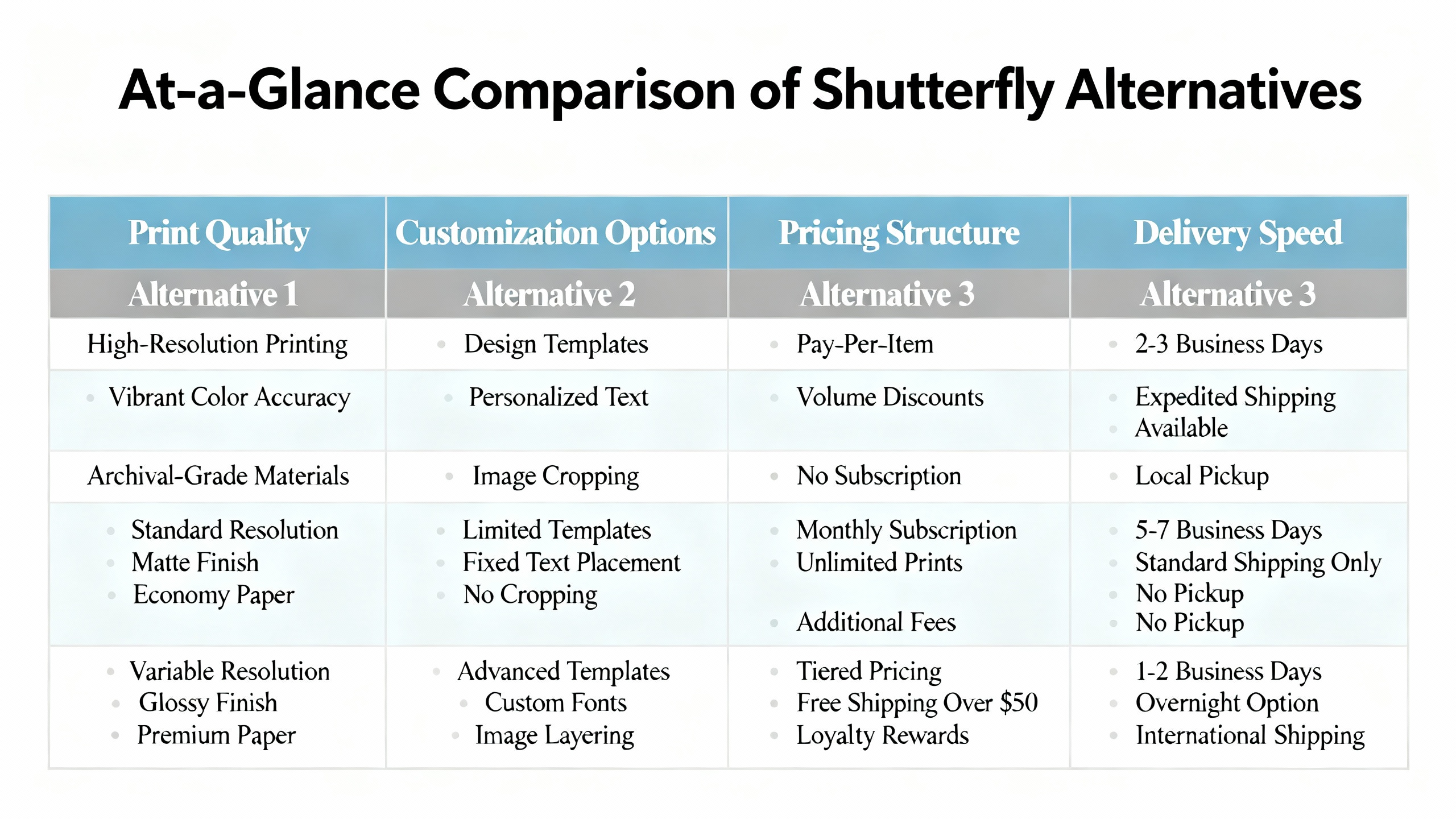
At‑a‑Glance Comparison of Shutterfly Alternatives

To make the landscape more concrete, here is a high‑level comparison of leading Shutterfly alternatives for personal gifts.

Platform

Best for

Key strengths vs Shutterfly

Main trade‑offs

Mixbook

Milestone photo books and calendars

Modern, flexible templates; strong print quality; fine‑grained layout control

Higher prices; not designed for selling or monetizing designs

Snapfish

Budget‑friendly prints and cards

Frequent discounts; simple card and stationery creation; similar range of basic products

Less premium finishes and consistency; some categories tested with weaker color and sharpness

Artifact Uprising

Gallery‑worthy books and wall art

Minimalist design; recycled and responsibly sourced materials; elevated look and feel

Narrower product range; premium pricing

Printerpix

Emotional photo gifts across many formats

Emphasis on storytelling; advanced printing; sustainability; happiness guarantee; free shipping

Pricing can include extra fees for quality upgrades; requires careful review of offers

Personalization Mall

Highly personalized everyday items

Very broad catalog; deep personalization of text and images

Quality and style vary by product; primarily consumer focus

Prize Possessions and Things Remembered

Engraved awards, trophies, and keepsakes

Precision engraving; heirloom‑quality presentation pieces; supports both one‑off and bulk

Narrower audience; less suited to casual photo projects

Mark & Graham

Monogram‑driven lifestyle gifts

Up to around 100 monogram styles; cohesive, preppy aesthetic for coordinated group gifts

Less emphasis on photo imagery; premium positioning

Uncommon Goods and Ten Thousand Villages

Unusual and ethically sourced gifts

Quirky, conversation‑starting items; fair‑trade, artisan‑made products with social impact

Limited photo integration; selection varies; more discovery effort

Zazzle, Etsy, Amazon Custom

Unique designs and marketplace variety

Massive design and product variety; independent creators; one‑cart convenience on Amazon

Quality and timelines vary by seller or product line; interfaces can feel busy

For creators and organizations, a separate set of platforms competes more directly with Shutterfly as infrastructure rather than a consumer store.

Platform or category

Best for

Key strengths vs Shutterfly

Main trade‑offs

Fourthwall

Creators with an existing or growing audience

No‑code branded storefront; print‑on‑demand merch and digital products; memberships and tips; creator‑platform integrations

Assumes you can drive your own traffic; catalog focused on common merch and prints

Printify

E‑commerce brands on Shopify, Etsy, WooCommerce

More than 1,300 products; global print‑provider network; advanced design tools including AI

Requires external storefront; quality varies by provider; demands active vendor management

Zazzle and Etsy

Designers wanting marketplace reach

Built‑in shopper demand; royalty‑based monetization; huge product and style variety

Less branding control; platform fees and policies; variable quality across products

VistaPrint

Small and local businesses needing brand kits

Professional‑quality print for business materials and merch; strong for cohesive branding

Weaker in memory‑keeping products; limited direct monetization tools beyond physical sales

Corporate gifting platforms (Sendoso, Swag.com, SwagUp, Xoxoday, Giftsenda, Imprint Engine IEX)

B2B revenue and employee programs

Curated catalogs; warehousing; automation; CRM and HRIS integrations; analytics and ROI tracking

Implementation complexity; subscription or volume‑based pricing; oriented more to organizations

These tables are not exhaustive, but they highlight a pattern. The more your goals shift from “one nice gift” to “consistent, on‑brand experiences with measurable impact,” the more you need to treat your platform choice as strategic infrastructure.

high quality photo book printing options

Practical Checklist Before You Switch

Choosing a Shutterfly alternative is less about chasing the newest logo and more about de‑risking a decision that touches your relationships and, for many readers, your revenue.

Start by articulating your primary goal in plain language. If it is “I want a wedding album that will still look great in twenty years,” prioritize premium book specialists like Mixbook or Artifact Uprising and pay close attention to paper, binding, and color fidelity. If it is “I want to send small, personalized thank‑you gifts to two hundred clients every quarter,” think in terms of catalog breadth, automation, and integrations, and look toward corporate gifting platforms or print‑on‑demand backends like Printify.

Next, test for quality before scaling. Research from photo‑gift reviewers such as Bbobbler and Wirecutter repeatedly shows that real‑world output can diverge from online previews. Order a single canvas, blanket, or book before committing to a large run. Pay attention not only to sharpness and color but also to packaging and how the product feels in hand.

Scrutinize pricing structures. Wirecutter’s experience with vendors like Canvas Champ and Printerpix is instructive. Deep headline discounts and “up to 95 percent off” banners can mask surcharges for lamination, thicker canvas, HD printing, or even removing the provider’s logo, plus shipping fees that bring the final price close to full retail. Transparent pricing with fewer gimmicks usually signals a healthier long‑term relationship.

Plan around timelines, not just production times. Gift guides for photo sites state that turnarounds can range from a few days to a few weeks depending on complexity and season. Prize Possessions and similar engravers may offer rush production but still require adequate lead time. During peak holidays, even the best provider will be constrained by capacity and shipping carriers. For mission‑critical gifts—client renewals, corporate events, big anniversaries—build in a buffer.

Finally, if you are a creator or entrepreneur, map your choice to your future tech stack. Platforms like Fourthwall simplify storefront creation but operate best when your audience lives on content platforms they integrate with. Printify gives you flexibility but expects you to manage storefronts and vendors. Corporate gifting systems tie into CRM and HR tools, so they are ideal when you are already invested in systems like Salesforce, HubSpot, or Workday. Each choice is not just a vendor; it is an operating model.

FAQ

Which Shutterfly alternative is best for high‑end photo books?

For high‑end photo books where print quality, materials, and design consistency matter, Mixbook and Artifact Uprising are among the strongest widely available alternatives in the research. Mixbook offers modern layouts, strong image reproduction, and granular control over page design, making it appropriate for weddings and milestone albums. Artifact Uprising pairs minimalist design with recycled or responsibly sourced materials to deliver books that feel closer to art objects. Both sit above Shutterfly in price but can justify the premium when the project is a once‑in‑a‑decade event.

Which platform should I choose if I want to sell my designs, not just print them?

If your priority is monetization rather than one‑off gifts, consumer print sites like Shutterfly are not built for you. Fourthwall is compelling when you have, or are building, a direct audience; it provides a no‑code storefront, print‑on‑demand products, and creator‑friendly features like memberships and tips. Printify is better when you want to use Shopify, Etsy, or WooCommerce as your storefront and need a flexible backend catalog and global print partners. Marketplaces such as Zazzle and Etsy can complement these by providing an additional revenue channel and discovery engine, though at the cost of less control.

How do I avoid disappointment with custom photo quality?

The most effective way to avoid disappointment is to combine careful research with small test orders. Look for independent reviews and product testing, such as Wirecutter’s evaluations of photo books, canvas prints, blankets, and mugs, which highlight patterns in color accuracy, material quality, and pricing transparency. Favor providers that show detailed previews and allow control over cropping and layout. Then order a single sample in the exact configuration you plan to use. Treat that small investment as calibration; if it meets or exceeds your expectations, scale up, and if it does not, pivot while the cost of switching is still low.

In my work with e‑commerce founders and marketing leaders, I often remind them that every custom gift is a touchpoint in a relationship or a brand story. Shutterfly can absolutely still play a role in that story, but it should not be your default by habit. Choose the platform that matches where you want your gifting strategy—and your business—to be in the next few years, not just where it has been.

References

  1. https://www.etsy.com/
  2. https://www.personalcreations.com/?srsltid=AfmBOoq_iYVY4iqREK1RBmZDqdbIwpOLkat-JcPE0QP8OG52hpvvDJxL
  3. http://www.printerpix.com/
  4. https://www.snapfish.com/home
  5. https://www.southernliving.com/best-personalized-gifts-8405648?srsltid=AfmBOoof-uPyVhFryKyil8xM3UsRPr_xBGLdeotx-aXVpa6dGohEngWb
  6. https://www.thingsremembered.com/
  7. https://www.uncommongoods.com/?srsltid=AfmBOoqj7XPTK28iUr9zo31s_miFJsT0XHfD1TU0b4nokuanlsKQAR2d
  8. https://www.zazzle.com/?srsltid=AfmBOopFzBLluKpW27iHrkKdfyXSytxd6yVKfCU_-L-zAcWzlI9U-mS9
  9. https://b2bsaasreviews.com/top-gifting-platforms/
  10. https://www.bbobbler.com/10-best-photo-gift-websites-in-2024-unique-and-personalized-presents/?srsltid=AfmBOoqGOy0RlZZw6kJVD0JOoMgmbMs-x4bZ-LEswcrNQd41SftmL47A

Like the article

0
Best Shutterfly Alternative for Custom Gifts: Top Options Compared

Best Shutterfly Alternative for Custom Gifts: Top Options Compared

If you have ever uploaded a batch of family photos at midnight to crank out a last‑minute holiday calendar, chances are you have used Shutterfly. It has become the default for turning digital photos into physical keepsakes. Yet as I see again and again mentoring creators, small businesses, and marketing teams, the “default” is not always the best fit once you care about print quality, unique aesthetics, or building a real revenue stream from your designs.

The good news is that the custom‑gift ecosystem has matured. You now have specialized photo labs for gallery‑worthy books, marketplaces for artist‑designed gifts, and full print‑on‑demand platforms that let you run a branded store without touching inventory. The challenge is picking the right Shutterfly alternative for your actual goal, not just the first site with a coupon code.

Drawing on independent testing from product reviewers at the New York Times’ Wirecutter, gifting research from Coresight Research, Deloitte, and multiple corporate gifting platforms, plus hands‑on experience helping founders build print‑on‑demand businesses, this guide breaks down the strongest options and how they compare to Shutterfly.

Where Shutterfly Shines—and Where It Falls Short

Shutterfly, founded in 1999, is designed for everyday users who want to turn phone and camera photos into tangible products. It offers a wide range of photo books, cards, wall art, calendars, mugs, blankets, puzzles, and home décor. The web and mobile editors are intentionally simple, using drag‑and‑drop layouts and guided templates. For casual gifters, the appeal is obvious: you upload JPEGs, pick a template, adjust a few captions, and you are done.

The platform has a generous promotional engine. Research on Shutterfly’s pricing highlights competitive entry points, with small prints starting around fifteen cents and premium hardcover books beginning around twenty‑nine dollars and ninety‑nine cents. There are recurring offers like free monthly four by four or four by six prints and a six by six softcover photo book, with customers paying only shipping. Packaging and delivery are generally robust, which is part of why Shutterfly still shows up on gift shortlists from consumer outlets like Business Insider and specialist gift sites.

For many family milestones, this is more than enough. Articles from Prize Possessions and other personalized‑gift reviewers position Shutterfly as a go‑to for quick, heartfelt photo gifts such as wall art, photo mugs, blankets, and puzzles. If you are making one‑off Mother’s Day mugs or birthday books, the convenience is hard to beat.

However, Shutterfly’s convenience comes with trade‑offs. A detailed comparison by creator‑commerce platform Fourthwall notes that Shutterfly is template‑driven and offers limited advanced photo editing. You cannot fine‑tune layouts at a granular level the way you can with some premium book platforms. Uploads are restricted to JPEG, with no support for RAW or TIFF files, which matters to serious photographers who want maximum control over color and dynamic range.

Independent testing from Wirecutter adds more nuance. In side‑by‑side evaluations of photo gifts, reviewers found Shutterfly socks scratchy and thin, puzzles with flimsy pieces that wore quickly, and canvas prints where heavy canvas texture showed through the image and made it look blurry. Shutterfly photo mugs were convenient to design but had an orangey color cast and awkward cropping. Plush photo blankets from several vendors, including Shutterfly, felt cozy but tended to warp images and mute colors because of the fluffy fabric.

There is also a business dimension. Fourthwall’s analysis emphasizes a critical gap for creators: Shutterfly does not offer built‑in monetization. You cannot set your own prices, earn commissions on repeat orders, or run a fully branded storefront. If you are a photographer, illustrator, or influencer who wants recurring income from your designs, Shutterfly is more of a consumer endpoint than a business platform.

Even on the consumer side, Shutterfly is not always the cheapest option once shipping enters the picture. A Facebook discussion among Calgary residents illustrates the challenge: a user happy with the U.S. Shutterfly range reported that shipping to Canada had become uncomfortably expensive, and Shutterfly’s Canadian site did not feel like a meaningful improvement on overall cost. That is a hint that “headline discounts” can be erased by international shipping and fees.

In short, Shutterfly is still solid for mainstream, quick‑turn personal gifts. But if you care deeply about design control, premium materials, or long‑term monetization, there are better alternatives.

shutterfly versus other photo printing services

How to Think About Shutterfly Alternatives

Before you jump to another platform, clarify what “better” actually means for you. In my mentoring work I see three broad profiles.

The first profile is the personal gifter focused on sentiment and reliability. You want custom gifts that arrive on time, look good on the coffee table, and do not require learning professional design tools.

The second profile is the visual storyteller: serious hobbyists, families archiving big life events, or photographers delivering client albums. For you, print quality, materials, and layout flexibility matter more than shaving off a few dollars.

The third profile is the creator or organization. You are using custom gifts as part of a revenue strategy or relationship‑building program. That includes independent creators selling prints, small brands building merch lines, and corporate teams sending gifts to clients or employees.

Corporate gifting research shows just how strategic this can be. Coresight Research estimates the global corporate gifting market grew from about two hundred fifty‑eight billion dollars in 2022 to a projected three hundred twelve billion dollars by 2025, roughly six and a half percent compound annual growth. Deloitte reports that seventy‑eight percent of businesses say gifting enhances client relationships and eighty‑four percent see it as an effective employee recognition tool. While those stats focus on corporate buyers, the principle applies to individuals too: thoughtful, well‑executed gifts deepen relationships.

Across all three profiles, several criteria consistently matter. You need a platform with a product range that matches your use case, from bobbleheads to gallery‑worthy books. You want design tools that are simple enough for your team but flexible enough to express your brand or story. Pricing should be transparent, without gimmicky sale banners masking hidden add‑ons for “HD printing” or basic quality upgrades, a pattern that Wirecutter observed with some canvas and blanket vendors. Production and shipping timelines must fit your calendar; gift research from photo‑gift sites notes that delivery can range from a few days to a few weeks depending on provider and complexity.

If you are a creator or business, add one more layer: integration and scalability. B2B platforms like Sendoso, Swag.com, Xoxoday, Giftsenda, and Imprint Engine’s IEX are not direct Shutterfly competitors but show where the market is heading. They offer global warehouses, curated catalogs, CRM and HRIS integrations, and analytics to tie gifts to pipeline and revenue. You may not need that on day one, but it is worth picking consumer‑grade tools that do not paint you into a corner if your gifting program grows.

With that framework in place, let’s walk through the best Shutterfly alternatives by use case.

top rated custom photo gift sites

Top Shutterfly Alternatives for Personal Custom Gifts

Mixbook: Premium, Story‑Driven Photo Books and Wall Art

Mixbook is a standout when your priority is a beautiful, cohesive story rather than just getting something printed. It specializes in premium photo books, cards, calendars, and wall art with modern templates and page‑by‑page design control. Fourthwall’s review highlights strong print quality and a more flexible editor than Shutterfly, which lets you adjust layouts more precisely and maintain a consistent visual narrative across a whole book.

A separate ranking of photo‑gift sites notes that Mixbook has intuitive online tools and high‑quality printing, especially for photo books. The trade‑off is cost. Mixbook tends to sit at a somewhat higher price point than mass‑market players, which makes it especially suitable for weddings, major anniversaries, or client albums rather than casual everyday prints. It does not offer built‑in monetization; its value is in delivering polished keepsakes.

If Shutterfly’s templates feel limiting for a milestone project, and you are willing to pay more for paper, binding, and layout control, Mixbook is one of the strongest alternatives.

Snapfish: Budget‑Friendly Prints and Cards

Snapfish, which shares corporate parentage with Shutterfly, provides a familiar mix of photo books, prints, gifts, and home décor. Its own marketing emphasizes custom photo cards and stationery for thank‑you notes, birthdays, graduations, weddings, and holidays. Customers can customize photos, text, colors, fonts, trim styles, and foil finishes using a user‑friendly editor and a wide range of templates.

Analysts describe Snapfish as the budget‑friendly cousin in this family. It runs frequent discounts and sales and positions itself as a cost‑conscious option, particularly attractive when you are producing many cards or simple photo gifts at once. However, both the Fourthwall comparison and Wirecutter’s testing point to trade‑offs. Snapfish’s print quality in some categories, such as puzzles, canvas prints, and plush blankets, lagged the best‑in‑class alternatives, with reviewers describing colors as muddy or foggy. Advanced design tools and premium finishes are also more limited than what you would find at higher‑end labs.

If you are comfortable trading a bit of print refinement for lower cost and a simple workflow, Snapfish can be a practical alternative to Shutterfly, especially for cards and low‑risk gifts.

Printerpix and Personalization Mall: Broad Catalogs with Personal Touches

When you want more than books and wall art, broad gift catalogs become appealing. Printerpix focuses on turning customer photos into physical gifts such as photo books, custom calendars, canvas prints, wall art, and soft photo blankets. Its positioning centers on emotional value: preserving memories “off‑screen” in keepsakes that tell your story. Printerpix emphasizes advanced printing technology, premium durable materials, fast shipping, free delivery on photo gifts, and a “100 percent happiness guarantee.” It also leans into sustainability with responsibly sourced materials and fade‑resistant inks and offers inspiration through a blog with photography and styling ideas.

At the same time, Wirecutter’s testing of Printerpix blankets illustrates a recurring caution in this space. A flat fleece blanket from Printerpix produced crisp, vibrant images, but the pricing felt confusing, with extra fees for HD printing and to remove the company logo, resulting in a much higher total than initial sale banners suggested. The lesson is not to avoid Printerpix entirely—its image quality impressed reviewers—but to read pricing details carefully.

Personalization Mall, featured in multiple gift roundups, takes a similar breadth‑first approach with a slightly different focus. It offers a wide array of products, from blankets to wind chimes and frames, with extensive personalization options such as names, photos, and messages. Its brand promise is “maximum gift personalization,” making it excellent when you want to customize daily‑use items rather than just photos on the wall.

These platforms are strong alternatives when Shutterfly’s catalog feels too photo‑centric or when you want to mix photo elements with engraved or text‑driven personalization.

Prize Possessions and Things Remembered: Engraved Awards and Heirloom Keepsakes

Not every meaningful gift is photo‑based. Prize Possessions, a family‑owned engraver established in 2002, focuses on custom‑engraved awards and gifts across niches such as golf, corporate recognition, yachting and sailing, scholastic achievements, and outdoor categories. Its specialty is precision engraving on glass and other materials to create presentation‑ready trophies and heirloom‑quality pieces. The company serves both individuals and organizations, offering custom sourcing beyond its catalog, low wholesale minimums, volume discounts, and rush production, backed by responsive customer service.

Things Remembered occupies a similar space with a more consumer‑facing twist, concentrating on engraved keepsakes and jewelry for engagements, weddings, graduations, retirements, and landmark birthdays. Its range spans from modest tokens to premium, presentation‑worthy pieces, leaning toward classic, polished designs.

If your Shutterfly usage is mostly about recognizing achievements—a retirement, a corporate milestone, a regatta—you may find that these engravers deliver a more appropriate sense of weight and ceremony than another printed mug or blanket.

Mark & Graham, Uncommon Goods, and Ten Thousand Villages: Style and Social Impact

Sometimes the differentiator is not the print engine but the aesthetic and story behind the gift.

Mark & Graham specializes in monogram‑driven style across bags, accessories, linens, home goods, glassware, and jewelry. Between the core site and coverage in business and lifestyle outlets, it is often recommended for tastefully monogrammed gifts, with up to about one hundred monogram styles. It shines when you need coordinated but individualized presents, such as bridal party totes, host gifts, or housewarming sets where each person gets their own initials.

Uncommon Goods takes a different angle as a destination for fun, unusual gifts. Business Insider notes items like QR code mugs with daily dad jokes, edible butter candle kits, and pajamas you can color on, plus virtual classes you can gift. The platform also runs a “Better to Give” program in partnership with organizations such as Breastcancer.org, donating a small amount per qualifying checkout at no extra cost to the customer. That philanthropic angle appeals to socially conscious buyers.

Ten Thousand Villages is a non‑profit, fair‑trade marketplace sourcing products from more than twenty thousand artisans across thirty countries. It focuses on ethically sourced, globally inspired gifts, such as carved gourd earrings from Peru and woven baskets from Vietnam. For giftees who value global craft traditions and fair labor practices, this is a compelling alternative to mass‑produced photo trinkets.

For recipients who care about style, story, or social impact as much as personalization, these sites can deliver more distinctive and aligned gifts than Shutterfly’s mainstream catalog.

Zazzle, Etsy, and Amazon Custom: Marketplaces for Niche and One‑Cart Convenience

Zazzle operates as a large on‑demand marketplace that connects customers with independent designers’ artwork across thousands of product types. Designers upload art or templates for event stationery, cards, announcements, apparel, and novelty items, and shoppers customize with names, dates, and sometimes photos. The platform presents itself as a community, where customers tap into artists’ creativity while Zazzle handles production on what it describes as “world’s best” base products.

The strengths compared with Shutterfly are variety and uniqueness. You can find highly specific designs and aesthetics that would never make it into a mass‑market template library. Zazzle also provides built‑in storefronts and royalties for designers, giving creators a path to monetization. However, reviews and research note that quality can be inconsistent across product categories and that the interface can feel cluttered. It is less focused on gallery‑quality photo printing or archival books and more on everyday gifts and event products.

Etsy, another global marketplace highlighted in gift guides, connects buyers with independent makers offering handmade, vintage, and custom items. While the summarized article did not list product details, Etsy is generally positioned as a destination for highly specific, original gifts that differ from mass‑produced retail. For photo and personalized gifts, Etsy sellers often combine custom illustration, lettering, and physical craftsmanship in ways major print platforms do not.

Amazon Custom extends Amazon’s shopping experience to personalized products. Shoppers can add names, dates, messages, and sometimes photos to a broad range of gifts and décor from multiple sellers, while still checking out in a single cart. Personalization fields, production times, and shipping options vary by listing and seller, so the customer is responsible for reviewing previews and timelines.

If you are willing to put in a bit more research time—reading reviews, checking photos, confirming production windows—marketplaces like Zazzle, Etsy, and Amazon Custom can deliver more distinctive or niche gifts than Shutterfly, especially when you need a very specific style or want one‑cart convenience across multiple recipients.

Design‑Forward and Premium Photo Alternatives

Artifact Uprising: Minimalist, Sustainable, Gallery‑Level Output

Artifact Uprising is often named as a premium, design‑forward alternative for people who care about paper, typography, and materials as much as the images themselves. It is known for minimalist, gallery‑worthy photo books and wall art created with recycled or responsibly sourced materials. The target audience includes photographers and consumers who value craftsmanship, sustainability, and elevated aesthetics above low price or maximal product variety.

Compared with Shutterfly’s colorful, template‑driven approach, Artifact Uprising feels more like a boutique bookbinder with digital tools. If your goal is a coffee‑table book that can sit next to art and design volumes, this is a strong candidate.

CanvasPop and Other Canvas Specialists

CanvasPop, founded in 2009, focuses on turning photos into canvas wall art, stressing attention to detail and “stunning” visual output. In rankings of photo‑gift websites, it is framed as a specialist for display‑ready gifts where the wall art itself is the centerpiece.

However, independent testing by Wirecutter complicates that picture. In one evaluation, a CanvasPop print cost more than one hundred dollars, yet arrived with sloppy, uneven edges and visible white gaps along the sides. That does not invalidate the company’s positioning, but it underscores why I always advise creators to order small test prints before committing to a provider at scale.

Taken together, the message is clear. Specialist labs can absolutely outperform Shutterfly on certain products, but marketing claims about “stunning” quality are not guarantees. Use reviews, sample orders, and your own eye to validate the difference.

Minted and Mixbook for Stationery and Calendars

Minted sells photo prints, holiday cards, and wall art created by independent artists. It also offers collections for specific needs such as wedding gifts and Disney‑branded art. Wirecutter praised Minted’s wall calendar for its elegant, toothy paper and functional grid, while noting that the design interface felt clunky and the fold‑over format made photos smaller. Minted is a good example of a trade‑off: you get distinctive artist‑driven design and premium paper, but potentially less intuitive tools than mass‑market sites.

Mixbook, mentioned earlier for photo books, also competes strongly in calendars and cards with modern templates and robust customization. If Shutterfly’s designs feel generic or dated, both Minted and Mixbook offer fresher visual language at the cost of a learning curve and higher prices.

Best Shutterfly Alternatives for Creators and Small E‑commerce Brands

For creators and entrepreneurs, the question is not, “Where can I print a calendar?” It is, “How do I build a profitable brand around custom products without holding inventory?” Shutterfly was never designed to answer that question. The following platforms were.

Fourthwall: Creator‑First Storefront with Print‑on‑Demand

Fourthwall positions itself as a creator‑first alternative to Shutterfly, with monetization at the core. Instead of a consumer print shop, it gives you a no‑code, fully branded storefront where you can sell photo prints, canvases, mugs, apparel, and digital products using a print‑on‑demand model. It supports memberships, tips, early access, and deep integrations with creator platforms such as YouTube, TikTok, and Twitch.

The upside, especially if you already have an audience, is that you own the brand experience. Fans visit your store, pay your prices, and can support you beyond one‑off purchases through memberships or tipping. You do not have to touch inventory; Fourthwall handles printing and fulfillment behind the scenes.

The main requirement is marketing. Fourthwall assumes you have, or are willing to build, a community. There is no built‑in marketplace traffic like Etsy or Zazzle. For creators who have outgrown sending fans to Shutterfly for one‑time prints, this is a natural graduation path.

Printify: Flexible POD Network for Existing Stores

Printify sits slightly lower in the stack. Instead of giving you a storefront, it gives you a vast catalog of more than thirteen hundred customizable products and a network of global print providers, then connects that infrastructure to platforms such as Shopify, Etsy, and WooCommerce.

Printify offers advanced design tools, including an AI image generator, which can be powerful for creators experimenting with new motifs or rapidly generating variants. Its global provider network allows you to localize production closer to customers in different regions, improving shipping times and costs.

The trade‑off is complexity and quality management. Because you choose among multiple print partners, quality can vary. The Fourthwall comparison emphasizes the need to test vendors and manage variable output. From an entrepreneurial standpoint, that is not a flaw; it is a reminder that you are now running a supply chain. Smart founders treat Printify as a flexible backend, invest in sampling, and standardize on providers that match their quality expectations.

Zazzle and Etsy: Marketplaces With Built‑In Demand

For creators who do not want to drive every sale themselves, marketplaces like Zazzle and Etsy offer built‑in traffic. As noted earlier, Zazzle lets designers upload artwork to thousands of product types and earn royalties through built‑in storefronts. Etsy, summarized as a global marketplace for unique handmade and vintage goods, connects independent makers with buyers looking for original items.

The upside is discoverability. Shoppers searching for wedding invitations, pet portraits, or niche fandom art can stumble on your work without ever having heard of you. Zazzle and Etsy handle payments and, in Zazzle’s case, production.

The downside is control. You are subject to the marketplace’s algorithm, fee changes, and policy shifts. Branding is constrained by platform templates, and you compete directly with many other sellers. Quality on Zazzle also depends on how its production workflows handle different product lines, which is why designers often monitor customer feedback closely.

As a Shutterfly alternative for creators, these marketplaces are best seen as one revenue channel among several, not the entirety of your business.

VistaPrint: Cohesive Branded Merch for Local and Emerging Brands

VistaPrint is optimized less for sentimental gifts and more for brand consistency. It focuses on business cards, flyers, marketing collateral, merchandise, and some photo products, prioritizing professional‑quality print and bulk consistency. That makes it an ideal partner when your primary need is cohesive branding across touchpoints rather than photo storytelling.

Compared to Shutterfly, VistaPrint is a stronger choice when your objective is to kit out a pop‑up shop, send consistent swag to customers, or equip a team with branded materials. It does not offer the same depth in photo books or family‑oriented gifts, but for brand builders it is often a better investment.

When to Graduate to Corporate Gifting Platforms

If your custom‑gift needs start to look more like a corporate program—onboarding kits, deal‑closing gifts, global client appreciation, employee rewards at scale—it may be time to move beyond consumer platforms entirely.

Research from B2B SaaS Reviews, Xoxoday, Ciloo, Imprint Engine, Giftsenda, and Sendoso paints a clear picture of what corporate gifting platforms provide that Shutterfly and its peers do not. They centralize sourcing, personalization, storage, and shipping for branded gifts across countries and teams. They integrate with CRMs such as Salesforce and HubSpot and HR systems like Workday, allowing rule‑based workflows that automatically trigger gifts for new customers, top performers, or referral milestones.

Coresight Research’s market sizing, along with case studies from tools like Giftsenda and Sendoso, show that when gifting is run through these platforms, organizations can attribute revenue, track engagement, and improve ROI. One example cited is Ottum, which used automation to quintuple survey responses while saving twelve hours of manual work and about one thousand dollars in campaign costs. Another example from Xero highlights a twenty‑five percent uplift in referral‑program conversion after automating rewards.

These platforms are overkill for a family photo calendar, but if you are a founder running account‑based sales or a people leader supporting a distributed workforce, they are the logical next step beyond any Shutterfly‑style site.

At‑a‑Glance Comparison of Shutterfly Alternatives

To make the landscape more concrete, here is a high‑level comparison of leading Shutterfly alternatives for personal gifts.

Platform

Best for

Key strengths vs Shutterfly

Main trade‑offs

Mixbook

Milestone photo books and calendars

Modern, flexible templates; strong print quality; fine‑grained layout control

Higher prices; not designed for selling or monetizing designs

Snapfish

Budget‑friendly prints and cards

Frequent discounts; simple card and stationery creation; similar range of basic products

Less premium finishes and consistency; some categories tested with weaker color and sharpness

Artifact Uprising

Gallery‑worthy books and wall art

Minimalist design; recycled and responsibly sourced materials; elevated look and feel

Narrower product range; premium pricing

Printerpix

Emotional photo gifts across many formats

Emphasis on storytelling; advanced printing; sustainability; happiness guarantee; free shipping

Pricing can include extra fees for quality upgrades; requires careful review of offers

Personalization Mall

Highly personalized everyday items

Very broad catalog; deep personalization of text and images

Quality and style vary by product; primarily consumer focus

Prize Possessions and Things Remembered

Engraved awards, trophies, and keepsakes

Precision engraving; heirloom‑quality presentation pieces; supports both one‑off and bulk

Narrower audience; less suited to casual photo projects

Mark & Graham

Monogram‑driven lifestyle gifts

Up to around 100 monogram styles; cohesive, preppy aesthetic for coordinated group gifts

Less emphasis on photo imagery; premium positioning

Uncommon Goods and Ten Thousand Villages

Unusual and ethically sourced gifts

Quirky, conversation‑starting items; fair‑trade, artisan‑made products with social impact

Limited photo integration; selection varies; more discovery effort

Zazzle, Etsy, Amazon Custom

Unique designs and marketplace variety

Massive design and product variety; independent creators; one‑cart convenience on Amazon

Quality and timelines vary by seller or product line; interfaces can feel busy

For creators and organizations, a separate set of platforms competes more directly with Shutterfly as infrastructure rather than a consumer store.

Platform or category

Best for

Key strengths vs Shutterfly

Main trade‑offs

Fourthwall

Creators with an existing or growing audience

No‑code branded storefront; print‑on‑demand merch and digital products; memberships and tips; creator‑platform integrations

Assumes you can drive your own traffic; catalog focused on common merch and prints

Printify

E‑commerce brands on Shopify, Etsy, WooCommerce

More than 1,300 products; global print‑provider network; advanced design tools including AI

Requires external storefront; quality varies by provider; demands active vendor management

Zazzle and Etsy

Designers wanting marketplace reach

Built‑in shopper demand; royalty‑based monetization; huge product and style variety

Less branding control; platform fees and policies; variable quality across products

VistaPrint

Small and local businesses needing brand kits

Professional‑quality print for business materials and merch; strong for cohesive branding

Weaker in memory‑keeping products; limited direct monetization tools beyond physical sales

Corporate gifting platforms (Sendoso, Swag.com, SwagUp, Xoxoday, Giftsenda, Imprint Engine IEX)

B2B revenue and employee programs

Curated catalogs; warehousing; automation; CRM and HRIS integrations; analytics and ROI tracking

Implementation complexity; subscription or volume‑based pricing; oriented more to organizations

These tables are not exhaustive, but they highlight a pattern. The more your goals shift from “one nice gift” to “consistent, on‑brand experiences with measurable impact,” the more you need to treat your platform choice as strategic infrastructure.

high quality photo book printing options

Practical Checklist Before You Switch

Choosing a Shutterfly alternative is less about chasing the newest logo and more about de‑risking a decision that touches your relationships and, for many readers, your revenue.

Start by articulating your primary goal in plain language. If it is “I want a wedding album that will still look great in twenty years,” prioritize premium book specialists like Mixbook or Artifact Uprising and pay close attention to paper, binding, and color fidelity. If it is “I want to send small, personalized thank‑you gifts to two hundred clients every quarter,” think in terms of catalog breadth, automation, and integrations, and look toward corporate gifting platforms or print‑on‑demand backends like Printify.

Next, test for quality before scaling. Research from photo‑gift reviewers such as Bbobbler and Wirecutter repeatedly shows that real‑world output can diverge from online previews. Order a single canvas, blanket, or book before committing to a large run. Pay attention not only to sharpness and color but also to packaging and how the product feels in hand.

Scrutinize pricing structures. Wirecutter’s experience with vendors like Canvas Champ and Printerpix is instructive. Deep headline discounts and “up to 95 percent off” banners can mask surcharges for lamination, thicker canvas, HD printing, or even removing the provider’s logo, plus shipping fees that bring the final price close to full retail. Transparent pricing with fewer gimmicks usually signals a healthier long‑term relationship.

Plan around timelines, not just production times. Gift guides for photo sites state that turnarounds can range from a few days to a few weeks depending on complexity and season. Prize Possessions and similar engravers may offer rush production but still require adequate lead time. During peak holidays, even the best provider will be constrained by capacity and shipping carriers. For mission‑critical gifts—client renewals, corporate events, big anniversaries—build in a buffer.

Finally, if you are a creator or entrepreneur, map your choice to your future tech stack. Platforms like Fourthwall simplify storefront creation but operate best when your audience lives on content platforms they integrate with. Printify gives you flexibility but expects you to manage storefronts and vendors. Corporate gifting systems tie into CRM and HR tools, so they are ideal when you are already invested in systems like Salesforce, HubSpot, or Workday. Each choice is not just a vendor; it is an operating model.

FAQ

Which Shutterfly alternative is best for high‑end photo books?

For high‑end photo books where print quality, materials, and design consistency matter, Mixbook and Artifact Uprising are among the strongest widely available alternatives in the research. Mixbook offers modern layouts, strong image reproduction, and granular control over page design, making it appropriate for weddings and milestone albums. Artifact Uprising pairs minimalist design with recycled or responsibly sourced materials to deliver books that feel closer to art objects. Both sit above Shutterfly in price but can justify the premium when the project is a once‑in‑a‑decade event.

Which platform should I choose if I want to sell my designs, not just print them?

If your priority is monetization rather than one‑off gifts, consumer print sites like Shutterfly are not built for you. Fourthwall is compelling when you have, or are building, a direct audience; it provides a no‑code storefront, print‑on‑demand products, and creator‑friendly features like memberships and tips. Printify is better when you want to use Shopify, Etsy, or WooCommerce as your storefront and need a flexible backend catalog and global print partners. Marketplaces such as Zazzle and Etsy can complement these by providing an additional revenue channel and discovery engine, though at the cost of less control.

How do I avoid disappointment with custom photo quality?

The most effective way to avoid disappointment is to combine careful research with small test orders. Look for independent reviews and product testing, such as Wirecutter’s evaluations of photo books, canvas prints, blankets, and mugs, which highlight patterns in color accuracy, material quality, and pricing transparency. Favor providers that show detailed previews and allow control over cropping and layout. Then order a single sample in the exact configuration you plan to use. Treat that small investment as calibration; if it meets or exceeds your expectations, scale up, and if it does not, pivot while the cost of switching is still low.

In my work with e‑commerce founders and marketing leaders, I often remind them that every custom gift is a touchpoint in a relationship or a brand story. Shutterfly can absolutely still play a role in that story, but it should not be your default by habit. Choose the platform that matches where you want your gifting strategy—and your business—to be in the next few years, not just where it has been.

References

  1. https://www.etsy.com/
  2. https://www.personalcreations.com/?srsltid=AfmBOoq_iYVY4iqREK1RBmZDqdbIwpOLkat-JcPE0QP8OG52hpvvDJxL
  3. http://www.printerpix.com/
  4. https://www.snapfish.com/home
  5. https://www.southernliving.com/best-personalized-gifts-8405648?srsltid=AfmBOoof-uPyVhFryKyil8xM3UsRPr_xBGLdeotx-aXVpa6dGohEngWb
  6. https://www.thingsremembered.com/
  7. https://www.uncommongoods.com/?srsltid=AfmBOoqj7XPTK28iUr9zo31s_miFJsT0XHfD1TU0b4nokuanlsKQAR2d
  8. https://www.zazzle.com/?srsltid=AfmBOopFzBLluKpW27iHrkKdfyXSytxd6yVKfCU_-L-zAcWzlI9U-mS9
  9. https://b2bsaasreviews.com/top-gifting-platforms/
  10. https://www.bbobbler.com/10-best-photo-gift-websites-in-2024-unique-and-personalized-presents/?srsltid=AfmBOoqGOy0RlZZw6kJVD0JOoMgmbMs-x4bZ-LEswcrNQd41SftmL47A

Like the article

0